|
We need your help to keep the KWE online. Jim Doppelhammer, our longtime webhost, has passed away and his webserver will go offline
in 2025. The entire KWE website must be migrated to a modern server platform
before then. If you value this resource and want to honor our veterans by keeping their stories online
after 2024, please donate now.
For more information, click here.
|
|||||||||||||||||
 |
|||||||||||||||||
| Back to "Memoirs" Index page | |||||||||||||||||
 |
|
||||||||||||||||
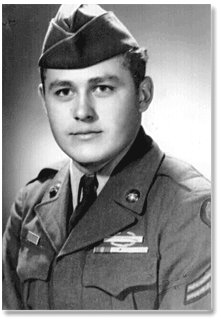 |
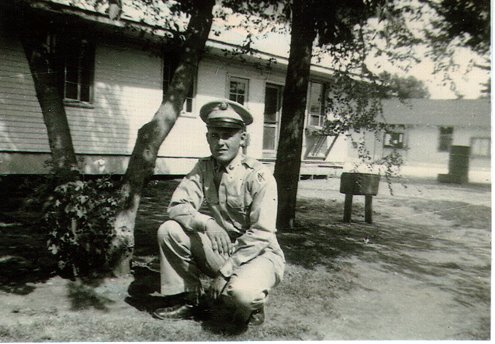
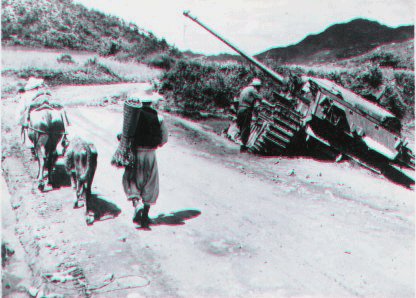
William E. AndersonWoodland, IL- "Oh, maybe someone would make a comment about something with regard to where we were going or what we were observing, and maybe there was a response to it and maybe not. I recall nothing of importance spoken while moving along that dirt road. I guess it was more of a silent walk, and we pretty much knew where we were going and what we were getting into." - William E. Anderson |
||||||||||||||||
Table of Contents:BackgroundWilliam Eugene Anderson was born December 17, 1932, in Woodland, Iroquois County, Illinois, the son of Elwood and Ruth Esther Brooks Anderson. Elwood and his brother Harold owned a tavern in Peoria, Illinois, but when young Bill became very ill, doctors advised Elwood and Ruth to get their son out of the city. After that, Mr. Anderson worked a variety of jobs, including maintaining a job in the Tile Factory in Woodland, doing carpentry for his brother Oscar, working in a defense plant in Kankakee that made artillery shells and bombs for use in the war effort, and as a tool maker in Watseka at "The Condenser." After World War II, Mr. Anderson bought a small farm, and also worked for Belmont Township. After many years working there, he was elected Road Commissioner, a position he held until he had to retire due to problems with diabetes and heart attacks. Ruth Anderson ran a beauty parlor out of her home for a number of years when her son was in grade school in Woodland. She then worked at the Condenser for a period of time. She became a certified nurse’s aide and worked at Iroquois County Hospital until she and her husband moved to Oregon in later years. Bill was the eldest of three children. His sisters were Cecele Diane and Wilda Jean. The children attended several grades at Woodland Community Grammar School. During World War II, they attended a little one-room school north of Kankakee, Illinois. After the war, the Anderson children returned to Woodland Community Grammar School. Bill attended his freshman year of high school at Watseka Community High School, and his sophomore and junior years at Milford High. His senior year, he returned to Watseka High, where he was scheduled to graduate in June of 1950. His parents had to pick up his diploma, however, because by graduation time, Bill Anderson was in the midst of combat in Korea. In addition to attending school, Bill held many different jobs as he was growing up in Illinois. "I delivered newspapers, building up a fairly large route," he said. "I sold things such as glowing statues, glowing light switch covers, etc., door to door. During the summer I would work at various farms, hoeing corn, shocking oats, threshing oats, and bucking hay. Two summers I worked on a truck farm doing every job that would apply. When the owner passed away, his wife had me manage their crops for the second summer there." The last two years before he joined the Army, Bill worked summers and after school at Neff’s Super Market in Watseka. "Basically," he said, "I was a 45 cent an hour box boy, but I did everything from stocking shelves, unloading trucks, and carrying groceries. Being a strong kid, I used to hike 100 pound bags of potatoes on my shoulder, and carry them up to two or three blocks away for customers." During a portion of his youth, Bill experienced the home front efforts being made in his community for World War II. "I was in grammar school at the time—a little one-room schoolhouse where I was first acquainted with History and Geography by listening to the higher grades. We conducted paper and iron drives in our war efforts," he said. "Personally, I harvested the pod from milkweed for the war effort. Somehow they used these in the making of parachutes. I also collected newspaper for the war effort." His father tried to join the military, but was denied. Instead, he was sent to work in the bomb making plant just outside of Kankakee. His family was represented in the war directly as well, since he had a cousin that served in the Pacific during the war. On his mother’s side, there were several cousins that served—one of whom was in submarines and eventually became an admiral in charge of the Pacific fleet of submarines. Joining Up/Basic TrainingBill enlisted in the Army on April 26, 1950, at Chicago, Illinois. "Actually," he said, "I joined the Army Air Force, not knowing that they had recently separated the Air Force from the Army. The recruiting officer out and out lied to me when he signed me up, and consequently I wound up in the Army. I don’t begrudge this, as I have some powerful memories of my time in the US Army." Being underage, his parents had to sign for him to join. Afterward, Bill took a train out of Chicago for basic training at Camp Funston, Fort Riley, Kansas, with the 10th Mountain Division. Upon arriving at the base the men were all lined up and given a pep talk. They were told what was going to happen to them. "During that first day," Anderson recalled, "we were issued our clothing, and then assigned to our barracks. We were immediately broken down alphabetically and assigned to squads and platoons." The Company Commander at the time was 1st Lieutenant Raymond M. Baranouskas. The first platoon sergeant was Marvin Winstead, and the second leader was Corporal Earl Cornett. These men trained inductees for fourteen weeks. Basic infantry skills such as marching, shooting, map reading, bayonet fighting, patrolling, etc., were taught using a combination of both classroom and non-classroom exercises. The hours and days of this training were much regimented. According to Anderson, "Each morning that I was in basic training, the platoon sergeant or one of the cadres came into the barracks at approximately 0500 hours. He turned on the lights and started yelling reveille over and over again. We came out of the bunk and immediately made up our bunks, showered, and shaved (whether we needed it or not). We usually dressed in fatigues for the day, and then marched to the mess hall where we had SOS (shit on a shingle) [creamed chip beef on toast] or corned beef hash with eggs or pancakes, and sometimes bacon and eggs for breakfast. When the sergeant or designated person yelled, we all washed our trays and fell out into the street for inspection. We marched to the parade ground for calisthenics and then to whatever we were learning that day. Midday we would most likely have sandwiches brought to us in the field. I can’t recall what we ate for the evening meal. My main meal has always been breakfast." After a full day in the field, he said the men returned to their barracks, usually around 1800 or 1900 hours. "Then we had to clean up the barracks. We had very little free time, and when we did, it was maintaining our gear." Anderson also recalled that there were several occasions when officers awakened recruits. "They did this mostly just to harass us some, which is the military way of breaking a civilian down and making them a soldier that will snap to when required." Sometimes the men were also awakened for an impromptu inspection. The instructors demanded complete respect from the recruits assigned to them. Anderson said that they were very strict and demanded a recruit’s full attention. "At the slightest infraction," he said, "we would be assigned KP or latrine duty. Normally the entire platoon would be punished as a group for such infractions as failing barracks inspection, although one person may have failed. Restriction to barracks and redoing the entire cleaning process were usual punishments." Anderson learned early on to pay attention to instructions and to keep his mouth shut. He recalled standing in ranks for inspection one day. All of the recruits were in their dress uniforms. "The drill instructor was inspecting our weapons," recalled Anderson, "and when he came to me he said there was dust in the bore of my rifle. I started to call his attention to the fact that we were having a dust storm, which is nothing unusual for Kansas. He hit me and I fell back through two ranks of soldiers. He told me that I am not to speak unless told to. It taught me a lesson. I got back up, resumed my position, and said nothing more." He said that there was a reason for the officers’ demand for total obedience from the recruits. "As I look back on it," he said, "the punishments meted out made better combat soldiers out of us, and we were being trained for cannon fodder." He recalled a time when one of the recruits refused to keep clean. "One of our platoon refused to take a shower and got pretty ripe," Recalled Anderson. "He caused us to fail an inspection. Several of the guys took him into the shower and used one of the GI brushes to clean him up. He was red as a lobster when they got through, and needless to say he fell in line and started staying cleaner than before. Really the only troublemakers that I recall were single incidents. We had one guy from Chicago that tried to get me to go AWOL with him. I refused, as did others. Years later I read about him in a detective magazine where he had been arrested for an armed robbery. I don’t know whether the Army ever punished him or not. We were better off without him in our midst." The training that Anderson and the others underwent took place in a large area in a high desert area of Kansas, where a lot of sand and dust blew from different directions. Fort Riley consisted of Camp Funston, Camp Whiteside, and another smaller camp. Here, the men had to qualify on the rifle range and maneuvers under live fire. "We took tests to determine what we were best suited for," said Anderson, "and we were designated to go to those schools. For example, I scored high in topography and was supposed to be assigned to that type of school. As you can see, I went directly to Korea and not to any service school. You must remember that a war had already started in Korea, and they needed infantry badly there." Overseas DutyAnderson said that probably the last week in basics, the recruits were told that they were going to be shipped directly to Korea. The need for ground troops was so urgent that Anderson and thousands of others did not receive any further training before being shipped off to the combat zone. "I did not receive any advanced training," said Anderson. "Apparently our company commander in basic didn’t inform my parents that we were en route to Korea," said Anderson. "I didn’t know this, so nothing was ever said about the fighting going on Korea by either of my parents. Consequently, the only person that was informed of my destination was my Grandfather, and I asked him to say nothing until I was on my way as I did not want to worry my parents while I was on furlough." Bill said that he didn’t have any thoughts about going off to war. "I knew I was going and was kind of proud to go and serve, but I wasn’t prepared for what I actually got into upon arriving in Korea." After his brief furlough, Anderson traveled across country by troop train to Seattle, Washington. "After one night in a huge barracks," he said, "we were told to ship our duffle bags home, along with any personal items. We were wearing fatigues, boots, cap, and field jacket. We were then put on trucks that took us to Sea-Tac Airport. We lined up and passed through a hangar where each of us were issued an M-1 rifle, helmet with liner, three bandoleers of ammunition, four hand grenades, one wool blanket, a poncho, three days of rations, a Mae West, and a parachute." The men were then loaded on Military Troop Transport planes, and left for the Korean theater of war. At that time, there were some thirty-six troop transport planes that left from Sea-Tac airfield at eight-minute intervals. The first leg of the flight to Japan ended in Anchorage, Alaska, where the planes were refueled and the passengers were given box lunches. The second leg of the flight ended on Attu, Alaska. There, the troops were fed in a mess hall while the planes were being refueled. Anderson recalled that he accidentally left his wristwatch in the latrine on Attu. A further memory of Attu was the take off once the plane was refueled. "Upon taking off," he recalled, "our plane was going very fast and actually dropped slightly when it reached the end of the runway. This runway ended at a cliff overlooking the ocean, and to get airborne it actually went off of the cliff." The plane was airborne for thirty-six hours, and could not land directly on Korean soil. Anderson said, "Since the enemy had possession of all of the air fields, we were turned back to Tokyo, Japan. There we boarded a very fast troop train that took us to Sasebo, on the southern tip of Japan, in just a couple of hours. We were traveling so fast that telephone poles resembled fence posts. We then boarded an old Japanese troop ship and in just a matter of hours disembarked in Pusan, South Korea." Anderson said that on the last leg of the journey from Japan to Korea, morale was high. "I don’t recall anyone even mentioning a war," he said. "The transport ship that took us from Japan to Pusan, Korea, was a World War II Japanese troop ship. It was a memorable trip trying to sleep on the raised mats like the Japanese did. We also got a shot that made some sick. It was called the Jap B shot, whatever that means. It seemed to hurt more than any other shots we received." Also during the trip, the unsuspecting, soon-to-be-combatants were issued faulty equipment that was less than adequate for what the men were about to face in Korea. This is a subject that will come up later in this memoir. Pusan PerimeterThe Japanese troop ship arrived in Pusan, Korea mid-afternoon on approximately 29 August 1950. Immediately upon arrival, the men disembarked and were moved into a large warehouse-type building. Anderson recalled, "We had arrived in a very backward country where buildings were old and there was very little in the way of conveniences. There was a lot of hustle loading ammunitions aboard trucks and trains going to the front lines. A lot of congestion kept these modes of transportation moving very slowly, but other than that there wasn’t too much to indicate a war was going on." The arriving troops spent the night in the warehouse building, and about two days later, Anderson joined the company to which he had been assigned on the MLR. In the days and weeks that followed, he became part of "Task Force Smith", joining veteran combat soldiers who had arrived in Korea before him. "The only assignment given at this time was to the battalion and company," he said. "We were assigned to companies and smaller units upon arrival at the front. My assignment was the 1st squad, 2nd platoon, C Company, 1st Battalion, 21st Infantry Regiment, 24th Infantry Division. Due to the fact that no transportation was available, we were given directions to our units at the front, and started walking. South Korean civilians refused to drive their trucks north into the fighting. Apparently there were many guerrillas and ambushes in that vicinity. There was railway equipment in the Pusan area, but they were already loaded and on orders to proceed to other points. We received orders to start marching north toward our assigned units north of Kyong-ju. We marched the entire distance and ate C-rations on the march. We rested for about five minutes each hour. It was dark when we moved out of Pusan, and it took us approximately twelve hours to arrive at the front." Some 15 or 20 new troops were on that long trek to the front. Several of them had gone through basics together back in the States. Anderson remembered James Braden from Illinois, Harold Bollinger from Illinois, Jackie D. Brown of Oklahoma, and a man named Tommy Bracken, as being part of the troops trudging to the front. "Our ground troops had been badly mauled and pushed back from Seoul to the Pusan Perimeter," said Anderson. Along the way, the men saw small villages with buildings made of straw and mud, and narrow, dirt roadways that apparently had very few, if any, vehicles driven on them. Here and there the American soldiers saw natives and refugees. He said the Koreans did not display any panic on their faces or in their actions just because there was a war going on. "They went about the job of carrying their belongings and finding their way south out of the war zone," he said. "We saw old women working in rice paddies, and natives sitting on mats in the courtyard of their homes, drying peppers or whatever they had to do. There were natives mostly in the form of refugees moving south with all their earthly possessions," he said. "The possessions were in bundles being carried on their heads or on A-frames, a device the Koreans used for carrying most anything. Further south, there were people working in the rice paddies, or around their homes. The children were always near their parents, and especially so when they were on the road as refugees. These people lived a very hard and frugal life as far as I could determine. Their homes were primarily made of clay and straw. Their cooking was done on one end of the home and the heat from the fire as well as the smoke would travel under the rice mats and out to the other end of the home. Therefore, they cooked and heated the home all with one fire." Anderson said that, at the time, he didn’t think about South Korea as being a country worth fighting over. "I had never even heard of this country before. I did like the people very much, and I could see the strain on their faces and the fear they had of the North Koreans taking over their homes." As the Americans trekked to their unit, there was virtually no conversation during the march northward, Anderson recalled. "Oh, maybe someone would make a comment about something with regard to where we were going or what we were observing, and maybe there was a response to it and maybe not. I recall nothing of importance spoken while moving along that dirt road. I guess it was more of a silent walk, and we pretty much knew where we were going and what we were getting into. As far as I know, we saw no enemy during the walk. I can’t recall anything in particular denoting a war zone. We would occasionally hear some shooting, or see a group of fighter planes going overhead. If my memory serves me correctly, we did hear cannon, possibly from a destroyer off to our right. The sea wasn’t too awfully far from our right, and the Navy makes big booms when they fire." When he arrived at his unit, it was assisting the ROK Capital Division in defending the Pohang-Dong area on the eastern coast of Korea. "There had been a break through, and this battalion was sent to repel the North Koreans," he said. "My company was on a hill north of Angang at an intersection half way between Kiggye and Pohang. They were engaged in a firefight at the time of our arrival. I knew no one in the company that I was assigned to, and they were not too friendly. It seems that there was a clique with the men from Japan and the original company. I was assigned as a rifleman to my squad, and became a scout at that point. I preceded the platoon when moving into the enemy-held areas." Anderson said that he got little instruction from the veteran soldiers upon his arrival. "We learned from our own experiences. I can’t recall ever getting any instructions other than from our sergeants and platoon officers," he said. "We were eventually accepted into the group that came with the unit from Japan, but not completely. I have gotten to know several of these fellows since, and we have become comrades at long last." However, in thinking back on how he learned the ropes of combat "on the job in Korea", Anderson said he was pretty much on his own. For instance, he said that he learned how to count the mortar rounds being fired at the other side, and how to count them again when they exploded on the allied side. He also learned hand-to-hand fighting, which occurred several times, from experience. And, he said he learned how to kill without remorse. "A person learns to shoot the enemy as they come at you," he explained. "If you were to have a guilty conscience about killing another human being, then you would not survive. I learned to kill in order to survive. It is not something that comes naturally. [As civilians] we were taught not to kill, but in war you have to reverse that learning. It comes back to haunt you in later years, as it has come back to me. I can see the faces of those I had to kill, especially in the hand-to-hand fighting we were involved in." Basic training teaches just that: the basics of marksmanship, following orders, etc., Anderson said. "They can’t really teach war in basic training. Nothing prepared me for war." Combatants survive it as they fight their way through it. Some of the soldiers who fought in the Pusan Perimeter also had to adjust to the heat that baked Korea in the summer of 1950, but not Anderson. Growing up in Illinois, he was used to the type of hot and humid weather he experienced when he first arrived in Korea. But adjusting to the terrain proved difficult for Anderson. His native Illinois was flat. Korea was not. "The country was extremely mountainous with many narrow valleys throughout," he recalled. "There was literally no vegetation to speak of—no trees or bushes to speak of—just rocks and more rocks." So there was little or no vegetation to hide the American soldiers from the enemy. "We did not fight in trenches except on occasion when we were relieving the ROK Army units," explained Anderson. "They had trenches. We fought primarily from one or two-man foxholes. We did not have bunkers during 1950-51. A foxhole was strictly to get as far out of range of bullets as possible. A trench was pretty much the same, although I was only in a trench on two or three occasions. During the dry times it wasn’t too bad, but in the wet seasons it got muddy and you stayed wet. In the winter time, the foxholes were harder to dig because of the frozen ground." New to CombatAs mentioned, his unit was already engaged in a firefight at the time Anderson arrived. "My group was fired upon as well," he recalled, "so this was the first time that I knowingly saw the enemy." As the green troops approached their unit, a T-34 tank parked inside a house across the intersection fired at them through the door. "Needless to say," said Anderson, "we all hit the ditch post haste. The round went over our heads and exploded in a rice paddy to our right. I know how bullets sound when they whiz by you. Tank shells make big noise as they come at you. My baptism of fire was from the T-34 tank. He fired his main gun at us and the round went over our heads, but close enough to have written on it if possible. Afterward, there was machine gun fire, sniper fire, etc. It really didn’t affect me during the time we were engaged, but afterward it became frightening." According to Anderson, a short time later, 1st Sergeant Godbey came along and escorted the new troops up the hill. He dropped them off at their platoons. "Sergeant Godbey was a large man with only one eye. He wore a black patch over his missing eye. I was told to dig a foxhole and where to dig it. I had just finished digging my first foxhole when Captain William E. "Chief" Wyrick, Company Commander of C Company, 21st Infantry, came up from behind the hill and told us to ‘saddle-up’ as we were moving out. By this time the firefight had ended and the North Koreans had disappeared from our front." The new troops went down the hill, crossed the road to the east, and started climbing a larger hill. During that first day on the front line, Anderson saw both dead enemy soldiers and dead American soldiers. "The enemy soldiers were killed as we moved forward," he said, "and they were just lying around on the ground. An American soldier, whom I did not know, was killed right beside me later that day during an enemy attack. I don’t know how it affected me at the time. I was very busy just trying to survive myself, and doing what I was supposed to be doing as a soldier. I am sure that I was saddened by the sight of a fellow soldier getting killed, but the enemy was something else. We were supposed to kill them, and the only good ‘gook’ was a dead one." That day and in the days to follow, the mission of the unit to which Anderson had been assigned was to support the ROK Capital Division as they moved north into defensive positions. There were several brief firefights on Anderson’s first night on the front line, but he said that none of them affected the unit’s positions. "We could hear sporadic small arms fire in the vicinity of our bivouac area," he said. The following day, the troops started over the hills en route to the city of Pohang-Dong, a port city that was located on the eastern end of the Pusan line. "The march was slow and methodical in searching for any NKPA troops that had been by-passed," he recalled. "On 08 September 1950, Lt. Francois X. Therrien joined us during an assault on a hill." Anderson recalled that they were assaulting a fairly steep incline when Lieutenant Therrien met with the company commander, taking cover behind a large rock. "Captain Wyrick said, ‘See those guys trying to take that hill? They are yours, so go get them.’ With that, Therrien took over as Anderson’s platoon leader. "That night, we dug in on that very hill, and the NKPA infiltrated our positions," he said. "Lieutenant Therrien confronted one with a burp gun. After the shooting was over, the NKPA was dead and Lieutenant Therrien had forty holes through his poncho on either side of his body. There were also two holes through his canteen. None of these bullets ever touched him. Pfc. Francis P. Connor, platoon runner, was hit in the leg that same night and evacuated. This was a very scary occurrence, but apparently we got used to it and did whatever was necessary to secure our positions." According to Anderson, it was on this same hill that a Korean civilian named Lee Sang Yun joined the platoon. "That night we dug in among a number of mounds which turned out to be a Korean cemetery," Anderson said. "For the following several days we moved about in the hills and mountains with only an occasional firefight. As I recall, we did lose some men in those small battles. On occasion during the darkness, the NKPA would infiltrate our positions and attack us from within our own perimeter. During this time, we were manning one-man foxholes that were spread out as much as 45 feet apart. We also relied very much on small outposts up to ¼ mile out. Lee and I became very good friends during the following months. He was a rifleman and interpreter for our platoon." Lee’s hometown was Angang, South Korea. As time went by, Lee and Anderson did everything together. "He would interpret for me whenever we met up with other Koreans, enemy or what," explained Anderson. "Lee and I shared foxholes, outposts, patrols, and even a firefight together." Lee Sang Yun had quite a story behind him, noted Anderson, "and over the months we were together I learned about his past. For example, as you know, Japan had ruled the Korean Peninsula from early 1900s until 1945. Lee and his family were forced out of their home when Lee was about four years old. The Japanese moved them into Manchuria and deposited them on a farm there. Lee basically grew up in Manchuria, but his family always dreamed of returning to the home in Angang. He had to attend school taught in Japanese, and upon getting out of high school, he was conscripted into the Japanese Army and placed on the Russian front." "When the Russians overran their position, they all fled away from the action. Lee escaped from the Japanese, and then the Russians, by getting into China. The Chinese Nationalists captured him there, but he escaped. Later he was captured by the Chinese Communists, but escaped once again. He made his way into North Korea dressed as a peasant, moving south by night. His parents and siblings were captured by the NKPA and detained in the north. In Seoul, Mr. Lee purchased a book to learn how to translate into English his native language. During the trek to Angang, he literally taught himself English. It wasn’t too long after that that the Korean War broke out and found its way to his village once more." Anderson said that is how Lee--the Korean, and Anderson--the American, came together in the mountains north of Angang. "In January 1951, the Division learned of Mr. Lee’s existence and took him from us. They sent him to Regiment as their interpreter. I never saw Mr. Lee again for 46 years. It took me that long to find him. I have been to his home in 1996, and he came to my home in 1999 prior to his death. He brought with him his wife and a son. I still correspond with Lee, Myung Ho, and recently by e-mail with his granddaughter, Auri, who is now about 16 or 17. Mr. Lee and I attended several reunions together with the 21st Regimental Combat Team Association." The men in Anderson’s unit had to fight their way into Pohang. Fortunately, by the time they arrived, the ROK Army and students of schools within the city had already evicted the NKPA after some very hard fighting. "I recall we marched into the city and to the port where we were to await transportation," Anderson said. "There were large warehouses located nearby and we were hungry, so we started looking for something to eat. We found rice balls, Kim chi, and dried squid inside a warehouse. We helped ourselves and I took a liking to Kim chi and rice, and still eat them today. I was not fond of squid, as it was awfully hard to chew." Anderson said that about mid-afternoon, some trucks arrived. "We loaded up and were hauled to a school yard on the outskirts of Taegu. We spent several nights resting and preparing for our role in the breakout from the Pusan Perimeter. While we were there for several days, we patrol northward and engaged in some firefights during this time." The date was then 15 September 1950. As to how Bill Anderson held up emotionally at this time, being new to the frontline and war in general, he said, "I think that I held up very well emotionally as a rookie to war. Definitely there were moments of fear that were greater at the time. I think that war is very fearful to anyone involved in it, and it is an ongoing thing. A person gets used to the fighting and artillery and mortar rounds coming in on their positions, but there is always a certain amount of fear." Attack Across the NaktongFor the first two weeks or so in Korea, Anderson was armed with an M-1 Garand rifle, bayonet and hand grenades. However, on 19 September 1950, as his company attacked across the Naktong River, the platoon BAR man was killed. Anderson was given that weapon, which he carried until May of 1951, while serving as a scout for his platoon. He discovered that scouting was a dangerous and lonely position, even though the rest of the platoon or squad was coming perhaps a hundred yards behind him. "Let me first say that basic training did not prepare me for war," noted Anderson. "The thing that went on in basic was the breaking down of a person so that he would do what he was told without question. There was a lot of marching, shooting at targets, cleaning weapons, throwing grenades, and KP and guard duty. War is learned by doing it. As for being a scout, it was my job to walk at least one hundred yards out in front to search out the enemy." Bill Anderson admitted that he made some mistakes on his new job. "First of all, the North Koreans were very adept at camouflage, and many times they resembled a bush completely. On several occasions, I walked right through the North Koreans without seeing them. They would lie quietly as I went through, and then ambush my platoon when it got up to them. My mistakes did, in fact, cost some lives. And it made me all the more suspicious of my surroundings as I approached an enemy position. Yes, I did learn by my mistakes, but it did not prevent them from happening again in another situation." As a scout, he learned to look for signs that the enemy was somewhere nearby. "You look for freshly cut bushes and brush," he said. "You watch for changes in position of a bush. Watch for footprints in soft dirt. Look for signs of food being dropped or containers being left in the open. As you approach, you learn to look at each bush or small tree very closely, looking for any telltale signs of there being someone inside the bush or a weapon showing. Sometimes you can hear breathing, or smell their cigarette smoke if you are very close to them. Many, many things could give away a NKPA hiding place." On 18 September, Anderson’s unit was supposed to cross the Naktong River approximately six to ten miles southwest of Waegwan during the darkness of the morning. "However," said Anderson, "our trucks had a real problem getting through blockages in the road, a collapsed bridge, and traffic jams. The night of the 18th, we bivouacked in an apple orchard, and the North Korean anti-tank guns fired on us throughout the night, causing tree bursts. It was very scary since there was no place for us to be shielded from these shells exploding from above. I do not recall if anyone was injured or killed, but there were no doubt some casualties." Anderson said that the Army Engineers were supposed to have boats available to the platoon prior to daylight on the 19th. However, the boats did not arrive until about 0800. "It was light and we had to carry these plywood boats several hundred yards across the sand to the water’s edge," he recalled. "Sgt. Robert Niarhos was our squad leader. He got us into the boat and safely across the river. We were the first squad across. We took very little small arms fire, while those behind us not only took a lot of small arms fire, but many mortars landed among them. Our casualties were very heavy that day. My squad got out of the boat and took cover in a small washout along the right side of a drainage ditch, which ran from the ridgeline into the Naktong River. The entire squad got into this wash. I was on the left flank, partially in the ditch. After a few moments, the rest of our C Company was observed landing behind an embankment. My squad had landed on their right flank to the right of the ditch. To our front, there were broad rice paddies, and on the small hill was a machine gun about midway up the front of the hill to the left front of my squad. It started firing at us." "There were a number of shots that dug into the ground near my left foot. For some unknown reason, I jumped up and took a couple of shots, which cut a tree off. I then started toward this machine gun, firing my rifle as I went forward. The rest of the squad followed. We went diagonally across the rice paddy to my front through the ditch, and continued across the next rice paddies. While I was crossing this rice paddy, I slipped and fell face first into it. Sergeant Niarhos told me later that he thought I was another casualty. But I got back up and continued on toward this gun. I was two-thirds of the way to their position when two North Korean soldiers dressed in black pajama uniforms left their gun and ran across the hill, then over the top and out of sight. The machine gun turned out to be one of our own light machine guns captured earlier." "Lieutenant Therrien had rallied the second platoon, fixed bayonets, and charged across the rice paddy. They caught up with my squad as we reached the base of the hill we were assaulting. Our objective was the ridgeline looming above this hill. They were still receiving both small arms fire as well as mortar fire from the ridge to the front. Due to the poor condition of our equipment, our radios were not working at this time. In this case, C Company was unable to reach the other side of the field. Consequently, more troops were engaged. They (A Company from the right flank and B Company from behind us) also started shooting at us. Since we could not identify ourselves, these men mistakenly thought we were enemy soldiers and fired on us. Some Marine Corsairs arrived, and Captain Wyrick later said that they dropped napalm tanks into the rice paddy we were crossing. I did not see it. After we started up this hill, a runner was dispatched. Pvt. Harold Bollinger was scrambling down the hill toward the river. He crossed my path and I immediately flattened out. He was shot by friendly fire from A Company, with the bullets passing over my head. The Good Lord must have been looking out for me. Something caused me to drop flat on the ground." "I then started up the hill and toward the center of it where there was an impression on the ground caused by water running off of the hill. This position wasn’t exactly safe, but better than others. The Air Force fighters arrived overhead and made several strafing runs right on top of us. I started to shoot back as the bullets were striking all around me. I could see the pilot’s face clearly as he dove on us. I was going to shoot at him. Sergeant Niarhos grabbed my rifle, pulled it down, and said, ‘Here, try this instead.’ I started smoking Lucky Strike cigarettes that day 19 September 1950 at approximately 1000 hours." "For this action we had a large number of Korean Augmentation to the US Army (KATUSA) soldiers assigned to our units to fill them out. These KATUSA’s were only partially trained (ten days). The thought was that we would train them as they fought beside us. Once the information was gotten back, the shooting stopped and the Air Force started strafing the ridge above and in front of us where the North Koreans were defending. We then started up over the crest of the hill we were on. There was a lot of shooting back and forth. As I started over the hill, Song Chang-Bum, #K1134333, a KATUSA, stepped directly in front of me and instantly took a bullet in the vicinity of the left clavicle. It spun him around and it seemed an eternity that we stared into each other’s eyes. I still see this man in my mind and my dreams." "We continued over the crest of the hill into a deep and narrow ravine, and then up the side of this taller ridge. We made it to the top of the ridge by late afternoon and dug in as the North Koreans were firing mortars into our positions. Upon reaching the summit of the ridge, we began digging in to hold the ridge in the event of a counter-attack, and to escape the mortars being fired at us. While digging in, I looked back down the side of the mountain and observed this man climbing up. He was our Company Commander, Captain Wyrick. I can visualize it to this day: this man was getting bigger with each step. He looked like a giant coming up over the mountain side." "By now (September 19, 1950) most of our KATUSA’s had all been either killed or wounded. A mortar round landed close by and I was struck with some shrapnel. A larger piece of shrapnel struck the steel cover to a little pocket Bible my mother had given me, but a small piece struck just under my shirt pocket. Our medic, Sergeant Goodson, checked on me and determined it to be too minor for treatment. Due to the shortage of combat soldiers, our medical people were under orders to return a man to their unit if they could still fire their weapons. My injury did result in a Purple Heart, however." After this assault was over, Sergeant Niarhos informed Anderson that he wrote him up for the Silver Star, using a paper bag to write on because he had no paper. "But the people approving such an award informed Sergeant Niarhos that I was ‘too young’ to receive it," said Anderson. "Of course, I was disappointed, but not too upset at the time. Then, medals meant very little to me. Now they are very important, and I wish that I had received it." Years later, at the first veteran’s reunion that Bill Anderson ever attended, a comment was made about his young age preventing him from receiving the medal. "I had brought this up during a conversation with Frank Connor," Anderson said, "and his comment was that at the age of 17, I was not supposed to have been outside the continental United States." Disallowing the medal might have been to conceal that fact, Connor thought. Anderson remembered that the assault at the Naktong was a costly one for American troops. "Attacking across the Naktong River, James Braden from Illinois was wounded. Harold Bollinger was wounded by automatic weapons fire from A Company. These two were in basic training with me. Tommy Bracken was wounded in the foot on this assault, and he was from California. Many others were wounded or killed, but I can’t recall their names," Anderson said. He did recall that the battle seemed to be one continuous one. "I can’t really point to the end of the battle unless it was when we achieved our first main objective," he said. The injury that resulted in a Purple Heart for Bill Anderson as his platoon met that objective also resulted in some major heartache for his parents. "My Father and Mother received a telegram from the War Department that I had been wounded and missing in action on 19 September 1950," he said. "My parents were very upset and demanded to know more about my wounds and location. Eventually, the Army sent a Major down to talk to my parents, and he indicated that I was never in Korea as I was too young. Apparently a person was not to leave the States until after he turned 18. It sure caused an uproar, especially when my Father told this Major that I had enlisted in the Air Force and not the Army. If you will recall, this is about the time that the Air Force broke away from the Army and became its own branch. The recruiter had lied to me and my parents, and for that it cost him his job." Waegwan-Taejon Axis & BeyondWhile his parents were back in the States being told by Army officials that their young son was not in Korea, 17-year-old Anderson was wielding a BAR on the front line in the Pusan Perimeter. Once his company had secured the area, they had moved out in a dry creek bed towards Waegwan (on the enemy side of the river), in an effort to cut off the North Korean 10th Division operating in that area. They captured enemy soldiers and armor as they went. "We arrived opposite of Waegwan, and my unit set up positions on Hill 170 on 20 September 1950," he said. "We did not get there in time. These North Korean troops had already escaped from our trap. When they did leave the battlefield, it just seemed that they sort of melted into the ground. Once we discovered the enemy was gone, we resumed the attack on 22 September 1950, toward Taejon." He said there were daytime attacks by US troops and nighttime attacks by NKPA during this entire push. Reflecting back on this approximate time period, Bill Anderson said that he had another experience with a mortar round. "As we were starting to move north somewhere between Waegwan and Kumch’on," he said, "we briefly relieved a unit of the ROK army, and took over their trenches. As an Automatic (BAR) Rifleman, I was placed out on a point by myself, where I had a large field of fire. This was my first encounter with horse-mounted cavalry. I could hardly believe what I saw. However, they did not get close enough for me to fire on them." Anderson said that while his unit was in these trenches, the North Koreans started firing at them with mortars. "I counted as the mortars were fired, and when they started coming in, I ducked down and counted the number as they went off. Apparently I miscounted, as a mortar landed right in front of me. (You don’t hear them coming in if they are coming in on top of your position.) It tore my trench knife from my side and was never found again. I apparently suffered a mild concussion (from what I know now), as it seemed like hours before I stopped bouncing off of the sides of the trench." When he regained his senses, he was ready to start fighting again. "As I got back to my feet and started to firing out to my front," Anderson said, "I heard this thud behind me. I turned to see a Korean soldier with rifle in hand standing there looking at me. He had dropped into the trench behind me. It was really frightening. I whirled around ready to fire on him, but something kept me from it. I did not know whether this was a North or South Korean. It turned out that it was a ROK soldier from another unit relieving us so we could continue on our northward movement to our new objective." That objective was the taking of the village of Taejon. At the time, the British 27th Brigade, attached to the 24th Infantry Division, lead the attack. The objective was Kumch’on, north of the Waegwan-Taejon axis. The reason for taking this village was twofold, said Anderson. "First, it was blocking our route northward. Secondly, the NKPA had reinforced their positions there in an attempt to stop our assault. We chose to fight them there rather than circle around them." It was Anderson’s first experience at street fighting. Although the British initially had taken the lead, they ultimately did not continue in the lead. "On the night of 23 September 1950," Anderson said, "our Air Force made a mistake and napalmed and bombed the British troops, a devastating blow to our allies. My unit then moved through the British to lead the attack on Kumch’on, which resulted in some very heavy fighting. First Battalion was engaged in this battle. Reportedly, a battalion of North Koreans stubbornly tried to hold this town. Our line companies had to fight door to door through this town. After capturing Kumch’on, the 21st turned in a northerly direction, moving an additional ten miles before stopping to dig in for the night. Our sister regiment, the 19th Infantry, continued westward, attacking and capturing the city of Taejon. The 19th had some scores to settle in this city." Now that Kumch’on had been secured, Allied troops were forcing the NKPA to take flight northward toward Seoul. "We more or less skirted Seoul on the east side, and I recall all the rubble from the fighting there. The city had been nearly leveled from the shelling. We continued to push the enemy ahead of us with occasional firefights erupting along the way," he said. According to Anderson, the 34th Infantry lost terribly in the battle during the withdrawal through Taejon. That regiment had been reduced to approximately 180 men. Their artillery support—the 63rd Field Artillery—had likewise been decimated, losing most of its guns and equipment. Anderson noted that the 5th Regimental Combat Team (RCT) replaced the 34th Infantry, and the 555 Field Artillery Battalion replaced the 63rd Field Artillery as the third regiment of the 24th Infantry Division. Remnants of the 34th and the 63rd were split up as fillers for the 19th and 21st Infantry, while the 63rd filled in with the 52nd Field Artillery Battalion. As mentioned, Anderson’s company was now moving north. "We traveled very fast, although for the most part we were on foot," Anderson recalled. "Our assigned Tank Battalion had joined us after we left the Waegwan area. I can’t recall their name, but I believe it was the 24th Tank. We did ride the tanks on occasion to make up some time, but for the most part there were occasional firefights that occurred most of the way. During the day, we captured several T-34 tanks and anti-tank weapons." The troops moved up the west coast and got involved in some serious fighting over Hague (pronounced hey’ju) on the west coast. "During this time," Anderson said, "we witnessed many atrocities by the North Korean soldiers. Somewhere above Taejon, my platoon was dug in on a fairly high hill, and in the distance we saw North Korean soldiers shooting prisoners of war. Their platoon leader had apparently surrendered his whole platoon. We saw them marched out to a point beyond rifle range and yet still in sight. The North Koreans tied their hands behind them and then shot them in the back of their heads. They killed the whole platoon. We each vowed that we would never be taken alive by these butchers. We later moved through the area where this execution occurred, passing the ditch where their bodies were laying. I would assume that the morgue unit collected the bodies. When we were driven back from the north to a position around Osan, we moved back by a different route, I think." Anderson said that from there, his unit moved slightly toward the east, racing other units to Pyongyang, the capitol of North Korea. They then moved in a northwesterly direction through Anju and across the Chumchon River. He said the fighting was sporadic as they rapidly pushed the NKPA north. "Our biggest obstacle," he recalled, "was the large numbers of refugees moving south on the roads. I have no idea how many miles we covered each day, but each night we dug in on the hills on each side of the road. I cannot remember names of the villages, although I can still picture them in my mind." It was now about 01 October 1950, and they were en route to the Yalu River. Dog Fight in the SkyIt was during this time period that the troops witnessed a "dog fight" in the sky over their position. "Somewhere north of Seoul, we were moving up a fairly wide valley and observed a "dog fight" in the air between an Air Force P-51 Mustang and a North Korean MiG," recalled Anderson. "We actually stopped our advance to watch. This MiG had dove on the P-51 and started firing machine guns. The P-51 pulled up and the MiG went past. The P-51 fired at the MiG, but could not keep pace with it. There were several passes, and on the last pass, the MiG made a really wide turn and came back for another run at the P-51. The MiG came in behind the P-51, which started a long dive toward the mountains on the other side of this valley. I thought the P-51 was going straight into the side of the mountain, but at the last minute, the P-51 pulled up to the right sharply, while the MiG went straight into the ground. There was one huge fireball from the exploding MiG. Later, I was told that the pilot of the MiG was a Russian pilot. That was really a show, and I really admired the P-51 pilot for the way he ran the MiG into the ground." About this same time, Anderson and Lee Sang Yun were moving through a farm village and Lee became suspicious of a large straw stack on the other side of the village. Underneath it, Lee found a brand new reconnaissance type of aircraft. "Our Company Commander had complained about having no light in the Command Center, so Lee removed the battery from this plane and took it back to the CO. Now there was a light. We destroyed the aircraft, but I don’t recall what we did to it." AtrocitiesAnother incident during this frame of time involved a North Korean prisoner of war train carrying American soldiers. These many years later, Bill Anderson still could recall what happened. "I recall racing after the North Korean prisoner of war train speeding north with a large number of our soldiers on board," he said. "The train was trying to make it into a tunnel, and we got there just after the train had entered. Further north, the North Koreans stopped the train, saying they were going to feed the POWs, but instead they shot them. There were several survivors who had been wounded and fell beneath others being shot. In fact, during those first weeks of our offensive, we came across many of our soldiers who had their hands tied behind them and shot through the head. Beyond where our race for the tunnel ended, the Hague road ran through a cut. That is where we dug in for the night. My foxhole overlooked the road above the cut in the mountain. After dark we heard troops and vehicles moving toward us on the road. We prepared for a big battle as the North Koreans were trying to escape the Hague area." On the Naktong River crossing, Anderson had been promoted from rifleman/first scout to a BAR man and temporary corporal. He was therefore assigned a position with his BAR about half way up the hill in the cut above the road leading to Hague. "Patrols had verified that we had a large number of North Koreans trapped in Hague. We set up along the assigned tanks and waited for them, as they could only get their vehicles out of the Hague area by coming through this pass directly into our position. About midnight, we could hear the enemy closing the distance between us. We all held our fire to let them get well into our position. Actually, a tank of ours sat in the cut when this truck came along. The gunner waited until the last moment and fired into the truck within two feet of the windshield. It blew the truck and its occupants completely apart. Apparently there were several cases of North Korean cigarettes in this truck, and someone had placed a cigarette between the charred fingers of the North Koreans lying in the ditch nearby. That was someone’s weird sense of humor. Life magazine published a picture of this scene in their publication." The following day, 17 October 1950, Anderson’s company marched on Hague, with only sporadic skirmishes. "But upon entering Hague," he said, "we met heavy resistance from North Korean defenders. Hague was more or less on the coast, and was a nice community with nice homes. Hague had many buildings and they were in fair shape for a war zone. The buildings were mostly all painted and sort of ornamental compared to Kumch’on. Our street fighting here was minimal and other than securing all of the buildings, we did not encounter enemy occupying all of the buildings as they did in Kumch’on. We took possession of the town in just a couple of hours, and released some of our POWs from their jail located there." In Hague, the American liberators also made an unexpected and grisly discovery: the bodies of South Korean elders and political figures. "They had been herded into a cave and shot," said Anderson. "As far as I can recall, there were 65 or so. Some of them were teachers from the village, and all were important people in this village. Lee Sang Yun, my Korean friend, interrogated some of the villagers, and they stated that the NKPA had marched these men into this tunnel in the village and then machine-gunned them from the front of the tunnel. I believe it was an older woman who witnessed most of this. She also said that after they had shot them all down, some of the soldiers entered the tunnel and made sure they were all dead, as there were more shot inside. I don’t know what became of the bodies or how they were cared for. Division Headquarters staff took over, I believe, and we went on to our assigned positions for the night." The March NorthThe platoon stayed in Hague that night, and the following day returned to the roadway and continued north. "During this chase," recalled Anderson, "we were driving North Korean soldiers ahead of us, as well as about 35 T-34 tanks. As we marched north, the second platoon had the point. As we rounded a curve, a tank from up on the hillside fired at us, hitting no one. Apparently the tank had run out of fuel, and the North Korean soldiers had moved this tank up this hillside with manpower alone. Lieutenant Therrien dispatched my squad to eliminate the tank, which we did. Once we got to the tank, we could see it had no infantry protection whatsoever. The squad covered me as I shoved a white phosphorous (WP) grenade down the gun tube. It made for a magnificent fireworks display as the WP set off the shells inside. We had several skirmishes with North Koreans as we marched northward. All were fairly brief." Anderson said that a number of enemy prisoners of war were captured during this journey. "Someone said that on one day we captured 2700 prisoners, all of them NKPA." He also remembered the power of a tank blast. "I recall getting knocked down with a blast from one our tanks firing. We were marching along when we observed a column of North Korean soldiers moving parallel to us across a valley at quite a distance. We were firing at them from the road when a tank turned its gun around and fired at these soldiers. The back blast knocked me off of my feet. After this encounter, we continued on our northward march with less opposition as we proceeded. The British 27th and the 1st Cavalry Division were preceding the 24th Division toward Pyongyang." Anderson recalled that there was a race on between the British (still assigned to the 24th) and the 1st Cavalry to take Pyongyang. "Actually," he said, "we couldn’t possibly have gotten there first due to the poor conditions of the road we were following and the frequent firefights that slowed us down." The First Cavalry actually took the city of Pyongyang. Forever in His MindFor Bill Anderson, Pyongyang is a city that remains forever in his mind. "As I recall, on or about 22 October 1950, we marched through Pyongyang, passing through the 1st Cavalry Division on the way to Sinuiju." The 27th moved through the 1st Cavalry on a northward push to meet up with the 187th Airborne north of Pyongyang. About two days before this, the 187th Airborne RCT had dropped on Sukch’on. The British 27th was to join up with the 187th to entrap elements of the remaining North Korean units in the area. "It was here that I saw a sight that has been with me all of these years," said Anderson. "We came into Pyongyang several hours after it had been secured. Mind you, we were still marching, but then I guess we were foot soldiers, and that’s what we do. We came up along this railroad that ran along on sort of a dike or raised railroad bed. It was like a wall. We came to an overpass where we turned and walked under this railroad. It was the same road, but it just turned at this spot. There was a lot of rubble and some of it was still smoking. I know there was a foul smell to the smoke, like burning bodies." The fighting had all but ended in the city with only a few sniper shots, recalled Anderson. Distant fighting could be heard. "Now comes a sight that has haunted me all of these years and I can still see this scene clearly," he said. "After coming under the railroad overpass, we had to make the turn, and right there I saw this little girl. She was dirty, and she was crying her eyes out. She was standing over her mother, who had apparently been killed by artillery. I can still picture this—color of clothing and all. We were on the march and I couldn’t stop for anything, so I watched this little girl as we passed by. I looked back to see if anyone had stopped for her, but no one did. We were still attacking to the north, so no one could stop and try to comfort this child. I have had this sight haunt my mind ever since. I can still hear her crying." Continuing NorthwardThe 21st Infantry assembled in a marshalling area just north of Pyongyang that night. There, the men had hot chow and bivouacked for the night. The next day Anderson’s unit moved en route to the Chongchon River. On or about 24 October 1950, they crossed the Chongchon River, west of the village of Anju, and continued to move north on the coastal highway. "We continued our march to the north, staying on the roads in the interest of keeping up with the defeated North Koreans," remembered Anderson. "I can recall that after brief skirmishes along the way, a lot of North Korean prisoners were captured as we continued up the road in the northwest sector. I also recall as we moved north, it being very cold. As I indicated earlier, we had only summer clothing, fatigues, field jacket, blanket and poncho, so it was cold. As we moved north there were many more mountains. They became bigger and much more rugged. The roads through the mountains became very narrow and with many switchbacks that slowed our progress. About halfway up this road, we had to dig in for the night on this very tall, very cold mountain of rocks. We were unable to dig-in, as the mountain was all rock, with rocks scattered all over the mountain. We finally took positions behind rocks rather than trying to dig-in for the night. Thank God we had only a patrol or two that caused us any grief on that mountain. The next day we began our journey northward." During this journey, Anderson said there was a tank battle as his platoon approached the city of Chongju. "Our newer tanks didn’t fear the T-34," he said, "and on one occasion I recall our tanks taking on some of their tanks. Our tanks pulled out from their cover, spread out, and commenced firing on the enemy tanks. Our side won without any doubt. We had tanks available, but there was very little opportunity for them to do anything, as there weren’t many portals for them to fire from. When engaged, our tankers were very effective against the enemy. A tank is defenseless without infantry to provide protection, so they needed us and we needed them. When the enemy fires on the tanks with artillery or other tanks, it can get a little dangerous being too close to a tank. Otherwise, I would much prefer to be near one. Not in it, mind you. We called them ‘iron coffins.’" "On or about 30 October 1950, the 21st Infantry, with the first battalion leading, passed through the British and led the attack once more. The second platoon was leading the 24th Infantry as we continued northward. We had a number of smaller skirmishes with remnants of North Korean units who were in retreat. The second platoon was well out in front upon arriving at a walled city. I believe this was Chongju. It was an old fortress, and it stood in our way to the Yalu River. There were enemy troops there in force, and my company was detailed to take the city. We had a very ferocious fight there in taking it; however we did take it, and routed the defenders. There were a lot of buildings that had to be fought for one at a time, but we did it. I don’t know what our casualty figures were or that of the enemy, but we had taken it before the rest of our column could catch up. After securing this city, the second platoon continued our march northward, and engaged the North Koreans in heavy fighting north of Chongju. This battle went on most of the day and into the night." "We reached and captured the village of Chong-go-do, approximately 15-20 miles from Sinuiju on the Yalu River, on or about 01 November 1950. The first battalion was halted here and dug in to hold our positions. As we approached Sinuiju, we were ordered to not fire into the city, unless fired upon. During the day, we were attacked by the 17th North Korean Infantry Division and its armor. Our tanks rolled out into the open to meet the North Korean tanks in front of our positions. The North Korean armor was quickly defeated, and we held against their infantry, causing the North Koreans many casualties. Actually, we never entered the city of Sinuiju due to Chinese intervention into the Korean War. It was the last obstacle between us and the Yalu River." Although his company did not enter Sinuiju, Anderson did get to see the Yalu River while he was on patrol. "I was with a patrol that skirted this city and approached the Yalu River," he said. "I recall that the Yalu was a very wide river. Perhaps it was because we were near the mouth and harbor area, but it was wide. I recall that the bank we were standing on was not very high, and there wasn’t any vegetation growing in the vicinity. We were several hundred yards east of Sinuiju, and it just looked like any other Korean city. It was a much larger city than most. Across the river, which I urinated in to show my contempt for the Chinese government, I could see what appeared to be a long shed, perhaps a warehouse. It was mostly flat. Off in the distance I could see a mountain range. We weren’t there very long as we were on a patrol. Patrols don’t tarry long as they really don’t want to be seen." It was on this patrol that Anderson took a North Korean officer prisoner. "He was hiding in some rubble of a house. After all of the atrocities the North Korean soldiers committed on our men, I really wanted to shoot this North Korean, but my conscience would not permit me to. I took an automatic pistol from him, and later some sergeant ordered me to turn the pistol over to him, which I did." "The patrol returned to Chong-go-do, south of Sinuiju, where we were told to defend our positions. We dug in for the night. C Company was on the south side of this perimeter. Approximately 0130, I experienced horse-mounted cavalry for the second time. The North Koreans attacked us with horse-mounted cavalry and foot soldiers. We left many dead North Koreans on the field that night. I think my biggest fear was having a horse fall in the foxhole with me." Anderson said that the riders on the horses were North Koreans. "I didn’t count the number of horses," he said. "There were too many. These horses were smaller than most of our horses. They were nice-looking animals and looked well cared for, but I don’t know the breed. The riders carried an assortment of weapons. For the most part they carried rifles and burp guns. I don’t know how to describe the attack. They came at us just like the foot soldiers, only faster. You fight that the same way as you would a foot soldier. You shoot the rider off the horse’s back. If you happened to hit a horse, so be it. It had to be done." Enter the Dragon"We held this position throughout the night and the following day we were withdrawn to the walled city of Chongju, where we dug in to stay," Anderson recalled. "The rest of the Division continued back to positions north of the Chongchon River. It was here that we learned that China had entered the Korean War. I cannot recall the dates here, but it must have been on or about 05 November 1950. My battalion was dug in around the walls of this village, and it seems that we held this position for nearly a week, while other units withdrew southward to more favorable positions to repel the Chinese. The rest of the 24th, with the British 27th Brigade still attached, set up bridgeheads in the vicinity of Anju, on the north side of the Chongchon River. The 19th was to keep a bridgehead open for our battalion to pass through when we were released from our blocking position in Chongju." Anderson said, "Picture a walled city, more or less round, with a gate to the north and another gate to the south. B Company was dug in around the north gate, and A Company was dug in around the south gate. Their flanks joined on the west side of the city. C Company joined both of their flanks on the east." The wall was primarily made of dirt, but there were blocks and stones in it, too. "The wall was probably 30 feet tall and perhaps 10 to 15 feet thick," he said. "It primarily provided some protection from rifle fire, and if dug in, mortars. It would be hard for someone to come straight up over the wall, and I think that is why the enemy chose to attack the gates and other openings in the wall. I think we could have held out there for a month with the necessary supplies," he said. According to Anderson, a portion of the northeast walled circle had been worn down by centuries of walking through a cut in the wall. "It was just a narrow path at the bottom," he recalled, "but then it was eroded at the top until it formed a ‘v’ shape." Anderson said that his position was on the right side of this cut, about halfway up above the path. He was operating a BAR, while a man from the 1st platoon was on the left, also with a BAR. "Bullets were flying in both directions for several hours," he recalled. "The North Koreans were very adept at infiltrating our positions," he said. "However, when they attacked, they came at us in waves. I have seen them come in four or five waves. Usually the first wave had grenades and the second wave had rifles of various kinds. As they charged up the mountainside, the remaining waves would have spears like weapons. When a rifle-bearing soldier went down, the man behind him picked up the weapon and continued to come forward. This wasn’t always true, but seemed to be the case generally. Apparently life meant very little to them, as they came and kept coming as we shot them down." "The North Koreans used bugles and whistles to guide their attacks. The sounds they created were very nerve wracking. Also they would parade lights around in the distance and yell at us prior to an assault. The enemy was driving a wagon with lanterns hanging on both ends of it back and forth in front of us, but beyond rifle shot. It accomplished no other purpose but to try and spook us. Then the music, bugles, whistles and drums sounded off while we waited. These were their tools for communicating with the troops—very eerie. They could come in such numbers that they could overrun a position just by shear numbers. This was the cause for hand to hand fighting. Korea had more of this fighting than any other war." He also noted the enemy’s use of World War II-era Thompson submachine guns, which the United States had left behind when they existed China after World War II. According to Anderson, his unit experienced some very heavy fighting while defending the walled city of Chongju. "One night they hit us in force and we fought throughout the night," he said. "The following morning someone had counted the number of enemy bodies laying out in front of our position. More than 450 were counted." He remembered that the enemy attacked each night. "The second and third nights they were hitting us from the east and the west, and later they had us completely encircled and each company had its share of the fighting. We had to have air drops over this city to keep us supplied with both ammo and food." He recalled that munitions, C-rations, and fuel for tanks and other vehicles were included in the airdrops. "The munitions were desperately needed at one time or another," he said. The enemy then apparently decided to pass around Chongju, and approach the MLR, where some very serious fighting resulted. Anderson said that in C Company, the casualties were light. The Chinese and North Koreans had bypassed C Company’s position in strength, and instead attacked the 19th Infantry. The second and third battalions attacked north into the 19th positions to strengthen their positions. "We were to escape and fight our way back to the MLR and pass through the bridgehead at Anju," he said. "The first battalion then started south to rejoin our regiment. We were engaged several times by North Korean/CCF, but we were moving too rapidly on tanks and trucks for them to effectively stop our southward progress." He said that his company pulled out of its positions during the day and rode trucks, jeeps and tanks in the move to the south. "We moved part of the way, dug in, and then moved the rest of the way to a position south of the Chongchon River, in the village of Sinanju. We were approximately 12 miles northwest of Anju." Lost NightAround this time period, Bill Anderson has a loss of memory that he cannot explain and that perplexes him. "For the 10th of November 1950, it is a night that I can’t get out of my mind, but I can’t really recall what happened," he said. "It is as if there is a mental block. I know that something occurred that night, because Lieutenant Therrien recalled it in his manuscript to West Point. He says we had 300,000 Chinese in front of us making their first offensive of the war. Yes, we knew there were Chinese troops in the field. We had captured some on patrol. We weren’t surprised that China had sent troops. It was MacArthur that wouldn’t believe it." Anderson noted that the Chinese were good fighters, but they relied on numbers in a fight. "They were not as good as a North Korean soldier," he said. "The North Koreans were far superior in both training and weaponry. The American soldier of that day was poorly equipped and not well trained. The troops from Japan had been garrison troops with very little training, and those of us who came from the States were fresh out of basic training. Believe me, basic training does not prepare one for what occurred there." He said that the Chinese were very stealthy in their fighting. "You could engage them one day and not be able to find them the next," he recalled. "The North Koreans had one thing in mind and that was to push the UN forces out of Korea. They would attack and attack until they wore their opponents down. They could carry more weaponry into the field and over the mountaintops than the American soldiers. On foot these North Koreans and Chinese could move more equipment faster than we could by moving on the roads. The United Nations troops relied on the roads to move equipment and supplies. The North Koreans and the Chinese fought in trenches for the most part and they were dug around the bottom of hills, while we dug foxholes along what is called the military crest. The Chinese was larger built than the Korean soldiers. They fought hard, but would surrender more readily than the North Korean. Both were fairly good marksmen, and both preferred fighting in the dark of the night. The UN soldiers, including us, preferred to fight in the day time, and all of our offensives occurred in the daytime." Anderson also recalled serving alongside troops of other nationalities who were attached to his unit. "At one time or another we had the British, French, Turks, and Columbians attached to our unit," he said. "Fighting alongside these fellows, I have to give the British high marks for their defensive efforts, and the French high marks for their ability to go into the offensive efforts. Both were good fighters, and I would like to have them on my side in any battle. The Turks had a definite language problem, which may have reflected in their efforts. The Turks did not overly impress me. The Columbians were just average." It was mainly the British troops attached to Anderson’s company who fought with the Americans against the Chinese that fall and winter of 1950/51. Biggest RetreatAnderson remembered how he and the others felt when the enemy often seemed to get the upper hand in the early days of the war. "Each time we were driven back, it was a discouraging and demoralizing experience. It wasn’t until General Matthew Ridgeway showed up as our commander that things turned around and we started some offensives of our own." Those successes were still in the future in late November of 1950, however. At that time, the enemy began to push American troops back south. "The Eighth Army started the longest retreat ever on 27 November 1950," Anderson explained. "This was dubbed the longest retreat in America’s history of warfare," he said. "It seems that we withdrew about 125 miles. We were engaged by the Chinese on a number of occasions along the way, but none of these firefights were of much consequence. We pulled back nearly 100 miles in ten days, with the CCF and North Korean divisions in pursuit. He said they were really moving along at a very good cruising speed. "Off to our right or to the east, we could see the CCF moving across the ridges in the same direction. We traveled south and then east to our new positions. I recall coming up on a small bridge. It was either out or mined, because we went around the bridge by fording the small stream. As the tank proceeded down the embankment, the barrel of the gun sank approximately a third of the way into the embankment on the other side. It must have been very embarrassing for those tankers. We mounted back up and proceeded to our new positions. We went up onto this mountain in the dark, laying wire for communications behind us as we went." "We dug in to prepare for a fight that night, but to our surprise, those CCF troops had crossed the ridgeline and beat us to where we were going. Our Army always dug in on the Military Crest, which was forward and just below the actual crest. The CCF/North Koreans seem to have always dug in around the lower part of the mountain. They cut our communications wire, and during the night attacked from our rear, hitting our mortar platoon first. We beat them off, but not before they killed a number of our men." The retreat south came at the end of a month of heavy fighting that took its toll in American casualties. "Most of the month of November 1950, the entire line was engaged in battle with either Chinese or North Korean troops. Our Main Line of Resistance (MLR) changed several times during this month as we were driven back. Many units had a Thanksgiving Dinner, but most of the combat units were unable to participate in this festive occasion, as the enemy was crowding us very closely. On 25 November 1950, the 24th Infantry attacked to the north from the Chongchon River. My unit moved approximately seven miles without any opposition. The north is made up of narrow gorges and mountain passes. We pulled back across the Chongchon River on 27 November 1950 after a very heavy CCF counter-offensive broke through ROK II Corps, leaving a very large gap in the line." "It was strange. The Chinese would fight hard for short periods and then just disappear. Patrols failed to make contact, and then without warning they would return to continue the fight. Apparently they would have to break off an engagement to re-supply their ammo and rations. Our forces were unable to relax during these periods. We did not know when they would break off or return for battle. On one occasion, the second platoon was out on a patrol looking for the enemy. We were in a column on both sides of a snow-covered road leading up to a village, perhaps ¼ mile in the distance. Another village was further up the road perhaps another ¼ mile, where the road turned to the right. Lieutenant Therrien was on the right side of the road, and I was carrying our SCR300 backpack radio, walking on the left side, when a machine gun started firing from the second village." "Each column sought shelter in the ditch on either side of the road. Lieutenant Therrien called over to me saying, ‘I can’t use the radio with you over there,’ so I ran over to his side with bullets kicking up all around my feet as I ran. Lieutenant Therrien called in an air strike and decided that we needed to move to higher ground overlooking both villages. We would lay down covering fire for the rest of the platoon. Lieutenant Therrien, two others, and myself started across the rice paddies running toward the mountains, perhaps ¼ mile on our right. A strange thing happened to me on this run across the rice paddy. I was bringing up the rear, more because of the load I was carrying than anything else. I was also carrying my BAR along with the radio. As I was running, nearing the place where we crossed into another rice paddy, something caused me to fall face first into the snow. It was as if someone had pushed the back of my head into the snow. Probably twenty bullets from the machine gun dug into the snow beyond where I fell. I got up and continued to the mountain." "On the mountain, there was another incident. A squadron of fighters came into the area, and they started to dive on our group. By this time, the rest of the platoon was on the way. I ran all the way back down the mountain and took the panels from a Korean, UN, and ran back up the hill to lay out the panels. This all occurred before the fighter was low enough to start firing. As the pilot flew by, he just grinned and waved at me, but I had set the panels up indicating the wrong village. Finally I got everything turned around and the fighters worked the village over. We did not receive any more adverse action from that village." Refugee ProblemDuring both the push north and the long retreat to the south, refugees became a problem in the Korean War. "As we moved north, the refugees would be returning to their homes and clogging the roads," Anderson said. "When the north was pushing us back both times, the refugees were leaving their homes and walking south to try and stay ahead of the fighting and out of the reach of the North Korean soldiers. These people I felt very sorry for, but they would plug the roads to the point we couldn’t even get through them on foot, much less move a vehicle through. It was these refugees from the north that have swollen the South Korean population so much." According to Anderson, the American troops were able to cope with these refugees for the most part by moving slowly through them, trying not to hurt one. There were times, however, when "not hurting anyone" proved to be impossible. Anderson explained, "On one occasion the refugees were blocking a bridge. We had been told the NKPA were dressing as peasants and infiltrating through our lines as refugees. We found some of them in this group blocking the bridge, and began firing over their heads. The refugees broke apart and escaped the shooting, while the NKPA soldiers ran to the north. We later fought them, and they were still dressed as refugees. It was a serious problem, but you can’t blame the people for wanting to get out of the war." Cold Korean DecemberOn 05 December 1950, the last unit retreated from Pyongyang, North Korea. By 15 December 1950, most of the Eighth Army was back below the 38th parallel, but Anderson’s unit was still in North Korea, defending against both North Korean People’s Army and the Chinese People’s Army, manning a line with units across the peninsula. "We were somewhere northeast of Seoul, and we had dug in along the Imjin River," explained Anderson. He said they were trying to stop the enemy from retaking Seoul, but after a week of fighting they were forced to move southward again. "We continued moving south again, giving up Seoul one more time," he said. "But on the way, there were a couple of incidents that I recall very vividly. I cannot recall names of villages or mountains, but I do recall the incident. We called the first one Christmas Valley, because we were there during December. We were dug in on the ridgeline above this valley. This narrow valley was a long one, ending nearly two miles from its mouth. At the closed end of this valley was a small village, and there was only one way out." Anderson said that it was his birthday—one that was destined to be an especially memorable one. That night, the men of the 1st Battalion, 21st Infantry Regiment had to face a regiment of Chinese and North Korean enemy--as compared to their company strength of men. "I did not think that I would make it through the night," recalled Anderson. "The enemy was coming at us in such overwhelming numbers that I didn’t think any of us would survive." "We were in our one-man foxholes, which were probably 25 feet apart," Anderson recalled. "It was late evening and we were watching for any sign of movement below our positions. If a man was extremely tired, he might nod off, or there were many reasons that the man in the foxhole might not be aware of the enemy’s presence. At night, things look totally different. Try it sometime. Go outside in the dark to a place you know well and sit there for an hour or two and see if you don’t imagine things are moving. In combat, a soldier tries desperately to recognize actual movement. We learned to look at things we thought were moving from the peripheral vision as it became a little clearer. Remember, we were in one- man foxholes spread very thinly to try and cover the necessary distances. Later on when we had more manpower, there was less of this problem." "The North Koreans attacked us en masse during the darkness on December 17th—my 18th birthday," he said. "The fighting started about 0100 and continued through the night until dawn. They nearly overran our positions during this night of fighting. The fighting started with the usual bugles and whistles preceding their actual attack, which began shortly after midnight and continued until nearly dawn the following morning. With first light I could reach out from my foxhole and actually touch four enemy soldiers. A fifth one was so close that he lay there with an arm dangling in my foxhole. I always remembered that as one hell of a way to celebrate a birthday." Anderson recalled that Korean winters were brutally cold, with temperatures averaging –24 degrees F to –30 degrees F. The frigid weather in December was no exception. "The winds, of course, made it even colder, especially in the mountains. Korea has many mountains throughout the peninsula. As previously mentioned, we were very poorly equipped and still operating with summer uniforms. I was still wearing the same fatigues and boots that I had in basic training. My boots had large holes worn in the soles, and the company supply was unable to get boots for me." He also said that the already malfunctioning weapons did not get any better in the dropping temperatures. "The ejectors sometimes froze up," he explained. "The only way to keep them operable was to keep the weapon as close to your body as you could." "If my memory serves me correctly, the 21st Regiment went into reserve briefly during December. I went on sick call and asked at the battalion aid station if they could help me. I had been using cardboard from the C ration boxes inside my boots to try and keep the snow and water out. It really didn’t work, but helped some. The Doctor put in a call to battalion, and I heard him tell the Commanding Officer to either get me a pair of boots or send me to Japan. Now I thought I would go to Japan, but battalion came up with a pair of boots that were two sizes too large. However, I wore them with cardboard stuffed in the toes to make them fit a little better. These boots lasted until I rotated home the end of November 1951. I still had only the one pair of socks until I went on R&R. There, I was able to pick up a new pair." Ringing in a New YearAnderson said that his company remained in Christmas Valley through Christmas, 25 December 1950 and a few days beyond. "We were relieved on the line in shifts to eat Christmas dinner. Our kitchen was set up on the backside of the ridge we were on, so we were able to have hot chow during this time. Before I got my turn, the enemy started shelling our kitchen and destroyed a chance of having turkey and all of its trimmings." The last week of December, Anderson’s unit was again ordered to pull back. "A BAR man from the first platoon and myself were left behind to provide cover for the battalion as they withdrew. We stayed busy setting up booby traps to slow the enemy as we withdrew. It took a considerable amount of time before we were able to leave our position in the village. We could see the CCF coming down the mountains and into the far end of the village. We then had to get out and catch up with our company, which was marching southward. As we were leaving, we heard the explosions of our booby traps as they walked into them. It was several hours before we caught up with our platoons," he said. The last day of the year 1950 also did not end peacefully for Anderson and his unit. On New Year’s Eve, 31 December 1950, they had left Christmas Valley and moved south to new positions. "This was a very tall range of mountain northeast of Seoul," explained Anderson. Now in northern South Korea, Anderson’s company had to deal with an attacking enemy on the first day of the New Year. "My company was trying to hold a mountain peak northeast of Seoul," he said. "We had climbed this mountain during the night. It took us approximately ten hours and was nearing daylight when we reached the summit. This was another one of those defensive lines, and I don’t recall which one." The soldiers had hauled cases of hand grenades to the top of the mountain with them. Anderson remembered that it was very cold, and there was deep snow on the ground at this time. "When my unit arrived, we were given our assignments as to what positions we were to occupy," he said. "We moved out at approximately 1600 hours, and immediately started climbing this mountain. We had Korean laborers moving ammo and food up the mountain with us. It was bitter cold and snow on the ground. We were poorly equipped for winter, still wearing our summer uniforms. We got to the top around 0400 hours and dug in. It was so cold, we tried to sleep in our foxholes to avoid the wind chill." He said the men were trying to keep warm with just a blanket and poncho, but the very heat their bodies generated began to cause another problem. "The body heat caused the sides of the hole to get very wet and the bottom of the hole was muddy." "At approximately 0800 hours, we spotted men coming up from the front of the ridge to our right, which was also considerably higher than ours. It was thought that the unit next to us had sent out a patrol, but these men just kept coming and were sitting up looking down on us. We could not see them clearly as to who they might be. Lieutenant Therrien called down to headquarters, and found that the unit that was supposed to be up there had spent the night in a village, leaving our flank completely exposed." The unidentified troops turned out to be the Chinese moving up onto the peak above us to our right. Then they started to attack up the mountain we were on. We threw grenades in all directions until using up the cases we had brought along. They [the Chinese] were sporadically firing from the mountaintop above us, as well as starting up to the positions we were manning. We had to "bug-out" as the term was used over there." Anderson continued, "It was decided to withdraw the company. We had to abandon our positions in a hurry, so the entire company went down the steep rear of the mountain, where they had to drop off of ledges, etc." Going down the back of the mountain rather than use the trails that were used the night before was a much faster way down, Anderson explained, in spite of the fact that there were places where the men had to drop 10 to 15 feet to the next ledge. "Lieutenant Therrien and I from the second platoon, and Lieutenant Chambers and his BAR man Corporal Hally (?) From the first platoon, stayed in position to provide cover for the company’s withdrawal," he recalled. By the time they got to the bottom, the Chinese were getting very close. As soon as the company cleared the bottom of the mountain, Therrien, Chambers, and Hally (?) then went over the back of the mountain. Anderson continued to throw hand grenades and fire occasionally. "I stayed back to cover them," said Anderson. "By now we had thrown all of the grenades, and there were Chinese soldiers on the slope below my position. I had the SCR300 backpack radio and a carbine, but the carbine was nearly worthless in trying to stop an enemy soldier. For example, I emptied a 30-round clip into a Chinese soldier and didn’t stop him." "At this point the others were nearing the bottom, so I used the radio to call artillery in onto our positions. The man on the other side of this radio transmission informed me that he was zeroed in right on top of this mountain and told me to get out of there. I told him I could not move, so send me the artillery. The enemy was taking pot shots from the mountain overlooking my position from above, and they were approaching the top of the ridge I was on." Twice the artilleryman balked at Anderson’s request. No American wants to bring down artillery on his fellow soldier. "Each time I told him how close the Chinese were getting, the fact that the Chinese above had set up machine guns looking right down into my position, and that they were starting to fire down on me," said Anderson. "I also told him that I couldn’t move. Finally, he agreed to fire for effect on my position. As soon as I heard the whoosh of the rounds coming in, I dove over the back of the mountain--nearly a fifteen-foot drop. The radio had a fifteen-foot antenna. It nearly carried on over another ledge. The fall broke the antennae, so I was unable to make contact with anyone. The artillery barrage was right on target, saturating the top of the mountain and my position." Anderson said that the artillery called in were the self-propelled guns. "I believe they were 155s," he said. "These guys were really good, and wouldn’t let up until there were no more targets." As Anderson made his way down the mountain, the Chinese were firing at him from the heights above. "I was able to escape and caught up with the rest of the company later in the day," he said. Anderson considered himself a lucky man to survive what he described as, "not much of a battle, but it was a very memorable occasion." He said, "Luckily, I got out of there alive, but I never was able to tell this artilleryman that I survived." Because the radio was broken at the time, he did not have the opportunity to let the artilleryman know that he made it out before the artillery barrage came down on his former position. "I have wondered about that many times—if he ever knew that I had escaped," Anderson pondered. On PatrolDuring all of December of 1950 and into January of 1951, Anderson’s squad accompanied Lieutenant Francois X. Therrien, their platoon leader, on several nighttime patrols. "These were long-range patrols," he said. "We wore white clothing over the top of our summer uniforms. We would go out to determine where the next day’s target was going to be for artillery and air attacks. On one such patrol, a bullet struck me. Both Lieutenant Therrien and I felt that it must have been a spent bullet, as it barely penetrated my left forearm. It made a sore spot, but the bullet dropped out of my sleeve into the snow." "Another incident on one of these night patrols happened when we came around this curve in the road. We ran into a large unit of enemy soldiers marching toward us, so we turned around and ran from them as fast as we could go, back around the curve and up onto the hill on the left side of the road. We ran up on top and concealed ourselves the best we could. I was lying flat on the ground behind a log of some kind with my BAR under me, and being as quiet as possible. The Chinese had apparently known we were there, as they turned and came right up the hill behind us. A Chinese soldier stepped over this log and stepped right in the middle of my back. Recently, Lt. Colonel Therrien and I attended a reunion together and he recalled the incident. He said he had hoped no one would give us away. No one made a sound and the Chinese continued on over the hill." Seoul was lost for the second time during the first week of January 1951. "My unit was involved in many skirmishes during January and February, both with the Chinese and the North Korean armies. We made many patrols where we got into firefights with their patrols during the time of our withdrawal back below the Han River. As I recall, we moved back below Osan where my unit first fought the North Koreans. On one of these patrols, we ran into an ambush, and one of our best BAR men, Corporal Gear, was killed." When involved in a firefight, no pause was offered for humanitarian efforts. "We were unable to recover his body due to the intense firing," explained Anderson. "We even returned with a larger unit and were driven back well before reaching the site where his body was last seen." "I remember one patrol. It was reinforced patrols in that we were riding tanks northward up this fairly wide valley. There had been no opposition and we were moving along slowly, waiting to be ambushed. All of a sudden there was an explosion on the tank I was riding on. We thought an enemy rocket or something had hit us. One of our guys, Howard Clark, was thrown off the tank and landed approximately thirty feet out into a rice paddy. We finally discovered what had happened. Our man with the bazooka was standing too close to the tank’s radio, and when someone inside keyed the mike, it set off one of the rockets for the bazooka. We learned a lesson that day. Do not let the bazooka team get too close to any radio." Thunderbolt &KillerThe counterattack known as "Operation Thunderbolt" began on 25 January 1951. The CCF/North Koreans were pushed back across the Han River for the most part, but there were nightly battles to get this accomplished. By 30 January, the CCF/North Korean resistance had stiffened, and they began launching counterattacks in battalion strength. "We were facing 148th CCF and North Korean 8th and 112th Divisions, and they resisted vigorously until 09 February 1951. They disengaged and moved north in a heavy snowstorm with our units following as closely as possible. They had left many minefields and booby-trapped their foxholes." "We moved forward toward the 38th parallel on 18 February 1951, and there was no opposition. On 21 February 1951, Operation Killer began with a general advance against the CCF/North Koreans. This time we ran into heavy resistance. Prior to moving out, we were dug in on high ground overlooking a wide valley to our right flank. Across the valley was what I believe was the Han River. In the valley, there were a number of tanks lined up between our positions and the river. There was infantry spread among the tanks to protect the tanks. Tanks were very vulnerable when not protected by infantry. All during the morning, bombers were bombing a mass of mountains to our front. At noon the bombing stopped. At about 1400, the bombers were back, only this time the bombs were dropped on our lines. I was told the bombers had destroyed several of the tanks and killed and injured a number of men—both tankers and infantry. I don’t recall any casualties among my company. We were pretty well dug in and stayed in our foxholes during the bombing." Anderson recalled that the allied front was once more stable after the CCF/North Korean elements south of the Han River collapsed on 28 February 1951. "Patrolling continued throughout the first two months of 1951," he said. "Our positions did not change too much during this period, although we did make a number of advancements against the enemy and took some key positions necessary for pressing our attack northward." Operation Ripper"During early March 1951, we began an offensive called ‘Operation Ripper.’ We attacked across the Han River," he said. "On 06 March 1951, first battalion spent the night in a small village east of Seoul. The village was burning and we stayed close to it for warmth. We dug up some potatoes and baked them in the fire from a building. They tasted so good, and they were hot food. Regardless of anything else being said, we did have to scrounge for food on many occasions. We spent the night, and at about 0400, we were up and moving through A Company’s position en route to our attack on Hill 1157. This was a fairly tall mountain, but not really very steep. On our right flank, we could hear a battle raging between the North and a ROK unit. We started up this mountain and climbed all morning without firing a shot. At noon we were getting close enough to see the top of the mountain, and came up over a rise only to find our kitchen staff there with bearers, waiting to serve us a hot lunch. Needless to say, they took a much easier path to get there ahead of us. After a hot lunch, we moved out again and continued our attack on this hill. The kitchen crew returned to the Command Post." "At approximately 1600 hours, it was getting dark. We were approaching the summit of the mountain and ran into a very tall rock outcropping, which blocked our entire front. There was absolutely no way to get around or over it. Consequently, we shifted to the left and would have to go down into the ravine there and then climb to the top up this ravine. As we started down into it, my foot slipped, and I fell approximately 30 to 40 feet down into the ravine, where I struck a tree with my left knee. It was very painful and I could not put my weight on that knee when I got up. The platoon leader sent me to the aid station, along with two men to assist me. One was Howard Clark, who was right behind me when I slipped. The Doctor examined my knee, and then wrapped it up in something like an ace bandage. By now it was pitch black out, so the three of us spent the night there." "The following morning the doctor released me and sent me back up to the company. At this time the medical people were still under orders not to send any men to the rear that could still fire his weapon. I returned to my rifle squad and was doing all right as long as we were holding a position. But I had a problem in keeping up on the marches. The knee was very painful to me, but I went on patrols or traversed all the mountains with my unit." "We were moving forward during this time almost daily now. The CCF/North Koreans were rolled back north of the 38th parallel. On 05 April 1951, Operation Rugged began and we advanced to Line Kansas near the southwest edge of the Iron Triangle and the Hwachon Reservoir. Actually, the 24th and 25th Infantry Divisions penetrated all the way to Line Wyoming." AnecdotesThe Chinese Communist Forces (CCF) began their Spring Offensive north of Seoul on 22 through 30 April 1951. "Our company was dug in on this hill—I can’t name it—when this offensive began," recalled Anderson. "We were trying to hold against the enemy until we were to launch another offensive of our own. We had just finished one offensive of our own and had stopped to reorganize ourselves. We were trying to hold this ridge against very superior odds." According to Anderson, there was one company of 220 US soldiers pitted against 2000 Chinese soldiers. He said, "On 26 April 1951 around midnight, the CCF hit us in force and eventually overran our positions." By "overran", Anderson was referring to the fact that the enemy had attacked in such a mass that the American soldiers were unable to stop them from coming into their positions. "It also meant that we would be fighting hand to hand for our very lives," he said. "We would most likely have fired every round in our weapons and they would be swarming over us and there was no chance to reload." Anderson did not remember the exact name of that location, but recalled that it was in the vicinity of Hill 1157, which they had taken on 07 March 1951. "I don’t know the name of this area," he said, "but it seems to me it was in the vicinity of the western end of the Iron Triangle. The Chinese attacked our positions in force. C Company was dug in on this mountain and prepared to receive the Chinese offensive when it occurred. It looked like a nest of ants was crawling across the mountains in front of us. After midnight they came in wave after wave. Sergeant Duke was the platoon sergeant of the 4th platoon, our heavy weapons platoon, and they were hit exceptionally hard. Although wounded several times, Sergeant Duke was trying to get his men out and off of the hill." Anderson recalled that the Chinese captured Duke, and he died while a prisoner of war. He had been wounded several times while trying to rescue his men during the hand-to-hand combat. Sergeant Duke received a Medal of Honor for his actions, although it was given posthumously. "I had been firing my BAR (nicknamed Rosie) as rapidly as I could when suddenly it was empty, and there were three Chinese soldiers coming toward me," said Anderson. "I could see them in the light caused by the firing. One came at me with a bayonet. I knocked it away, but it still cut my knee—the same knee that was hurt earlier in March. I literally broke my BAR over this man’s head." Anderson said that the blow was so hard it shattered the plastic stock of the rifle in his hands. "It had to have killed him," he said. He then stabbed the other two before getting away. "I then grabbed my knife and struck the next one in the side of the head," Anderson recalled. "The knife penetrated, so I know he was dead. And then the third one, I struck in the chest, killing him. All three must have died instantly, but I didn’t wait to find out. Our Company Commander—who had been hit no less than eight times--had already yelled out that it was every man for him or words to that effect, so I got the hell out of there. There were 220 men on that hill, and as far as I recollect, there were 63 who came down off of the hill." Although he had seen a lot of fighting in Korea to date, Anderson said that this particular battle was probably his most frightening one while in Korea. "The Chinese came at us in such numbers, and by light of the flares it appeared like ants moving around in front of you. They just kept coming by far worse than other incidents I recall. The call went out, ‘every man for him-self,’ and that alone is frightening. Just think about being all alone against such a horde of men wanting to kill you. Men were dying all around me, and these three Chinese coming straight for me and no one else. It was a terrible battle to say the least. It lasted only a very few hours, and we were running for our lives. After it was over with, we just walked until we found an American unit. I don’t even recall what unit it was. At this time I was not able to walk very well, let alone set out on a real march. On 07 March 1951, I had fallen off of a mountain (Hill 1157) and severely injured my left knee." The injury continued to bother him throughout the remainder of his time in Korea, and it still bothers him these decades later. There have been no reunions just for the 63 survivors of Hill 1157. "For the most part, I did not know these men other than a very few that were in the company when I joined them," explained Anderson. "For example, Howard Clark is extremely ill and can’t talk long on the telephone. I write to him from time to time, but he isn’t well enough to write back. Company Commander Captain Wyrick was already gone from the company, as was Lieutenant Therrien, our platoon leader, Sergeant Reed, the platoon sergeant, and Sergeant Niarhos, my squad leader. In combat you really don’t get to know one another due to the outcome of trying to have friends. From the company that I joined in August 1950, there were only ten survivors. Two died this past year, so now there are only eight. Of those eight, only five of us actually see one another at reunions. And those numbers keep dropping due mostly to illness." Only a handful of survivors are left to tell their fellow countrymen about the horrors of combat and the Korean War. Quality in LeadershipAll wars seem to have their share of "90 day wonders"—those inexperienced leaders who arrive on the front line with little experience and visions of grandeur. During that first cold winter in Korea, the men in Anderson’s company had to take orders from one such leader. "The 90-day wonder came in and on the front lines he required us to be clean-shaven and stand inspection every morning," Anderson recalled. "Can you imagine shaving in cold water without shaving cream? Besides, I still had just peach fuzz. There was really nothing there to shave, but he had me shave anyway. We were usually in one-man foxholes, and there was very little sleep during the night. When in a two-man foxhole, it was one hour on and one off. And then stand inspection prior to moving out in an attack on a hill or moving out on a patrol. Yes, he was bad for morale, and didn’t last long. He was shot through the head and died there." Still, in spite of the occasional bad leader, Anderson attributed a large part of his and other men’s ability to survive the Korean War to just the reverse of that 90-day wonder. They survived because of excellent leaders like Lt. Francois X. Therrien, 2nd platoon leader, and Loren Chambers, 1st platoon leader. "They were exceptionable officers," he said. "They were always right there with their men, and never asked anything of their men they would not do themselves. At the time, Lt. Therrien was recently graduated from West Point, and Lieutenant Chambers was a sergeant with a battlefield commission. Both were extremely effective, and the men in their platoons would go the extra mile for them." According to Anderson, Therrien was a graduate of the 1950 class at West Point. "He was assigned to our war without the advantage of having basic training. He was a man that learned very rapidly from the experience of the men he commanded. At the beginning he would ask the NCOs what they would recommend doing in any given situation, and later on he really took command of our platoon. Our platoon had the reputation of getting the job done and consequently Lieutenant Therrien was called on frequently to handle a situation that might come up. For example, while pursuing the North Koreans to the north, whenever the 21st Infantry was called upon to lead the attack, the 2nd platoon, C Company of the 1st Battalion was always called upon to take the spearhead. By the same token, when Lieutenant Therrien needed something done, he always called on Sergeant Niarhos and his 1st squad—the squad I was in—to do the job. For example, while pushing the NKPA north in September 1950, and a tank fired upon us from up on a hillside, it was the 1st squad leading and it was the 1st squad that was told to take out the tank." Anderson continued, "Lieutenant Therrien became a top notch combat leader. We all respected him very much. Lieutenant Therrien would never ask a man to do anything that he wouldn’t do himself. I have seen examples of that when he accompanied us out on patrols. I was but 17 years old, and he was perhaps 24 at the time, but if this Lieutenant were to have asked me to take on the entire NKPA by myself, I would have done it. I don’t know what else to say. After 46 years I was able to find Lieutenant Therrien, who has retired as a Lieutenant Colonel. We have renewed our bond. In fact, he called me at Christmas time from his home in Florida. I found out later that Therrien, who spoke fluent French, was sent to command a company of Legionnaires in Korea after he left our company." The commanders leading Anderson’s company were also good leaders for the most part, he said. When Captain Wyrick was moved to battalion, a captain who didn’t last very long replaced him. "Then Captain Allen arrived to take over," said Anderson. "He was a good leader. He was wounded on 26 April 1951, but he returned to our company a few weeks later. Captain Allen went by the book you might say, but bent it some if it placed his men in harm’s way unnecessarily." Defective WeaponsUnfortunately, what the leadership gave toward the soldiers’ ability to survive, inferior weapons tended to take away. "The Garand M-1 rifle that I carried from Seattle, Washington into battle in Korea was very defective," recalled Anderson. "Most of the weapons carried into combat in 1950 were defective ‘redlined.’" He explained that "red-lined" meant that the equipment in question did not function properly and was in need of repair. "These weapons were supposed to be taken into the Armory for repairs before being serviceable." During the early days of the Korean War, many Americans had to fight the war with this redlined equipment, and it needlessly cost American lives as a result. "And yet our illustrious political leaders sent us to war with them," he said. "The grenades seldom went off. With my rifle, I had to literally set the butt on the ground, kick the bolt down, raise it up, and shove the bolt shut with the heel of my hand. After I fired it, I had to go through the same procedure all over each time it was fired." Anderson also recalled when artillery was actually rationed in the early days, as the artillery batteries were unable to obtain the necessary shells. "I have to recall earlier on when our division artillery had to ration ammo," he said. "We were allowed only so many rounds regardless of the situation. I can recall situations where we were allowed only three rounds of artillery fire. We were rationed to just so many rounds per engagement due to not having enough. As best I can recall, we were rationed to about ten rounds per hour when we first got there, and it slowly improved. It was a relief when these units were fully equipped and supplied. Later, artillery units arriving in Korea apparently had plenty, as they would fire until you told them to stop." In reflecting on those early days of rationed artillery, Anderson said, "The 52nd Artillery was a part of the 24th Infantry Division, and they did the best they could with what they had. Later on other units were arriving, and they were much better prepared. Our Division Artillery was on short rations at least into October or November. The first that I recall getting plenty of artillery was on 01 January 1951. And, it wasn’t just the artillery that we were rationed on, but 30-caliber rifle ammo was in short supply when we crossed the Naktong River." Anderson also noted that newer tanks arrived in mid to late October. The armament on the old Sherman tanks that were first used in Korea could not penetrate the skin of the T-34 the NKPA were using. Anderson continued, "We all know about Task Force Smith’s poor equipment and the fact that they were unable to combat the enemy tanks. Our radio equipment was very poor. In fact, most of them had dead batteries and there were no replacements. Batteries were in short supply, and the ones that had been stored in Japan had aged and deteriorated terribly, due to the climate I suppose. During the breakout of the Pusan Perimeter, we could not communicate with our headquarters on the beach across the river. Nor could we communicate with the aircraft attacking us, or with A Company who was firing on us." And his company erroneously received "friendly fire" from aircraft on more than one occasion. "I can recall one incident," he said, "when we were out on patrol and were pinned down with automatic weapons fire. Lieutenant Therrien called in for air support. There was a flight in our area and they started diving on us. I ran clear back down the hill, grabbed the panels from the man carrying them, and ran back up the hill before this plane started firing. He waved as he peeled off. We got our panels laid out and they started in on the enemy. We used colored panels a lot over there until the North Koreans started using them against us." Not only did his company not have the proper equipment to fight the enemy, it also did not have the proper equipment to even remove the dead and wounded after battle. "Evacuation of wounded was done in most cases," recalled Anderson, "but there were other times when evacuation was impossible. During combat, I was not able to observe every case, but I do know that our dead were often left behind. We just did not have the equipment available for extracting all of the bodies or in some cases the wounded." Anderson said that he was angry then, and is angry these 50 plus years later, that he and the others were so ill equipped for war. "I was angry at our government for sending us into the Korean War with faulty equipment and inadequate supplies," he said. "I still am. I was a private, and therefore only did what I was told to do and made the best of it with what I had. In September, I found one of our soldiers lying in a rice paddy. He was dead, so I tried his rifle out, and it functioned better than mine. I took his rifle and left mine behind. At least it would fire semi-automatically. Mine would not. I really don’t know how to explain my anger, but it was there. Hopefully, no man or woman will have to be faced with this in any future war that they may be called upon to fight." Everyday LifeThose who were called upon to fight in Korea faced challenges other than faulty weapons, too. Combatants had to deal with the basics of survival, even the "simple" tasks of personal hygiene, finding nourishment, and trying to deal with the boredom that generally accompanies war. Keeping clean certainly wasn’t easy for the men who were in the line companies. "It wasn’t easy as there was very little time for personal hygiene," explained Anderson. "We had no means of bathing while on the line. On occasions we would strip off and get into a river or dam. For instance, we went out on patrol once in the Hwachon area, and happened to get to the banks of the reservoir. We took turns getting into the water to wash off, without soap. In reserve, we would have access to portable showers, if that unit was close enough to utilize it. I can’t recall ever getting to use those facilities. We shaved with a razor and water in our helmets. We didn’t have a change of clothing until we went on R&R. I got five days in Japan in 1951. There, we were able to take good, long showers, and were issued new clothing. We were allowed liberty in our fatigues. The next time was when we rotated home. We were taken to the showers where we stripped and were dusted for body lice, which we all had a big dose of from being in the same clothes all of the time and being on the ground all the time." Cold C-rations were often the order of the day for meals. "Primarily we received C-rations and ate them cold," recalled Anderson. "Building a fire would only bring incoming mortars. On occasion we would get some hot chow from our company kitchen. I don’t recall too much about what we had to eat. I do know that there were cans of sausage and hamburger patties in a lot of lard. Eating them cold was not the most pleasant food, but when you are hungry, it doesn’t seem to matter too much. The prizes were the cans of peaches and beans & weenies. Good for bartering. Whenever we were in reserve, we always ate hot chow from the kitchen, and it tasted very good. I was always fond of Spam and eggs, corned beef hash, and SOS (shit on a shingle). I really didn’t mind the powdered eggs, until I caught Charlie the cook spit in them. I haven’t been able to stand them since." On occasion, Anderson and the other men of his platoon had the opportunity to eat something other than C-rations. He mentioned earlier in this memoir about raiding a warehouse and dining on rice balls, dried squid, and Kim chi. "I really enjoyed the rice balls and kimchi, but the dried squid was very tough and had a foul taste to it," he said. "I also recall Lee Sang Yun and I going into villages from time to time and paying a Mom-a-san to cook us up a meal. This occurred only when we were defending a line or otherwise not in a battle. I enjoyed the food and still do. I don’t know if this is what caused me to have a very bad case of bloody dysentery or not, but for a long time I had to hold my trousers shut with my hand so that I could get them down quickly. Even when on a march this was a problem. I missed the stateside foods of bacon and eggs with hash browns and toast, and blueberry and peach pie." From time to time, an unexpected treat would arrive in the mail. Anderson’s old boss, John Neff, sent him a package of food. "One was a canned chicken, and we really enjoyed that," recalled Anderson. Occasionally a soldier asked for something to be sent to him. Bill Anderson asked his Aunt Pearl to send a camera to him, and his Father sent him a really good pocket watch. Some of the men got Dear John letters, including Anderson. These letters caused many of their receivers to become quiet, withdrawn, and bitter, he recalled. Such letters sometimes truly devastated these already-homesick men who were so far away from their loved ones. As a result, some Dear John letter recipients volunteered to do hazardous things—such as "suicide patrols"--after receiving them. Sometimes, when a heart was broken by thoughtless written words from a stateside girlfriend, a soldier on the front line in Korea didn’t really care whether he lived or died. Anderson admitted that the memory of the Dear John letter that was sent to him still hurts even today. "I recall becoming very angry over receiving such a letter from the girl that I loved," he said. For several months into his tour of duty in Korea, Anderson received letters of affection from his girl. Then one day the unexpected Dear John letter arrived. He said, "It sort of put me over the edge, so to speak. Definitely a Dear John letter should never be written to any man in any life and death situation. If they can’t be true to a guy, they should give them a chance to get back home before dropping the bomb. At least a face-to-face meeting with that person would make things much easier to swallow on both sides. I still wonder whom she married and what has become of her. I think that now I could sit down over a cup of coffee with her and perhaps understand and have a better feeling of what had happened." Dear John letter-writers do not realize the dangers facing a soldier in combat. "I really don’t think that people in this country are so callous," explained Anderson. "They just are too caught up in their own lives to even give a thought to the plight of the American soldiers in Korea, or anywhere else at that time. You see, the big World War II hadn’t been over with for very long, and that damned Truman labeled the Korean War a ‘police action.’ So many people didn’t pay any attention to the war." Diversions from WarSometimes the men serving in Korea during the war were diverted from the unpleasantness, drudgery, and fatigue of it all by the occasional celebrity paying a visit to the area, by attending a USO show, by marking a holiday, or by going on R&R. In Anderson’s case, he was on the line when "a very gutsy news reporter" named Marguerite Higgins paid a visit. "We were not accustomed to having a woman on the front line," he said. But while others were not pleased with her presence in Korea, Anderson had no problems with the idea. "As a news woman I think she deserved the chance to cover the story, regardless of the hazards involved. Mostly she stayed in and around company headquarters, and she wasn’t there for a long period of time as I recall. "I thought she was a very gutsy lady, and she conducted herself like a lady even under the circumstances. Actually, she was the only news person that I ever saw so close to the fighting." Anderson never got to any of the USO shows. "I recall that Marilyn Monroe was on tour in our area, but front line troops were usually busy, and couldn’t attend these. Mostly it was our support troops that were able to attend to the entertainment. The support troops also often had the luxury of having native women available for low-priced sexual gratification. "There were camp followers, prostitutes if you will," recalled Anderson. "But they were further back servicing the men in the rear echelon. As for prostitute areas, I did not see any, but then we were in the thick of the fighting and these girls didn’t get very close to the action. On R&R in Japan, that was different. The men from the lines did indulge in this recreation." During mid-1951, Anderson received five days of R&R in Osaka, Japan. "Actually, we did not want to go on R&R as it was bad luck," he said. "Many of our men that went on R&R came back to the unit and in no time were killed. It was like a bad omen, and the officers in the company had to talk me into it. Two brothers—both lieutenants named Frickie (they had married sisters in Illinois)—loaned me $50.00 each for this R&R. Once in Osaka, $100 doesn’t go very far, but I did meet a young lady who took me home with her for the money that I had. I didn’t party, as this young lady worked full time days and then came and spent some time with me. During the day, I stayed at the house and listened to its owner, who had been an Admiral in the Japanese Navy during World War II. He had many very interesting stories. Besides, I didn’t have any money to do anything else. Other than that you can take a guess at what else I did—something I had never experienced before." He said that he didn’t think R&R helped in any way. "The days go very fast, and then you have to report back in and be transported back into the action." There once again, the soldiers struggled to survive war. "Each time we were engaged in a fight with the enemy, I thought there was personal danger. It was a fight for survival in every incident, and it wasn’t until afterward that the fear really struck." Although Bill Anderson spent Thanksgiving, Christmas, New Year’s, Valentine’s Day, 4th of July, and other holidays in Korea, they were not days of celebration. "We didn’t celebrate other than be involved in a firefight," he recalled. "The enemy liked to attack on holidays—I guess they thought it was a chance to demoralize us. We did our patrol, got into firefights, and just the same activity as was customary." Anderson said that he picked up few vices while he served in Korea. "I drank very little, as it wasn’t readily available other than some saki you might buy from a villager. Enlisted men received a ration of beer, while officers received a whisky ration. I never did like beer, and still don’t. I started smoking over there on 19 September 1950. In our free time, we did gamble some, but my gambling was very short lived as I lost what little I had. You see, I sent most of my money home to be saved. My income at that time was around $83.00 per month, and there was no combat pay in those days. Cigarettes came with our C-rations, and also the Red Cross distributed cigarettes by the carton. I never smoked, drank or gambled before I went to Korea. Why I don’t really know. I guess it was due to me working so much, and I wasn’t willing to spend my hard-earned money on any of these habits." Whether they were or weren’t drinkers, smokers, gamblers, the men in his company did manage to get a little relaxation when they went into a reserve area. "Leisure time was when we would go into reserve," Anderson explained. "We were able to sleep with our boots off—and that was a real treat. Mostly our leisure time was spent just trying to relax, because we always knew that our primary reason for being in reserve was to rapidly move into the position that the enemy was breaching. So you see, I wouldn’t refer to it as ‘leisure time’ in actuality." Jeep DriverAbout 01 May of 1951, Bill Anderson was pulled off the lines because of his severe knee injury. "I wasn’t able to make some of the forced marches and keep up with the rest of the unit due to the aggravating pain in the knee," he said. "During that first year, a man was not sent to the rear if he could still use his weapon, and those orders came from much higher up. I was one of those that could still fire my BAR and engage the enemy. My only problem was walking very far. I guess I was pretty gimpy." Because the CO’s driver was wounded or killed, the motor pool needed a driver, so Anderson was reassigned to drive a jeep for the Company Commander. "The rest of my tour in Korea was spent driving for Captain Allen," recalled Anderson, who drove a jeep until the end of November 1951. "Actually, being a driver was pretty good duty in 1951. The only time we went back up on line was when our guys were going to be overrun, and then we fought as riflemen. But at least I didn’t have to march with my bad knee. The enemy only infiltrated our Command Post four or five times." "Captain Allen liked to drive out in front of the MLR," recalled Anderson, "especially when he had orders to gain some more ground or to have a better position for defense. He would say where he wanted to go and I would take him there. He always wanted to see the lay of the land before he sent his company out to do a job. We were shot at quite often, and during my remaining seven months we had four jeeps literally shot out from under us. They were well damaged enough that they had to be replaced." "During the later part of May 1951, I volunteered to drive a jeep with a trailer loaded with ammunition for our infantry several miles out in front. We had some tanks run out of fuel, and my company went out to provide them with infantry protection. A tank is very vulnerable without infantry to protect it, although one may not appreciate that fact when looking at a tank. I took off alone in the jeep. The enemy followed me all the way out there with mortar rounds landing all around me. I drove as fast as I could, which made for a poor target. I did wind up with some holes in the jeep, even in the back of my seat, but I did not receive a scratch." "Another incident occurred during this same time period. I had again pulled a trailer with ammunition and rations out to our Company on the line. It was quite tricky getting in there, as several times I had to switch back through ditches and finally a dry creek bed. This creek bed led up to the rear of their positions. It was strewn with big rocks and boulders that had to be circumvented. Due to the darkness, I stayed on the hill after we unloaded my jeep and trailer for the night. The following morning, I was returning to our command post and winding my way around the big rocks. All of a sudden I looked up to my left and found probably twenty Koreans sitting on the bank. One of them was pointing a rifle at me. I rolled out of my jeep, scurried for some cover, and the jeep meanwhile ran up onto a large rock and died. About this time, I heard all of this laughter. I came out from behind this rock only to find out that these Koreans were all bearers carrying more supplies up to our Company. The man behind the rifle was none other than Whitey Thomas, and he was cracking up watching me roll out of the jeep and head for cover. At the time, it was not funny to me, and I told him so in no uncertain terms. But now looking back on it, I can find amusement, too." "I also drove jeep on motorized patrols. We mounted a machine gun on the jeep. Usually two always went out. As I recall, we would drive straight out from the line for several miles and then across to the right or left and then back to the line, if there were trails wide enough to drive on. Primarily, we were out there to stir up some action and to get the enemy to fire at us. Once in a while we did get shot at, but usually it did not get too close, other than a hole in the jeep on occasion." "General Ridgeway got a laugh out of me once. For some reason, I was fording a river, driving on sand bags laid on the bottom for the purpose of making an underwater bridge. I had stopped and dutifully removed the fan belt as we always did to avoid drowning the jeep. I started across and was about half way when the sandbags slipped out from under me. I sank right up to my chin. I looked ahead and there was General Ridgeway standing on the other bank, just roaring with laughter. At the time I didn’t appreciate it, but now I can picture it and smile about what happened and how funny it must have looked from the other side." "On 15-16 May 1951, the sixth Chinese Offensive began when twenty-one CCF Divisions and nine North Korean divisions struck. It broke the ROKA 5th and 7th Divisions. They fell back leaving a twenty-mile gap in the Main Line of Resistance. It was raining very heavy and the mud conditions were as bad as it could get when we started to move forward against very stiff resistance. On 26 May 1951, my unit was hit very hard and we had to pull back about twenty miles to the next MLR. My jeep had taken several hits and one of them got the crankcase. I started driving with a supply of oil, which I continued pouring into the engine. We made it and I got the CO’s jeep running once more." "On one of the patrols we were out on, I was driving lead jeep and the second jeep was supposed to drive in my tracks. However, on this occasion, the jeep following me was apparently just out of my track and hit a mine. The jeep was blown apart and there were pieces of the men in the jeep dangling from a tree beside the road. Just think, I missed it by perhaps two inches. During this patrol we ran into an ambush and took a number of rounds through the front of the jeep, hitting both the radiator and somewhere around the oil pan. Again, the jeep got us back into our lines, but it was badly damaged. Our last jeep also had some bullet holes through the windshield, but neither of us was hit. A lot has to be said for those jeeps. They were a very hearty little vehicle, and extremely reliable. It was during this period of time that I received the Bronze Star for Meritorious Service. The citation reads that while coming under heavy enemy fire, I continued to perform my job." In fact, when it came time for Bill Anderson to rotate home in November 1951, he had done his j ob so well that Captain Allen asked him to stay there with him. "He said that he would see that I made sergeant," recalled Anderson. "I should have stayed, as the 24th Infantry rotated in January back to Japan. I never really got to see Japan, and I could have been a sergeant as well." But by that time Anderson was tired of the living conditions he had experienced in Korea. Furthermore, none of the guys that he had joined the company with were left. After they were wounded, each of them returned to stateside. "I really didn’t know anyone else," said Anderson, "and wanted it that way." Going HomeBill Anderson had no prior knowledge that he was finally going to be shipped home. "I was not aware until shortly before," he said, "and it was probably just another day." A truck took him, along with others whose time in Korea was up, to Inchon. From there they boarded a small ship that took the group to Sasebo, Japan. "I can recall a wild ride through the streets of Sasebo, Japan, in a bus," he said. "The driver was Japanese and I don’t think he ever took his hand off of the horn." "We were then moved into a large building where we went through a line and our clothes were removed and taken from us. We were thoroughly dusted for whatever parasite that might be making our bodies their home. And then we had a shower with plenty of strong soap, a shave, and a haircut. I may be wrong as to which was first, but all of it occurred in a very short time. We were examined by a doctor, received new fatigues and socks and boots." "For the next days—I don’t recall how many there were—but there were a number of days that we were interviewed by apparently psychologists. They explained to us why we were in Korea. In fact, until I was released from the service, I was periodically ordered to attend a session where the Army would again explain why we were in Korea. Those meetings were very boring, and none of us would have attended them if it were not for orders to do so. I thought it was a waste of time. We already knew the reason. Whatever their reasons were, we felt they were just so much crap. We were there because we were ordered to fight Truman’s war, and that is all there was to it. Did I agree then? Apparently not. I can’t remember what they were trying to feed us then, so can’t say whether or not I agree now. I would think that I would not. We were interviewed day after day, over and over. We were never allowed any liberty during this time, and were under the watchful eye of armed guards with live ammo. I did not witness it, but later heard that one of the guys tried to get out and was shot. We only got to go to the PX once or twice, and each time we were marched in small numbers by armed guards during closed hour. I was told that they were afraid we might kill someone if allowed that freedom." When Anderson left for the States, he was a "temporary" corporal. "The company never got around to making me a Corporal," he said. "I think that it slipped through the cracks and that our company commander at the time was more concerned about his promotions than his men. Technically, I was a PFC doing a Corporal’s job. Oh, I was wearing the stripes all right, and getting the pay, but I wasn’t a Corporal and that is the bottom line. I don’t think that I could have made Sergeant from a PFC rank. You have to go through Corporal first. Yes, it did stick in my craw a whole bunch and still does. The same person failed in this job as the one who denied me the Silver Star because I was ‘too young.’ We all strive for recognition, and an honest promotion is a big part of that." Anderson was just one of 2700 returning servicemen who were traveling back to the States via the USS General Meigs. His only duty on the ship was to make the coffee—large urns of coffee—on a rolling ship. "We met a very big storm on the way to the States, waves breaking over the top of the ship," he said. "I was burned once while making coffee when the hot water sloshed out covering me." At the end of the 11-day journey, the ship pulled into San Francisco. "The pier was roped off with guards on both sides of us," he recalled. "They were armed, I might add. There was a very small group of civilians, not more than a dozen on the other side of the roped off area. I have no idea who they were, and none of us were allowed out of the line. We were immediately loaded onto buses—with bars no less—and transported directly to Camp Stoneman, where we were assigned to barracks. We could see the countryside and city as we passed them by, but we might as well have been in a foreign land." The men were reissued clothing and went through rigid inspections repeatedly. "They would go through our belongings looking for pictures or whatever contraband we might have brought into the barracks," Anderson recalled. "I smuggled a set of pictures in to the States. They were some that I had taken and some that I had purchased from an Army photographer in Korea." "I’m sure you think we had liberty," he said, "but we didn’t. We had to stay in the barracks with the only exception being the march to the mess halls for meals. This went on for several days before we got our furlough papers and got on a train to go home. The Army really seemed afraid of us for some reason. And, they probably did have a reason to be afraid of us. We were ‘killers’, and our country dumped us into that category without the necessary equipment or training. Actually, they were afraid of what we might do the civilian population, especially in Japan. In the United States, we were always kept under armed guard until getting on the train en route for home." Now back in the States, Bill Anderson was a restless individual. A Dear John letter received in Korea had ended his relationship with the girl he loved. "Many times I wished that I had stayed there [Korea], and many times I wished that I had died there on the battlefield. I really had nothing that I wanted to return to, and I really don’t know why I didn’t stay in Korea." Immediately and for a long time after he received it, the Dear John letter had caused him to go off the deep end. "There wasn’t much else to do than to drink, smoke, and even get into fights. Most of the time I stayed to myself; I did not like for people to bother me, and I drank quite a lot. I minded my own business, but there were a couple of people that liked to get something started and then turn it on me. When pushed, I would fight. I didn’t just fight—I tried to kill. I once tore up a bar in Monterey and the MPs took me away. They just took me back to the base and turned me loose. But to this date I have never been the aggressor. It was always from someone’s pushing me into a situation. Later, after I got married, I did not have near as much trouble as I had before." After having a furlough at home, Anderson was assigned to a replacement depot at Fort Ord, California. "We lived in tents at East Garrison," he said. "I became the duty NCO and also passed out the mail at mail call. Both were thankless jobs, and very meaningless to me. I never was reassigned, and stayed there from January 1952 through my discharge April 25, 1953." Then Anderson met Connie Crowell Johnson in San Jose. "I asked her to marry me, and she did," he said. "So I acquired a wife and two children on 06 June 1952." Then began a long struggle for Anderson to find a decent job with decent pay. "I couldn’t find work anywhere," he said. "So I tried to reenlist to fill my own vacancy. I was told that if they needed cannon fodder, they knew where to find me. I even went to the legal department [veterans being discharged were supposed to have 90 days to reenlist]. I was told that the man was correct—they didn’t need me right then. My MOS was still Automatic Rifleman, Light Infantry." Post-MilitaryAs mentioned, after he was discharged from the Army, Anderson had a very difficult time finding work of any kind. "I can understand why no one wanted to hire me," he said. "The only skill that I possessed was the ability to destroy things and the taking of life. I had a wife and two children to care for, so I had to do something. For a brief time we did move back to the Woodland [Illinois] area, where my old boss had promised me a job, but nothing turned up there. There were literally no jobs available anywhere." Anderson moved his family to Indianapolis where he got a job as a press operator in a rubber company. "One week later I was on the street again. The Borg-Warner plant had burned and GM no longer needed the rubber door gaskets that I made." In the following few weeks, Bill tried to find work, but couldn’t. That’s when he returned to Fort Ord, California, where he tried to reenlist. "I was pretty desperate by then," recalled Anderson. "There was no unemployment for me to draw. I worked at many day jobs around Salinas, California. We were literally out of money and had nowhere to turn. We lived in some very run down old motels that had been converted into permanent living quarters. My wife found a job in a string factory, and I kept doing day jobs. For example, I dug holes for outhouses, cleaned bricks in a lumber yard, tried to sell office equipment from a catalog, and during the evenings seven days a week, I set pins in a bowling alley. Actually, I took two lanes, as it paid more. I did other things like get into the ring and fight. It didn’t pay much—only $8 per fight—for it was income we desperately needed to keep food on the table and a semblance of a roof over our heads. I also tried out wrestling, but I didn’t have one of those physiques that the women went ga-ga over, so that didn’t work out either. This went on for the remainder of 1953, through 1954, and into 1955." Finally Anderson was given a job as an apprentice sheet rock taper. "The bad part is that it was in the Los Angeles area," he said. So I moved down there and lived in my car in order to save as much of my meager income as I could. I don’t recall how many times the cops came along, woke me up, and made me move on. Finally I finished as an apprentice and returned to the Salinas area where there was a call for sheet rock tapers some of the time. I landed a job as a hand taper with this one contractor who had me double as a painter. I wound up back on Fort Ord’s reservation, cleaning and painting their barracks. This contractor paid okay for the first few weeks, and then he stiffed us for the last two or three paychecks." When the work petered out in that area, Anderson then worked in various grocery stores as a stocker and checker, but those jobs didn’t last. "I moved my family to San Jose, where I was able to find a job as a sheet rock taper. One gigantic problem was that I had to learn to machine tape. I did, but I never broke any speed records at it. However, when I got done, the painters didn’t have to come in and conceal all of my work as they did these speedsters." Construction jobs are not known for their longevity, Anderson pointed out. "I found myself back working wherever I could," he said, "especially in grocery stores. Over a period of time I found jobs inside, but I couldn’t handle being shut in and would quit the job in short order. One was in a candy factory in San Jose. The smells and the being shut in really got to me. Finally, I landed a job that I really liked on the Southern Pacific Railroad as a fireman. Being new I worked the ‘extra board.’ It only worked during the summer months primarily. I worked the last year of the steam engine, and the following year I worked the first of the diesel engines. Then the government gave the okay to drop the fireman’s job, and I was out again. Afterwards I worked in various grocery stores, and the job longevity became longer until a friend of Connie’s talked me into trying out for the police department. So I did." Anderson continued, "It was funny, too, because I had never given much thought to getting into law enforcement. I competed against 400 people taking the written test. At least 90% of them were graduated from the San Jose College, most of which had been enrolled in the law enforcement course offered there. I came up 23rd on the list, and eventually was hired. I started work on 04 February 1958. I found that I not only liked law enforcement, but that I was good at it. I started working my way through various assignments, having taken the sergeant’s exam and passed. I took day classes in law enforcement for eight years at the City College. I primarily took classes to make me a better police officer." In addition to his law enforcement duties, Anderson served three years in the Army Reserves for the extra money. After joining the police department, on the advice of the patrol captain, he joined the US Coast Guard Reserves. There, he enlisted as a Second Class Port Security man. "I taught various things such as riot control, unarmed defense, and small boats patrol," he said. "In 1965, I was injured badly and was in a wheel chair when I received orders to report to Vietnam for duty on a river gunboat. I signed the orders wishing that I could go, but turned the orders over and wrote that they had to furnish the wheelchair. That ended my enlistment of six years in the Coast Guard." Anderson’s last year on the police force was spent on a motorcycle. "I was on the way home the last night on this assignment when a 14-year old driving his mother’s car ran a stop sign and struck me broadside," he said. "I was unconscious when they made the largest list of sergeants ever made in San Jose, and I was about fourth on the list. Due to the accident, I was passed over and the department finally retired me for disability on 14 November 1967." At that time, the Anderson family moved to Grants Pass, Oregon. "I tried out retirement," Anderson said, "but it wasn’t long before I got into a business of my own: Merchant Security Patrol. I built it up from a very run down condition and sold it, but kept the investigation side of the business. I called it ‘Southern Oregon Investigation Service.’ I built up a fairly good reputation, as I had cases come in from all over. They included a narcotics case out of Los Angeles, which entailed tracking a group from Germany where they bought a new VW wagon and drove it to Pakistan. In Karachi, the wheel wells were filled with hash-hish, and then false plates welded over the hiding place. The car was then shipped to the USA. I tracked them up the west coast and back as far as Grants Pass." "Another case was out of Fairbanks, Alaska. It was a case of kidnapping and murder off of the oil lines, and it involved organized crime. I found the perpetrators of eight killings, but they were never convicted as the witnesses kept disappearing. For several years I would get a call periodically from Alaska telling me the whereabouts of these so-called hit men, so that I would be prepared if they came after me." Anderson recalled that the money started to run short to pay for criminal investigations, so he eventually went into the banking business. "At first I worked for a service company where I developed a reputation in asset recovery and problem solving," he said. "Due to mergers and takeover, I had to start over several times. I studied both in night classes and in self-study in my new field. I learned everything that I could about banking and the various laws pertaining to this field, especially collection, asset recovery, and repossession law. I became a bankruptcy trustee and studied that area very hard until I became one of two experts in the northwest in this field. Lawyers used to call me for advice on various laws. Eventually I worked my way up to Vice President and Asset Control Specialist. I actually managed three departments at the same time. And then along came Bank of America. Oh how I despite them and wish them nothing but bad. Bank of America came in and bought out the Savings and Loan that I was working for. It took them two years and one month to get their system to take our system (computers). I had at the time 13 employees, so I looked around and found jobs for all but my secretary and myself. Peg was 65 and I was 60, and no one wanted us, so back to retirement I went on 10 October 1992." In his retirement, Bill Anderson does research work on his computer. He is extremely interested in family history, and has located over 5,000 individuals. His other research is trying to locate other veterans from C Company and Task Force Smith. One of his children lives on eight acres, and it is full of wildlife, so Bill helps around the grounds. Lingering MemoriesBill Anderson has strong opinions about Korea, as well as strong memories of that war-torn country. He believes that the United States definitely should have involved itself in the Korean War. "Had it not been for our fighting there," he said, "the damned communists would have taken over South Korea, Japan, and who knows what else. We already have them in Cuba and in Panama. And yes, MacArthur should have gone north of the 38th parallel. That was the only way to wipe out the North Koreans. I personally think that he should have been allowed to bomb Manchuria. It might have kept the Chinese out of it. But, don’t mistake this," he cautioned, "I did not and still do not like MacArthur one little bit." He said that the United States was ill-prepared to go to war anywhere, "thanks to the political pressure to downsize the military, set aside the training needed to keep the military up to the task of war, and the destruction of so much equipment." He cited the fact that equipment was shoved off of ships into the ocean after World War II. "There were new jeeps still in cosmoline dumped," he said. "Had the US been prepared, the war would have ended with a victory and not a cease fire. The Korean War was actually lost. All that was accomplished was holding on to the south." But Anderson also concedes that South Korea has now vastly improved since the cease-fire went into effect. Anderson went to Korea in 1996 on invitation from the Korean government. He saw that South Koreans live in a democratic society, and that the people of that country had rebuilt everything better than it was before. For Bill Anderson, his strongest memory of Korea was its people. "After all of their ceremonies [the Secretary of the Navy pinned the Ambassador of Peace medal on Anderson] were over, I stayed on another 13 days and visited with Lee Sang Yun. We traveled all over South Korea, his hometown before the Japanese had relocated his family to Manchuria. We visited some of our old battle sites, which were near impossible to recognize. I became even closer to the South Koreans when I returned to Korea, and saw for myself how these hard-working people had gotten back up and rebuilt their lives and their buildings." Anderson cautions that American troops are still needed in Korea, and that the people of that nation need to be prepared for possible aggression from the North. "It is not completely over as yet," he warned. "The North will eventually try again to take the South." He has disdain for the communists who have not cooperated in the United States’ efforts to bring about the return of our missing in action. "I don’t think that anything less than a declaration of war against North Korea would cause them to be fearful enough to cooperate," he said. Anderson strongly opposes communism, and wants future generations to know that the Korean War stopped its spread to other parts of the world. World War II was so global in nature that its veterans are readily acknowledged for their contributions to bring about world peace. However, "My war is definitely the ‘Forgotten War’," noted Anderson. "I also believe that the Vietnam veterans have had much more attention than the Korean War veteran. World War II was very much in people’s minds and it was a war that they agreed with. The Vietnam War was all over the television, and there was a lot of anti-war made public. The Korean War was just a ‘police action’ and it meant little or nothing to anyone." "People weren’t even aware of a war going on unless they had relatives there, and then sometimes not even then. When I returned to the States the usual question from the people I knew was, ‘where have you been’? People were neither aware of the Korean War then or now, and consequently the title ‘the Forgotten War.’ The only people who have never forgotten are the veterans who served there. The history books cover nothing or very little about such a war being fought. We as veterans are now starting to suffer for this attitude. We are now in need of some help, and it is hard to come by," he noted. For instance, when Bill Anderson suffered his painful fall into a ravine in Korea in March of 1951, he received an injury whose consequence stays with him even today. Ultimately, the injury resulted in knee replacement surgery. Bill now lives with an artificial knee, a reminder of the Korean War that will never go away for him. Ever since the war years, he has also suffered from internal bleeding in the stomach. After filing a claim with the Veterans Administration, he was given forty percent total disability. He has since filed a Cold Weather Injury claim. "Meanwhile," he said, "the Veteran’s Service Officer has sent me to some counseling, and they now believe there is a claim for "Post Traumatic Stress Disorder." Recurring bad memories still haunt Anderson more than a half-century later. For instance, his thoughts sometimes wander back to particular battles that left a lasting impression on his mind. In 1950 and 1951, when fighting was fierce and his life was on the line in Korea, Anderson didn’t have time to stop and think about the life or death situation facing him. But after the battle ended, and these five-plus decades later, there has been time for reflection. "I guess the first thing that I thought of was how lucky I was to have survived the ordeal," he said. "It seems that while the action was under way, a fellow does not have time to think about the consequences or even ask yourself the question, ‘What am I doing here?’. And you don’t have time to really be scared during the action. However, when it was over, I sometimes would go sit in my foxhole or whatever and then start shaking out of fear of what just happened. Even today I sometimes wake up at night with thoughts of what happened over there, and I get sort of shaky." Anderson explained that, for the most part, his entire time in Korea continues to stand out in his mind. "It is just that each day or night something else pops up in my mind about something that happened during those years. There are times that I think of a dead comrade, such as right now my mind popped up the sight of Geer. He was a BAR man like myself, and we were out on patrol when suddenly all hell broke loose. The thing that really registered was Geer being struck in the forehead with a bullet. He was one of the dead left behind. We couldn’t get his body out, nor were we able to get to it later." And if these kinds of haunting memories are not painful enough, now Bill Anderson and other veterans of the fighting in the Pusan Perimeter have in recent months had to contend with the unpleasant, and even entirely false publicity that surrounds the recent Nogun-ri controversy. An Associated Press story in 1999 told about an alleged massacre of Korean refugees in the vicinity of Nogun-ri, South Korea in 1950. "I think it is a bunch of B.S.," exclaimed Bill Anderson. "Most recently it was proven that one of these so-called confessions was made by a man who was no where near that area. I mean, he was miles and miles away. Something like that would have been spread out to us, because my unit at that time was in that vicinity. I will never believe that this story was anything more than sensationalism on the part of the Associated Press." When You RememberBill Anderson said that he was pretty bitter when he returned home from the war in 1951. He never discussed the war with his parents or anyone else in the months and years that followed. He didn’t tell his wife Connie about it. Neither has he ever told any of his children—Danille, Michelle, or Rebecca. At reunions he occasionally reminisced about the war with other veterans for a few hours, but other than that, for the most part he has kept silent about his wartime experiences in Korea. However, that changed in late 1991 when he began to see a VA counselor in Oregon, and simultaneously participate in an online interview with Lynnita Sommer (Brown). He said that VA counselors deal with Vietnam veterans more than they do the veterans of the Korean War. "They are all tuned into the Vietnam War, and the Korean War is just now surfacing," he said. "I have been asked to join a group, and I will, although those in the group are all Vietnam veterans. I am only the second Korean veteran to come out of the woodwork so to speak. They refer to us as the ‘silent generation.’ The counselors are very easy to talk to, but they have a very limited knowledge of the Korean War. They ask questions and get me to talking about such things as being overrun, hand to hand fighting, etc." "The more we talk—and I have been to about eight to ten sessions now—the more the memories and nightmares are getting worse. I wake up during the night frequently with a start, and my pillow is just wringing wet. I have started smoking again, so I go out and sit on the porch and smoke. Sometimes I nod off, and I see all of these enemy soldiers coming toward me. Suddenly I jerk my eyes open and there is nothing out there. In Korea, we used a lot of flares when we heard something out there. Also, on cloudy nights we had these anti-aircraft lights several miles behind us. They would reflect the light off of the clouds. It was like semi-daylight. You could see all of these bodies coming toward you, and that is what I see when I nod off. I also see the faces of the Chinese that I killed on April 26, 1951, in a hand to hand fight." Like so many of our nation’s Korean War veterans, Bill Anderson still struggles to come to grips with his memories of Korea. Such memories--whether they surface for seemingly no reason, or spring forth as the result of counseling sessions and interview questions--are often grisly ones. They are decidedly unwelcome in his "golden years". But Anderson no longer keeps silent about the Korean War. "I realize that these questions need to be asked or no one will ever know the effect that war has on a person," he said. In 1950, William Eugene Anderson, recently a grocery store box boy and hardly more than a child at age 17, was shipped overseas to fight an unfamiliar country’s war. When he returned home one year later, the teenage boy had long since been transformed into a man. Now an experienced combat veteran and killer, he had seen and experienced humanity at its worst on the bloody battlefields of Korea. Gone forever was his youth. [This memoir was created from answers to questions asked of Bill Anderson in an online interview with Lynnita Sommer (Brown) in 1999/2000. Lynnita put the responses in narrative form, but all quotes and other details and incidents in the narrative are entirely the words of William Eugene Anderson, Grants Pass, Oregon.] |
|||||||||||||||||
Photo Gallery |
|||||||||||||||||
|
(Click on a picture below for a larger view) |
|||||||||||||||||
|
|||||||||||||||||
|
|||||||||||||||||
|
|||||||||||||||||
|
|||||||||||||||||
 |
|||||||||||||||||