|
We need your help to keep the KWE online. Jim Doppelhammer, our longtime webhost, has passed away and his webserver will go offline
in 2025. The entire KWE website must be migrated to a modern server platform
before then. If you value this resource and want to honor our veterans by keeping their stories online
after 2024, please donate now.
For more information, click here.
|
|||||||||||||||||
 |
|||||||||||||||||
| Back to "Memoirs" Index page | |||||||||||||||||
 |
|
||||||||||||||||
|
|
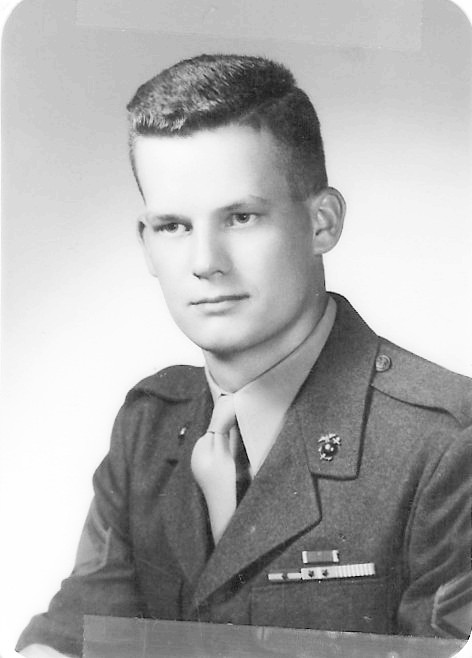
George H. McMasterBrandon, Florida- "No one is prepared for the mental and physical strain that is experienced immediately upon arriving at the scene, regardless of the training he or she has received.... The newness of war disappeared very quickly once we saw our first casualties, both friend and foe, and set our mind to the fact that our old life was over and we had entered a new era." - George McMaster
|
||||||||||||||||
Memoir Contents:
Pre-MilitaryMy name is George H. McMaster. I was born on June 22, 1930 (a Depression baby) in Chicago, Illinois, the son of Henry L. and May F. Dixon McMaster. Father was born May 19, 1903 in Kilmaster, Michigan, a lumber camp that no longer exists. Mother was born on March 13, 1908 on a farm near Portage LaPrairie, Manitoba, Canada. Father was a long distance truck driver (owner and operator) who died on February 22, 1998 at Ft. Atkinson, Wisconsin. Mother was a homemaker and she is still living in Ft. Atkinson. I have two sisters, Irene and Margaret, both younger than me. I attended Stone School in Chicago, Illinois, graduating from eighth grade in 1944, and attended Senn High School in Chicago, graduating in 1948. I continued on the same year at Wright Junior College, also in Chicago, for one year, 1948-1949. At the age of 12, I joined our church Boy Scout troop, participating in parades and other patriotic events during the war. I enjoyed the experience, the association with others, the limited discipline enforced during meetings, offices I was elected to and the responsibilities associated with them, and the weekend camping and scout activities in outdoor living. While in grade and high school, I worked part-time in a machine shop as a machinist assistant. I also worked at the National Tea Company and in a grocery store as stock clerk and produce manager. In the summers of 1942 to 1947, I assisted my Uncle Norris Forsythe in his dairy farm operations at New Bern, North Carolina. World War II was going on while I was growing up. I had two uncles on my father's side, Art and Clint McMaster, who served in the Army during the war. Two uncles on my mother's side, Hough and Jack Dixon, were in the Royal Canadian Army and Air Force, respectively. All survived the war. I remember student activities in USO programs, sending letters and packages to service men, victory gardens, and war bond drives. I participated in these student activities, plus was a member of the high school ROTC program for four years. I held the rank of Master Sergeant when I graduated. Joining UpUnited States victories during World War II built up a tremendous amount of pride and loyalty in a teenager like myself, and my training for four years of high school ROTC and the close relationship with regular military personnel assigned to this program increased my interest in joining the military as soon as it was practical. I also planned to attend junior college after high school because I felt that continued education would be a necessity if I intended to do something with my life besides driving a truck or hard labor like so many members of my family and friends. The Reserves sounded like an obvious choice since I would remain in my home area, and I could continue my part-time job while attending school. During the war I was always impressed with the news reports made on the conduct of the Marine Corps, beginning with their defense of Wake Island, the landings and action on Guadalcanal, and all other campaigns during the remainder of the war. My uncle in North Carolina had constructed several cottages for rent to Marines and their families who were stationed at the Marine Corps Air Station, Cherry Point, North Carolina, just down the road from the farm. New Bern, of course, was an excellent liberty town and my summer months during the 1942 to 1947 period brought me into close contact with a large number of Marines of all ranks and positions. Many were kind enough to take me on tours of the base and simply show me around. Needless to say, I was impressed with their attitude, appearance, overall bearing, and esprit de corps, so I decided it would be the Marine Corps, if they would take me. I never regretted my decision. None of my friends joined with me. They thought I was crazy. Since I was still 17 and required my parents' consent, I waited for my father to leave on one of his long distance runs and conned my mother into signing the enlistment papers, assuring her that I would not have to go away. World War II was over and we had no one else to fight. Wishful thinking. When my father returned a couple of weeks later and found out, he was not a happy camper, but finally said afterward that it was my neck and I would have to live with it. I enlisted in the active Marine Corps Reserve on March 18, 1948, in Chicago Illinois, for two years. I was assigned to Baker Company (Co. B), 9th Infantry Battalion, Evanston, Illinois, with the rank of private. Boot camp was not required, but we were expected to attend all monthly training meetings and two weeks of summer training at an assigned Marine Corps or Naval Base. If we were absent more than three times without acceptable excuse, we were transferred to inactive status and our draft board was notified. I remained in the Reserves for two years, then re-enlisted on March 18, 1950, for six years. Baker Company was organized as a standard Marine Corps infantry company. Our officers and most of the NCOs were all veterans of World War II and were, for the most part, combat veterans. That meant no BS during training periods. We were fortunate in having our own indoor facilities that were located adjacent to a public golf course and forest preserve. These open spaces gave us the opportunity to exercise and drill without too much public distraction. Close order drill, field tactics, preparations of defense positions, hand to hand combat, etc., were performed outside when weather permitted. Indoor training included training films on various subjects such as map reading, combat footage of World War II actions, field hygiene, first aid, etc., with emphasis on weapons instruction, Marine Corps history, inspections, written examinations, etc. My years as a member of my high school ROTC paid off since our regular army instructors had drilled most of these subjects into our heads on a daily basis. Summer camp of 1948 was at Camp Lejeune, North Carolina, home of the 2nd Marine Division. Most of our time was spent in field training with regular Marines, amphibious landings, live firing on the firing range with all weapons in use at that time, inspections, and a formal parade thrown in. The summer camp of 1949 was at the Naval Amphibious Training Base, Little Creek, Virginia. Training there was similar to that received the previous year at Lejeune, except we boarded a troop transport at the Norfolk Naval Base and spent several days at landing practice, and live firing on the rifle range and night assault practices. Pleasant memories of liberty at Virginia Beach remain in my mind. The summer of 1950, I returned to Camp Lejeune. Training was basically the same as before, except additional time was spent on the rifle range. There was no cold weather training given at any time. Growing up in the North--Illinois, Wisconsin, and Manitoba, Canada, did help. I had just changed civilian jobs. After completing one year at Wright Junior College in Chicago, I was still working part-time at National Tea Company and had no idea as to what I was going to do career-wise, etc. I thought that perhaps a review of job opportunities might be in order. I could always go back to school if nothing materialized. As luck would have it, my next door neighbor was a secretary for a large mining and fertilizer manufacturing company headquartered in downtown Chicago. She suggested that, if I was interested, I should call and make an appointment to have an interview with the personnel manager. She knew of an opening in the service department, thought it might be interesting, and felt that I would qualify. I called, made an appointment, filled out the normal employment forms, had the interview, and got the job. I still think to this day that my neighbor put in a good word for me since there were a number of applicants for the job. I quit National Tea and joined International Minerals and Chemical Corporation full time as a mail clerk delivering mail to the various departments and running errands around town. My starting salary was $125.00 a month. In today's terms, that doesn't sound like much, but it was not too bad back in 1949 when jobs were scarce. During this time I was able to observe the various functions of corporate activities and became acquainted with practically everyone who was employed there, including most of the top executives. My interest started to focus on the Traffic Department. Since their responsibilities centered on the movement of raw materials and finished product, the department required close association with railroads, airlines, and trucking and steamship companies. This type of department is generally called a Logistics Department today. In addition, the department employees seemed to have more fun than the rest. The Accounting Department was the other alternative, since I had no desire to be a salesman. Accounting appeared to be quite boring and since this was pre-computer days, most work was done by hand. In January of 1950, an opening developed in the Traffic Department and I was asked by the Corporate Traffic Manager, E. Landis, if I would be interested in joining his department as clerk/trainee. Naturally I accepted, since it also meant a $25.00 per month increase in salary. I was also ready to do something else besides deliver mail. My duties consisted primarily of filing claims against freight carriers for loss and damage, auditing freight bills, and the filing of supplements to update freight rate tariffs, of which we had an extensive library. Miscellaneous other assignments were given to me by members of the department. Everyone knew that I was a member of the active reserves, but this created no problems with the company or my boss since there were several other employees who were in the National Guard and Navy/Marine Corps reserve. My two weeks of summer camp was not counted as vacation, nor did it cause loss of pay. By law, they couldn't do anything about it anyway. War Breaks OutI was at Camp Lejeune, North Carolina, June, 1950, when the North Koreans attacked South Korea. Our company was assembled on the second floor of our barracks and our company commander, Captain T. Burns, made the announcement that the North Koreans had invaded South Korea early that morning, but that very little information was available at that time. He indicated that it was a very serious situation and that we all could be affected. He said that additional information would be passed on as it was received and authenticated. The scuttlebutt was unbelievable. In fact, most of the guys hadn't the slightest idea where Korea was. I personally knew very little about Korea except its location in relation to Japan and that a Marine Battalion had captured the forts in the Inchon area around 1870 or '71 in reprisal for treatment of American merchant seamen captured at sea. The Japanese had occupied Korea for many years, building most of its industrial complex in the northern areas. I also knew about the Russian declaration of war against Japan near the end of World War II and their invasion of Korea to reap the spoils at no cost to themselves. I was aware that North Korea was industrial and that South Korea was agricultural. Nothing was known of the people, their philosophies, etc. I recall going to the base library and reviewing what limited information they had on the country. I passed most of this information on to some of the members of the company who were interested. I did not particularly want to go to war, but I knew that I was responsible to fulfill my commitment to my service and country. I knew that if I had not been a member of the reserve, I would probably have been drafted sometime into the Army, and who knows what would have happened then. Just having celebrated my 20th birthday and still young enough to be reckless with my own neck, plus the time spent studying and participating in military activities, science, and history, I was ready to go. We didn't think we were going home from Lejeune, but finally returned to Chicago after our two weeks training was completed. Upon arrival at our reserve training center, we were advised not to leave town for any extended period, but if we had to, call in and advise where we could be reached. When I returned to work from camp in late June 1950, everyone was well aware of the war in Korea and the growing US participation in it. My boss simply asked me if I might have to go. I said probably, but had no idea when. Orders were issued in late July to report for active duty on August 8, 1950, destination unknown, but it didn't take an MIT graduate to figure out where. During the period of March, 1949 to August, 1950, I received the following promotions. I was promoted to PFC on January 03, 1949, to Corporal on July 01, 1949, and to Sergeant on August 08, 1950. I advised my boss of my activation orders and dates. He told me that I would have my job when I got back. In a way I was sorry to leave since I enjoyed the work very much and had made plans to enroll in the College of Advanced Traffic in Chicago that fall. The college had a two-year course in Industrial Transportation and Interstate Commerce Commission law. Still, since my initial enlistment in the reserves, I had known that it was always a possibility that this could happen, so it was a matter of making the most of it. In the Reserves we were subjected to intense field training, discipline, weapons and live firing--all of which were essential to field service in any war. Besides, I was convinced of my own invincibility. I followed the news very closely. The "conflict" in Korea was the main topic of radio and newspapers, especially as the US commitment increased on a daily basis. Television was still in its infancy and we did not own one. The news covered mostly the defeats suffered by the Army and the rout of South Korean forces down to the Pusan Perimeter. Using effective propaganda techniques, the US news media tried to make it sound better than it really was. However, we were getting the hell beat out of us and that was it. My family, of course, took the news of my leaving with natural concern. My younger sisters and mother were visibly upset initially, but after a few days they got over it. My dad gave me whatever support he could and did not mention the "I told you so." During the last few days at home, I spent as much time as possible with my family. Since I had no full-time girlfriend, I was not bothered by outside interference. There was little to do to get ready to leave. As I mentioned, my boss and I had our discussion and my leave of absence was established with the company. I said goodbye to my co-workers around the 4th or 5th of August. I was not married (thank God) and had nothing to put into storage. Nor did I own a car. The fellows I grew up with in our neighborhood threw a going away party, which included my father. Everyone woke up the next morning with severe headaches, so we must have had a good time. Mom washed and ironed all my uniforms and clothing and we packed my sea bag, which was delivered and tagged at our reserve training facility the morning of August 8, 1950. We reported early that evening. My family, as well as families of all other members, were present when we were ordered to fall in and official orders were read to all hands, advising us that we would board buses parked outside for transit to Union Station, downtown Chicago. From there a special troop train would take my Reserve Battalion en masse to Camp Pendleton, California. Once there, we would be further processed and assigned to our new units. The names of several of our newest members were called and they were advised that since they had less than one year in the reserve, they would be immediately assigned to San Diego, California, for boot camp upon our arrival at Camp Pendleton. This was the only time during the first stages of our going active that boot camp was mentioned while I was present. The rest of us were never asked about or had a choice to request basic boot camp training. We said our goodbyes and boarded the buses for the train station. At this time our company, like most reserve units across the country, was at approximately two-thirds strength since interest in the military had declined and many of the older veterans had transferred to the inactive reserves or had just gotten out. The bus ride was rather quiet and only took 45 minutes or so to reach the train station. The full impact of our situation had finally reached home in most of our minds. We boarded the train and were assigned seats and berths. We were on Pullman cars, which were quite comfortable. After all the other units of the battalion arrived and boarded, together with our sea bags and other gear which were placed in baggage cars, the train pulled out, heading southwest. We were allowed to bring one carry-on bag. It contained field dungarees, underwear, shaving gear, reading material, and in most cases, some spirits in case of snakebite. One officer who was assigned to each car to maintain order and conduct training classes while en route, it was the senior NCO in each car who ran things. Most of the officers had state rooms and/or compartments, the size of which went according to rank. They were located in other sections of the train and we seldom saw them. The trip took four days, which was longer than the distance would usually take. Since we were a special train, we were often placed on a siding while a scheduled freight or passenger train passed us. This was not too bad. We were allowed to get off, stretch our legs, and talk to the locals if we were in a town. The people were very friendly, supportive, and included many veterans from World War II, who wished us luck. The Salvation Army, American Legion, VFW, and others came out with drinks and snacks if we spent a little time in one area. The most enterprising of the group could always find a way into town and come back with some beer or stronger beverages. I was assigned Sergeant of the Guard the second night out, which included the whole train. I had no problems to speak of, except I couldn't decide who made the most noise--officers or enlisted men. It was understood that moderate drinking was allowed, but if anyone got out of line it was stopped, so everyone policed themselves. Dining cars provided three great meals per day. In short, we had a memorable train ride to the West Coast. Since most of us had never been past the Mississippi River, we enjoyed the change of scenery. We arrived at Camp Pendleton the morning of August 12. We bid farewell to the boys going to boot camp, were assigned to barracks, collected our sea bags, and settled in for a short stay. The next few days were spent taking physical examinations, getting additional shots, being issued new ID cards, signing up for GI insurance, arranging for allotments to be sent home, the issuing of additional clothes, cleaning barracks, going to the mess hall for meals, and waiting for something to happen. Since I had recently been promoted to sergeant, I had the roll of delegating and observing. I was not a worker, but this changed drastically after we arrived in Korea. Camp Pendleton was a mad house. During the physical exams, If we were warm under the arm pits, we were assigned to a combat unit. On August 17, a number of reserve units from various parts of the country, including ours, were assembled on one of the parade grounds and each individual present was called by name and advised to report to a posted assembly area in the vicinity. My name and several others from our Chicago battalion were called fairly early and upon reporting to the officer in charge, we were instructed to return to our barracks, gather all of our personal belongings, pack, and report back in one hour. We were being transferred to the 7th Marine Regiment which was forming at Tent Camp II. Upon arriving at Tent Camp II, we were met and welcomed by a senior NCO. Our personnel records and other materials had been sent on ahead, so we were already on file at Regimental Headquarters. Our names were called again and several others and I were assigned to Dog Company, 2nd Battalion. We reported to Company Headquarters and I was assigned as squad leader, 3rd Rifle Platoon. Our Platoon Leader was a 2nd Lieutenant and a reservist like myself, but the platoon sergeant was a regular Marine. He was a great help in getting settled in. Initially my squad consisted of only eight men. Half were regulars and the remainder were reservists who had just arrived. The squad was eventually brought up to full strength (13 men broken down into three four-man fire teams, plus myself). I assigned the regulars as fire team leaders--two corporals and one PFC, even though the PFC would be over a reserve corporal in his fire team. This was approved by my platoon leader and sergeant. Everyone got along and worked together with no problems. The next twelve days were spent being issued weapons, field equipment, field training, and live firing. All excess personal clothing, etc. was packed and shipped home. We were allowed one sea bag, which was stuffed with as much clothing and other items as we thought necessary, plus the usual extra clothing and gear that was normally carried in our field transport packs. Evenings, if we were not out in the field and sleeping on the ground, were spent cleaning, walking the half mile to the outdoor theater, picking up our allotted two cans of beer for 25 cents, and trying to beat the sunset while taking an outdoor shower. If we were still in the shower when the sun went down, it seemed like a 50-degree drop in temperature in a matter of seconds. It got cold, even though this was still August. But everything in California is strange. Thinking back over the years, I think the chow was about as bad at Tent Camp II as anywhere I served. But taking into consideration the camp had just reopened after closing at the end of World War II and the Regiment was just forming, I suppose they did the best they could. On August 29, 1950, we were instructed to pack all gear and be ready that afternoon to board trucks and buses for San Diego Naval Base. I was able to call home and speak to my mother for a few minutes to let her know what we were doing, and with a lump in my throat, I said goodbye. We were transported late that afternoon to San Diego and immediately boarded ship. Korea-boundThe ship was the USS Thomas Jefferson (APA 30), a Navy Troop Transport. We sailed the evening of August 30, 1950. There was no fanfare, bands, or ladies waving their handkerchiefs as we pulled away from the dock. After moving down the channel and heading out to sea, we bid farewell to the lights of San Diego and the USA. Unfortunately, many on board would never come home, but we didn't know that yet. The ship was built and commissioned during World War II. It was single-stacked and was a troop transport in all respects. The men on board were mostly Marines besides the normal Navy crew. They were jammed in like sardines in various troop compartments throughout the ship. I have no idea how many men were on board, but there was very little room to move around below decks. There were a number of Navy nurses on board being transferred to various naval hospitals in Japan, but we rarely saw them. In addition to the men and ladies on board, there were Jeeps, trailers, cases, and boxes of miscellaneous gear, ammunition, rations, etc.--anything that could be stowed on board that belonged to the various companies, battalion, and attached units. Three meals a day were served. Everyone had a colored mess card to signify what time of the day they were allowed to enter the mess hall. Eating was accomplished by standing up at raised mess tables since room was at a premium. Food was fairly good, but not too plentiful. This was where I really started to lose my baby fat. It was fortunate that I had a bottom bunk with a small open space between the deck and my canvas bed. I was able to stow my sea bag and field equipment there and not have to sleep with it. There were four additional bunks above me and those sleeping there did so with their belongings around them. There was just enough room between the rows of bunks to move in and out, one person at a time. Regardless of the crowded conditions, the ship was clean. Of course, we kept it that way with morning wash downs and head cleaning. The one thing missing was the daily shower. Water was rationed and we had one shower during the entire period onboard the Jefferson. If we started to smell, no one noticed since we were all on the same boat together. I had been on board a similar ship for several days the year before at Little Creek, Virginia, so I felt a little at home on the Jefferson, although it was a little more crowded. My sea legs developed quickly and I only felt a little light-headed the first day out. I had no seasickness. There were, however, several who were sick for several days and a few who were sick the whole trip over. Motion sickness affected everyone in different ways. Many of us adjusted quickly. Others required more time. Some never adjusted. It is best to know one's limitations when traveling or one can have a miserable time. For those who get sick easily, traveling by sea, air, or car is not the best thing to do. Instead, find alternative methods or not travel at all. One should not join the Navy or Marine Corps if he or she gets sea sick easily. During our initial days at sea after leaving San Diego, the company was reorganized and I was transferred from the rifle platoon to the machine gun platoon and assigned as squad leader, second squad, third section. My section leader was Sgt. R.J. Reller, a regular. My new eight-man squad was composed of reservists from different parts of the country. Except for visual contact off and on during our days at Tent Camp II, we were not too well acquainted. Corporal R.E. Hael, who had been a member of my reserve company back home and we knew each other, was one of the new men assigned to my squad. I immediately made him my gunner and number two man. My main duty was to form the squad into a workable unit as quickly as possible and to assign duties and responsibilities to each member so he knew what his job was and what was expected of him. We all knew what a machine gun was and how to operate one, but most of us were unfamiliar with the finer details. Our platoon leader, 1st Lt. W.F. Goggin, arranged for us to conduct machine gun school in a partially empty storage room on a lower deck of the ship. We spent eight to ten hours a day detail stripping and reassembling our new weapon and learning everything the experienced members of the platoon could teach us during most of the two-week period. We reached the point where everyone could name all the parts, how they operated, and field strip the gun and put it back together, blindfolded. On two occasions we practiced live firing off the stern of the ship at empty crates the sailors threw overboard for target practice. Our platoon sergeant, S/Sgt. J. O'Neill, a combat veteran of World War II, was a master at the machine gun and a great help to all of us. One event that took place when we had been at sea for about ten days was that the Navy crew put on a show for us one night. They fired one of the ship's 5-inch guns with a star shell. Once the shell exploded and exposed the flare, all the ship's anti-aircraft guns--20 and 40mm--opened fire. It was quite a sight watching hundreds of tracer rounds going toward the burning flare. It reminded me of the 4th of July back home. We also received several more inoculations during a two-day time period. This did not help the sea sickness situation very much. Standing in line in a companionway outside of sickbay, with little ventilation and the odor of the serum hanging in the air, made everyone queasy. What the shots were for, we never found out, but I suppose they had a purpose. I would bump into a member of the old reserve company periodically who had been assigned to other units, both rifle companies and artillery batteries. There were about ten members of my original reserve company assigned to Dog Company, 7th Marines, who were serving in the various platoons. Naturally we saw each other often. The sea was fairly rough the whole trip over. When out on deck, one could observe being down in the trough of a wave and the peak would tower over the top of the ship's mast. We had a few nice days when it was reasonably calm. One of those days was a Sunday, so church services were held on the open deck with the sun shining and blue sky and white fleecy clouds overhead. We hit a typhoon south of Japan and it got extremely rough for about two days. All hatches were locked shut. No one was allowed out on deck for any purpose. Only cold food, sandwiches, and such were served. Many on board could not eat at all and seasickness was everywhere. Almost everyone stayed in their bunks or stood around holding on for dear life. It was not a pleasant experience. There was very little in the way of entertainment on board the Jefferson, and none on the Bayfield. At night, weather permitting, a canvas movie screen was rigged on the after deck and if we could find room, we could watch a movie. Reading material such as books, magazines, etc. were limited. Card games, of course, went on during what free time we had. In the evening the mess tables were dropped and we could actually sit down and write a letter. I think I wrote home almost every evening, even if I had nothing to say. Since there was no mail service in the middle of the Pacific Ocean, my family back home received a pile of mail the first time. We did not go directly to Korea. We arrived in Kobe, Japan, on September 14, 1950, after 15 days at sea. It was raining and generally miserable, but it was exciting to see and be in a new country and to see dry land. It was, however, somewhat sobering to think that just five years earlier, we were at war with these people, each one trying to kill the other. Japanese laborers came on board and started to make repairs and do other work on the ship, including attaching water and power lines. Water restrictions were lifted and we could at last get cleaned up. We were allowed to go ashore for a few hours and look around. When we left the ship and started to walk on dry land, we all had a problem initially with keeping our balance. We were so accustomed to the roll and motion of the ship it was difficult at first to walk on something solid. The locals probably thought we had been drinking beer all day. The city by that time had, for the most part, been rebuilt and there was very little evidence that we could see as to its virtual destruction during World War II. The people were friendly and we enjoyed just walking around. I guess we were too new to the area to get into trouble. Upon returning to the ship a couple of hours later, we were instructed to form a working party to help combat load a supply ship which was docked near us. We had eight hours of work and then eight hours off. Combat loading consisted of loading nonessential items in the lower holds and critical materials such as ammunition, rations, and medical supplies in the upper sections so they could be offloaded first. We did this for about a day and a half, then our machine gun section (two squads), one rifle, headquarters and weapons platoons of Dog Company were transferred to the USS Bayfield. The remainder of the company stayed on board the Jefferson. Initially rumors had us staying in Japan for a couple of weeks of further training, but the Bayfield sailed from Kobe to Korea on September 17 and the Jefferson left the next day. So much for rumors or, as we say, scuttlebutt. The Bayfield was an older Navy troop transport which had participated in the Normandy landing and was jammed to the overheads. There was no room for us below in the troop compartments, so we stayed and slept out on deck. Naturally it drizzled or rained most of the trip, so we spent most of our time trying to stay dry. We were not too successful. We arrived at Inchon, Korea, on the afternoon of September 21, 1950. Prior to leaving the Bayfield via cargo nets into Landing Craft Vehicle Personnel (LCVP's), we were issued field rations (canned goods) and ammunition. A sobering addition to the above were the grave registration cards given to us. They required the normal information--name, rank, serial number, unit, and next of kin. Reading further were lines that included cemetery, section, lot, row, and grave number. Welcome to the real world. Machine Gun SectionWe landed on Wolmi-do Island, Inchon harbor, loaded down with full field transport packs, weapons, rations, and a full issue of ammunition. I was personally armed with a light weight, six-pound, semi-automatic .30 caliber M-1 carbine which had been developed during World War II. It had a 15-round magazine and could fire one round each time the trigger was pulled, or a semi-automatic weapon. It had a muzzle velocity of approximately 2,000 feet per second, and had an effective range of about 300 yards. The weapon, in my opinion, was unsuitable for infantry troops. It was too light to use as a club in hand to hand combat, did not have the stopping power required to bring down the bad guys on the spot, and did not have an acceptable range. It had a bad habit of jamming when fired rapidly, and had to be kept completely clean at all times in order to function properly--something that was next to impossible under combat conditions. As time went by, we began re-arming our carbine-carrying men with M-1 Garand rifles and Browning Automatic Rifles (BAR) as they became available through casualties or other sources. These weapons were standard infantry arms. We were all trained to use them. They fired the same type of ammunition as our machine gun and were much more reliable in combat. They had more stopping power, were heavier if we needed a good club, and continued to operate even when they became dirty. They were, of course, heavier to carry, but the additional security and fire power was well worth it. Along with the carbine that I first carried when I got to Korea, I carried four extra magazines, two in a magazine pouch attached to my pistol belt and two in my pockets, plus a box of 50 cartridges in my pack. I also had a bayonet for the carbine, a K-Bar knife, and initially had two hand grenades. I had more later on and an additional can of 300 rounds of machine gun ammunition. Our personal arms would change as our length of combat service lengthened and as we, unfortunately, became aware of deficiencies and/or needs under combat conditions of our original personal weapons. Once ashore, we were also issued two additional hand grenades each, which we put in our pockets or anyplace else where we could find room. We picked up any additional ammunition if we wanted it. We then boarded trucks when it was nearly dark and were transported a short distance inland to a point approximately two miles south of Kimpo Air Field, where we settled in for a long night march. I believe the airfield had been secured by that time. Our objective was to move to the city of Seoul and assist in its recapture. I do not recall even seeing the airfield or any activity, in or out. I observed no enemy except dead ones and several destroyed Russian T-34 tanks from the time we landed at Inchon on September 21 until we made our initial assault at Seoul on the morning of September 26. I observed the first Allied dead on this trip. We passed four bodies covered with tarpaulin. Their feet were sticking out and they were wearing US Army combat boots. They could have been US Army personnel, South Koreans, or even North Koreans wearing captured boots. But they were not Marines, since at that time we all wore canvas leggings. From what we could see of Inchon itself in the dark, there was destruction of buildings and the movement of supplies, engineers, other service personnel and their vehicles moving in every direction. I'm not sure how far we hiked that night--it was several miles at least, but finally we stopped and took up positions overlooking a large valley. We dug an emplacement for our machine gun and then dug foxholes for ourselves. Watches of 50 percent were set, but I don't think anyone slept much that night since we were all uptight and rather excited with our new surroundings. In the distance we could see the red tracers of the machine guns of the 5th Marines ahead of us and occasionally green tracers fired back at them from the North Koreans. Periodically the sky to the Southwest would light up as the battleship Missouri and other large ships fired their guns at inland targets. A few seconds later we could actually see the large shells passing overhead. Shortly thereafter, the sky towards the Northeast lit up as the rounds landed and exploded. Sometimes we could hear the rumble off in the distance, depending on the strength and direction of the wind. The next morning, the 22nd, as soon as dawn started to appear, we were up and waited for the remainder of the Company who had remained on board the Jefferson. When they arrived later that morning, the battalion was complete and we proceeded by foot northeast towards the Han River and Seoul, the capitol of South Korea. During the day we hiked along trails, through rice paddies in the valley, and occasionally passed bodies of North Koreans and South Korean civilians killed during the fighting in that area a day or so earlier. By whom we didn't know or bother to find out, nor did we have time to stand around and gape at them. Their bodies had been collected and were along the side of the road or in the fields, awaiting burial. I remember our first full day in Korea was hot. It was around 90 degrees and dry. Our hike the night before showed that we were not in the best physical condition after all that time at sea. Everyone was stiff and sore and needed to get their leg muscles back in shape. But it faded after a few miles. During one break I suddenly felt hungry, as did others, since our last meal had been lunch on the Bayfield the day before. With the sudden departure from the ship, excitement of landing, and our first night in foxholes, no one thought of eating. We broke out our rations, since nothing else was available. I opened a can of something--I can't remember what, and started to eat it cold. It tasted like something that came out of the rear end of a cow, but it was food approved by the US government, so we ate it together with some crackers and grape jam from another can. We learned in a very short period of time that these canned rations tasted much better when they were warmed over a fire. We learned how to better prepare them using a little ingenuity. Water was a problem at first. We were advised that drinking water would be available by tank trailer on a daily basis. If a delay occurred, we could drink the water found in wells in villages and farms, but were to use the water purification tablets with we were issued--enough for two days. The first water delivery was made approximately eight days after our landing at Inchon and our involvement at Seoul. During the dry period we obtained drinking water from whatever source was available--wells, streams, etc., and no one to my knowledge got sick. Remember, it was very warm and dusty during the day and a person could get very thirsty. So much for government logistics. If I remember correctly, we spent our second night outside a small village, still west of the Han River. A few civilians ventured near our positions, but were told through sign language to stay away. This was still unknown territory to us and when we dug in for the night, we prepared a 360-degree defense perimeter. In short, we didn't trust anyone. My platoon did not suffer any casualties during our movement from Inchon to Seoul until the 23rd, when two men were wounded on our second full day in Korea. It was another warm, dry day as we marched northeast through some hilly country which included the usual rice paddies here and there. I can't really remember too much about the day itself except one event that shattered our peaceful hike. We stopped early afternoon for a short break and before we knew it, a mortar shell came in on us without warning and exploded. It hit close, since there was little warning of its arrival. Two men were wounded and the rest of us were scared to death. The wounded were helped by our Navy corpsmen and evacuated. I believe they were members of one of the rifle platoons, but I don't recall their names. It was either a short 80mm round from one of our units or a 140mm from the North Koreans. The more I think about it, it had to be one of our own since it landed right in the middle of us. If it had been North Korean, they would have plastered us after seeing the first shell land on target. Whatever it was, it was right on. We had experienced our first casualties and never found out who actually caused it. That same day, we saw our first dead Marines. They were wrapped in their ponchos and were on a Jeep going back towards Inchon. They were probably from the 5th Marine Regiment, since they were advancing towards Seoul in front of us. Frankly, I had very little feeling towards the dead North Koreans, or for that matter, the dead South Korean civilians we saw. Seeing the dead Marines only reinforced the feeling and knowledge that it could happen to any of us at any time. I felt sadness for the families back home when they received the telegrams advising them that their sons, husbands, or loved ones had died. My position as squad leader had been established in the active reserve before the war and continued on when called to active duty and joining my rifle company. I had been active in this area for so long that being in charge of a group of men seemed natural. I enjoyed the responsibilities of my position and working with other men. There was a feeling of being looked upon for leadership and setting an example that helped me personally in getting through some rough times simply because I didn't have time to worry about myself, but had the welfare of others to think about. Initially I was uptight and, frankly, was scared, especially after seeing my first dead and our two wounded men. But so was everyone else, including the old-timers from World War II. Those who had been in that earlier war described their experiences during the island hopping campaigns in the South Pacific when they were generally in action, or in the immediate area of action, for just a few days, followed by a prolonged period of rest and training. Action was heavy and brutal, but they knew that it would only be for a short duration. Most of the time they were never out of sight of Navy ships or their supporting gun fire. We were in a different war. Korea was a completely different story. We were in the hills and later mountains where ships and naval gunfire no longer existed. Our support came completely by tanks, air, and our own artillery. Days became weeks. There was no rotation or leave, R&R was unheard of, and there was very little rest. It became one hill after another. If one left the company, it was because of wounds or death. We were now in the same situation that our troops had experienced in Europe during World War II. Fortunately, I was able to concern myself with the other members of my squad and not so much on myself, but I still watched my own butt when necessary. The third day, the 24th, we crossed the Han River on armored amtracs. The 5th Marines had preceded us, so the crossing was unopposed. We were traveling a little faster now since we dropped some of our excess baggage. We cut down from a full field transport pack to single field packs and carried nothing but the basic necessities. Rations had finally caught up with us and we were now receiving a regular daily issue of one box of C-rations per man. We had learned to eat whenever we had a chance and not wait for infrequent breaks and starting small smokeless fires--if we could find any dry wood to heat the rations. Smokeless fires could be made by using small pieces of dry wood, such as twigs, but they had to be dry and the fire small. People have a tendency to build large fires when a very small one will do the trick. One could heat a can of rations on a very small fire that could be put out with his open hand. The 25th or fourth full day, we were on our own. The 5th Marine Regiment had changed direction and were attacking Seoul from the west. Our regiment was assigned to attack from the north and cut off any North Koreans trying to escape. This was probably the hardest hike we experienced to date. It was hot, dusty, and approximately 15 miles long along the Kaesong-Seoul highway (or dirt road). The terrain was, for the most part, hilly with scrub vegetation and some occasional woods which could be used by both sides, if either was lying down. The valleys were mostly rice paddies, water and mud, but we never spent the night in low areas. It was the high ground--and the higher the better. All roads, which were dirt, were located in the valleys. We stayed on the foot paths or trails for the most part and had to be very careful when walking anywhere due to mines. We were constantly on the move and usually spent the night in foxholes. The days of trench and bunker warfare were still in the future. Those nights when we didn't dig in--and they were few--we simply laid down in whatever ditch or low spot in the ground that we could find. To my knowledge, we were not harassed by snipers during our advance to Seoul, and except for the one mortar round landing on us on September 23, the hike was uneventful. We encountered no North Koreans during the day, but knew they were not too far away. Dog Company was assigned to establish a road block just a couple of miles northwest of Seoul and to cut off any North Koreans coming our way. It was a quiet night. Nothing happened, but once again, we got very little sleep. We did not see any live enemy until we reached the northern suburbs of Seoul on September 26, which was when we finally considered ourselves "on the front line." September 26/27, 1950Captain Richard R. Breen was our original company commander at Camp Pendleton, California, and was in command of our company in Korea until he was wounded during the first day's action in Seoul and was evacuated the next day. We never saw him again. He was later awarded the Navy Cross for his actions that day in Seoul. 1st Lieutenant William H. Goodman was our executive officer. He was slightly wounded in Seoul on the 26th, but assumed command of the company when Captain Breen was evacuated. He was wounded again the night of the 28th when we came under a heavy mortar attack by the North Koreans north of Seoul. 1st Lieutenant Paul B. Startwell assumed the command of the 3rd Rifle Platoon from the reserve 2nd Lieutenant whom I had originally been assigned as a squad leader while we were still at Camp Pendleton. He was also wounded in Seoul on the 26th and was evacuated. 1st Lieutenant William F. Goggin was platoon leader of the Machine Gun Platoon and I was assigned to his group on board the Jefferson shortly after we sailed from San Diego. Lieutenant Goggin was also wounded in Seoul on the 26th, and evacuated. He returned a few days later. He was wounded a second time just south of Koto-ri, North Korea on November 9, was evacuated, and we never saw or heard from him again. Other company officers were 1st Lieutenant Paul Mullaney, 1st Platoon, wounded September 26 in Seoul and evacuated; 1st Lieutenant Edward H. Seeburger, 2nd Platoon Leader; and 1st Lieutenant James D. Hammond, Mortar Platoon. All the officers were well-trained professionals who were well thought of by all. We were sorry to see them leave one by one under the harsh circumstances that we all experienced, but they were the ones who told us clearly before we landed at Inchon that some of us would be hurt and some probably killed, so get used to the idea. The 26th was a hard day on not only the officers, but also the enlisted men. My personal "baptism of fire" was on that day. Our company was ordered to advance south down the Kaesong Highway to the northern section of Seoul and make contact with the 5th Marines who had entered the city from the west and were somewhere on our right flank. MacArthur's headquarters had announced (prematurely, as usual) to make a big show that Seoul had been secured and all was well. We were advised of this and thought we would walk right in. We started out about 0630 and made good progress except for a blown-out bridge and a number of mines in and around the bridge. Once we were through this area, all was relatively peaceful. South Korean civilians were out in large numbers as we passed through a small village just north of the city. They were on both sides of the road, cheering, waving flags, and having a grand old time. It felt rather embarrassing, since I didn't think that we had done that much in their liberation. Our problem with all these civilians, we realized later, was that we were unable to send out flanking parties to protect our flanks--a cardinal sin in troop movement when in enemy territory. This never happened again during future operations. The company proceeded south to a cut or pass in the road between two hills. There we could see the city of Seoul and "Independence Gate." From the cut on the left side was a narrow band of thatched native homes and on the right were additional homes and I believe a school or office under construction. A little further down on the right side was a large red brick complex known as the Sudaemum Prison. This structure contained high brick walls, high guard towers, and firing ports at lower levels, placed there presumably to defend against outside ground attacks. It was quite a sight. We found out later that it had been used by the Japanese during their occupation of the area to hold POWs and others, many of whom were tortured and executed. It was not a happy looking place. There was considerable destruction in evidence. Part of the front wall of the prison had been destroyed by bombs and/or artillery fire. Some of the surrounding homes had been burned out and there were knocked out vehicles along the road leading into town. At this time it was noticed by all that the civilians had disappeared. Everything became rather quiet. The word was passed around to keep our eyes open. When we hit the pass and could look down into the city, Captain Breen placed the 2nd platoon (Lt. Seeburger) in the lead, followed by the 3rd platoon (Lt. Sartwell). Captain Breen and his headquarters group followed next, then our machine gun platoon (Lt. Goggin), mortar platoon (Lt. Hammond) and the 1st platoon (Lt. Mullaney), bringing up the rear. There were several other men with us, such as a Navy corpsman, an artillery spotter and his radio operator, and a nut case Navy seaman who had jumped ship (or tugboat) in Inchon harbor and joined our company. The later said he was "bored and wanted to do something besides puffing around and pushing ships into and out of docks." He found enough clothing, some given to him by us, to at least look like a Marine, and we gave him a weapon and some ammo. The officers said nothing so he became one of us for a short time and did a good job as a rifleman. His name was Taylor. He was petrified at the thought of going back to the Navy and what they would do to him. As it turned out, he eventually returned, since the Navy did frown on its members transferring to the Marine Corps in this manner. He got back before he was listed as a deserter. We never heard what happened to him, but if he's still around, he has some tall tales to tell. As soon as we came abreast of the prison, all hell broke loose. Machine guns and small arms fire from all directions except the rear hit us. Everyone dove for cover. I was 6'4" so I had a little harder time finding a place to hide than my shorter friends, but it is amazing what a person can find when necessary. Mine was a telephone pole on the left hand side of the road. My squad was behind me up the road, spread out and ducking wherever they could. Everyone was okay, so far. Lieutenant Goggin, our platoon leader, was ahead and ordered the 2nd section forward to support the 2nd platoon. One of the squad leaders, Sgt. Dick Harris, was killed as they moved forward, and Lieutenant Goggin was wounded at the same time. At this time, the 3rd platoon (Lt. Sartwell) was ordered to attack the prison and eliminate the North Koreans firing from that compound. Our 3rd machine gun section was ordered to support the 3rd platoon and to fire into the prison and any other area forward from where we were receiving fire. The 1st machine gun section set up on the left side of the road in support of the 1st platoon (Lt. Mullaney), who was covering that side. Since my squad was on the left side of the road, we had to cross over low and on the run, one man at a time. I went first to the corner of a house just on the other side. Firing was heavy since the North Koreans knew what we were doing, but I made it all right. I heard two loud cracks just behind my back--a close call. Any number of whizzing rounds passed by and overhead during the remainder of the day, but I didn't consider them as "close calls." After a while I could determine when to duck and when to ignore them. I waved for the remainder of my squad to come over, one man at a time at staggered intervals. One of my ammo carriers, PFC Vince Faine, a little guy and fun to be with, tripped and fell into a shallow ditch, dropping his two cans of machine gun ammunition. Naturally, the North Koreans started to concentrate their fire in his direction. I yelled at him to leave the ammo and get over to us immediately, but not to lose his carbine. He made it okay, but was scared to death and had the shakes. About this time, our platoon sergeant, S/Sgt. John O'Neill, who was a little forward of us with Lieutenant Sartwell, was killed. Sartwell was wounded in both legs. We set up our machine gun to fire on the prison and into buildings around Independence Gate. While the gun was firing at these targets, the rest of the squad was spread out and formed a defense line facing the prison. With their carbines, they were to fire at anything that moved in that area, but to watch out for our own men. My main concern was the direction to which my gun was firing and the rate of firing, since we didn't have an inexhaustible supply of ammunition and didn't know how long we were going to be there. After reloading my magazines, I fired (by actual count) 37 rounds at various windows, slits, buildings, etc. Did I hit anything? Who knows. It did not take long to determine that we had walked into the North Korean main line of resistance and that they had more troops in the area than we did. We were blocked on three sides and held only the ground we had occupied that morning. We stayed there for several hours. Firing in both directions continued during the entire time. Captain Breen called for tank support, but they were unable to reach us due to the blown-out bridge we had passed that morning. While this was going on, other North Korean units moved in behind us, so we found ourselves surrounded. Colonel Litzenburg, our regimental commander, was in radio contact with Captain Breen and asked him if he could hold or if he wanted a rescue attempt to be made. Breen told him that if he could pull the company back a short way and occupy the high ground at the pass on the right side of the road, he could set up a defense perimeter and hold on. Litzenburg told him to pull back. The conversations between these two officers were passed on to us a few days after we left Seoul. Naturally, as a Sergeant I was not in direct contact with or consulted by either officer, but I was relying on information received from others who had more direct contact at company headquarters. We maintained our position outside the prison walls, firing and taking care of some of our wounded until we were ordered to pull back to the pass area that afternoon. We picked up our wounded and went back across the road to the same location that we had crossed that morning. Along the way we picked up Faine's two cans of ammunition that he had dropped. We needed them since we were starting to run low. The North Koreans were not firing as heavily as before, so we had no trouble getting back. We dropped the wounded off at an improvised aid station and set up our gun next to the road on an outcropping overlooking the city--the same area that we had seen that morning. The forward artillery observer and his radio operator, who had been with Captain Breen during most of the day, joined us. As soon as the last of our company members reached our position, he called in artillery fire on the prison and other locations where the North Koreans were located. Unfortunately he had been unable to do this earlier since we had all been too close together. It wasn't long before 105mm shells began passing over our heads and exploding in the city. It was quite a sight. I had never seen heavy shelling like that before. A shell exploded and a building disappeared. We continued to receive small arms fire, but no counter attack. The artillery firing from our side continued on during most of the night. Late that afternoon, an air drop came in and gave us a re-supply of ammunition and other supplies. We were glad to see it, since we were starting to run low on everything. There was no sleep for anyone that night but we did manage to eat some cold rations. During the night, a Navy doctor and three Jeep ambulances made it into our perimeter and removed the wounded. Our total casualties during the day were 13 killed and 27 wounded. Those killed from our platoon were S/Sgt. John O'Neil and Sgt. Richard Harris. Among the wounded were Lieutenant Goggin, PFC V. Midkiff, PFC Joe Saluzzi, PFC R. Mazerall, PFC Tony Valetta, and PFC Oscar Kessler. All deaths and injuries in our platoon occurred during the first few minutes of action, when the North Koreans caught our company in the open beside the Sudaemum Prison and our taking up positions. Of the seven officers in the company, five had been wounded. Some of the wounded eventually returned, but not many. The rest we never saw again. It was not known until the next morning, the 27th, that three men from the 1st machine gun section had been left behind during our withdrawal. They hid during the night and were picked up at first light by patrols that were sent back into the city. The patrol found that the North Koreans had left, they picked up our three lost men, and made contact with the 5th Marines. For the next few hours after dawn, we spent most of our time checking civilian refugees moving in and out of this section of the city. Those moving out, especially those of or close to military age, were searched. We captured several North Koreans dressed in civilian clothes, trying to escape. That afternoon, our company, which now numbered approximately 190 men (down from the original 235) assembled and moved a couple of miles north to a small village where we spent the night. Our participation in the recapture of Seoul was over. It was strange sitting alongside the road with my squad. No one had been hurt, but we were all tired, hungry, and dirty. The one thing that came to my mind was that I certainly felt older after our first fight than I did during the days preceding the 26th, and I knew the rest of the guys felt the same. I had spent considerable time during and after high school being involved in military training through films, lectures by veterans, and actual field experience, with the thought in the back of my mind that someday I could actually be a part of a shooting war. Once there, however, I found that the "newness" of so many things was startling. No one is prepared for the mental and physical strain that is experienced immediately upon arriving at the scene, regardless of the training he or she has received--the extra loads of ammunition, rations, and the other equipment one must carry because there are no trucks or Jeeps to do the work, the long, hot, dry marches with few breaks, very little sleep at night, eating usually on the run, and the knowledge that somewhere out in front are people who want nothing more than to try and kill us. The newness of war disappeared very quickly once we saw our first casualties, both friend and foe, and set our mind to the fact that our old life was over and we had entered a new era. After the city of Seoul had been secured or recaptured, we never entered the central part of the city. We only saw the northern edge where we had been engaged. We encountered no one famous. The VIPs were not about to come into our area. I was not wounded during the Inchon/Seoul period, and fortunately did not lose any members of my squad. We were in need of warmer clothes, since the nights were getting colder after we left Seoul and headed north to the 38th parallel. We still had only our summer field dungarees and a field jacket, but these were staring to wear out. A pair of shorts and a T-shirt didn't help much either. I'm reminded of an old Marine Corps axiom, "Maybe you oughta get more, maybe you will get more, but all you can depend on getting is what you already got." Ammunition, however, was one thing we usually had plenty of during the South Korean campaign, and we had plenty of opportunities to use it. Training always emphasized a unit of this or a unit of that. We learned quickly to carry as much as we could and forget about authorized unit size I could write a book on just what we had to learn the hard way during our initial phase in Korea. What we did learn in South Korea was certainly put to good use when we arrived in North Korea--until the real cold weather hit us. Then it was a whole new war. On the afternoon of September 27, our company moved to a small village a couple of miles north of the city, where we spent the night. The first thing we did the next morning was to pick through some miscellaneous equipment collected from our casualties, which we dumped at battalion headquarters. Many of us were able to pick up an extra canteen and fill it from a water tanker in the area--the first one we had seen since originally landing at Inchon. We then started north towards the 38th parallel. During the next several days, we experienced two heavy mortar shellings, which caused many additional casualties. We participated in the recapture of the town of Uijonbu. We captured a North Korean supply dump which contained a large amount of American equipment and ammunition. I picked up a Colt .45 automatic pistol, and extra clips and ammunition, which went into one of my field jacket pockets. Many of the members of my squad and other platoons did the same. During this period our company lost an additional nine men killed and approximately 43 wounded. We were relieved on October 7 and were transported by truck back to Inchon. Back when we had originally arrived in Korea in mid-September, the weather was warm to hot during the day and it cooled off at night. As the days wore on toward late September, the days remained warm, but the nights turned colder, especially when we were in the hills close to the 38th parallel. No fires were allowed for obvious reasons, so it became rather uncomfortable or in short, damned cold. During the cooler nights we used the buddy system by digging two-man foxholes, hugging close together for body heat, and wrapping our ponchos and shelter halves around us for additional warmth. It was never enough, though. We were still cold and morning was filled with men starting fires as soon as possible with anything that would burn. Shortly before we pulled off the lines, we received a short sleeve pullover sweater--which helped a little, but that was it except for our field jackets, which we already had. The veterans in our company from World War II were as helpful as could be expected, since we all had to rely on each other. There is a lot to the saying "on the job training." Boot camp--if we had attended it--and post infantry training never taught us what real combat is really like. We could use our weapon, dig a hole, read a map if we had one, and dig a latrine if we had time and were located in the same position for an extended period. Most importantly, we knew how to follow orders without question from our supervisors. What we had to learn--and learn fast in Korea, was how to survive with little or no sleep, and how to survive when we were hungry, thirsty, carrying heavy loads of personal equipment, weapons, ammunition, rations, and (if we were lucky) water. There were very few highways in the mountains of Korea, and most of our supplies had to be air dropped, which meant climbing down to the drop area and carrying the loads back up hill. We had to learn how to combat or take advantage of the weather--hot, cold, dry, rain, snow, frozen, and/or rocky ground. We had to learn how to heat rations by making a smokeless fire, and how to go to the john without going on ourselves or freezing something tender. We had to learn how to keep our weapons in firing condition when cleaning materials ran out and were not replaced through supply channels. We had to learn how to forage for something to eat when rations were not brought up--in short, to live off the land when necessary. Improvise became a standard way of life. Gourmet MealsSince C-rations were our main source of food, we discovered after some experimentation that they could be prepared in different ways to taste rather good, depending on one's attitude. Remember, we were on our own when it came to cooking these rations. Some guys just never caught on, however, and bitched and bellyached, since their mom's were not there to do it for them. A box of C-rations was issued one per man, per day. If I remember correctly, it contained three cans of heavy meals, three cans of light items (crackers, a tin of grape jam, packets of salt, pepper and sugar, soluble coffee, bars of cocoa, cereal and candy. There was also one can of fruit, one package of cigarettes, a book of matches, a packet of toilet paper, one P-38 can opener, and a plastic spoon. After using the can opener and plastic spoon, if we didn't break them, they went into one of our pockets as a spare. After a while we had a collection of them. The heavy meals were either beans, beans and franks, beef hamburger patties, vegetable beef stew, ham and lima beans, spaghetti and meat sauce, pork sausage patties, and I believe chicken and rice. There may have been others, but I can't remember them if there were. In the cans of fruit were fruit cocktail, cherries, pineapple, or peaches. My favorites were beans, beans and franks, hamburger patties, vegetable beef stew, spaghetti, and chicken and rice. The best way to prepare them was to build a small fire to heat them. They were always better warm. Open a can about 80 percent, fold the lid back, and use that piece to hold on to the can. We learned not to place the can too close to the fire, otherwise the inside portion next to the can would burn. Once it started to bubble or steam, it was ready to eat. Salt and pepper to taste. Beans, beans and franks, chicken and rice, spaghetti, and chicken and rice were okay by themselves. Hamburger patties were good if we broke two or three crackers on top of them and mixed them in to soak up the grease. Vegetable beef stew made good soup if we added an equal can of water to it in our canteen cup and heated the whole mess. (Empty cracker cans made good containers for measuring and/or heating water.) Ham and lima beans were good--if one separated the ham from the beans, ate the ham, and threw the lima beans away. Spaghetti was also good, but it burned very easily. There were times when we found vegetables in root cellars of homes and farms and used some of these cut up in our canned rations for a change of taste. A pig or chicken also somehow found its way over an open fire occasionally. Crackers and jam made a nice snack if we were on the go and couldn't stop to make a fire. We never knew what was in our particular box until we opened it, so after weeks on end, we had the opportunity to try them all. Trading always went on, since everyone had their own preferences. There was a different brand of cigarettes in the box, so we traded others for our particular brand. Canned fruit was always good, especially if we ate the fruit, saved the juice, and mixed this with a little medical alcohol if the Navy corpsman attached to our unit had any. The cocoa and cereal came in a bar that resembled a hockey puck and was as hard as a rock. This was pounded into a coarse powder using a stone or the butt of our rifle. Mixed with water in our canteen cup and heated, it was good any time we could prepare it. The soluble coffee was awful, even with sugar and canned milk, so I never drank any. Occasionally fresh bread was brought up and distributed. There sometimes was enough that three or four men could split a loaf. It was very seldom that we had the opportunity to wash our hands or utensils before or after eating. (It would probably drive a modern day hygienist up the wall.) But no one got sick and the more time we spent in the field, the healthier we got. Operation Yo YoA couple of days prior to being relieved by the Army, we were dug in just short of the 38th parallel. A field shower and laundry was established not too far from our positions. The showers were outdoors (but who cared) and the laundry consisted of a large washing machine and dryer. We were taken over in batches by truck and for the first time since our arrival in Korea, had the opportunity to have a hot shower and wash our clothes. This was the only time during my service on land in Korea that we had these facilities available. We arrived at Inchon on October 7 and were assigned to an open area adjacent to a bombed-out factory that once had built submarines for the Japanese navy during World War II. There were no tents or cover of any type and we had no idea how long we were going to be there. Our first order was to turn in all hand grenades and other explosives, but to keep our small arms ammunition. Our next activity was to set up a sort of hobo camp using whatever materials we could find around the factory area. We used lumber, crates, pallets, anything we could carry to construct any kind of shelter we could. We used our ponchos and shelter halves to cover our huts, keeping out most of the rain. Each hut held four to six men and had a dirt floor, but by that time we were accustomed to sleeping on the ground. During the next seven days that we were located there, the days seemed to mesh into one in my mind, but I remember the following:
PX supplies were unavailable and neither was beer or hard liquor. We were a sober bunch, including the Navy corpsman who couldn't get any medical alcohol. Card games sprang up, but no one had any money, so matchsticks or bullets were used for betting. If we lost, we cleaned up the mess and replaced the cartridges back into the clips or machine gun belts. South Korean civilians came by the barbed wire fence and we traded them cigarettes for apples. The apples, by the way, were very good. Mail caught up with us and I was extremely lucky to have my family, including aunts and uncles from various parts of the United States and Canada write. There was never a mail call that I didn't receive several letters. I tried to answer everyone, but the supply of writing paper and envelopes was practically nonexistent. This was corrected when I asked all in my responses that, when they wrote again, to please include a blank sheet of paper and envelope with their letter. This solved the problem and I was able to drop everyone a line when I could. A couple of the squad members never received mail, so I asked my oldest sister Irene, who was attending Senn High in Chicago, if she and some of her classmates could drop them a line and just say hello. This proved to be a great morale builder and I eventually supplied her with the names of several other members of the company who began receiving mail from her English class. During this period, Captain Milton Hull joined our company as commanding officer. Lieutenant Mullaney, who had been in acting command, resumed command of the 1st platoon. On October 14, we broke camp, packed our gear and equipment, marched to the water front, loaded onto LCVPs (Landing Craft) and were taken out to Landing Ship Tank Q-090. This was a former navy vessel that had been given to the Japanese after the war. It had a Japanese crew and was to be our home for a while. Our company now numbered 175 men. It was originally 235 when we left California. Some of the officers and men who had been wounded earlier returned during our stay in Inchon, but we received no new replacements. Our LST, in convoy with a large number of other vessels, sailed from Inchon on October 15, 1950. Our destination was unknown to us at that time. Scuttlebutt had us going back to Japan. The war was supposed to be over and we would be back in California by New Year's. Or -- we were going to invade North Korea (which turned out to be true). Or -- we were going south to support the Chinese army on Formosa in their invasion of the Chinese mainland. Or -- we were going to simply head south to relieve the Army. We sailed south around the southern tip of Korea, then headed north, picking up additional vessels as we went until the horizon was covered with ships of all classes and designs. On deck, which had a 360-degree sweep of the horizon, we could observe ships of every type—LSTs, freighters, destroyers and destroyer escorts, command ships, and troop transports. Aircraft carriers and larger combat ships were supposed to be in the area, but were out of sight. We knew then that the war was not over and we were not going home. Our destination was to be Wonsan, North Korea. We were twelve days onboard and eleven days at sea before we got there. The vessel was a standard LST as seen in newspapers and films throughout the war. The upper deck was flat to carry vehicles of any type, including tanks, artillery, or for that matter, anything that could be stored outside, including troops. It had a superstructure aft that contained the bridge, galley, officer’s quarters, etc. Below the main deck was a large area for vehicles, tanks, or general cargo. The bow consisted of two large watertight doors which opened for unloading purposes either on the beach or in open water. Troop compartments, heads, and mess areas were located on each side between the center storage area and the hull. The engine room, crew’s quarters, and storage holds were located aft, below the superstructure. Meals were served in the galley, then carried by the individual down a flight of stairs (ladder) to the mess area. The troop compartments were spacious compared to what we had experienced on the Jefferson, with plenty of room for storage of our equipment and personal gear. We had sit-down toilets, which were a real luxury, and showers in the head where we were able to wash our clothes and ourselves. Top speed was about ten knots per hour, with a good wind blowing in to the stern. It was somewhat slower in a headwind. I cannot recall any direct contact with the Japanese crew during the twelve days spent on board. We saw members of the crew at various times when their duties required them to be in our areas, otherwise, they stayed by themselves in the crew quarters aft. There was a large number of people on board, but I never felt crowded. I have no idea how many US military personnel were on board, but my research has developed the following: Dog Company – 7 officers, 168 enlisted men, 5 Navy corpsmen, 6 artillery observers, 1 radio operator, 2 wiremen, 1 interpreter, 1 from intelligence, and also on board (but I never saw them) were 13 South Korean soldiers. In addition, there were the crews and officers for the Amtracs (Amphibious Tractors), which would take us ashore once we reached our destination. There were also drivers and maintenance personnel for the other vehicles on board. Originally our vessel and the convoy were headed directly toward Wonsan, but a small problem developed. It was discovered that Wonsan harbor was full of mines and the Navy had few minesweepers to clear them. Consequently, the convoy was diverted 180 degrees south for 12 hours, then turned 180 degrees north for 12 hours. I believe this commenced around October 19 and continued for the next seven days until the harbor was sufficiently cleared of mines for us to finally land on October 26. Back and forth. Back and forth. The whole operation was named Operation Yo Yo. While we were on board twiddling our thumbs, it was agreed that our whole division could have hiked from the 38th parallel to Wonsan—a distance of approximately 110 miles or so, bypassing our stay in Inchon, in six to eight days, taking our time. We were healthy and physically fit--sick and wounded weeded out, and could have eliminated the bands of North Koreans who were starting guerilla activities, harassing US and South Korean Army units. However, we were stuck on board ship doing nothing, simply because his royal highness Douglas MacArthur and his lap dog staff wanted to make another glorious amphibious landing like Inchon. Any type of weather was rough when sailing on an LST. The ship had a flat bottom, giving it its ability to land on a beach and to back out when unloaded by use of a stern anchor, which was dropped shortly before hitting the beach. The vessel rolled and pitched on a continuous basis unless steaming in absolutely calm seas. Some days were rougher than others, but for the entire 12 days, the vessel was in a continuous rocking motion. Seasickness showed its ugly head again with many on board, but I was again fortunate in not experiencing any. I don’t recall any severe storms, but there were periods of heavy wind and rain that kept us below decks except for our trips to the galley for meals. There was only one way to get in and that was to form a line port side aft and enter the galley one man at a time. If we got wet, too bad. I will never forget the food. Whoever made the arrangement to store our vessel must have had a deranged sense of humor, or he was a naval officer who hated the Marine Corps. The vessel was loaded with rice and rice and more rice. Three times a day we ate rice prepared in every conceivable way. Fried rice, steamed rice, rice baked in cakes, rice in patties. You name it. (I suggest a rice diet to those who wish to lose weight fast.) Once in a while someone found a can of corned beef hash or something else and added that to the rice. Oh, for the good old days of C-rations. One morning we had pancakes with maple syrup. The flour and syrup must have been borrowed from the Japanese crew stores, but it was quite a surprise. After I was served, I carried my tray and canteen cup full of coffee to the ladder leading down to the mess area. The ship was rolling a little more than usual, so I jammed my elbows into the hand railings and started down one step at a time. The food was very important to me and I wasn’t going to take any chances. When I was about half way down, the ship made a sharp pitch and my feet went out from under me. I slid down the remainder of the steps on my butt, landing in a pile butt first on the deck. My mess gear with the pancakes and cup of coffee landed on my head a split second later. Goodbye breakfast. No injuries except to my pride and sadness for a lost meal. I returned to the galley, got another cup of coffee, and a spoonful of rice. I spent the rest of the morning washing my field jacket and pants, which were covered with coffee and the remnants of my pancakes and syrup. We had no specific duties on the LST except our normal responsibilities to our squad members, and cleaning our compartment and head. We were, however, assigned one duty during the trip that made absolutely no sense whatsoever. We were sailing in the Sea of Japan off the east coast of Korea. All of the men, excluding the officers and senior NCOs, were assigned the duty of manning a watch on the bow and stern of the LST at night, regardless of the weather or sea conditions, to watch out for and report any mines near the vessel. Fortunately we never saw any mines since, if one hit the ship, we would have gone down like a rock. The question was, how and to whom were we to report any mine sightings? We had no radios or telephones, and to report in person meant leaving our post unmanned. By the time we made our way to the bridge, the mine would have hit the ship or passed astern and long gone. Some nights when it was rough, the bow lookout had to be tied to the railing to prevent him from falling overboard. One night I had the stern watch—the only one during the trip. The weather was fairly calm and the sky clear. I remember the moon. It was full and appeared so close that I could almost touch it and the stars. They were unbelievable. I stood my four-hour watch next to a life raft that was secured by a line (rope). My knife was handy and if we hit a mine, I would not hesitate to cut the line and follow the raft into the water and hope that some of the others on board would be lucky and get off before the ship went down. Fortunately, nothing happened. For the most part, it was so dark at night a person could hardly see the water, much less a floating mine. Most of the trip was quite boring. In fact, I can’t seem to remember on a daily basis what we did. At first we cleaned our equipment, weapons, clothes, etc., and accustomed ourselves to the ship’s motions. Food was the main discussion. There were no books or magazines on board unless someone had carried one in his pack. Mail was delivered periodically, so we wrote letters home if paper and envelopes were available. My supply was adequate since requesting paper and envelopes be inserted with any letters sent to me. PX supplies were also delivered with the mail, but these consisted mainly of pipe tobacco, cigarettes, and a little candy. Card games were probably the main source of entertainment, with matchsticks and bullets used for betting. As indicated earlier, no one had any money and no scores were kept. The losers cleaned things up and repacked the loose ammunition. I spent a great deal of time with a friend or two simply sitting in one of the trucks topside, looking at the convoy and the sea. It was very relaxing. We were able to spend as much time in our bunks as we wanted, catching up on sleep. This lasted for the first few days, then we walked around the vessel several times to try and keep our leg muscles limber. But this was not enough, as we found out after landing at Wonsan. There were no training exercises that I recall, and since we had received no replacements for the men lost earlier, we didn’t have to educate new men into our ranks. The platoons were reorganized, swapping some men around to reflect a more even balance of the various squads. I lost Bob Hael, my gunner and number two man, who was transferred to another squad as squad leader. Dick Alexander, a corporal and original member of our unit and assistant gunner, moved into Bob’s spot. I also lost one of my ammo carriers, Oscar Kessler, who was transferred to another squad. My squad was now six men instead of the original eight. We knew there would be more weight to carry, but that’s life. While we were at sea on the LST, South Korean army units, followed by US Army personnel, captured Wonsan. These forces were followed by Marine Corps air groups who occupied the airfield near our landing beach. Our actual landing was administrative and unopposed. If I remember correctly, two days before we landed at Wonsan, the entire company gathered in the bow section of the second deck and were given a briefing as to what had been going on in Korea since our departure from Inchon. We were told about the mine problem which had delayed our landing, and informed that Wonsan was now occupied by friendly forces, so there would be no opposition to our landing. Naturally, this did not bother anyone. There was some mention of Bob Hope putting on a show and making some dumb-ass remarks about the 1st Division still at sea. What we were going to do after we landed, no one seemed to know or wouldn’t tell us. We already had small arms ammunition and were advised that C-rations, hand grenades, and other explosives would be issued just before we boarded the AmTracs for the actual landing. Full field transport packs would be carried. Nothing was to remain onboard. Once we left the LST, it was goodbye forever. Our LST Q-090 arrived in Wonsan harbor on October 25 and anchored. We packed our gear, drew additional ammunition if needed, including hand grenades, explosives, etc., and C-rations. We had our last rice dinner (we hoped), and settled in for the night. A few of the guys opened their rations to have a quick meal and were told if they ran out tomorrow, too bad. They went ahead and ate anyway. I couldn’t blame them. We were all tired of rice, and we were hungry. A Whole New WarThe next morning all members of Dog Company proceeded down to the second deck and boarded the Amphibious Tractors (AmTracs) parked there. About mid morning, the front bow doors opened and the ramp lowered into the water. We left the ship and proceeded to our landing beach, which was near the Wonsan airfield. The harbor was full of ships of every description and the water was a little choppy. Naturally everyone got wet on the ride in since the tractors were open and exposed to the elements. It was actually a nice day--the weather was sunny and mild. Our field jackets were more than adequate. The short sleeve sweaters that we had received after Seoul were, for the most part, in our packs. Some US Army personnel were already at Wonsan when we got there, but I don't have any idea what units they were attached to. As mentioned earlier, units of the South Korean army had captured Wonsan on or about October 10--several days before we boarded the LST in Inchon, which made us question why the transportation by sea was made. Our division was always short of trucks since the Marine Corps was trained to move by foot and did not have the vehicles to transport large numbers of troops by this method. We still could have hiked up there from the 38th parallel and beat our landing date by two weeks. It is difficult to remember the activities that took place on a day to day basis after we landed at Wonsan on October 26. Days started to turn into weeks—some good and some bad. I had an old friend, O.J. Reiler, who was my section leader, machine gun platoon from Camp Pendleton, California to Chosin, North Korea. I was with him last October at Camp Lejeune, North Carolina, for our annual reunion of Dog Company, 7th Marine Association. We had a great time after not seeing each other for 50 years. He would have been extremely helpful in discussing some aspects of the Chosin campaign, but I just learned three days ago that he died on February 12 at his home in Raleigh, North Carolina. It was a great shock to me personally. I remember that we formed a column of two and started to hike inland. We passed Marine F4-U fighters being serviced and we could see several Russian-made YAK fighters parked nearby. There was an oil or fuel refinery across from the airfield that had been subjected to air and sea attacks. It was pretty well demolished. The town of Wonsan itself showed little damage that I can recall except at the waterfront where we landed. Moving through the town of Wonsan, one file on each side of the road, I recall a unit of South Koreans (probably platoon size) marching down between our lines, singing and having a good old time. We passed a large monument commemorating the Russian seizure of Wonsan at the end of World War II. It had a Russian T-34 tank on top of it. There were many North Korean civilians in the area and we noticed a number of North Korean males of military age present. The South Koreans didn't seem to pay much attention to them, so neither did we. After leaving Wonsan we continued north along a railroad track. Walking was difficult due to our inactivity on board the LST, gravel, and ties on the railroad bed. We proceeded for approximately five miles (a guess) until we reached St. Benedict's Monastery, where we stayed for two days. We slept wherever we could find room--inside or out, on the floor or bare ground. The Monastery was selected as 7th Marine Command Post (CP), so there was considerable activity with the addition of Colonel Litzenberg and his staff in the area. Our company tried to stay out of the way by spending most of the two days in marches and field training exercises. When we got up that first morning at dawn, everyone was so stiff from the previous day's hike from Wonsan that we could hardly walk. Captain Hull solved this problem by taking us on a hike back to Wonsan and return to the monastery. We walked along the same railroad tracks with full field packs, weapons, and ammunition. The second morning we woke up not quite as stiff and never had that problem again as long as I remained in Korea. For a week, the weather remained much the same as it was at the time we arrived. Once we left Hamhung and started north, however, it became partly cloudy and the temperatures started to drop as we proceeded into higher altitudes and mountains. Mist and rain settled in occasionally, and being from the North, I could almost smell snow in the air. In fact, it started snowing while we were still south of the Chosin Reservoir, when the temperatures hit the low 30s. At first it was wet snow due to the warmer temperature. It soaked into our clothes and turned the ground into mud, which froze during the night. The higher we climbed into the mountains and the closer we came to the Chosin Reservoir and the temperatures dropped, the snow became dryer. Our mode of transportation from Wonsan to the Reservoir was: Wonsan to St. Benedict's Monastery about five miles by foot, and St. Benedict's to Hamhung about 35 miles by truck at night. The distance wasn't too great, but it seemed to take all night. We were packed in like sardines on benches running along the sides of the truck and on cases of C-rations packed in the center. Upon arriving in Hamhung we were herded into a warehouse which was pitch black inside. Everyone became lost. I simply laid down on the floor and figured I could collect my squad in the morning when we could see. The next morning we sorted ourselves out and were issued long johns and a heavy T-shirt. At least someone was thinking perhaps we might run into some colder weather. On November 1, we moved by truck from Hamhung to a point approximately midway between Oro-ri and Majon-dong, about 15 miles to an assembly area behind the 1st battalion, which was behind the 26th ROK regiment. We did not meet any enemy resistance from Wonson until we reached Sudong Valley on November 2. This was approximately three to four miles north of Majong-dong. The 26th ROK had proceeded that far north, where it stopped. The 1st battalion of our regiment moved through the ROKs and our battalion followed the 1st. The 2nd battalion was responsible for the seizure and control of the high ground on both sides of the Main Supply Route (MSR). This always confused me, as to the road designated name, since it was the only road in that part of the whole country. It was a narrow, two-lane, dirt road. In the USA, it would be referred to as a simple country lane. As we proceeded north along this road and into the Sudong Valley, we encountered a number of South Korean soldiers running hell bent for election south, abandoning their positions and most of everything else, including weapons. They were yelling, "Chinese, Chinese." This I remember quite clearly, since it was a good opportunity to replace some of our personnel weapons with possibly better ones. Ours were giving us trouble in jamming or simply being worn out. This was also our first direct contact with the Chinese in force and should have put everyone on notice that they were there. Our company assembled on the road and were ordered to attack and secure the high peak on the west side of the road known as Hill 698. This hill was very steep and fairly open, with little vegetation that could be used as cover. It took considerable time to work our way up. By the time we were close to the top, everyone was pretty well pooped out. We spotted a number of large rocks on the right side of the summit and decided to place our machine gun at that point so we could deliver supporting fire to the riflemen who were getting ready to make their final assault to gain the top of the hill. At that moment, a bullet went right past my right ear, making a sharp and loud crack which left my right ear ringing for about two days. Too close. We moved up a little faster and started firing over at where we thought the Chinese were firing from. The remainder of my squad were spread out and firing their weapons, which now included one BAR and a few M1 rifles. I still had my carbine and .45. The carbine was okay as long as I could keep it clean. We gained the summit and the firing continued until dark. The Chinese tried to regain the heights several times, but didn't make it. Easy Company moved up and relieved us about 10 p.m. that night and we were ordered to move back down to the road and valley. Our company lost two men killed and an unknown number of wounded during this engagement. The trip down in the dark was something that I'll never forget. All of our equipment and ammunition that we had carried up had to be carried back down (except what we had fired or consumed), plus the bodies of the two men killed and all the wounded who could not walk on their own. We slid down most of the way and could not see where we were going some of the time. Unfortunately, the wounded who were being carried fell off the stretchers, which did not ease their pain much. We finally reached the bottom of the hill, found the road, and set up a defensive perimeter for the rest of the night. I doubt if anyone got much sleep. Dawn came just a couple of hours later. I remember the area being some sort of an orchard and that the ground was cold. We were up at dawn and had a cold can of C-rations because no fires were allowed. We were instructed that we were moving up to support the 1st battalion, which was having problems advancing up the road. The South Koreans were long gone and the only other Orientals out there were Chinese. How many, no one knew. That morning, November 3, we started up the road toward the 1st battalion and almost immediately started to receive heavy automatic weapons fire (machine guns) from the surrounding hills. We took cover behind some large boulders and commenced firing back at the Chinese, while our riflemen started to work their way up the hills. Artillery and air strikes were called in and most of the morning was spent shooting at or being shot at by the Chinese. We held our positions, although the Chinese did attempt a counter attack, but we were able to stop them. Late that afternoon, our company was ordered to cross the river and road and seize Hill 727, where the Chinese had set up a road block and established positions on the hill, which blocked the road for any vehicle or troop movement. Air and artillery strikes were called in once again and worked over the hill. Our section sprayed machine gun fire over the area in support of the rifle platoons. It was starting to get dark when the riflemen crossed the river and road again and started up the hill. The tracers from our two guns really lit up the sky as we fired several hundred rounds during that period. The hill was finally secured by dark and our section followed the riflemen and waded across the river, crossed the road, and started up the hill, which was very steep. We passed several walking wounded and prisoners on their way down. When we reached the top, we dug in and settled in for the night. Ammunition for once was getting low and we could not count on getting re-supplied until morning, so everyone was ordered to fire only at live targets and not to waste ammo shooting at shadows. That night the wind picked up, blowing in from the north. It really turned cold. We still had no cold weather clothing except for the long johns received at Hamhung. We were still wet from crossing the river twice that day, and I frankly thought that we were all going to freeze to death. Just before dawn on November 4, the Chinese hit us with a mass attack and damn near chased us off the hill. Dick Alexander, my gunner, did a great job firing short bursts to conserve our short supply of ammunition, but at one point I had to use my .45 automatic because my carbine jammed. Dawn came and the Chinese broke off their attack and disappeared. The hillside was quite a sight with Chinese bodies laying all over the place. Many had been killed during the air strikes in which napalm had been dropped. They were burned to a crisp. Some scouts were sent out a short way to check the area for Chinese. They found only dead ones. Working parties were sent down to the bottom of the hill, helping wounded down and bringing up fresh supplies of ammunition, C-rations and water. After two days of combat with the Chinese, our company had lost a total of three men killed and about 40 wounded. An intelligence officer (captain) from regimental headquarters came up to look over our area. My section leader Sgt. O.J. Reller and I went out with him. A few yards out in front of our position, we found the body of a Chinese major and searched him for any valuables. I found some paper currency of 5, 1,000, and 10,000 Yen and a round disk with a mirror on one side and a small picture of two Chinese girls on the other. The captain found some other papers and put them in his case. I kept the money and the mirror for a souvenir. The money could always be used to start a fire, if necessary. I still have some of it and the picture of the two girls. These were the only two souvenirs I picked up while in Korea. The 3rd battalion passed through our and the 1st battalion positions and continued on to Sudong and Chinhung-ni. Our company was now down to about 50 percent strength and everyone was carrying mortar and machine gun ammunition, besides ammo for their own personal weapons. Once again, men were reassigned to balance out the platoons and squads and my squad now consisted of four men plus myself. Except for an occasional sighting at long distance of a single or perhaps a small group of Chinese, this was the only encounter of enemy troops that we had during our travels north from Sudong Valley to the Chosin Reservoir. As we proceeded north after the action at Sudong, the weather began to turn really cold and we still had no winter clothing. Around November 7, we were in position near Chinhung-ni when Colonel Litzenberg decided to send a volunteer patrol of 18 men to Koto-ri to see if there were any Chinese in the area. The patrol was composed of members of Dog Company with our platoon leader Lieutenant Goggin in command. Just about everyone in the company volunteered, so Lieutenant Goggin made the final decision as to who would go. Most were riflemen--two from the machine gun platoon and one Navy corpsman. He instructed Sergeant Reller and I to stay with the machine gun platoon, or what was left of it, and take care of things while he was gone or in case he didn't come back. Reller was to take charge and I was to be his backup. The patrol left about noon on November 8 and in total covered a distance of approximately 24 miles in 26 hours. A few Chinese were encountered and some small exchanges of fire took place, but the patrol reached the outskirts of Koto-ri on the 9th, reported no enemy in town, and returned to our lines that same evening. During one of the brief skirmishes encountered on this patrol, Lieutenant Goggin was wounded again in one of his hands and was evacuated. We never saw or heard from him again. A rather humorous thing happened around this time on our movement north from the Sudong Valley. My machine gun squad had set up a position out on a spur of a hill overlooking the north road going to Koto-ri and were in contact with the rest of the company by runner. I believe it was on the morning of November 6 or 7 and we had assembled our weapons, ammunition, and packs, and were waiting for word to rejoin the main body and to receive rations. About 7:30 or 8:00 a.m., no word had been received, nor had we received rations. I told Dick Alexander, my gunner and number two man in my squad, to take care of things while Charles (Chuck) Decker, one of my ammo carriers, and I went back to the company CP to find out what was going on. On our way down, we noticed the rifle squads were in their holes and enjoying their newly-delivered rations. Upon arriving at the company CP, I asked M/Sgt. Ralph Cherry, our First Sergeant, what was going on and what happened to our rations. He said that we would be moving out sometime during the day, but didn't know when. I was to have my squad ready to go any time. As far as our chow was concerned, it was supposed to have been sent to us, and he had no idea where it could be. He pointed to a truck a few yards down the road and said they were the ones who brought everything up. Maybe they had something left over. Chuck and I went over to the truck and I told the driver that I had a machine gun section of 14 men back up the hill and we had not received any rations for the day. Where were they? His first comment was, "Tough shit." I took my .45 out of my field jacket pocket, cocked the hammer (the weapon was loaded and had been used recently at Sudong Valley) and told him that the business end of a .45 stuck up his ass would change his views on life. He said that he had no more C-rations, but there were several cases of 10 in 1 rations back in the truck that he was delivering to battalion headquarters. He told me to go ahead and take a couple. Ten in one were supposed to be ten rations for ten men--one meal. I thanked him for his kindness and told Chuck to climb into the truck and toss out two cases. We then proceeded back up the hill to our position. When we arrived, Dick Alexander said our seven boxes of C-rations and some ammo had arrived just after we had left. I guess I had stretched the truth a little. I didn't have a section of 14 men. I had a beat-up squad of a total of seven. The C-rations had been misdirected and we could always use the extra ammo. We opened the cases of 10 in 1, which contained canned bacon, powdered eggs, fruit, candy, and all kinds of goodies. Small fires were built and some of the bacon was fried. We added water to the eggs and heated them. We loaded all remaining items in various pockets and packs where we had room. There were periods after that on our way to Koto-ri when we were able to prepare various items of our ill-gotten gains to supplement our C-rations. We moved into Koto-ri on November 10 and took over as many houses, huts, barns, etc., as we could for shelter. I don't recall the exact temperature at that time, but it was getting to be damn cold, even to a Yankee boy like me from the North. While we were in Koto-ri, we were finally issued fur-lined parkas that were full length with hoods. No winter boots or gloves were available, but the parkas certainly helped. They must have weighed 20 pounds, which added to our loads, but the extra weight was worth it. Up until that time, any newspapers that came into our hands were stuffed into our clothing for insulation. It was a trick the old hobos used during the Depression in Chicago, and it worked. The guys from the South thought I was crazy until they tried it. About this time we received our first replacements. By actual count 21 men joined our company. They were mostly riflemen, but one man was assigned to my squad. Reller had taken over as platoon leader and I temporarily became section leader of two squads instead of one. The new men had enough clothes and equipment to furnish the whole platoon, so we made things easier for them by telling them what to bring and what to leave at the company CP. My man was fortunate enough to have two blankets in his sea bag. He kept one and I helped myself to the other. The rest of the old-timers in the company had the opportunity to replace or add to their wardrobes. The blanket certainly came in handy. November 10 was the 185th birthday of the Marine Corps, but there was no party this time. Dog Company celebrated by digging in--or scraping into the snow, in an area approximately 1000 yards north of Koto-ri and just west of the road. That night the temperature dropped to around 8 or 10 degrees below zero with winds 30 to 40 miles per hour. Happy Birthday. The next morning snow was about two feet deep in some places and everything was frozen solid. Fires couldn't be started fast enough, but thank God for the parkas. I can recall snow drifts four to five feet deep in some cases. If an area was exposed to the strong wind on the flat ground or windward side of a hill, it was generally bare, but the lee side had snow several feet deep. My attire now consisted of:
I had no gloves or winter boots yet. The rest of the men were wearing about the same--or extra if they had it. Just before reaching Hagaru-ri, we received the second replacement draft which consisted of nearly 100 men. 1st Lt. Arthur Weber was assigned as our platoon leader and S/Sgt. Art Wills of the 1st replacement draft was assigned as our platoon sergeant. Reller and I resumed our normal positions. In addition, I received three new men for my squad. Dog Company was once again at nearly full strength. I don't recall the names of the new men. The reason for this will be explained later. One of the men had somehow brought along a few cans of gold old USA beer all the way from the States in his pack. After we settled in for the night, no one was sleeping and the new men were telling us what was going on in the war. We never received any overall news and only knew what was going on around us. We were a little interested, but really didn't care by that time who was winning or losing--only that we were tired, cold, hungry, and really wanted to get out of those bare, frozen, windy mountains. Out of the night came this voice, "Hey Sarge, how about a beer?" My only response was, "Good try, but you're still going to carry three cans of ammo." He wasn't joking. The next thing I knew there was a can of ice cold Schlitz in front of my nose. I can only say in all truth that I was at a loss for words and nearly went into shock. I stared at the can, not really feeling it since my hands were colder than the beer. I told him that we hadn't seen anything like that since leaving San Diego last August. I recall taking two or three sips and passing the can on to whoever was sitting next to me. It certainly broke the spell and raised morale a few points. I never saw that can again, and unfortunately, it was that replacement's last. I recall going out on patrol to see if we could find any Chinese in the area, but didn't. During the late afternoon of November 11 or 12 while we were still in the vicinity of Koto-ri, I was assigned, together with three other men from our company, to run a Jeep patrol from our 7th regimental headquarters to the 5th Marine Regiment. This patrol lasted all night and covered a distance of approximately 20 miles round trip. I was not allowed to drive the Jeep since (1) I was in charge, and (2) I had no military driver's license. My civilian license from Illinois did not count. The first question that came to my mind was who in the hell was going to stop us and check driver's licenses, we had no idea. But that's military thinking. PFC Edsol Forrester, 2nd squad, 2nd section, machine gun platoon and an original member of Dog Company, drove. I can't remember the other two men who went on this Jeep patrol. PFC Forrester was later killed on November 27 on Hill 1240 at Yudam-ni. Riding at night with no lights and in temperature below zero in an open Jeep was quite an adventure. I can't recall how many round trips were made that night, but fortunately it was clear with enough light to see the road. We saw very few people during the night except those on duty at each end of the run when we reported in. There was a large supply dump established not too far south of our regiment. We passed it several times during that night and noted little or no activity in the early hours just before dawn. Curiosity got the better of us and we stopped on one trip heading back to the 7th area. I got out of the Jeep, walked down to the dump, and found everyone sound asleep. The next thing I noticed was the dump contained mostly C-rations, so with no one on watch, I picked up two cases of rations and took them back to the Jeep. We later split them up, three boxes each. I can still remember Captain Hull's words just before we left on our first run. He said, "You guys are going to pass some supply dumps, so don't steal anything. But if you happen to find something laying around of value, don't get caught taking it." Captain Hull was a remarkable man and a great company commander. We didn't get caught and everyone enjoyed the extra meals. About this time we were issued winter sleeping bags, gloves, and boots called snow or shoe pacs. The sleeping bags were great--not too heavy, but filled with chicken and/or duck (down) feathers, and large enough that we could get into it by only removing our parka and nothing else. The boots were another thing. They were constructed with no thought of ventilation. Since our feet sweated, the moisture had to go somewhere. Two felt liners came with the pacs with the idea that while we were walking with one set of pads in the boots, the other pair could be drying out somewhere. This didn't work out too well and many men suffered lost toes and feet because of it. The gloves consisted of a pair of wool knit mittens and large glove covers with only the thumb and forefinger protruding. The rest was like a mitt. We seldom used the covers since we needed the flexibility of five fingers, not two, when firing and performing other activities. Whoever designs, manufactures, and approves military clothing and equipment should be made to test these items under combat conditions and life-threatening situations. They might take more interest in their work. I can only hope after all these years that things have changed for the better and our young men and women in the service are enjoying improved conditions. We were supplied by air on any number of occasions from Seoul to Yudam-ni and back to Hagaru-ri. The supplies consisted mainly of ammunition, grenades, mortar shells, C-rations, and medical supplies for the corpsmen. The drops were generally made when we requested them and not haphazardly. If requests were made at night, the drops were made the next morning. If we were located on a ridge line or top of a hill, the drops were usually made in the valley below. We would organize a work party to go down and carry the supplies up. They were usually dropped at a low altitude, unless the planes were being shot at. I recall several occasions when we could look down and observe the planes below making their runs. The supplies usually arrived in good condition, but it was the selection of goods themselves that created problems. Example: Ammunition for our M-1 rifles were requested "to be clipped ammunition." However, quartermasters or shipping clerks sometimes sent boxes of loose shells, so those who carried M-1 rifles, which was practically everyone, had to scrounge around looking for empty clips and reload them by hand. Loose cartridges were fine for BAR magazines, but not M-1 rifles. The trip from Koto-ri to Hagaru-ri was eleven miles by foot. Dog Company was the first unit to enter the town on or about November 14 or 15. It was bitterly cold and it didn't take long to find shelter in some abandoned houses and huts. There were very few civilians in town and from what the intelligence officers could find out from them, there were a lot of Chinese back in the hills. We spent several days in Hagaru-ri and our company was assigned to set up positions northeast of town at a spot known as East Hill. We secured some shacks and railroad box cars at the bottom of the hill to sleep in. Watches were set and we hiked up to our assigned area carrying whatever firewood we could find for a fire. We stood our watch, were relieved, and returned to our quarters. At least it was fairly warm inside and rations could be heated. Fresh bread was dropped off a couple of times to supplement our diets. It was welcome and very good. The night before we left Hagaru-ri, November 23rd I believe, some idiot accidentally managed to burn one of the shacks down. Equipment, weapons, clothes, sleeping bags, ammunition, etc. of his unit was lost. Fortunately, no one was hurt. We could see the glow of the fire and hear the popping of the ammo from our position on East Hill (we had the watch at that time), but had no idea what was going on. We were relieved and told about the fire and that battalion headquarters and Captain Hull were mad as hell about it. When we arrived at our shack and were looking forward to a warm sleeping bag and a hot can of something to eat, we were ordered to pack up our gear and move back up to East Hill. The shacks and box cars could no longer be used. It turned out to be a cold and hungry night on the ground. Everyone was mad and if we could have found out who started the fire, he probably would have been shot on the spot. On November 24th, Thanksgiving Day, some of our company boarded trucks and started moving west towards Yudam-ni, a distance of around 14 miles. The rest of us followed by foot. Later that day, still east of Toktong Pass, we stopped for Thanksgiving dinner. A makeshift serving table made of boxes and crates was set up and the chow was brought up in thermos containers. Turkey was served with all the trimmings and fortunately most of us still had our field mess gear available. Some of the guys, had unfortunately lost or misplaced theirs, so we split ours up so they didn't have to eat out of their hands or on pieces of cardboard. After eating out of cans for so long, it was a strange sight to see regular food for a change. As we moved along in line, mess men tossed or plunked whatever they were serving--turkey, mashed potatoes and gravy, olives, pickles, chunks of bread, etc., into our mess plate and we continued on to the end of the table and looked around for someplace to eat. There appeared to be plenty to eat for everyone, but unfortunately by the time we reached the end of the serving area, everything was frozen solid. We built some fires, reheated everything, and slowly ate our dinner as the food became warm, regardless of what it was, since we couldn't wait for everything to be warm at the same time. Later we found some straw in a farmer's yard and created some comfortable sleeping arrangements considering the time, location, and weather. The straw was placed on the ground for insulation, then our ponchos, sleeping bags on top of that, then shelter halves for an outside cover. Some of us who had obtained an extra blanket thanks to some of the replacements used these also. The next day, November 25, we hiked to Toktong Pass and set up for the night. Our company and most of the battalion reached Yudam-ni on November 26. During the afternoon and evening of the 25th, US Army units passed us. They were in trucks, Jeeps, and half-tracks. I later found out that they were part of the 31st Regimental Combat Team of the Army's 7th Division. They were to proceed on the east side of the Chosin Reservoir. I remember they were in high spirits and we yelled back and forth, calling each other names and other remarks. They were nearly destroyed when the Chinese hit two days later. We were assigned to Hill 1240, just north of town--if you want to call it that. We set up positions on and around that hill. There was no digging in since everything was as usual--frozen. This was the furthest north and west our company traveled as a whole. While traveling north, I personally saw no civilians moving south. That came later. The northern-most point our company reached was while on patrol on November 27. It was a bad day for a lot of us. The morning of November 27 was clear, bright, and very cold. Someone mentioned that it was around 35 degrees below zero. We were up before dawn and as soon as it was light enough to see, fires were started to melt snow for drinking water and to heat rations as much as possible. We received instructions to assemble around two-thirds of the company for a combat patrol to cover our general area. The officers were instructed as to where we were going from battalion, and they in turn passed this information on to the senior NCOs who would be going on the patrol. My section leader, Sergeant Reller and I were given all necessary information by our new platoon leader Lieutenant Webber, who was well thought of by all. No packs were to be carried since this was to be a single-day patrol and we would not be too far away from our positions on Hill 1240 north of Yudam-ni. We were to take weapons, full loads of ammunition, and whatever rations we wanted to carry. By that time our diet consisted of snow for drinking water, crackers and candy from C-rations, and Tootsie Rolls, which seemed to be available by the truckload. The patrol, if I remember correctly, consisted of two rifle platoons, our machine gun section (two guns), one 60mm mortar squad, Navy corpsmen, plus other assorted personnel. In addition to our personal weapons and ammunition, we also carried any number of hand grenades. I still had my .45 automatic, an assortment of knives, explosives, and other items of our trade. The remainder of the company stayed on Hill 1240 for security purposes. The machine gun platoon now consisted of four guns. One was lost at Sudong Valley and the other broke down and had to be sent back to the armorer's for repair. It had not been returned by that time and no replacements were available. We started out around 8 a.m. that morning and made what I thought was a northwesterly survey around Yudam-ni and Hill 1240. We were looking for Chinese and nothing else. The terrain was hilly, the sides were steep, and there was very little vegetation. The snow was up to two feet deep and more in some places. Narrow trails usually could be found along the bottom portions of small valleys and also along the tops of ridges. Generally there was a small frozen stream running through the valleys. It was not a place where one would want to give up his life. We passed through a small village which was nothing more than a collection of small huts or shacks. They were searched and the few North Koreans we found there were questioned. They indicated to the interpreter, a South Korean attached to our unit, that there were many Chinese in the area, but did not know how many. We continued on and started to swing in a more easterly direction when we came to a narrow valley that contained another small village perched on the side of a hill. A clump of trees was located to one side of the scattered huts. A small stream ran through the valley floor and was, of course, frozen. Again, the surrounding hills were steep and practically bare of vegetation except for the trees next to the village and a few others here and there, and the ever-present snow. The temperature had warmed up to around 25 below. As we approached the village two or three Chinese soldiers came out with their hands raised, indicating they wanted to surrender. My squad with our machine gun was up front in support of the lead rifle platoon. Captain Hull ordered a fire team of four men to advance and bring in the prisoners. As the fire team advanced toward them, they backed up a few paces. Hull smelled a rat and ordered the rest of the squad, which now made 13 men, to assist the original four. We set up our gun in the open along the trail to support them. At that moment, the Chinese opened fire from, it seemed, all directions with rifles and automatic weapons. Since they were on top of the hills and in the huts of the village and we were down in the valley, they had a slight edge. Mountainous country always gives the defender an advantage since attacking troops must advance up hill, which can be extremely difficult, especially if someone is shooting down on you. In most places at Chosin, we were able to overcome this problem with superior air power and artillery fire. This cleared the area of most Chinese, if they were not dug in too deep. They were never completely driven off, regardless of how many air strikes and shells dropped on them, so it was never easy. The snow on the mountain sides was helpful at night when we were defending a position. Chinese movements could be spotted long before their actual attack took place. Our partial company spread out, took cover wherever we could find some, and returned fire. My squad and gun was placed on a portion of the stream bed facing east and towards the village and the group of trees. The Chinese were firing at us from these locations among others, so we commenced to spray the area with our gun and personal weapons of the squad. Occasionally a Chinese soldier could be seen on top of the hill and Dick Alexander, my gunner, sent a burst toward them. His firing was right on target, since we could follow the tracers arching in that direction. Since we could not move into the village or anyplace else for that matter, Captain Hull called in an air strike to cover us while we broke off contact and made our way back to Hill 1240, which was about one mile to the south. The planes came in strafing and dropping napalm bombs. We made it back to our positions when it was just about dark. During this fire fight, we lost 12 men killed, including 1st Lieutenant T.L. Thomson, a replacement officer who had just taken over as leader of the 3rd platoon, and PFC Joel Korte, machine gunner of the 1st squad, who was on our right and a little further up the stream bed. Our section leader Sgt. O.J. Reller was with the 1st squad and was wounded in the face and hands when a bullet hit their machine gun and broke into pieces, hitting Reller. Joey Korte was killed at the same. Reller came over to me after the corpsman dressed his wounds and handed over his binoculars and two hand grenades. He said, "The section is now officially yours." This was a sad blow to me personally since Reller and I had been together from the first days at sea on the Jefferson and had dug and slept in many holes together. How many others had been wounded, I have no idea, but there were three Jeep ambulances and possibly more waiting for us when we arrived back on our hill. We brought everyone back--both the dead and wounded. Every Marine is taught from the very first day that, unless it's a very extraordinary reason or they were all dead, all wounded and dead will be removed and cared for. Regardless of where we were at or under what conditions, this principal always applied. No one was left behind. We were all dead tired, cold, and hungry when we reached our old positions. No one felt like talking. No fires were allowed and at least half of all men had to stay awake. My section now had only one operating machine gun since the one Joey Korte had been firing was hit by several rounds and was not operable. We stripped it down and saved whatever parts could be used. We picked up several M-1 rifles and a couple of BARs (Browning Automatic Rifles), with clips and magazines to go with them. These were distributed to some of the members of the section who had experienced jamming problems with their carbines. We settled in for the night, did not remove any of our clothes, and pulled our sleeping bags halfway over our bodies. Captain Hull passed the word around to all that the Chinese were coming up and to be on the watch for them. Chinese AttackWe had met our first Chinese during the engagement in the Sudong Valley south of Chosin, and were fully aware that they were in the area from the time we left Sudong in early November until our action with them on November 27. They were seen on various occasions at a distance, and North Korean civilians confirmed this when stopped and questioned. I personally saw small groups in the hills as we proceeded north. These sightings were always reported to company and battalion headquarters, and in most cases officers came up to our locations to seek additional information as to what we saw, exact locations, approximate numbers, and how they were armed if carrying weapons. Everyone in our Division knew they were there and in large numbers, but apparently MacArthur and his gang of lap dog yes men refused to believe it, even though the US 8th Army on the west coast was being pounded to pieces by these same nonexistent Chinese. Fortunately we were commanded by General O.P. Smith and very competent regimental commanders--our own Colonel Litzenberg, Lt. Colonel Murray, 5th Marines, and Col. Chesty Puller, 1st Marines. These officers saw the dangers of being strung out so far and along a single, narrow road. Besides, they were all old China hands in their earlier days and had a good working knowledge of the Chinese mind. After our contact with the Chinese at the village just north of Hill 1240, Yudam-ni, on November 27 and our return to our positions that evening, everything was rather quiet for a while. Then off in the distance to our left we could hear small arms firing and knew our area would be attacked soon. Everyone was awake and by this time we had acquired additional ammunition and grenades to make up for what we had expended that afternoon. Approximately 9 or 9:30, the Chinks, as they were called among other things, started to probe our lines looking for open spots and trying to get us to use our automatic weapons. This was an old trick that no one fell for. Our section and most of the company, except Captain Hull and the other officers, didn't know that there was a separation of approximately 800 yards between Easy Company on Hill 1282 and our own. The two companies had small patrols operating between the two locations, but were recalled when the shooting started. Things were rather loose at the time, but there were no other Marines in the area to plug the gap. At the time, our battalion consisted only of Dog and Easy Companies. Fox Company was back at Toktong Pass and Weapons Company was still at Hagaru-ri. A rifle or carbine shot--that is, if the carbine was not jammed, kept the Chinese at a respectful distance. We could see a shadow move here and there against the snow, but if we didn't have a clear shot, we didn't fire. I believe it was around 10:30 or 11:00 that night that the Chinese worked their way close enough to us and started yelling, "Marines, you die. We kill all you sonsofbitches. Marines you die." They started using noise makers like the ones used at Halloween parties, blowing bugles and whistles. Flares went up lighting the surrounding countryside, and the world seemed to be alive with Chinese. They came massed together. Some had rifles and submachine guns (Russian Burp Guns and US Thompson Submachine Guns). Others carried sticks of hand grenades. When a man with a weapon went down, one of the others picked up the piece. So forth and so on. They hit us three or four times during that period. How many men they lost, I have no idea, but if you have read history of battles where the dead and wounded were piled on top of each other, it's true. We had a number of our men hit. There again I have no idea how many, but I do know that ammunition was being depleted rapidly. About the fifth or sixth assault, the Chinese finally broke through on our left and attacked the company CP. Captain Hull, who had already been wounded twice that evening, ordered what was left of the company to withdraw back down to the base of the hill to a dirt road located there, and re-form. Some of my section had been hit and had been taken or walked (I believe) back down to the village. It was dark, very confusing, and literally impossible to tell who was still there and who was missing. Heavy firing continued, which didn't help matters any. For some unknown reason, I had not been touched except for a few holes in my parka. But by this time I had my last full magazine in my carbine and was trying to reload the three empty ones from the extra shells I carried in my pocket. I still had my .45, unused. There were some reports of actual hand to hand combat with the Chinese, but I did not participate in any, nor did I observe any. Orders were passed from man to man to relocate down at the base of the hill. We went down in small groups, taking only our weapons, what ammunition was left, sleeping bags, and wounded. Captain Hull was there and assembled those of us remaining, which was by head count around 40 or so, including officers, NCOs, and privates. His order was simply, "We are going back up to the top of the hill and stay there." He turned to Sgt. A. McDonald and me and said to bring up the rear and make sure everyone moved up together, no stragglers. We were able to pick up some extra ammunition and hand grenades which had been placed there earlier, before we started up. Dick Alexander and Tom Cassis of my old squad, who had the only workable machine gun, were instructed to take the rest of the section (I believe five total) and go on up with the company. I was to follow with McDonald and join them on the top or somewhere in between. We started back up the reverse side of the hill and after a short climb the Chinese, who were further up, started firing at us. Someone yelled, "Hit the deck" and we all fell to the ground. Why, I didn't know, but the Chinese fire from my vantage point was high and over our heads. While on the ground, for some unknown reason I glanced back down the hill and saw two figures about 20 feet away from me. It was light enough with the snow and clear night sky to see that they were wearing dark padded uniforms and caps with ear muffs. These two chinks had managed to get in behind us and were following us up the hill. I yelled, "Chinks to our rear." I managed to hit the first one in the head with a round from my carbine and started to fire at the second one, but my carbine jammed. I saw him turn his Burp Gun in my direction and my only reaction was to bring my left hand up to cover my face. He fired a burst and the rounds went right by the right side of my head. I felt a slight tug on my left hand, but thought nothing more about it. Fortunately for me, someone up ahead saw what was going on and finished off the second one before he could get off another burst. A second or so later, someone above called out to come on up. It didn't take a second invitation for me and a few others to get up and move over a slight crest of the hill. By that time I could see more Chinese coming up. I didn't realize at the time that one of the bullets the Chinese had fired at me had hit the first joint of my little finger on my left hand and had taken off about half an inch of the finger. The blood had already frozen on my glove and hand. I felt no pain or discomfort at that time since my hands were nearly numb due to the freezing conditions. Firing was extremely heavy, coming in from all sides. There was no problem on our side finding targets to shoot at. There were masses of Chinese everywhere. As far as the actual number of Chinese troops in the Chosin area is concerned, I have no idea. Reports which have been published in various books, journals, etc., seem to agree that there were approximately 120,000 assigned to destroy our division. As far as I'm concerned, there were times when I thought the whole damn Chinese army was attacking our lone company. The individual Chinese soldier was dressed primarily in a quilted cotton uniform, a cap with ear flaps, and what we would call a rather cheap pair of tennis shoes--not what one would call suitable for a winter campaign in below zero weather. They froze by the thousands and in many cases their bodies were found in rows where they sat, with no physical signs of wounds. Their weapons consisted mainly of rifles from all over the world--Russian burp guns, US Thompson submachine guns, stick hand grenades, light mortars, and whatever else they could pick up. The logistics in trying to supply their army with ammunition alone was impossible since they required so many different kinds because of the variance in calibers. When they were searched, we found that their food usually consisted of a small sack of rice or a type of what looked like a noodle. These small amounts were probably enough to last only a couple to a few days. After that they had to forage locally. In that part of the world, there was not too much for so many men. Regardless of the way they were armed, clothed, and supplied, they were well-disciplined and good fighters, especially at night. Most of them had fought the Japanese during World War II and each other after the war, so I think this had a lot to do with that. Their method of attack was simple: mass a large number of men, get as close to us as possible without being detected, and charge, hoping that we would run out of ammunition, our weapons would jam, or we would run out of men defending our positions. One serious drawback on their part, besides supply, was communications. They had no small unit field radios, and most communications were made by whistle and bugles. If we could spot who was blowing the whistle or bugle and drop them, their formations generally fell apart. In their attack of November 27, we had no sooner crossed over the crest of the ridge when a shower of Chinese hand grenades came over after us. These grenades were lighter than ours, made of wood and cardboard with a long handle. They sputtered like hell, so it was easy to see them. They burned for approximately ten seconds before they exploded. It was fairly simple to pick them up and throw them back, which we did in most cases. A couple of fellows actually hit them with their entrenching shovels like baseballs. A few exploded, but they caused little damage. They were more like concussion grenades, whereas ours were made of cast iron, exploded after about four seconds of burning, and sent shrapnel in all directions. Because of their weight, a person could not throw them very far, but they were very effective. Forget about watching movie stars pull the pins with their teeth. It didn't work that way. The pins were actually cotter pins with a finger size ring attached and required some force to pull the pin. One's teeth would probably break or come out before the pin. Captain Hull was kneeling on the ground and Corporal Walter Menard, his runner, was lying next to him. I reported that all the men who started were up, but had no idea where McDonald was. He was around somewhere, but I had no idea where. I asked Menard if he was all right. He said no, he had been hit in both legs and was out of action. Just then, Captain Hull was hit again in the left arm or shoulder. He sat on the ground next to Menard but continued to direct the men who were left. Captain M. Hull, our company commander at the Chosin, was an example of a first class officer and fine gentleman. His leadership can only be described as magnificent, and he was an inspiration to us all. He was later awarded the Navy Cross for his conduct and leadership on Hill 1240. Lieutenant Webber, our replacement machine gun platoon leader, had only been with us a short period of time, but proved his excellent leadership capabilities during the afternoon and night actions of the same period. The other platoon officers, whom I didn't know that well, also conducted themselves in the highest standards, exhibiting outstanding leadership and responsibility for the welfare of their men. Higher ranking officers, such as battalion and regimental commanders, we saw very little of, but the overall performance of the various regiments and the division itself during the Chosin campaign speaks for itself. The corpsman who was taking care of Menard went over to Hull. I had no idea where Alexander, Cassis, or anyone else from my old squad or section was (and never did find out until 1998). Everyone was yelling, and firing was heavy on both sides. I remember picking up an M-1 rifle, a cartridge belt, and bandoleers from a rifleman who was down. I still had my .45 automatic in my pocket. A .45 was very handy when the action started to close in. How many clips I fired that night, I have no idea, but I still remember using a BAR for a period of time and firing several magazines. Sometime early in the morning of November 28, we were still in our same position. Just about everyone had been hit once, if not killed outright. I was reloading my rifle when something hit me on my right side just below my arm pit and knocked me down. It was like being hit with a sledge hammer. I remember feeling the initial flow of blood down my right side, since it was warm. I don't recall being unconscious, just stunned. I could see the stars shining above and, of course, hear the firing still going on. One of my first thoughts was, "Is my arm still there?" After a period of time--it could have been minutes or longer, I decided to try and raise my arm. The next thing I knew, I could see my arm and hand outlined against the stars above. What a relief. I didn't move for a while, and frankly didn't feel like it. Below zero temperatures didn't seem to matter. One of the remaining corpsmen crawled by and put his hand in my parka. Corpsmen were the real heroes. They moved about in the open, helping wounded and moving them to a safer location--if one could be found, treating their wounds to the best of their ability and becoming wounded or killed themselves. I asked him if he could feel anything. He didn't say a word, just moved on. He probably felt the blood and figured he couldn't do anything. Finally the sky in the east started to cast a faint light and we knew dawn was just around the corner. Captain Hull had been on the radio off and on during the night asking for assistance, but was told that none was available. Every unit was being hit hard and was just hanging on. At first light some Marines from the 5th Regiment made their way up to our positions and aircraft started coming in and making strikes. By this time I had stood up and found that I could still walk. Someone came by checking casualties and told those of us who could make it on our own to head down to the bottom of the hill. There was an aid station established there and we would be taken care of. I recall joining a small group and we sort of began sliding and walking back down the hill. The ground was covered with bodies of dead Chinese, so we had to watch where we stepped. Many of the Chinese were wounded and could not help themselves, but no effort was made to bring them in that I could see. It was still bitterly cold--30 degrees, or possibly more, below zero, so they would not last very long. Our dead were collected and carried down to the bottom of the hill and later picked up and moved to a central location. Sgt. Alton McDonald had been shot through the chest and died later at the field hospital at Hagaru-ri. Cpl. Bill Pearson was killed that same night, and Cpl. Merlin (Stoney) Stone was wounded. I had known McDonald since Camp Pendleton. Bill Pearson and Stoney were both members of our reserve company in Evanston, Illinois. We had been together for some time and knew each other before the Korean War started. We had been through all the activities and turmoil from the very beginning when our reserve unit was activated back in August. Like my feelings about Reller, I felt a personal loss on hearing of McDonald's and Pearson's deaths and of Stoney's injuries. By that time, however, we had lost so many men--both of the original members and replacements, that the mourning was of short duration. Sounds cold, but that was the way it was. No later remorse was experienced. A group of tents had been set up next to a battery of 105 Howitzers of the 11th Marines just outside the village of Yudam-ni, which was serving as a temporary aid station. Wounded men from various units in the area were on stretchers, sitting or laying on the ground, or standing around in small groups. Those who had already been treated were wearing white casualty tags which contained their name, rank, serial number, unit, next of kin, and listed their injuries. Those of us who had not entered the main tent for screening just got in line and waited our turn. Those unable to walk or were in really bad shape took priority and went in first. Fighting was still going on up in the hills and bullets continued to buzz overhead. An occasional one hit a tent. By that time, most of us were so damned tired it really didn't matter. That's how I felt, anyway. After a while I went into the tent which, of course, was unheated. A Navy corpsman with a clipboard took down the necessary information I gave him, and I described where I had been hit. Since it was full daylight, I could see my parka and pants were splattered with blood and my left hand around my little finger resembled a large red snowball. Several holes and large tears that were not in my parka the evening before were in evidence. Someone literally chipped away the frozen blood from my hand and helped me take off my parka. Then came my field jacket, sweater, dungaree jacket, etc., until I was stripped down to the waist. For some unknown reason, I could not feel the cold and was probably just numb. Another corpsman started to bandage my finger. It was smashed and the size of a half dollar. My right side was torn open and my upper right arm, shoulder, and chest were starting to swell. He said that all they could do there was bandage the wounds, and that he thought the bullet that had hit my side had bounced off my ribs. My .45 and K-bar knife were still in my parka pockets, but another person I didn't know helped me put my clothes on and discovered that my field jacket was missing. This was disturbing, since I had kept a record of the members of the squad, the transfers, new additions from the replacement drafts, etc. in my field jacket pocket. To this day I can recall most of the names of the original bunch, but have no idea who the new men were. Some of the artillery boys came around with cigarettes and anything else they had handy. Oh, for a cup of hot coffee, but sorry, they didn't have any. They were very apologetic for not assisting us the night before, but they were too close to our positions and could not fire their guns without hitting us. I went into one of the tents and laid down on an empty stretcher. I don't think I slept, but sort of laid there in a daze. A short time later, another stretcher case came and was placed next to me. It was Sgt. John Christiansen of the 1st platoon and another Chicago reservist, like me. He had been hit very badly in the right leg and was out like a light from morphine. He later lost his leg. A helicopter started operating between Hagaru-ri and Yudam-ni, taking out the more seriously wounded two at a time. John was one of the casualties that was transported out of Yudam-ni in this manner. Corpsmen came around periodically checking tags and people, but regardless of how badly we were hurt, if we could walk, we stayed. The actions of November 27 and 28 destroyed Dog Company. The remnants of our company was withdrawn from Hill 1240 on the morning of November 28. I learned later in the day of the 28th that only eight to ten men remained unhurt and that our company--or what was left of it, would be merged with the survivors of Easy Company of our battalion. Later at the Naval Hospital in Yokosuka, Japan, I learned that Dick Alexander and Tom Chassis made it through without injury. As I sit here on November 15, 2006, 56 years later, I can still feel the cold, hear the sounds, and vision the men on both sides doing their best to try and kill each other during this action. Sleeping may be a problem tonight. Bitterly ColdAccording to books, articles, and other reports, the weather conditions at Chosin set a record for wind and low temperatures in 1950. The ground and streams were frozen solid. Our individual entrenching tools were worthless and bulldozers couldn't break ground for the artillery to properly set their guns. Heavy snow clogged roads--drifts were several feet deep in many cases. The wind blew snow so hard that visibility went down to zero sometimes. It has been reported that temperatures dropped to as much as 35 to 40 degrees below zero. In my younger days I had experienced below zero temperatures in Chicago, Minnesota, Wisconsin, Michigan, and Canada, but nothing like this. It was numbing. If a man started to shake, we literally had to hold him down and try to get some warmth back into him. It seemed to be windy all the time, with gale force winds perhaps up to 50 miles per hour or more at times. If the wind chill factor was taken into consideration back then as it is today, the figures would probably have been unbelievable. Many of the men in our company were from the South and some had never seen snow in their lives. We had to watch them carefully when it really got cold and the snow began falling. We explained to them how to keep out of the wind as much as possible and to use straw or hay when available for insulation when building a bed on the ground. We advised them not to eat frozen C-rations, to keep their canteens next to their body to keep the water from freezing, how to burrow into a snow bank for shelter, etc. Regardless of our efforts, it was still extremely hard on many of them. As the temperatures dropped, freezing and jamming became a problem with most weapons. Many times we were unable to strip the weapons down for proper cleaning. Government-issued oil was unsuitable because it froze, resulting in malfunction and jamming. It took considerable time to thaw the particular parts so the weapon could be broken down and the GI oil removed. Experimenting with various materials, it was found that Vaseline, Wildroot and other hair oils, if applied lightly, worked much better than what Uncle Sam sent us. If none of these items were available, no lubricant was used at all and we hoped for the best. Straight 100 percent anti-freeze was used to replace the water that was normally used in water-cooled weapons, especially the heavy .30 caliber machine gun. Gunners in the artillery batteries complained that their shells were falling short and, in many cases, on top of us, due to the cold conditions. We noticed that the mortar rounds and hand grenades didn't seem to have the bang they normally had in warmer weather either. I didn't notice any problems with our small arms ammunition during this period, and do not recall any complaints from any of the other men. Canned C-rations became frozen solid and were extremely difficult to thaw out and warm without burning them. Fires were the only method we had to warm them and this could be done during the day, since fires were out of the question at night. Scuttlebutt floated around periodically that warming tents were being set up which were to contain drums of hot water where we could thaw out and heat the rations. I can only recall going into a warming tent once before we got to Yudam-ni and there was certainly no drum of hot water. Except for Thanksgiving dinner on November 24, we did not experience the luxury of a mess truck, field kitchen or trailer, and honestly from that time on until we returned to Hagaru-ri about December 3rd--with the exception of one warm meal heated on a tent stove in Yudam-ni on November 29, my whole diet consisted of crackers, small packets of sugar, candy, and the ever-present Tootsie Rolls. I had melted snow for drinking. Perhaps I'm completely false in my thinking, but the small amount of food eaten and the water drank from melted snow must have been consumed almost entirely within my body, especially during the movement west from Hagaru-ri to Yudam-ni. Prior to arriving in the Hagaru area, the weather was cold and windy, but the streams and rivers were still running, so we had plenty of drinking water and rations hadn't quite reached the frozen solid state. Shelter out of the wind was fairly easy to find and fires could be built. From Hagaru-ri to Yudam-ni, it was a different story. Temperatures dropped considerably and I can only recall having one bowel movement one morning at Toktong Pass, in a space between a shack and hill that was sheltered from the wind and must have been the result of our Thanksgiving dinner the day before. Urinating was a problem, too. Trying to extract a three-inch dick through six inches of clothing was troublesome. We could always tell when a fellow didn't quite make it when the front of his parka and pants was icy. Since we were on foot most of the time, our experience with vehicles was practically nonexistent except as passengers on rare occasions. Vehicles generally react to extremely cold weather the same all over the world. Batteries die and engines freeze up. When vehicles are moving and hit ice, they slide off the road and have to be towed back on, if still operable. Fuel turns to jelly and won't flow properly through fuel pumps and carburetors. The list goes on. Such was the case in the Chosin Reservoir area. A large number of Jeeps, trucks, tanks, and other vehicles had to be destroyed because of the weather. From my observations, the weather had no effect on air support except when visibility was poor and the planes were held on the ground. Other than that, we had air support any time it was requested during daylight hours. As for tanks, to the best of my knowledge the two regiments at Yudam-ni had only one or two tanks available. One led the way back east when the orders came to fall back to Hagaru-ri. With only one restricted narrow road to operate on and mountains on either side, this part of North Korea was not tank country. If old George Patton had been there, he probably would have gone up the walls. I saw several tanks at Hagaru, but the country was a little more open for them to operate. I'm sure they were of great assistance in the defense of that town. I can think of no serious problem or general affect the weather had on my body. The lack of warm solid food and sleep, I must admit, left me a little weak and dizzy at times, but everyone else was in the same condition. There was nothing we could do about it except continue on if we wanted to survive. I knew that I had lost a considerable amount of weight since my clothing was getting extremely loose, but most of this was probably fat which I didn't need anyway. Basically I felt physically fine. I was very tired and it took more effort to do just normal things such as walking. I was 20 years old, but felt like 100. Other than that, my mind was clear and other body functions seemed normal under the circumstances. This, of course, was my personal observations and I can't really speak for others. I don't believe the weather had any effect on my mental state. I knew what cold weather was like from my younger days growing up in the North. I also knew that, as time went on, the body and mind become acclimated to the weather. My mind remained clear, as I recall. The first really cold night at Koto-ri was probably the worst, especially since we had not received much in the way of winter clothing yet. Some men started to cry and the tears froze on their faces. Some actually collapsed and others found it hard to breathe. Some tents had been set up and most of these men were taken to them to try and get them warm. Any kind of shelter or windbreak was a great help in relieving the pressure of the cold weather. The wind was a curse, and a farmer's shack, barn, stand of trees, or a snow drift where we could burrow into helped. When we arrived at Hagaru-ri, we were lucky to move into some village huts and railroad box cars. This was like heaven for a short period of time. We could imagine what the Chinese were going through, but really didn't care. They could all freeze to death as far as we were concerned. I can't recall any problems with my normal senses except feeling. My hands, fingers, feet, and face were partially numb from the cold, but I had no problem with hearing, smelling, or tasting. Sometimes the use of my hands and fingers was a problem since I couldn't feel the item I was trying to work with. When writing a letter, for instance, a pencil was difficult to hold. Cleaning my personal weapon could be a job when I couldn't hold on to the parts. Back to Hagaru-riAfter they brought John Christiansen into the tent on a stretcher, completely knocked out from morphine, I stayed there for a while getting my thoughts together and wondering why and how in the hell I was still alive when so many of the other guys were gone. I finally got up and went outside. I had no idea what time it was. My watch had stopped a few days earlier since I couldn't rewind it due to cold fingers, but it was probably late morning. Needless to say, there was considerable activity in the area. Since I was pretty well on my own, I decided to go around and try and find other members of Dog Company, especially those of the machine gun platoon. I found a few members here and there who, like myself, were classified walking wounded but not well enough to rejoin the company for an active role. I learned that my friend Sgt. Alton McDonald had been shot through the chest and had been taken by helicopter back to Hagaru. Sgt. John Christiansen was taken out that afternoon. There were plenty of rations available, but no way of heating them, so it was crackers and candy with snow to wash them down. As mentioned earlier, those of the company who had not been hurt were merged with Easy Company, and several men who had received light wounds and then been dressed at the aid station returned to the composite company. They were sent to another location and I never saw them again. Late in the afternoon of the 28th, an officer came to our area and began asking men how they were and if they felt strong enough to assist in manning the immediate defense positions as backup to the artillery men who were setting up a line around their guns and the town. Apparently by that time it had been decided by the top commanders that we were in a tight spot and that withdrawal back to Hagaru-ri would be necessary. Rifle companies of the 5th and 7th Marines were repositioned to form a tighter defense around Yudam-ni and get ready for the Chinese that night. There was fighting still going on all around us, but it actually got to the point that I didn't hear it unless I stopped to listen. I told the officer--I think he was a captain--that there was no way I could fire a rifle from my right shoulder or throw a hand grenade, but I could probably fire from the hip if I used my left forearm to cradle the weapon and fired with my right hand. Also, I could carry extra ammunition and hand grenades in the pockets of my parka. The officer said, "Good enough," and I joined a group of other men, figuring there was nothing else to do and at least I could see what was going on. We were issued weapons that had been collected from various locations during the day, and ammunition and grenades. I picked up an M-1 rifle, three bandoleers of clips, and three hand grenades that went into my pocket, plus a helmet and sleeping bag that were no longer needed by their original owner. I had lost mine on Hill 1240 the previous night. I could load the rifle by setting the butt on the ground, opening the bolt with the thumb of my left hand, inserting the clip into the rifle with my right hand, and shoving the bolt forward to complete loading. My .45 and K-bar were still handy in my right pocket. Everything seemed all right for the time being, so three of us were assigned to one of the 105s in the area to reinforce the gun crew. We settled in, chewed on some candy, and climbed halfway into our sleeping bags. No one took off any clothes, but at least my feet and legs were warm. The Chinese attacked again and the fighting continued throughout the night. Firing was heavy, tracers flying overhead from all directions, but there were no breakthroughs that I know of. The artillery got into the act, firing when fire orders were issued, but we did not have to fire at anyone in our area. We were able to take little cat naps during the night that were about an hour long. It wasn't much sleep, but it helped. The battery boys were just as tired as we were, so we kept the watches short. Besides, they were called to fire periodically, which kept everyone awake off and on. My fingers had thawed out a great deal and my little one was bleeding again and starting to ache all the way to my elbow. Casualties came in during the night and doctors and corpsmen were kept busy. Dawn finally came on November 29. The fighting slacked off in the hills as soon as our planes arrived and started to strafe and drop napalm bombs on the bastards. One of the artillery boys came over and said they finally got a heater started in one of their tents and to go over and try and heat some rations and get warm. This, I'm sure, was going on all over town and in the hills, since getting warm and heating something to eat was of prime importance to everyone. I had a can of beans and another of hamburger patties in my pocket, together with some crackers. I was able to heat them both. I ended up enjoying a first class feast for the first time in five days. I can't recall exactly what happened during the 29th and 30th in any great detail except going to the aid station and having the corpsman rewrap my finger since it was bleeding again. My right side and shoulder were swollen, but I didn't feel any new bleeding from that area. It was too much trouble to take my clothes off to change the bandage. Besides, it was too cold and I didn't feel like having the tape ripped off my chest and back. There was a lot of activity in the area--packing, knocking down tents, loading trucks, burning excess equipment and supplies. Orders had been given that we were returning to Hagaru-ri and that anything that could not be used or loaded into the vehicles was to be destroyed. Unfortunately, company records, diaries, and paperwork in many cases, including Dog Company's headquarters files, were destroyed. The helicopter made as many round trips as possible, taking out those seriously hurt. I saw an OY (single engine observation plane) come in a couple of times. There was some attempt to break through to Fox Company at Toktong Pass on the 29th, but it failed. I wasn't there, so I'm not in a position to speculate as to what happened. The movement back to Hagaru-ri started on December 1st. This is where I became one of the walking wounded flank guards. The distance was about 14 miles via the one road. The badly wounded who had the misfortunate of not being taken out by air were placed in trucks, Jeeps, and anything else that moved. They were made as comfortable as possible. They were generally covered with tarpaulins, used parachutes, or anything else handy that could help keep them from freezing to death. These vehicles were placed in or near the center of the convoy for better protection. Those of us who were walking were spread out along both sides of the road, usually around four men per truck. I'm not sure what time the lead elements started out, but it was sometime around mid-afternoon when we got underway. The movement was slow, so it wasn't difficult to keep up. We could talk to those in the trucks and keep them up to date as to what was going on. Many, however, were unconscious from morphine and completely out of the war. I felt sorry for them since they had no way of defending themselves if the Chinks broke through. It was made clear to us that this was not to happen. There were periods of time during that 14 mile, three-day walk that are blank in my memory. Perhaps I was walking in my sleep during some of that time. It was stop and go, stop and go as the point units ran into roadblocks on an almost continuous basis. They were encountered every couple of hundred yards and at almost every turn in the road. I was personally located in or near the center of the convoy and never took part in an actual assault against one. My attacking days were over. I did, however, observe the remains of these roadblocks as we passed through. They were constructed mainly of trees, telephone poles, railroad ties, pieces of civilian shacks, rocks, smashed vehicles, and whatever the Chinese could get their hands on. They were not what one would call permanent structures, but only intended to slow us down. The one tank in the lead tried to knock each one apart, an air strike would come in and blast it, then the riflemen moved in and finished the job. This created more casualties who had to be taken care of. While this was going on, Chinese snipers on both sides of the road, armed mostly with rifles and machine guns, fired at us. There seemed to be an everlasting sound of buzzing and cracking of slugs as they went overhead, and occasionally a clank as one hit a truck or other vehicle. As we passed through the taken roadblocks, we saw dead Chinese by the hundreds. The movement never stopped day or night for very long, regardless of how tired everyone was. I remember reaching the point that all I wanted to do was lay down anywhere, go to sleep, and stay there until I woke up. On one occasion that I recall, I walked into the truck and knocked myself down. I had gone to sleep while walking. Sometimes we had to hold on to the sides of the truck to keep from falling down. We had little chance to eat anything, and actually got to the point where we were no longer hungry--just thirsty. At least there was snow to take care of that. The fellows in the trucks, except what little the corpsmen were able to give them, received practically nothing. When we stopped for any length of time, generally due to another roadblock everyone wanted to lay down and get into their sleeping bags, but this was impossible since we never knew how long we were going to be in one spot. Physical force had to be used on occasion to keep some men on their feet and moving around. It was still around 30 degrees below zero and a person could freeze in a very short period of time if they didn't. After what seemed like an eternity, we finally reached and moved through Toktong Pass sometime around mid or late afternoon of December 3. We reached Hagaru-ri that evening. During the trip from Yudam-ni to Hagaru-ri, the Chinese made every effort to split up the convoy. On the second day, December 2, they were able to work their way close to our section on two occasions and nearly broke through. Fortunately there were enough Marines on hand--walking wounded, truck drivers, cooks and clerks, to stop them. On the first occasion, I fired all eight shots of my clip from the hip. I couldn't aim and really don't know if I hit anyone, but the rest of the guys were able to knock them all down before I could re-load. On the second occasion later that day, I had to use my .45. It got rather close. Acts of heroism reached a point where it was a common occurrence--from the Navy corpsmen who were risking their lives by going out in the open and bringing in wounded, sometimes being hit themselves--to the riflemen who were attacking roadblocks and clearing ridgelines and mountain tops of Chinese on both flanks of our convoy day and night--to the badly wounded men laying exposed in trucks, without complaining. They were all heroes in my opinion. EvacuatedOnce in town, those of us who were walking and wearing the white tags were directed to a group of shacks and proceeded to another line to wait our turn to go in for examination. When I reached the door, someone checked my tag, took a look at my bandaged finger, asked me how my side was, and said to lay my rifle, ammunition, and any grenades I might have on a pile next to the door and go on in. "You won't need these anymore," he said. My days as a flank guard were over, but I didn't tell him about my trusty .45 or knife. The inside was a makeshift hospital complete with doctors, operating tables, corpsmen, patients, noise--you name it. Someone helped me strip down to the waist, removed the bandage from my side in one swift motion, and had a fresh bandage on me before I could yell. They just wrapped another bandage around my finger. I already had three or four around it and they were caked solid with dried, frozen blood. The corpsman said it was just as good as a cast so I was to just leave them on until they could be removed in a regular hospital. He told me that with the airstrip in operation, I probably would be flown out to Hungnam the next day. I asked him if there was somewhere I could get something to eat and some sleep. He pointed to a door and said, "Go through there, there's a cook shack in back and then just find a place to lay down." I took his advice, went through the door, joined another group waiting in line, and for the first time in I have no idea how long, smelled pancakes. It was only a short wait, but when I arrived at the serving table there were no trays. If we didn't have our own mess gear, too bad. I simply held out both hands (which had not been washed in weeks), bandages and all, and told the mess man to pile it on. He laid two large pancakes on my hands, covered the top one with strawberry jam, and put a large spoonful of corned beef hash in the center. I folded it like a taco and proceeded to devour the most delicious meal I have ever had in my entire life, including up through today. A GI can was sitting next to the serving table, and it was full of hot coffee. There were plenty of empty ration cans in a pile, so getting some coffee was no problem. I think I drank three or four cans full. I didn't realize how thirsty I was. After finishing the pancakes, hash, and coffee, I left the cook shack. By then it was dark, but I have no idea what time it was. I proceeded next door to another building (they all looked alike by now), entered, and found a number of wounded Marines sitting on the boxes and crates around a small oil-burning stove. There was a small single light bulb burning overhead that threw off just enough light to see. There was no room around the stove. I was dead tired and only wanted to lay down anyway. Compared to the outside, the room felt warm and for once was sheltered from the wind. There were a number of stretchers on the floor, some of them occupied and some not. I simply opened my sleeping bag, spread it on a empty stretcher away from the wall, and laid down. I didn't remove any clothing or boots, but simply zipped the bag as far up as I could. Frankly, I don't remember going to sleep. It must have been immediate. I woke up sometime early in the morning. My finger was aching, sending shooting pains up my left forearm to my elbow. The bleeding had worked its way through the several bandages and blood was all over my left arm and sleeping bag. I could hardly move my right arm, and the swelling seemed to have increased. My feet, hands, and face felt as though a thousand needles were pecking away. I must have thawed out during the night. In addition, I had a great need to find the nearest head (bathroom). The coffee had finally worked its way through. I finally worked my way out of the sleeping bag, got up, and headed for the door. It appeared the same gang of wounded was still sitting around the stove and the small light was still burning. I opened the door and went outside. It was still dark and the cold intense, but the sky in the east was showing the first signs of dawn, so I guess it must have been around 5 a.m. on December 4. The outside head consisted of a snow bank, and I wasn't alone in using it. Off in the distance around Hagaru-ri I could see streams of tracers arching out from our lines, reports of small arms firing, and the occasional firing of artillery. The war was still going on. I roughly calculated that I had slept for approximately 10 hours, but I still felt exhausted. I didn't feel like going back to the stretcher or for that matter, inside at all. The cold fresh air felt strangely good and besides, I was curious as to what was going on around town. By this time it was getting lighter and the firing seemed to be tapering off. To the best of my knowledge, the day was spent eating when warm food was available, laying down on the stretcher and in the sleeping bag taking cat naps, going outside and watching the cargo planes dropping supplies using various colored parachutes, aircraft landing on the air strip and taking off with wounded, and fighter aircraft strafing the surrounding hills. Marines were moving around all the time. Trucks, tanks, Jeeps, and other vehicles were in continuous motion. Some fresh Marine replacements were brought in by air and it was interesting to note how clean and shining they were compared to our appearance. Every plane that took off, regardless of size, carried as many wounded and frostbite cases as they could hold. Rumors floated around that a few able-bodied were trying to sneak on board, too. The night of the 4th was spent in the same shack, sleeping on and off, listening to the firing in the hills, making room for fresh wounded coming in, and wondering what would happen if the Chinese broke through the lines. The occasional bullet hit the side and roof of the shack, which kept everyone awake. Most of us still carried weapons. I had my .45 and others, who were able to, had secured rifles and BARs, so there was some security inside. We knew there were Marines outside on watch. The next morning was the 5th. We were told not to venture too far from the hospital since we would be flown out that day to Hungnam. Welcome news. My turn came late that afternoon. We were instructed to leave any unnecessary equipment, including packs, sleeping bags, weapons, ammunition, etc., and to proceed to the airstrip (I cheated and kept my .45). Watching the C-47 come in for a landing was something I'll never forget. How those pilots were able to land those large aircraft on the small strip was nothing short of a miracle. They should all be entered into the Hall of Fame if there is one for pilots. A number of stretcher cases were loaded on board first and strapped in. The rest of our group was assisted up the ladder into the plane and sat down in bucket seats against the walls of the plane. How many were on board, I have no idea, but I'll bet it was more than the plane's certificate allowed. We took off almost as soon as the last man was aboard. I recall the cargo door was left open and one of the air crewman stood by it holding a BAR, probably looking for something to shoot at. With the door open, it got very cold and windy in a short period of time. My last view of Hagaru was through the open door where I could see a line of tents, Marines walking around, and snow on the ground. Then we were flying over the hills and mountains as we headed toward Hungnam. I recall at that moment my emotions were of sorrow thinking of the men I would never see again, and yet relief that I was getting out of there alive. The flight was fairly short. We landed at Hungnam as the sun was going down on the evening of December 5. The airfield was extremely busy. Aircraft of all descriptions and from different nations--most from the USA--were parked, landing, taking off, or just flying around. We finally stopped and after a short wait some Army ambulances came by and we were taken to the 1st Marine Division Hospital in Hungnam. The hospital consisted of either a two-story warehouse or an old Army barracks converted into a hospital. It didn't matter. It was warm inside and well lit. As we entered the door, a Navy corpsman directed us to some benches, where we sat down. Other corpsmen came over with their clipboards and asked us the usual questions--name, rank, serial number, unit, next of kin, where and when we had been wounded, etc. While this was going on someone came by with a tray of toasted cheese sandwiches. They tasted delicious. I was finally led to the X-ray room, stripped to the waist, and my left hand and finger was X-rayed. No picture was taken of my right side or chest, even though it was quite swollen. No reason given. The picture of my hand was passed on to a Navy doctor nearby. The film showed my small finger shattered and small pieces of bone spread throughout my finger. My side was re-bandaged and the doctor instructed the corpsman to remove the bandage on my finger. By now this consisted of five or six individual bandages wrapped around each other and caked with dirt and dried blood. The only way the corpsman could take the dressing off without putting me out was to soak it in peroxide and cut it off a little at a time as it loosened. It took some time and I wouldn't want to go through that experience again. Finally the last piece came off, exposing my finger. Needless to say, it was a mess. The doctor examined the exposed finger and said that at least he could not detect any infection, but that it was possible I could lose the finger. He told me that it would not be done there at the hospital since he wouldn't classify it as an emergency and there were a lot more serious cases to be treated first, but he did say my fighting days were over for a while. The finger wound was cleaned and dressed and my boots and socks taken off so he could check for frostbite. My toes and the front portions of both feet were bright red. The knuckles of both hands and my face were the same color, but were not black. The doctor said that I had gotten a little nipped, but should be all right in time. There was a pan of warm water nearby and I was able to wash some of the dirt from my hands and face. By that time I was ready to collapse and the doctor said nothing more could be done at that time. He assured me that I would receive better treatment back in Japan, and to go to bed and have the bandages changed the next morning. I was given my chart and X-ray and another corpsman told me to go through another door. He pointed at it and told me to turn right and go up the stairs to the second floor. I was to report to the corpsman at the desk at the top of the stairs and he would find me a place to sleep. This I did and was led to a small room with about five or six double-deck bunks. I was assisted to an upper, which was the only one available. Some of the men were asleep but a few of the others indicated that they had been there for a couple of days and were waiting transportation to Japan. They were, of course, interested in what was going on up north with the division and the various regiments, and I filled them in with what I knew. During the second day at the hospital, a couple of my roommates left and I was able to take a lower bunk, which eliminated the need for assistance to get in or out of bed. The wounded kept coming in so it was a matter of staying out of the way as much as possible. I couldn't help but look at the new arrivals, hoping to see a familiar face. This, unfortunately, didn't happen. The rest of the time was spent trying to sleep and standing in the mess line. This hospital was as good as anyone could expect, considering the circumstances. I believe that the personnel, both doctors and corpsmen, did everything in their power and skills to assist every wounded and frostbitten Marine that arrived there. During the time I was there (five days), in addition to frequent changes of dressings since my finger continued to bleed for an extended period of time, I was able to clean up a little with sponge baths (there were no showers or bathtubs in working order). I obtained a new pair of pants, a jacket, pair of socks and underwear--all Army issue. They didn't fit very well, but at least they covered my skinny body. For two packs of cigarettes, a North Korean civilian who worked at the hospital washed my old clothes--those which were salvageable and ones that I wanted to keep. He actually brought them back clean and folded, much to my surprise. I tossed the Army clothes and put on my old ones, holes and all. Prior to putting on my old clean clothes, I took inventory of all my worldly possession. They consisted of:
The weather was much warmer at Hungnam, with little snow, so we didn't have to wear all of our clothes. I rolled my unused items in a bundle and tied a piece of rope around it. These were my only possessions when I left the hospital on December 9. Late that afternoon, a corpsman stuck his head in the door of our room and told everyone to get ready to move out because transportation was coming to take us to the docks. An hour or so later, we were told to assemble on the first floor to board trucks for the trip. There was a large number of walking wounded and stretcher cases ready to go. As soon as the trucks arrived, we climbed or were carried in and waited until all the trucks were loaded. The trip to the docks was short and as soon as we arrived we were transferred from the trucks to LCVP landing craft. With the help of the boat crew, we managed to climb down into the boat with no mishaps. As soon as it was full, we left the dock and proceeded out into the harbor. The harbor was full of ships of all descriptions that we could see in the fading light, especially the cargo ships which were in the process of reloading supplies, ammunition, fuel, vehicles, and anything else moveable. Shore and dock lights were on so they could see what they were doing. We arrived at the side of a large troop transport. By this time it was dark, but they had flood lights on so we could see clearly. The stretcher cases were hoisted up by a winch and the rest of us climbed up the portable ladder. As we reached the entry port, a member of the ship's crew greeted each man coming on board and acted as a temporary guide. The sailor who greeted me said, "I'm (forgot his name) and welcome to the Mitchell." The USS Mitchell was a Navy troop transport. He asked if I needed to go directly to sick bay or the head or if I wanted to get something to eat first in one of the mess decks. I said that I wanted something to eat, and a hot cup of coffee would be great. He led me to a mess area nearby where the Navy had set up a sort of buffet with cold cuts, cheese, hot soup, bread, butter, ice cream, coffee, and other items. Our lunch at the hospital had consisted of a toasted cheese sandwich (these constituted most of the meals we had at the hospital) and I was hungry, but for some reason the hot soup, ice cream, and coffee were the only items that held any interest to me. We chatted as I ate. He was interested in the fighting ashore so I gave him a brief description. I caught his eye going over my dirty, bloody parka with its holes and tears and which I still had on. I told him how lucky he was to be on board the Mitchell. As soon as I finished, he took me down to the next deck where sick bay was located, and said goodbye and good luck. I wished him the same and thanked him for his assistance. The line outside sick bay moved along fairly steady and as soon as I got to the door (or hatch), a corpsman took my chart and X-ray (we had to keep these from the hospital at Hungnam and not lose them), asked me a few more questions, and I was once again stripped to the waist. The bandages were removed and a Navy doctor examined my injuries, especially my finger, and called a couple of doctors over to see it. It must have been interesting from a medical standpoint. I was re-bandaged and re-dressed, taken to a troop compartment, assigned a lower berth with real clean blankets and a pillow, and was told to get some sleep. I undressed, pushed all my clothes under the bunk, and even though the compartment was fully lit, literally passed out. The next thing I knew, someone was trying to wake me up. I opened my eyes and a Navy nurse said, "Good morning, Sergeant" and told me that she had to take my pulse and temperature. I cannot describe my emotions in seeing the first white USA female in nearly five months, but before I could ask her to marry me, she put a thermometer in my mouth, took my pulse, read the thermometer, made a notation on my chart, and went on to the next bunk. I got up and went to the head where a sailor was handing out small bags that contained a razor, soap, comb, toothbrush and a small tube of toothpaste, and a towel. He said they would be turning on the fresh water showers later that morning so everyone could clean up. Also, the ship's laundry would be open and clothes would be collected by compartment later that day. I looked in the mirror (there had been none at the hospital in Hungnam that I knew of), and wondered who the stranger was. My face was thin, my hair was long (last haircut had been on the Jefferson in September), my ribs stuck out, etc. I was glad my mother was not there to see me. One thing, though. I had plenty of company with the rest of the 1st Marine Division on board who looked the same. No wonder the sailors on board looked at us in a rather strange manner. At that stage of life, I didn't have what one could call a beard. There were just a few hairs here and there. But I shaved anyway, and managed to give my face, hands, arms, and the upper portion of my body where I could reach a good washing. I brushed my teeth (I couldn't remember the last time), and generally felt much better. I went back to my bunk, dressed lightly since it was nice and warm within the ship, and went to the mess hall for breakfast. I think we had eggs, bacon, toast, and a few other things, but I can't remember what. After breakfast I returned to the troop compartment. Shortly afterwards, one of the corpsmen told several of us to report to sick bay for a check. Once there and a short wait in the usual line, I had to strip down to my shorts and get on a scale. I had lost 30 pounds since leaving the States in August. I was now 6'4" and 155 pounds. I doubted that I would be considered to play for the Chicago Bears. The rest of my visit in sick bay was the usual short and quick physical exam. I think they just wanted to see if anyone was ready or close to kicking the bucket before we got to Japan. This was the first of three days (I believe) on board the Mitchell. She was fairly new, built towards the end of the war, twin stacks, much larger than the Jefferson, and in mint condition. We were treated very well by the ship's company, made to feel at home, had plenty to eat, and no duties. Entertainment for the most part was the latest movies available. I saw "A Connecticut Yankee in King Arthur's Court" with Bing Crosby. I used my one and only nickel for a Coke out of the Coke machine and nearly choked on the first sip. The showers were available twice a day and my first one was an absolute joy, the last one being on board the LST prior to landing at Wonsan at the end of October. I don't remember when we actually sailed from Hungnam or really too much about the trip in general, except that most of us made every effort to try and become human beings again. We arrived at some port in Japan (I have no idea where) and were transferred from the Mitchell to an Army hospital train. I think it was around December 13. I recall walking down the gangplank with the rest of the 1st Division Marines who had been on board. I carried my little bundle of belongings tucked under my left arm like the hobos in Chicago back in the 1930s. The sun was shining and it was too warm to wear our parkas or other heavy clothing. No one was there in the form of a welcoming committee, but no one cared. We were alive and out of Korea. We boarded the train and were assigned bunks. Naturally I got an upper and no one would change, but it was by a window so I could see out. The train finally pulled out that afternoon and a short time later a Japanese civilian came through pushing a cart piled with containers from the galley car and handed one to each of us. I have no idea what it was, but it was dinner. After three days on the Mitchell being served Navy chow we were spoiled. But food was food, and there were not frozen C-rations. That night the lights were dimmed and the Army medic assigned to our car came around with a bottle of Canadian Club whiskey and gave a sip to everyone in the car who wanted one. He made a lot of friends that night. As I lay in my bunk, I could pull back the shade and even though it was dark outside and the train was moving, I could see lights off in the distance which were probably homes and/or farms. Passing through small villages was another treat with all their street lights burning. No blackouts, shooting, destruction, death. Once again, we were all lucky to be alive. The train ride was very pleasant. The food cart came around at the usual time for meals and we could enjoy the scenery, even though we stopped occasionally for what seemed to be extended periods of time. Bull sessions went on continuously during the day with everyone sitting on lower bunks and each one trying to tell a bigger story than the other guy. Since we were all from different units of the Division and really didn't know each other, who could disclaim what another said. We did have one thing in common. We had survived the Reservoir. Approximately mid-morning on December 15 we arrived at Yokosuka, Japan. We were told that the naval base would be sending ambulances and buses to take us to the base hospital. A couple of jokers in the car decided to jump the train and see what was going on around town. A short time later they returned with several bottles of Japanese Santori whiskey and passed them around. Since no one had any money (remember, I had used my last nickel on the ship for a Coke and was flat broke), they were asked how they got it, short of stealing it. They said they had traded their sweatshirts for it. Sweatshirts came flying out of every corner of the car and a few more of the guys left to do some more trading. They also returned a short time later with additional supplies of whiskey and beer. I learned later that the Japanese would trade almost anything for products made in the USA, especially US currency and occupational script. It turned out to be quite a party, which included the Army medic. I thought the Santori whiskey was harsh and had a sharp taste. It was like swallowing a bunch of fish hooks. But the Japanese beer was very good. By the time transportation arrived to take us to the base hospital, several of the guys were in no condition to walk and had to be assisted. Since no alcoholic beverages had been available in Korea except perhaps some medical alcohol carried by the corpsmen, it didn't take too much to send a fellow flying with no wings. We wished our medic goodbye and good luck, boarded the buses, left the train siding, and proceeded through the city of Yokosuka to the naval base. This was my first experience driving on the left hand side of the road English style. I thought the Japanese driver was trying to kill us. The Navy base had been a major installation during the war and we saw several Japanese vessels still in the water. They were now nothing more than sunken wrecks after having been destroyed during our bombing raids in World War II. We arrived at the base a short time later and were taken to the base transit barracks. The base hospital was overflowing with wounded and all available space was being converted into makeshift wards. Semi-organized bedlam is about the only way I can describe it. While waiting to get off the bus, I noticed a couple of Marine MPs checking for weapons and taking them away from those who still had them. They were putting them on a pile. I managed to hide my knife inside my jacket, but unfortunately they found my .45 and clips in my parka pocket and I had to surrender it. All I could say was, "Goodbye, Old Friend." It had proved its worth on more than one occasion in Korea. Once past the checkpoint, we were marshaled into the barracks. Welcome to the naval hospital facilities, Yokosuka, Japan. The hospital was located where we could walk to the main gate, the Marine barracks where a couple of my reserve unit friends from Evanston, Illinois were stationed, the base theater, PX, and the Petty Officer's Club. All were very handy. We were allowed base liberty almost from the very beginning. We could walk, even dressed in hospital clothing, to the PX, base theater, Marine barracks, or just stroll around. Upon entering the naval barracks at Yokosuka, we joined a line of other Marines waiting for a dental examination. As time wore on and the line moved forward slowly, those who had been examined passed by--some smiling and others holding gauze to their mouths. We learned very quickly that the exams were fast and complete, with two approaches taken. If we had no problems or just minor ones, no further action was taken at that time. On the other hand, if we had deep cavities or other serious problems which would require extensive care, the infected teeth were pulled immediately. Once again, I was lucky. The dentist found nothing serious except for a couple of small cavities, which he said would be taken care of later when things settled down a little. A new page was added to my portable file. My next stop was an examination by a Navy doctor. My bandages were removed, then he checked the wounds, tapped at various sections of my body, took my blood pressure, listened to my heart, etc. It was what I would call the usual quick physical. One question he asked that I remember to this day was, "Do you feel ill when looking at your finger?" I replied, "No" and he said okay. He went on to say that he was going to send me to the main hospital when room was available and to just find a bunk there at the barracks until my name was called. He made some more notes in my record and gave them to a corpsman. My wounds were re-dressed and I was pointed to the door. At least I didn't have to carry my medical records and X-ray around anymore. The barracks had been converted into a temporary receiving ward. Bunks were four to five high and fairly close together, as one would find on a troop transport. Tables were set up along the walls, where other doctors and corpsmen dressed wounds and treated frostbite cases. I also observed them climbing up and around the various levels of bunks, checking patients. Periodically a group of names were called and these men were led out of the building and taken to the hospital--or in many cases, to available transportation for shipment back to the States, either by military or civilian aircraft or on board a vessel sailing back home. I believe that every effort was made to move as many men through the hospital as quickly as possible and back home, where more room and personnel was available to care for them. It was easy to find a lower bunk and get settled in. Announcements were made over the PA system from time to time which informed everyone there of such interesting items as, "The mess hall is open," "No one is to leave the barracks except for meals," names of men who were to report to the main entrance for transportation to whatever destination, and other messages. There seemed to be a constant movement of personnel coming in and going out as the Division reached Hungnam and the wounded were moved to Japan. By chance I sometimes recognized a familiar face from Dog Company and, on a few occasions, someone I knew from our old reserve unit back home. Some individuals that we thought had been lost made it through, and it was great to see them. The second day at the barracks, my name and several others were called and we were bussed to the main hospital and processed for admission. Before entering the hospital some of our clothing was taken due to their unwholesome condition. My parka, boots, and socks went into the pile and were later burned. I still had my K-bar knife, safely tucked away under my dungaree jacket. We were issued hospital pajamas, robes, slippers, bath towels, and soap. This added to our small supply received on board the Mitchell. A group of officers' wives greeted everyone and handed out blank telegram forms to send a message home advising our families of our safe arrival in Japan. Some of the men required assistance writing and the ladies filled out the forms for them. My folks never received my wire sent that second day from Yokosuka, but they received the first one sent by the government. After I arrived home, my father told me that when the first telegram arrived from the war department, my mother called him at work and asked him to please come home. She had the wire, but could not bring herself to open it. When Father arrived home, he said that Mom was naturally beside herself and pacing the floor. He opened the telegram and read that I had been wounded, He said he thought Mom was going to faint. All they could do from that point on was wait for further word. No other information was received until my first letter from Yokosuka. The Yokosuka Naval Hospital was a rather large two-story structure. How many wards or normal patient capacity they had, I have no idea. But at that time, it was probably tripled or more. Our charts and X-rays had preceded us and we were split up and sent to different wards according to space availability. A few of us ended up in Ward D on the second floor, and I was assigned to an upper bunk that was available. Instead of the normal single adjustable hospital beds, double deck bunks had been substituted, with enough room between to move in and out. The room was large and airy, had plenty of windows, and had a more than adequate head with showers, even with the increase in patients. When I entered the ward I noticed a number of Royal Marine Commandos were there undergoing treatment, but they were transferred a couple of days later. Walking wounded went to the hospital mess hall for meals, and carts from the galley went around serving those who were bedridden. I recall one ward was set aside for those who had limbs amputated. They were moved out and sent back to the States as soon as they were strong enough to travel. The staff consisted of several Navy doctors assigned to each ward, Navy nurses, and a number of corpsmen. In my view, they were top quality in efficiency and professionalism, considering the tremendous number of cases brought in during a short period of time. The corpsmen naturally did most of the work. The nurses' main responsibility, it seemed, was to perk up the spirits of the patients. This they succeeded in doing. A team of doctors--usually three or four--came around each morning and checked every patient. When they checked my finger, one or two would suggest removing it, but the others would say, "Let it heal and see what it looks like. We can always take it off later." I was always with the latter group. There were a large number of Japanese employed at the hospital, mostly doing service jobs such as cleaning, barber and tailor shops, mess hall, PX, drivers, etc., and most of them could speak English to a certain degree. The hospital contained a recreation area where movies were shown each evening to those interested in attending. There was also a barber and tailor shop, both of which were free of charge to all patents, and a large library which became one of my favorite spots to pass the time. The barber shop was one of my first visits. I felt five pounds lighter after my hair was cut. The second or third day after arriving in the ward, I woke up to find my old friend, companion, and section leader, Sgt. O.J. Reller, standing by my bunk. He said, "Hi. Glad to see you made it. You're not supposed to be here." One of the guys from Dog Company was at the hospital along with several others and had told Reller that I had been killed at Yudam-ni, along with McDonald, I think. I replied, "Sorry to disappoint you--and I lost your binoculars." We had a great reunion and spent a good part of the day going around to various wards visiting old buddies. Lieutenant Webber, our platoon leader, was in the officer's section. He had a leg wound and Reller and I spent some time with him. A few days before Christmas, so many men had been transferred out that the double deck bunks were removed and replaced with regular single, adjustable beds. Mine was by a window so I could see outside and open it if I wanted some fresh air. In addition, we now had a night stand for each bed, with a cabinet to store clothes and other items. We were finally issued new uniforms at the Marine barracks. They consisted of winter greens, overcoat, shirts, tie, belt and buckle, dress shoes, shorts, tee shirts, sea bag, and other miscellaneous items such as chevrons, lapel and hat, and globe and anchor pins. My pants, jacket, and shirts were long enough, but too large for my skinny body, so the next stop was the tailor shop. The Japanese who staffed this facility were doing a land office business. They cut my uniform and shirts down to size and sewed on my stripes. Now I had some clothes to wear if we were ever let loose to visit the city. The next morning after our beds had been replaced, I woke up to find about 20 boxes of various sizes and a pile of letters in front of my bed. My mail had finally caught up. The boxes were actually Christmas packages from Mom, Dad, my sisters, aunts, uncles, and friends at home. They contained enough cookies, canned fruit and juices, candy, olives, crackers, etc. to feed a regiment. I selected a few items--mostly canned goods and chocolate cookies--and told everyone in the ward to help themselves. Most of the other guys had also received packages and mail but a few had not, so my pile was like a goodie buffet. The doctors, nurses, and corpsmen had their share. I had sent a letter home as soon as I arrived at Yokosuka, advising my folks were I was, not to worry, and that I was all right. It took some time to send thank you notes to everyone who had sent the packages. One of the good things about being in the hospital and not in Korea was that we had plenty of stationery. Money was a problem. We had never been paid since leaving Chicago back on August 8. Evidently the Marine Corps had decided we didn't need any money where we were going, and they were right. While we all had brought spending money, that was all gone. Pay records had not caught up in all the turmoil. Part of the Division was on its way to Pusan, Korea, more were already in or on their way to the States, and the rest of us were in hospitals in Yokosuka and Otsu, Japan or Pearl Harbor, Hawaii. The Navy came up with an advance plan. All those below the rank of sergeant were given $10. Sergeants and above (excluding officers) were to receive $20. We called it the "Flying 20." As soon as I had money in hand, my first trip was to the PX. I purchased large boxes of Almond Joy and Mounds candy bars--I believe for around $1.50 for both. This was before my Christmas packages arrived. I had a great desire for something sweet. Within 24 hours, both boxes were gone and so was my desire for sweets. Most items that were eventually purchased were beer, mixed drinks, and meals on or off base. They were very cheap compared to US prices, so the $20 lasted until the regular pay schedule was established. This took effect after New Year's. Since no one had any money, we strolled around a lot when we first got there. Once we received our new uniforms, the small advance in pay, and were given doctor's permission, we were given passes into the city of Yokosuka. Once ashore, the one rule to remember was that only those establishments which had the sign in front reading, "Approved for Occupational Personnel" could be entered and utilized. All others with no sign were off limits and we could be arrested if found in one. My first pass was issued about two days before Christmas and was good for two hours. Several of us went into town and went directly to the Enlisted Man's Club just outside the main gate. We had a couple of fast beers to celebrate our short freedom. A couple was all that most of us needed anyway. There was a small theater at the club which featured such films as "Gunga Din" with Cary Grant, "Lost Horizon" with Ronald Coleman, and others with Errol Flynn, George Brent, Bette Davis, and other stars of the 1930s and 40s period. There was no charge for the movies and the popcorn was on the house, so at that rate a dollar went a long way. The official rate of exchange was 360 Yen to one dollar. Most purchases from Japanese shops or restaurants were paid for in Yen. Getting back to the base in any condition was no problem. There were always plenty of taxis and Marines to give a buddy a hand. The Marine guards at the gate always looked the other way when a hospital pass was shown, and they never checked the packages brought in. They knew it was mostly liquor for Christmas parties in the wards that were now in full swing. There was always an ambulance at the gate on standby to assist any hospital inmate in need. Things tightened up a bit after the holidays were over and packages were checked. The word went out that no more booze was to be brought in. When the paymaster, his assistants, and the armed guard arrived with our regular pay, I was surprised how much back pay was on the books, even with the monthly allotments sent home to my mother. I took $100 to simply have a good time with, left $50 on the books, and sent the rest home. Back pay collected by some men, especially senior NCOs, was staggering. Being true to form, poker and crap games sprang up immediately. It didn't take long before some left the games with empty pockets, while others stuffed their pockets and went on to new games. Not being a true gambler, I just watched. Some of the guys were real pros, and it was best to stay away from them. The base had a Petty Officer's Club that included a large bar area, dining room, and a theater on the second floor featuring live entertainment. The club was open to all hospital patients, regardless of rank. Several of us old Dog Company members met at the club periodically, usually to toast a member who was being transferred or just to get together. O.J. Reller, his face and hand healed, left around the end of January and returned to the Division in Korea. He was reassigned to the Seventh Regiment and was hit on two more occasions. I ran into him by chance at the recuperation center at Otsu, Japan, when he was on his way home. I never saw or heard from him again until we met at our 50th company reunion at Camp Lejeune, North Carolina, in late October of 2000. He died February 2001. The club sponsored some very excellent live shows. All the performers were Japanese and when it came to acrobatics, they were the best I have ever seen. The club manager arranged seating so those of us from the hospital had front row seats. Drinks at the bar or tables cost in the area of 15 cents for a beer and up to 25 cents for mixed drinks. We were supposed to be 21 to enter the bar area, but no one ever checked IDs. A steak dinner with all the trimmings, including eggs if we wanted them, was around 75 cents. We could spend a lot of time there for very little money. The main gate had on display a miniature Japanese submarine similar to the type used during the Pearl Harbor attack on December 7, 1941. It was rather interesting. I would never have been able to get into it. Since we were not allowed to travel beyond the Yokosuka City area, most of the time spent away from the hospital was simply walking around town, window shopping, or buying a souvenir to send home at one of the multitude of Japanese shops or street vendors. Japanese female company was always available 24 hours a day if that was our desire. When walking down the main streets, especially around the main gate and EM Club, we sometimes had to force our way through the mob. When the fleet came in or any large naval vessel, and the crews given shore leave, we generally stayed on base and gave the sailors all the rope they wanted to hang themselves. The Japanese were good business people, especially the girls, and knew the sailors were loaded and willing after months at sea. The prices shot out of sight. There were no special sightseeing tours or other cultural activities available. After most of the old gang left, I started spending more time at the library either reading there or taking books back to the ward. Sometimes I had three or four novels going at the same time. I still do and it drives my wife crazy. Most of my third month in the hospital was spent in the library, playing chess, watching movies, writing letters home, and waiting to be released. There were thousands of Marines either at or en route through the hospital while I was there. Their wounds consisted of gunshot and shrapnel or frostbite. In many cases these wounds resulted in amputation of the limb or limbs. Some wounds were minor and the individual was released in a matter of days. Others which were more serious required longer convalescent periods. A great number of men were shipped back to the States during the month of December. I was never able to determine the rating system as to who would go and who would stay. It appeared that many with minor wounds were sent home while others with more serious injures, even though they were able to travel, stayed. I was eventually sent to Otsu. When I was well enough at the hospital in Yokosuka, and later at the recuperation center at Otsu, there were many occasions when several of us gathered and discussed our experiences during our activities in North Korea. While most of us had been through the southern campaign at Inchon, Seoul and Uijonbu and had lost many friends, this period seemed minor in comparison to the Chosin Reservoir campaign. Most of our thoughts centered on the geography of the country, the hills, mountains, the exhausting climbs and marches leading into contact with the Chinese, the continuous loss of men during this time, how few of us were left before our first replacements arrived to help carry the load, and the lack of knowledge, on our part anyway, concerning the enemy we were about to engage. But overall, we discussed the weather--the bitter, unbelievable cold and snow, how unprepared we were, and what it cost us in men lost and effectiveness in personnel and equipment. It seemed almost better to be in constant contact with the Chinese. At least it kept our minds off the continuous battle with the weather. I recall thinking just before the events that took place on November 27-28 at Yudam-ni after all the fighting and skirmishes that I had participated in, there I was, one of the few remaining members of the original company still on my feet, and I had not received a scratch. It was finally almost a relief when my finger was hit. I didn't quite feel that way though when I received my second wound in the side. From that point on, it was a matter of staying alive and helping other Marines as much as possible--whether known or unknown--who were in worse shape than I was. There is no way to describe the sadness when thinking of the friends and partners who were left behind. Fortunately, most of them were able to make it back to Hungnam, Japan, and finally home. Those who didn't were at least taken care of in the manner of a quick but dignified burial and not just left behind wherever they fell. Thinking back a little over a year later at Camp Lejeune, it was hard to believe that the whole Korean experience had actually happened. Now over 50 years later, it still seems unreal. Our ward contained the usual assortment of complainers (fortunately, very few), the quiet ones, the friendly ones, and those just happy to be out of Korea. It's difficult to specifically determine the actual tone, since men were moving in and out continuously. I would categorize those of us who were in for a longer period of time as being in good spirits most of the time, and quite happy to be there and not back on the front lines in Korea. My worst time was Christmas and New Year's because it was the first time that I had been away from home for these holidays. I remember one individual on our ward quite clearly. His name was Tom Huttros. He was a communications sergeant from the 1st Marines, Chesty Puller's outfit. He was from Ohio and loved to play chess. He had a chess board that he borrowed from the library, and he went around to everyone in the ward, including nurses and corpsmen, asking if they wanted to play chess. No one seemed to know how or they weren't interested, and this was repeated every time someone new came into the ward. Finally one day I told him that if he would teach me the principals of the game, I would be happy to play. This he did and we spent many pleasant hours trying to outthink each other. He was good and I don't believe I ever beat him. It was good brain exercise. The only important individual who visited our ward while I was there was a Navy captain (four striper) who was the commander and head surgeon of the Yokosuka Hospital facilities. He presented four of us with the Purple Heart medal. No Hollywood stars or professional sports figures (I don't consider them important or famous anyway) appeared for a visit. I spent a total of three months at Yokosuka, primarily due to the slow healing of my finger. My side closed without the use of stitches and the swelling finally disappeared after the first month. It was approximately March 12th or 13th that the doctors decided I could be released from the hospital and transferred to the Division recuperation center at Otsu, Japan, near Osaka. Checking out of the hospital required a quick physical by one of the Navy doctors and clearance from the various departments, i.e., library, recreation department, etc., to make sure I had returned everything that had been borrowed from them. On March 15 I bid those of the hospital staff whom I had become acquainted with goodbye, grabbed my sea bag, and went to the main entrance to wait for the bus to take me and others being released that day to the train station. I can only say that my overall view of the hospital was excellent. I can't think of any complaint that I could register except for the quality of the food on occasion. The care and treatment given us was what one would expect from any US Naval facility. As luck would have it, I ran into my old company commander, Captain Milt Hull. He had been badly wounded on Hill 1240 at Yudam-ni the same night as myself and was in the process of leaving the hospital himself. It was strange that none of us knew he was there, otherwise we would have tried to see him, as was the case with Lieutenant Webber. I introduced myself, he wanted to know how I was, we chatted for a few minutes, the bus came, and we said goodbye. About three years ago, I learned that he had retired to Plant City, Florida, which is about a 30-minute drive from my home. Unfortunately, he died of cancer several years prior to my discovering his location. It's too bad. I could have called him and at least said hello. Base PersonnelWe arrived at Otsu the next morning after a long, slow train ride and reported to base headquarters. There were about 25 or 30 of us and we were told to go to the mess hall for chow and then report back to headquarters. The base consisted of several two-story wooden barracks basically situated in a U-shape, with other similar buildings branching off in different directions. Each barrack had its own enclosed head in the rear, and various smaller buildings in and around the barracks area which contained the headquarters, mess hall, quartermaster, barbershop, laundry, PX, and recreation and library halls. Across the street was a gym, theater, baseball field, bowling alley, and beer hall. I became very familiar with the gym, baseball field, and bowling alley in a few weeks. The recuperation area was fairly small and was part of a larger army installation located on the outskirts of Otsu. The base had been a former Japanese seaplane base during the war due to its close proximity to Lake Bawa, one of the largest fresh water lakes in Japan. Each barracks contained a number of eight-man squad bays where all enlisted men were housed. Officers had their own quarters in a separate area. After breakfast, we were processed into the 1st Provisional Casualty Company and were sent to the dentist and doctors for examinations. The dentist confirmed my three cavities and made an appointment to have them taken care of. Next, the doctor checked me over and examined my wounds. The finger was not quite 100 percent healed so he said he would keep me at Otsu for two weeks. After that, I was to report back to him. Most of the others were given one week to relax, after which they were returned to the Division in Korea. I was assigned to a barracks and squad bay which contained a single bed and full locker for each individual in the room. I moved in, met some of my roommates, got the scoop as to what the routine was, and settled down for the next two weeks. During this period I was issued a complete new issue of clothes. It didn't matter what I already had or that I had another full sea bag stored somewhere in Japan, which I figured I would never see again. Now I had a new set of dungarees and field shoes (boondockers) and didn't have to wear my winter greens all the time. I went to the PX and purchased a combination lock. We were warned that clothing and most other items could be sold to the Japanese and that theft was a problem, so we kept everything locked up. Each squad bay of eight men had (through permission of the base commander Colonel Burns) a house boy who scrubbed the floor, washed the windows, shined shoes, and generally kept things ship shape. We paid him $4.00 per month per man or $32.00 total, and gave him odds and ends--usually worn or torn clothing--to take home. Our man turned out to be a former chief petty officer in the Japanese Navy and had a family in Otsu. He considered himself very lucky to have this job that paid so well. He was always happy to join us when a bottle of Sake wine was being enjoyed. He spoke fairly good English and helped us with Japanese, which we were picking up rather fast. Life at Otsu changed slightly, compared to hospital living. Food wasn't much better, the town was much smaller than Yokosuka. The base theater charged 10 cents to see a movie. It was no longer free. I had my visit with the dentist, became familiar with the library and recreation area, and went to the show in the evenings. Around 10 a.m. each morning we could go to the Army canteen and have a cup of coffee and two fresh doughnuts for five cents. Considerable time was spent walking around town and Osaka was only a 30-minute train ride away. We had no duties other than attending muster each morning and trying to stay out of trouble. The camp was rather unique in that it was mainly occupied by the Army, but had many Navy and Marine Corps personnel. The only element missing was the Air Force, but we bumped into them in Osaka and other locations. Everyone got along fine. During these first two weeks, I was given a three-day pass (which didn't count against my normal 30-day annual leave) and registered into the Bawa Hotel (a government rest hotel), just a short walk from the camp. This was a large converted home, originally built by some Japanese aristocrat back in the old days, and was rather impressive. The charge was 50 cents per day, which included room, all meals served in the dining room (with white table clothes, waiters, etc.), and the use of all sports equipment, including sailboats and a large pool. This was a very enjoyable stay. During the second two-week period, I thought it best to start getting back in shape by taking long walks in the surrounding mountains in the area and working out in the gym since reassignment back to the Division was inevitable. My old friend from the reserve company in Evanston and former member of my squad, Bob Hael, had been released from the hospital and was on his two-week rest period there at Otsu before reassignment. He joined me on our daily workouts, knowing he would probably go back to the Division in Korea. One day we went to the gym to check out some tennis racquets and balls. The sergeant in charge looked at my ID card, noticed the stripes on my sleeves, and asked if I wanted a job, if unattached. My reply was, "Doing what?" He said that he was scheduled to go home and needed to find a replacement. The job consisted of taking charge of the gym and all of its equipment, checking items out to base personnel for their use, and generally keeping things in order. I would be interviewed by the officer in charge of Special Services and report to him. I would also have an assistant, either a PFC or a Corporal. His next question was, "Do you know anything about sports?" After thinking it over for about one second, I told him that I was very familiar with all sports, either as an observer or participant, which was BS and he knew it. He took me to the Special Service officer, we had a short interview, and he said I had the job, starting right then. I was assigned to base personnel status and moved to another barracks. Bob was rather envious since he probably could have had a chance at the job if he had had one more stripe. A few days later he went back to the Division and eventually returned home. My new job commenced early April and I held it until the later part of November 1951. I cannot describe this period on a day-to-day basis, but I can give a brief review of it. The job consisted mainly of its original description, except that my assistant and I had a staff of six Japanese workers to do the cleaning and maintenance work. We actually had very little to do besides pass out athletic gear and maintain our inventories. On slow days, we became our best customers, working out with the punching bags, playing tennis, etc. The Special Service officer post was a transit position for a 1st or 2nd Lieutenant and the individual officers assigned to that position never remained there for long, so we never got to know them and were pretty well on our own. My assistant was also replaced periodically, so I never got to know them very well either. Every time a new officer took charge, an inventory of all equipment was made so that nothing was found missing. This was, of course, time consuming, but it protected everyone's butt. The number of men moving through the center varied depending on the fighting in Korea and the resulting casualties. There were times when my assistant and I could operate the facility alone and took turns allowing the other to have some extra time off. It was a sweet deal. Whenever possible, a group of us would go to the Bawa Hotel for a day or two when space was available. Reservations for the hotel were made through the Special Service office by one of the clerks, so we usually had little trouble getting in. Bus tours were available to visit different cities nearby such as Nara, the old capitol of Japan. Some of the gardens and temples were over a thousand years old and quite beautiful. For further entertainment, an NCO club had been established down the road after the center had opened, and many evenings were spent having dinner or playing bingo there. The officers had their own club on the base just behind one of the barracks. One two-week period was spent on the rifle range. No one wanted us to forget that we were still Marines and were expected to maintain our weapons skills. The last day firing for record I managed to fire expert and maintain my qualification. A baseball schedule was established and several teams organized. The officers had a team, base personnel, army, navy (mostly corpsmen), senior NCOs, cooks and bakers. We played three to four games a week. We didn't have a world series or trophy for the best team due to the constant change in personnel, but it helped pass the time and everyone enjoyed it. Special Service funds included payments of $6.00 per game to the home plate umpire and $3.00 per game to the first base umpire. Naturally since it was my responsibility to organize the schedule and teams, I appointed myself as home plate umpire and usually my assistant at first base. The baseball season lasted until the fall when the bowling league started. I made enough umpiring games to allow my regular pay to accumulate on the books for about five months. During the late summer, five of us (one officer and four enlisted men) were selected to attend the Army's ABC (Atomic, Biological and Chemical) warfare school at Gifu, Japan for a two-week course. The schedule included both class and field work and was very interesting. The class was mainly made up of green army officers on their way to Korea, so we were constantly bombarded with questions. I came back to Otsu at least knowing how to operate a Geiger Counter. Upon returning to Otsu, for some unknown reason we were considered new arrivals and were processed accordingly, which included a complete issue of clothing. I had received my old sea bag from storage and now had clothes coming out of my ears. I selected the best fitting of everything, including extra shirts, skivvies, and dungarees, and shipped two sea bags home. I wrote my dad and told him that when they arrived he was to open them up and take anything that fit him. I celebrated my 21st birthday in June at Otsu and the gang threw a little party at the NCO club. It had almost been a year since I left home, and I wondered if I would ever see Chicago again. During the first two or three months at Otsu, I saw old members of Dog Company or members of the reserve company from Evanston as they passed through, either going back to the States or to the Division. O.J. Reller passed through, I believe in late April or early May, on his way back to the States after being hit for the third time. He was only there for a few days, but we were able to spend a little time together, either at my office at the gym or an evening at the NCO club. Going HomeOne evening during the middle of November, several of us were at the bowling alley (games cost ten cents, so we could bowl all night for a dollar) when the Personnel Officer came up and said to have a good game, because it would probably be my last one at Otsu. He said they were shipping a few long-term residents home, and they were glad they wouldn't have to look at our faces any more. The next evening six of us, with all of our belongings (I'm glad I shipped the two sea bags home earlier), our orders ("Report to Treasure Island, San Francisco, California, as soon as transportation can be arranged"), and our personnel, medical, and pay records, boarded a train back to Yokosuka, Japan. We arrived at the naval base in the morning and reported in at the same transit barracks where I had been the previous December. Our orders and records were turned in, and we were told not to leave the barracks or the mess hall area because we could be called at any time. The four to five-level bunks had been replaced with double-deck bunks, but everything else looked the same. There were plenty of Marine and Navy personnel moving in and out, and the PA system was forever calling names or making announcements. We spent some time during the next two days at the main hospital (that hadn't changed either), taking physicals, having blood tests, etc. The first evening there I wrote home telling my folks that I was at Yokosuka awaiting transportation back to the States, not to write anymore, and that I would call as soon as I could. Late in the afternoon of the third and boring day, around November 22 or 23, our names were called and we were told to report to the main entrance for transfer. Arriving at the main entrance, we were advised that we would be bussed to Haneda Airport, Tokyo, and flown home. We were given our records and orders and boarded the bus. Upon arriving at the airport, we turned in a copy of our travel orders (we had several), checked in our sea bags, exchanged our military script for US currency, and joined a large group of mostly Air Force officers and a few Navy personnel who were catching the same plane. That evening we boarded a Northwest Orient Airline DC-4 complete with stewardesses, and took off. Landing somewhere in northern Japan for fuel, we proceeded to Shimia Air Base in the Aleutian Islands and had Thanksgiving dinner in the airmen's mess. It was my second Thanksgiving away from home. One of the engines had been giving the Captain troubles and we stayed there longer than scheduled until the problem was fixed, which was okay by us. Leaving Shimia, we proceeded to Anchorage, Alaska, where we landed the next morning. We spent most of the day in Anchorage at the airport, and left that evening for Tacoma, Washington. Following the coast, we had one of the roughest airplane rides I had ever experienced and everyone was happy to land at Tacoma the next morning, November 26. Overall, the plane trip from Japan to Tacoma was wonderful. The stewardesses were considered queens of the day and treated accordingly. In turn, they tried to give us the best they had on board. The pilots gave everyone the opportunity to visit the flight deck and answered any questions we had. There were no customs agents to check us. We could have smuggled in a tank if it had fit in a sea bag. Our orders were checked and another copy taken. We were told to wait and they would check on the next flights to San Francisco and notify Treasure Island that we were here. Early that afternoon, we were advised that there were no flights available for a day or so and to catch a Navy bus serving Tacoma-Seattle. We were to report to Pier 92, Marine Barracks, spend the night, and call back the next morning for an update. We caught the bus--I remember it was raining--and were taken to Seattle. We reported to the First Sergeant at the barracks, turned in our orders and records for safekeeping, were assigned to an almost empty barracks, and told when evening chow was served. I called home and told my mother, who answered, that I was in Seattle, Washington, but wasn't sure when I would get home. She said they had just received my last letter that I had sent from Yokosuka and were waiting to hear from me. I heard her crying on the other end and almost started myself. Upon entering the mess hall we were given a standing ovation by the Marines stationed there. We were shown our table and asked if a steak dinner was satisfactory. This was like living in dream land. This was a small detachment and enjoyed the benefits of upgraded quarters and mess arrangements not found in most Marine Corps bases. Breakfast was by order--eggs served as we liked them, bacon, sausage, ham if available, potatoes, toast made to order, coffee, milk, juices, etc. Lunch consisted of a variety of foods, and dinner was first class. Everyone sat on individual chairs at six to eight-man tables and gave their orders from a menu to the mess men. It was certainly a happy mess hall, something we were not accustomed to. No wonder that none of the detachment personnel wanted to be transferred. The next morning we were advised by the First Sergeant that Treasure Island had notified him to keep us there since they were overcrowded. We were to await orders there. Our stay at Pier 92 lasted two weeks, during which time we enjoyed liberty every evening, the outstanding mess hall, and no duties except to police our area in the barracks. We were also issued another complete issue of clothes, so now I had two sea bags to lug around. It was good timing, however, since I had gained some weight from my original 155 pounds when arriving at the hospital last December. In Seattle, I weighed 180 pounds. My winter greens were a little tight in spots, so the new issue was welcome. None of the men stationed there had been to Korea, and we spent a good part of the days describing our experiences--most true, but of course, a little BS thrown in to make things a little more colorful. Evenings were spent walking around the downtown sections of Seattle, looking at the good old USA girls, going to the shows if there was a movie worth watching, and drinking beer in a local bar. The bars all closed at midnight and all day Sunday, so no one got into any trouble. Our orders finally arrived. I was to report to the Second Marine Division, Camp Lejeune, North Carolina, in six days, with a 30-day delay en route included. It was my first official leave in 17 months. I also received a check for $160.00 to cover travel expenses from Seattle to Jacksonville. I called the airlines and found a puddle jumper by the name of New England Airlines that had a flight departing that night for Boston, Massachusetts with intermediate stops, including Chicago. The cost one way was $50.00. I booked a seat on the flight, said goodbye to the gang--who were going in all different directions, and grabbed a taxi to the airline office. There, they cashed my check and gave me a ticket. Then I was taken to the airport. The plane was a converted C-46 Curtis Commando, picked up as surplus from the government and probably the only plane the company owned. The plane was loaded with servicemen going to different locations, and my two sea bags just added to the load. We took off that night and our first stop was Butte, Montana. Then we stopped at Fargo, North Dakota; Minneapolis, Minnesota; Milwaukee, Wisconsin; and finally, Chicago, Illinois. We landed at Meigs Field in Chicago the next morning. I remember all the stops since it was a memorable flight. We were served sandwiches sometime that night and I loaned my P-38 C-ration can opener to the one stewardess on board so she could open the canned cream for coffee. The plane did not have a can opener on board. I had fun showing her how it worked and telling her where it came from. During my absence from home, my folks had purchased a half-interest in a two-flat apartment about ten blocks south of where I had grown up on the north side of Chicago. I had the address and telephone number, but wasn't sure exactly how to get there. I hadn't called home the night before to tell them I was en route since things happened so fast. I collected my bags and asked a cop to point me in the direction of Cicero Avenue. I knew busses traveled north and south on that street, caught a bus heading north, and asked the driver for directions. He said to stay with him until we reached Foster Avenue, then transfer to an east-bound Foster Avenue bus. I gave the driver my home address and he practically took me to my front door. He stopped at Wolcott Street, one block from my new home, and let me off. I walked to the two-flat and rang the bell. My mother came downstairs, opened the door, and nearly fainted. My younger sister Margaret was home and she started crying. My other sister Irene did the same when she came home from high school later that day. Mom called my dad at his office/garage where he was operating a lease trucking company, and he came home. My dog Dixie, a cocker spaniel that I had raised from a pup, barked and was ready to attack. She was not accustomed to seeing someone in a green uniform, but after I spoke to her for a few minutes, she finally recognized me. One of the first things I did after arriving home was to purchase a Greyhound bus ticket for $25.00 for the trip to New Bern, North Carolina when my leave ended. This left me nearly $100 of my travel allowance to spend however I wished. I won't go into details of the period spent at home, but it did include Christmas and New Year's, considerable amount of time with my family and friends, and any number of parties. I left Chicago the morning of January 15, 1952, and arrived at New Bern the afternoon of January 17. I called my Aunt Mable, she picked me up at the bus station, and I spent the night on the farm. The next morning she drove me to Jacksonville, North Carolina, where I caught the local bus to the base a few miles away. I was back in the Marine Corps. Post-KoreaArriving at the main gate at Camp Lejeune, North Carolina, on January 18, 1952, the guard checked my orders and directed that I report to Headquarters, Sixth Marines. I believe on that day all new arrivals were assigned to the Sixth since a few others on the bus were given the same instructions. Regimental headquarters assigned me to the Second Battalion, which in turn sent me to Easy Company. I reported to the First Sergeant, who introduced me to the Company Commander. After the usual greeting and question and answer period, I was assigned as a squad leader in the second platoon. The First Sergeant introduced me to the platoon leader, a Second Lieutenant and the platoon sergeant, then to my squad in the barracks. To this day, I cannot remember the names of any of them. The barracks were exactly the same as I had experienced during my reserve training days back in 1948 and 1950, so they were not new to me. My biggest surprise was that the members of my squad, platoon, company, battalion, and regiment, were mostly composed of regulars and very few Korean War veterans, and that the units were all practically at full strength. It wasn't hard to readjust back into normal training and activities as a member of a rifle company. I missed the role as a squad leader of a machine gun squad, but the company commander indicated that the machine gun platoon was at full strength and that he could use experienced men in his rifle platoons. Who was I to argue. Training constituted mostly field exercises, long hikes, and indoor class work during inclement weather. Approximately February 15, my name appeared on the bulletin board as being scheduled for release from active duty on February 23. I remained as squad leader, but began the series of interviews and physical examinations prior to my release. The physical examinations were through and included a chest X-ray. At one interview I was advised that if I wished to re-enlist into the regular Marine Corps, I could retain my current rank, but the minimum period for reenlistment at that time was six years. I would receive $360.00 as an enlistment bonus. I graciously declined. The next day while in the field with my company, we were taking a break when a hospital Jeep pulled up and stopped. My name was called and I was advised that the Jeep would take me back to the hospital, where some doctors wanted to see me. The driver or corpsman didn't know what the problem was, but apparently I would find out soon. We arrived at the hospital, the corpsman led me to an examination room, I peeled off my field equipment, and stripped to the waist. A group of four or five doctors were standing around the X-ray screen, looking at my X-ray taken the day before. One of the doctors was examining my medical records and inquired as to the wound on my right side. He asked if I had been X-rayed in Korea or Japan. I answered no to the X-ray question, but that a bullet had hit me on the right side just under my arm pit. I showed them the scar and described the swelling, bleeding, etc., but said that I had been told that the bullet had probably bounced off my ribs and didn't enter my body. The X-ray taken at Lejeune showed a bent bullet lodged around one of my ribs in my chest. The doctor said that when the bullet hit, it traveled around my right rib cage and lodged in my chest. That would explain the reason for most of the swelling on my right side during the first couple of weeks after being wounded. That was over 50 years ago and the bullet is still there. It's always a topic of conversation every time I have a chest X-ray taken. On February 23, 1952, I received my release order, back and travel pay, and bid Camp Lejeune goodbye. I spent the next week at my aunt and uncle's farm outside of New Bern, North Carolina, and then returned home. There was no question in my mind that to make a career in the Marine Corps, or any service, would be impossible for me. I was proud to have served and still am. They say there is no such thing as an ex-Marine--only former Marines. It's true. I considered my active duty period simply as a phase in my life and to be taken advantage of from the experiences and lessons learned. I felt my future was in civilian life where I would be master of my own destiny and not be at the whim of someone who had one more stripe than I or a bar on his collar. My wish was to return to my civilian life, my job that I had left, and also to return to school, which I now had a higher appreciation for. I returned home to Chicago, Illinois and after a few days to get re-adjusted and buy some civilian clothes, I returned to my old job in the Traffic Department at International Minerals and Chemical Corporation at their corporate headquarters in downtown Chicago. I also returned to the active reserves and was assigned to the 18th Special Infantry Company at our training headquarters in Evanston. This had been the same location as the old Baker Company of the 9th Battalion that I had been a member of when we were called to active duty in August 1950. I had been promoted to staff sergeant and actually looked forward to assuming my new role as a Staff NCO and seeing how many of the old gang had come back. The first meeting proved rather disappointing. Most of the old members were gone, especially the World War II vets who had survived Korea. Two wars were enough for them. Several had been lost in Korea. Just a few returned to the active unit. From those who were active members, I was only able to locate two buddies, Bill Becker who had been wounded just north of Seoul, and Bob Hael, the original gunner of my squad. Both were in Chicago and we were able to stay in contact for a while. Contact was lost with most of the rest after Yudam-ni. Since most of them were from the West Coast, we just faded into the sunset. I recall making one attempt to look up the family of a buddy who had been killed in Korea. They were the parents of Bill Pearson who had been killed the night of November 28, 1950 on Hill 1240 at Yudam-ni. I knew Bill from our Chicago reserve company. I was unable to contact them since they had moved and left no forwarding address. As I said, most of the other men were from the West Coast, and I had no idea where they could be reached. At the end of my second enlistment, on March 17, 1956, I decided not to continue my reserve membership and received my discharge, effective that date. My total service time was eight years, both active and reserve. I enrolled in the spring class at the College of Advanced Traffic. It was located just a few blocks from my office, which made it quite convenient. This was a two-year course in industrial transportation and transportation law. Classes were held five nights per week, 48 weeks per year. Having a full-time job in a traffic department helped considerably with school work, but left little time to play, especially during the first year. Many in my class were veterans from World War II and Korea. We had many things in common, such as the realization that the war was over for us and it was time for us to get on with our lives. There was a feeling of being somewhat older and more mature than our actual ages would indicate as compared to the non-vet students who seemed to still be in their childhood or the adolescent stage of their lives. I graduated in 1954 and went on to study advanced transportation law at Northwestern University, obtaining my license to practice before the Interstate Commerce Commission in 1956. The GI Bill was very helpful in paying most of my school expenses. In 1958 I attended Ohio State University under my company's sponsorship to study Industrial Logistics. I married the girl next door. As mentioned, my parents had purchased half interest in a two-flat apartment on the north side of Chicago while I was overseas. Upon my return home, I lived with my folks until they sold their apartment and moved to Wisconsin. During this period I met a young lady by the name of Kay Kenna. She was home for summer break from DePauw University, Greencastle, Indiana. Her parents' home was two doors down from our two-flat. We dated that summer, then she returned to DePauw for her second year. I was determined she would not escape and spent many weekends driving from Chicago to Greencastle. We became engaged in the Spring of 1955. We were married on September 24, 1955, and have since celebrated our 50th anniversary. We have three daughters. Kimberly Kay graduated from Florida State University with a degree in education. Jill Allison graduated from Florida State University with a degree in education and a masters degree in Computer Science from Texas A&M. Shari Lynn graduated from Hillsborough Community College with an Associate degree in Business Administration. Thanks to the three of them, we have five granddaughters. I remained in the field of Industrial Transportation and Logistics during my entire career. I was transferred to field operations for International Minerals & Chemical Corporation in Bartow, Florida, in 1953 as Division Traffic Manager. I joined Mobil Chemical Company, Nichols, Florida, in 1970 as Superintendent of Production Control and Traffic. I accepted a position with Anchor Glass Corporation, Tampa, Florida as Traffic Supervisor in 1983 and retired January 1, 1996 as Corporate Traffic Manager. Since that time I have been recalled on several occasions for consulting work, including a period at Coors Brewery, Golden, Colorado; Consumers Products, Toronto, Ontario, Canada; and several periods at Anchor's home office in Tampa, including a 6-month stay during 1996 and 1997. In addition, I do yard work, gardening, and maintenance of our home, as well as maintenance of rental property purchased 20 years ago as an investment. I go fishing in the Gulf of Mexico with my wife and our oldest daughter and her husband (he has a boat) when time and weather permits. My wife and I love to spend a little time at the beach and just be lazy. Our summers--usually two to four months each year--are spent in the Jackson, Wyoming area, hiking in the mountains, viewing wild animals with our youngest daughter, and trying to keep up with our twin grandchildren. They have a condo there and invite us to join them. That gives them built-in babysitters. I still read, although I only have two books going now. I just enjoy life in general, thinking back that I nearly lost it when I was fairly young. I discovered a very important lesson during my early retirement days. It is the basic necessity of life to keep busy both physically and mentally if one hopes to enjoy his or her later years. Boating has always been one of my favorite pastimes and over the years we have had several of different sizes and shapes and used them as much as possible, especially when the girls were growing up. In 1975, I enrolled in an educational course covering boat safety and seamanship, sponsored by the U.S. Coast Guard Auxiliary in Tampa, Florida. While attending evening classes one night per week for 12 weeks at the University of Tampa, I developed an interest in the organization and enrolled for membership. After completing the basic safety course, I began a trial period of attending the regular monthly meetings and individual training periods with regular members in Tampa and the Coast Guard Station in St. Petersburg, Florida. All of this was done in the evening and on weekends. Remember--I was still working full time and had a growing family to feed. Five months later, after several oral, written, and on-the-job examinations, I was admitted as a full time member. The rest of the first year was spent becoming a certified public instructor, vessel safety examiner, and a search and rescue specialist. As time went on, I was assigned to the Flotilla staff, then on to Division staff, vice Flotilla Commander, and finally two years as Flotilla Commander of Flotilla 79, Tampa, Florida, with the rank of Lieutenant Senior Grade (two stripes). I remained active in the Auxiliary until October 1987, when I decided it was just too time consuming and could not devote the time to remain active and concentrate on my job, which put bread and butter on the table. In 1998, I became aware of an organization called "Dog Company-Seventh Association" which is comprised of men who served in this company during the Korean War 1950-53. Upon joining I received a roster of active and non-active members. I was able to relocate many old friends through e-mail, correspondence, and telephone. We enjoy talking to each other and bringing everyone up to date as to our activities from 1950 to the present. Unfortunately, at our age many are no longer with us and the remainder are doing whatever possible to stay around for a while. I'm a member of the VFW, DAV, Chosin Few, and the Dog Seven Association. I was a member of the American Legion for several years, but dropped out since they seemed to concentrate on selling members insurance. My primary interest and activity is the Dog Seven Association. Final ReflectionsDuring the period that I was recuperating from the Chosin Reservoir campaign at the Yokosuka Naval base hospital, all of us there had plenty of time to reflect on our experiences and what we had been through. While at the Reservoir, we didn't fully realize the serious nature of our situation and that our withdrawal through masses of Chinese divisions was nothing short of a miracle. In the hospital, my main thought was that I had somehow survived and would someday return home in almost one piece. Why I survived while many others didn't cannot be answered in just a few words. After the Inchon-Seoul campaign, we felt that there was no force on earth that could stop us. After arriving in North Korea and observing the desolate mountains and general terrain and encountering the first Chinese troops, my thoughts began to change. I found myself living from one dawn to the next. Every morning at first light when we were up, my first question was, "Well, where will you be this time tomorrow?" This lasted until I arrived at the division hospital at Hungnam. A strong thought kept floating through my mind that I would not allow myself to die in this god-forsaken country. If I was killed outright, that was one thing. But if I were wounded, I would crawl down the road on my hands and knees to the sea if necessary. Another thing that I feel important was that most of us had been born during the Depression in our country. There were very few jobs available, no one had any money to speak of, and times were tough. Growing up in the midst of nothing had its challenges and had the effect of making our generation a little tougher and better prepared to face those challenges. The will to live and not give up or stop--when every muscle in our body cried out to, reflects that type of growing up. I think the United States should have sent troops to Korea in 1950. Someone had to put a stop to Russian and later Chinese acts of aggression. The South Koreans were unable to, our so-called allies turned their backs on what was happening, so as usual, Uncle Sam had to step in and carry the ball at the beginning. I can't imagine what the world would be like if our country had not acted in Korea when it did. We probably would be speaking Russian by now. I think the United States should still have troops stationed in Korea. As long as we are there in force, the North Koreans can make all the noise they want, but they won't start anything. While I believe our country entering the Korean War was justified, I think the continued advance north once we had landed at Wonsan was not. The tragic results of this movement have been clearly shown. Regardless of one's opinion of them, the Chinese were clear in their warnings to the United Nations and the United States that it was time to stop. The mindless wonders in Tokyo and Washington chose to ignore these warnings, and the rest is history. Truman and his joint chiefs of staff in Washington should have put a leash around MacArthur's neck and made him stop somewhere along a line running from Wonsan west to Pyongyang or Hamhung to Sinanju on the west coast. There, the peninsula was narrow and could easily have been defended with the forces we had there. These lines would have been below the high mountain ranges of the north and out of the real cold weather. Instead, MacArthur was left in command until it was too late to do anything at that time. MacArthur and his worthless staff ignored the warnings, and since everyone in Washington was afraid of him, they did nothing. How many lives and how much valuable equipment were lost due to this blunder, one can only guess and will never be known. General E.M. Almond, MacArthur's chief of staff in Tokyo, commander of the X Corps n Korea and his chief a--kisser, should have been fired for incompetence and drummed out of the Army. Truman and the joint chiefs of staff, Admiral Sherman and Generals Bradley, Vandenburg, and Collins, should have been told to get some backbone or find another line of work. Listen to the Chinese warnings, stop at the line indicated, and tell the Russians and Chinese, "This is where we are stopping. What are you going to do about it?" They should have sent more trained men and equipment, including first line fighter aircraft, to Korea instead of to Europe. The fighting was in Korea, not in Germany or Poland. The Russians were flying combat missions against our aircraft and inflicting losses to our pilots since our fighters on hand there were no match for their MiGs. This was finally corrected when Washington saw the light and started sending updated jets. If we could have blown the Russians out of the skies in the early days, Stalin would have backed down immediately and the war would have ended. Those days are past and we should have learn from the experience--but we didn't. Look at Vietnam. One other tragic phase of this northern campaign was the weather. No one was expecting the weather to be as harsh as we experienced or that we would be so ill-prepared for it. The fact that we had no winter clothing to speak of until it was below zero had tremendous negative impact on many men. One positive thing concerning the cold temperatures was that many men who were wounded survived when their blood froze when exposed to the cold. Under ordinary circumstances, they would have bled to death. Also positive was the fact that, as the result of the Korean War, we stopped Russian and Chinese aggression, not only in Korea, but worldwide. The United States woke up to the fact that our armed forces were totally inadequate to handle any emergency and that it had to be rebuilt. There is no doubt in my mind that those of us who served in Korea during the Chosin Reservoir campaign came home changed individuals. As I look back, I feel that we were more mature, felt older, and had much more appreciation for life and its values. I had seen so much killing that I even lost my desire to go hunting with my father and uncles, and I have yet to this day regained any interest in this past-time. Many of my childhood and neighborhood friends whom I had known for years indicated that they definitely thought I had changed after I had been home for a while and had resumed my association with them. This was also the case with many of my co-workers at IMC when I returned to work. I have never revisited Korea. Perhaps someday I would like to visit Inchon and Seoul and trace our movements to the 38th parallel. I would also like to return to North Korea and follow our trail from Wonsan to Yudam-ni. Of course, this is out of the question at this time due to the political situation in North Korea. If I can't see it all in one trip, then I don't need to see any of it. There are still men who went missing in action during the Korean War. I believe the country is doing everything possible to locate them, but the question is, where does one look and if there is nothing left of the body, how is one supposed to locate and identify it? I was not in Korea when the so-called "Nogun-ri Massacre" recently mentioned by Associated Press reporters took place. Neither were the jackass reporters who wrote that garbage. I know from personal experience that civilians were caught in the middle of fire fights (this happens in all wars) and North Koreans and Chinese dressed in civilian clothes to infiltrate our lines. We took them out permanently and in other cases, captured a number of them. We could not take chances. It was a life or death matter and second opinions came in last. The Korean War now carries the nickname "The Forgotten War." I think that is probably because it was the first armed conflict the United States was involved in that our country did not come out as the clear-cut winner. People tend to forget unpleasant things. However, they should feel a sense of pride in what our country did in Korea at a time of real national emergency. The sacrifices made by the first untrained green troops sent in and lost should never be forgotten since they gave their country the necessary time to build the forces required to stop the North Koreans and Russians. World War II was shared by all citizens of this country and was worldwide in scope. Korea is a small country and the number of men serving there was a small percentage as compared to the previous war. News reporters had to actually live in tents or get into a hole on occasion. There were no fancy beaches or night clubs for them to play in except perhaps a few back of the line officer's clubs. Consequently, the war was never given front page status, nor reported properly. As far as I'm concerned, the veterans from World War II earned their place in history and should receive all the praise they deserve. There were many World War II veterans who also served in Korea and many of them never returned. Awards that I received over a period of time, as issued and approved by the Marine Corps and U.S. Government include: Purple Heart medal, Navy-Marine Corps Combat Action Ribbon, two Navy Presidential Unit Citations, and Selected Marine Corps medal. I also received the National Defense Service medal, Korean Service medal with two stars, two Korean Presidential Unit Citations, United Nations Service Medal, Republic of Korean War Service Medal, and Expert Rifleman Badge. It has been only recently that I have had some in-depth discussions with my wife and daughters about my Korean War experiences. My daughters are now parents themselves and are at an age where they are interested in some of their parents' early activities. Ever since they were old enough to understand, they knew I had served in the Marine Corps, had fought in a war, and had been wounded. It has pretty well been left at that. They are now in their forties or approaching that age and are now becoming more inquisitive. As to the injuries I received in Korea, my small finger on the left hand still lets me know it's still there during a change of the weather. I can't close the finger due to the smashed joint. I can also feel the bullet in my chest when doing certain physical movements. My toes and feet lose feeling and tingle on occasion, possibly due to my feet being partially frozen. The skin on the knuckles of both hands peel extensively on occasions, probably due to being partially frozen. My face was frost-bitten in Korea and still turns a deep red when exposed to direct sunlight over short periods today. I must use large amounts of sun screen whenever I go outside for long periods. In 1976, due to continued aching in my left hand and a feeling of pressure in my right chest in the area where the bullet is lodged, I contacted the VA and requested an examination of these areas and whatever assistance they could give. I was shortly thereafter instructed to report to the VA hospital in Tampa, Florida for a review and examination. There I was given a complete physical and interview, which I thought was done in a professional and courteous manner. The examination area was extremely busy with large numbers of veterans from World War II, Korea, and Vietnam. I had a feeling, however--which was also stated by some of the older veterans--that the veterans from Vietnam seemed to be treated in a more positive manner and given more attention to their ailments. I was eventually awarded disability compensation of ten percent, which I still receive. Over the years my finger and chest have continued to ache and in 1997 I reapplied for a further review. Once again I was instructed to report to the same veterans hospital here in Tampa. Upon arriving, I noticed very little activity in the admittance area as compared to my previous visit. My file was ready and an X-ray was taken of my left hand and nothing else. I was interviewed by two young doctors who right from the beginning gave me the impression that the Korean War meant nothing to them and after a few questions said goodbye. No check or X-ray was made of my chest and nothing was said of the problems with my feet or skin. When I left the hospital, I wondered why I had wasted my time going. I have never been in contact with the VA since. A month or so later, I was advised that no change would be made in my status. The discipline, training, and fellowship instilled in those of us who served or are serving in the Marine Corps today reflect the basic qualities that life expects of a person. Look at the human trash walking the streets today who have never received the benefits of these lessons. As far as I'm concerned, as does everyone I know who served in the Corps, I will always be a Marine. One can't work so hard and sacrifice his very soul in order to wear the green uniform (I never had a set of blues) and not feel in his body and mind that he will always be a Marine until the day he dies. In writing this memoir, each individual experience that I have shared has brought to light something that I had tucked away in my mind and had partially forgotten. Attending summer camp at Camp Lejeune, North Carolina and Little Creek, Virginia. The train ride to Camp Pendleton, California. The assignment to Dog Company, 7th Marines. The voyage to Japan and Korea. The fighting in Korea. The mud, rain, snow and ice. Those I knew who were killed or wounded. My being hit. The long march from Yudam-ni to Hagaru, much of which I don't or can't remember, even though it was only 14 miles, yet took three days. Hospitalization in Japan. The flight home. Frankly, I was delighted that my time in Korea was over, and I had absolutely no desire to return. Anyone who says that they can't wait to get back to the dirty enemy, fight, and try to survive under those conditions and fight for mom and apple pie has a loose screw bouncing around in his vacuum head. I felt that my time spent in Korea was enough to satisfy my life-long goal to serve in a combat situation and survive. I wouldn't take a million dollars for the experiences I had over there, but wouldn't give a nickel to go through it again. I know of no one who gladly volunteered to go back. Nevertheless, I will always be proud that I served my country, and will never regret the period of my life devoted to the cause that we served. |
|||||||||||||||||
|
|||||||||||||||||
 |
|||||||||||||||||