
CHAPTER TWO
Effects of Type of Operation and Tactical Action
SOURCE AND LIMITATIONS
In war, battle casualties result from many complex factors which seldom, if ever, combine to produce identical situations for each type of campaign, each type of tactical operation, and, indeed, even for each type of tactical action. Some of these factors, which vary in significance, are the weapons employed and their relative firepower; the size and experience of opposing forces; the excellence of plan and tactics of battle; the type of terrain and advantage of position; and the tactical, strategic and logistical support provided. Disease cases, on the other hand, are more a product of exposure related to geography, climate, and season of year, while nonbattle injury cases result from external causes other than the hostile act of an enemy. The incidence of battle casualties, however, by particular operations and tactical actions, and of nonbattle admissions by type of operation, can often provide a basis for the projection of the combined effects of certain of these variables, which are important from both the tactical and logistical standpoints. In addition, certain operations of the same type, by one coincidence or another, produce battle casualty rates that are similar, and certain types of operations consistently average higher or lower battle casualty rates than do other types. For example, certain types of ground operations in World War II were observed to produce higher than average casualty rates (6). In preparing that material, research into division tactics did not go beyond the classification of ground operation for the entire division, and only counts of the wounded in action who lost time from duty were made available.
The preparation of these data has included research into the tactical action of the separate regiments in relation to the type of ground operation of the division as a whole. Casualty counts for these operations have been expanded to represent the total number hit: the killed in action plus all of the wounded in action, even those who were slightly wounded and who lost no days from duty and were CRO cases.
The operations classified here account for 93 percent of the total number hit (killed and wounded, including CRO cases) among U.S. Army troops in the Korean War. Of the final medical counts, therefore, 18,654 of the 19,353 killed in action, 72,926 of the 77,788 wounded-in-action admissions, and 12,468 of the 14,575 slightly wounded CRO cases are included in the divisional operations. Detailed data for nonbattle as well its battle casualties are included in appendix B (source tables B-5 through B-11), separately, for divisions, regiments, headquarters and service companies, division artillery, and for engineer, medical, and tank battalions, for every tactical division operation of the Korean War.
The chief sources used in determining the types of tactical actions and types of operations were the unit periodic operation reports, various staff journals, and other command and staff reports (7). These operations reports were usually prepared each day and covered a unit's combat operations for the previous 24-hour period. No attempt was made to go below regiments for the tactical action, and, consequently, a few selected were necessarily arbitrary, especially when more than one tactical action was given for the three infantry battalions of a regiment. In general, the selection involved nothing more than a determination as to which tactical action, on any particular day was most likely to have produced most, if not all, of the casualties in any single given regiment on the same day. Since reporting procedure at Army and division level followed the pattern of recording only the principal tactical activity in which a particular regiment was engaged in any 24-hour period, it was from these reports that final determination was made. The chronology of the various tactical operations, and the dates when U.S. Army divisions, their organic regiments, and attached separate regimental combat teams were committed or relieved, was documented more accurately and posed no special problems.
The classification of tactical operations was developed to classify all of the killed and wounded-in-action casualties sustained by each of the eight
20
Table 20.- Frequency distribution of division periods, killed-in-action rates,1 by type of operation
|
Killed in action per 1,000 men per day |
Type of Operation |
|||||||
|
Offensive operations |
Pursuit operations |
Maintain defensive lines |
Limited operations from MBP2 |
Defensive operations |
Withdrawal operations |
Redeploy and regroup |
Corps or Army reserve |
|
| 0.0-0.19 |
14 |
10 |
43 |
8 |
1 |
5 |
2 |
8 |
| 0.2-0.39 |
17 |
1 |
1 |
8 |
7 |
1 |
|
|
| 0.4-0.59 |
6 |
|
|
9 |
5 |
|
|
|
| 0.6-0.79 |
1 |
|
|
5 |
4 |
|
|
|
| 0.8-0.99 |
|
|
|
4 |
3 |
|
|
|
| 1.0-1.19 |
1 |
|
|
3 |
2 |
|
|
|
| 1.2-1.39 |
2 |
|
|
6 |
|
|
|
|
| 1.4-1.59 |
2 |
|
|
|
1 |
|
|
|
| 1.6-1.79 |
|
|
|
|
|
|
|
|
| 1.8-1.99 |
|
|
|
|
|
|
|
|
| 2.0-2.19 |
|
|
|
1 |
|
|
|
|
| 2.2-2.39 |
|
|
|
|
1 |
|
|
|
| 2.4-2.59 |
|
|
|
|
|
|
|
|
| 2.6-2.79 |
|
|
|
|
1 |
|
|
|
| 2.8-2.99 |
|
|
|
|
1 |
|
|
|
| 3.0-3.19 |
|
|
|
|
1 |
|
|
|
| 3.2-3.39 |
|
|
|
|
|
|
|
|
| 3.4-3.59 |
|
|
|
|
|
|
|
|
| 3.6-3.79 |
|
|
|
|
1 |
|
|
|
| 3.8-3.99 |
|
|
|
|
1 |
|
|
|
| Total |
43 |
11 |
44 |
44 |
29 |
6 |
2 |
8 |
| Mean, unweighted |
0.39 |
0.11 |
0.06 |
0.62 |
1.10 |
0.12 |
0.04 |
0.003 |
| Mean, weighted |
0.36 |
0.14 |
0.05 |
0.63 |
1.18 |
0.10 |
0.05 |
0.01 |
| Standard deviation |
0.36 |
0.05 |
0.05 |
0.46 |
1.08 |
0.07 |
0.04 |
0.003 |
1 Killed in action stated as number per 1,000
average strength per day.
2 Main Battle Position such as defensive lines.
3 Less than 0.005 per 1,000 men per day.
U.S. Army divisions and the two separate regimental combat teams which served at one time or another in the Korean War. The types of operations and tactical actions reflect the character of U.S. Army divisional experience in Korea, which is, to a certain extent, influenced by quality of the various after-action reports. The types of divisional operations developed are offensive operations, pursuit and mopping-up, maintaining static defensive lines, limited operations from main battle positions, defensive (enemy offensive) operations, withdrawal operations, redeploying and regrouping, and corps or army reserve. The types of regimental tactical actions are attack, heavy resistance; attack, light resistance; airdrop, attack; assault river crossing; defense, enemy attack or counterattack; withdrawal and rearguard action; patrolling; establish, hold, or consolidate defensive positions; mopping-up or consolidating gains; movement or redeployment; and reserve.
The divisional operation covers an overall stated period of time and the regimental action represents day-to-day tactical activity within the overall divisional period. While most of these tactical actions pose no special problem of definition, some necessarily are slightly ambiguous. For example, "airdrop attack" includes not only the parachute drop but also ground action of whatever classification that might occur on the same day. The action "establish, hold, or consolidate defensive positions" includes the operation of outposts, security guarding, and, static defense on main battle positions, as well as the "holding" action on offense and defense. The only other less-well-defined action is"patrolling," and that includes ambush, reconnaissance, security, contact, and raiding parties.
OFFENSIVE OPERATIONS
The major U.N. offensive operations in Korea occurred within the first 16 months of the Korean War. These operations are distinguished from the limited objective attacks by relatively small forces (limited operations from main battle positions) in that each of the 11 offensives studied represents a major United Nations Forces effort against the enemy involving more than one division over a wide front. In two instances, the experience of a single U.S. Army division is shown. The first one (Inchon
21
Table 21.- Frequency distribution of division-periods, wounded-in-action rates,1 by type of operation
|
Wounded in action per 1,000 men per day |
Type of operation |
|||||||
|
Offensive Operations |
Pursuit operations |
Maintain defensive lines |
Limited operations from MBP |
Defensive operations |
Withdrawal operations |
Redeploy and regroup |
Corps or Army reserve |
|
| 0.0-0.49 |
3 |
10 |
43 |
5 |
|
3 |
2 |
8 |
| 0.5-0.99 |
11 |
|
1 |
4 |
1 |
3 |
|
|
| 1.0-1.49 |
5 |
1 |
|
6 |
6 |
|
|
|
| 1.5-1.99 |
10 |
|
|
2 |
4 |
|
|
|
| 2.0-2.49 |
7 |
|
|
6 |
5 |
|
|
|
| 2.5-2.99 |
1 |
|
|
2 |
2 |
|
|
|
| 3.0-3.49 |
7 |
|
|
6 |
2 |
|
|
|
| 3.5-3.99 |
|
|
|
4 |
1 |
|
|
|
| 4.0-4.49 |
|
|
|
1 |
3 |
|
|
|
| 4.5-4.99 |
1 |
|
|
2 |
|
|
|
|
| 5.0-5.49 |
2 |
|
|
2 |
3 |
|
|
|
| 5.5-5.99 |
|
|
|
2 |
|
|
|
|
| 6.0-6.49 |
|
|
|
|
|
|
|
|
| 6.5-6.99 |
1 |
|
|
1 |
1 |
|
|
|
| 7.0-7.49 |
1 |
|
|
1 |
|
|
|
|
| 7.5-23.49 |
|
|
|
|
|
|
|
|
| 23.5-23.99 |
|
|
|
|
1 |
|
|
|
|
Total |
43 |
11 |
44 |
44 |
29 |
6 |
2 |
8 |
| Mean, unweighted |
1.93 |
0.44 |
0.25 |
2.64 |
3.49 |
0.49 |
0.07 |
0.02 |
| Mean, weighted |
1.80 |
0.54 |
0.27 |
2.66 |
3.17 |
0.42 |
0.07 |
0.02 |
| Standard deviation |
1.57 |
0.33 |
0.11 |
1.87 |
4.08 |
0.27 |
0.02 |
0.01 |
1 Wounded in action and admitted to a medical
treatment facility, stated as admissions per 1,000 average strength per
day.
2 Main Battle Positions such as defensive lines.
landing) involved the 1st U.S. Marine Division and the 7th U.S. Army Division; the second (Operations Nomad-Polar) involved a force of two Republic of Korea divisions along with the 24th U.S. Army Division, in both, data are given for the respective U.S. Army division alone. Although these data cover only U.S. Army experience, every action included both Republic of Korea and other United Nations Forces as well.
In these 11 offensive operations, six U.S. Army divisions and two separate regimental combat teams contributed 43 division-periods, averaging 14.7 days and totaling 25,737 men hit. For all divisions, tables 20 and 21 give the distribution of divisional KIA (killed in action) and WIA (wounded in action,) admission rates, respectively, expressed as cases per 1,000 average divisional strength per day over the entire period of participation of each. These rates ranged from 0.02 to 1.45 for killed in action and from 0.17 to 7.40 for wounded in action. Frequency distributions for divisional WIA-CRO rates are not shown because they represent neither unit losses for which replacements would be required nor admissions to medical treatment facilities from which hospitalization and evacuation requirements originate. Figure 4, however, presents the counterpart of these distributions for the total hit, which includes the WIA-CRO cases.
The average divisional rates for major offensive operations as shown in table 22 are 0.36 KIA, 0.21 WIA-CRO, and 1.80 WIA-admissions for a total of 2.37. These are weighted mean rates obtained by weighting each individual divisional rate by the proportion of the total man-days for the specified type of operation which it represents. The arithmetic means are slightly higher: 0.39, 0.25, and 1.93, respectively, totaling 2.57 hit per 1,000 men each day. All of the rates given in table 22 are weighted mean rates, as they are in all of the succeeding tables. When statistical comparisons are made on the total hit between different types of operations as well as between operations of the same type, the differences are highly significant. However, the mean rates of certain pairs- for example, Operations Ripper vs. Rugged; the Inchon landing vs. Operation Detonate; and the January 1951 U.N. counteroffensive vs. Operation Dauntless- do not differ significantly (P>.05). Neither do the means differ for the two highest division rates, which represent the last two major offensives of the war and surpass all others for any type of operation studied. This variation might indicate that, while very different, rates are being averaged, nevertheless certain instances do occur in which some uniformity exists. Table 23 presents weighted regimental rates per 1,000 men per day for the
22
Figure 4.- Cumulative percentage distributions of average U.S. Army divisional hit rates (KIA, WIA-CRO, and WIA admissions), by type of tactical operation, Korean War.

various regiment tactical actions performed during the parent divisions' offensive operations. Needless to say, these rates for each separate type of action differ significantly between the several types of operations with, but one exception. The mean hit rate of 11.13 for the airdrop attack of the 187th Airborne Regimental Combat Team at Munson-ni in support of Operation Ripper (table 23) does not differ siguificantly from that (12.33) for the jumps on the Sukchon-Sunchon area north of Pyongyang to trap retreating North Koreans during the Eighth U.S. Army's operations of pursuit (table 24). However, if the relative distribution of killed and wounded is considered, a significantly higher pro-
23
Table 22.- Killed and wounded in action during major offensive operations, U.S. Army divisions, Korean War
|
Operations |
Calendar period1 |
Number of divisions |
Division days |
Mean division strength |
Number |
Rate4 |
||||||
|
Total hit |
KIA |
WIA CRO2 |
WIA Adm3 |
Total hit |
KIA |
WIA CRO2 |
WIA Adm3 |
|||||
| Breakout of Pusan Perimeter | 16-27 Sept. 1950 |
4 |
48 |
15,217 |
4,334 |
790 |
340 |
3,204 |
5.94 |
1.08 |
0.47 |
4.39 |
| Inchon Landing and Liberation of Seoul | 18-30 Sept. 1950 |
1 |
13 |
14,127 |
418 |
94 |
5 |
319 |
2.28 |
0.51 |
0.03 |
1.74 |
| Counteroffensive against Chinese Communist Forces | 25 Jan.-20 Feb. 1951 |
6 |
125 |
16,495 |
3,788 |
667 |
218 |
2,903 |
1.84 |
0.32 |
0.11 |
1.41 |
| Operation Killer- to reestablish UN Line east of Wonju | 21 Feb.-7 Mar. 1951 |
4 |
56 |
16,135 |
1,065 |
144 |
11.7 |
804 |
1.18 |
0.16 |
0.13 |
0.89 |
| Operation Ripper-to outflank Seoul and capture Chunchon | 7 Mar.-4 Apr. 1951 |
6 |
161 |
16,562 |
3,786 |
506 |
329 |
2,891 |
1.41 |
0.21 |
0.12 |
1.08 |
| Operation Rugged- to secure phase Line KANSAS | 1-15 Apr. 1951 |
6 |
44 |
17,278 |
1,057 |
156 |
136 |
765 |
1.40 |
0.21 |
0.18 |
1.01 |
| Operation Dauntless- to secure phase Line UTAH | 10-22 Apr. 1951 |
3 |
36 |
18,479 |
1,151 |
95 |
73 |
983 |
1.73 |
0.14 |
0.11 |
1.48 |
| Operation Detonate- to retake Line KANSAS after Chinese Communist Forces Spring Offensive | 20 May-8 June 1951 |
6 |
88 |
19,201 |
3,725 |
530 |
376 |
2,819 |
2.20 |
0.31 |
0.22 |
1.67 |
| Operation Piledriver- to secure Line WYOMING and Iron Triangle | 3-12 June 1951 |
4 |
35 |
18,622 |
2,018 |
231 |
379 |
1,408 |
3.09 |
0.35 |
0.58 |
2.16 |
| Operation Commando- to secure Line JAMESTOWN | 3-15 Oct. 1951 |
2 |
16 |
19,942 |
2,643 |
405 |
230 |
2,008 |
8.28 |
1.27 |
0.72 |
6.29 |
| Operation Nomad and Polar- to secure Lines later designated MISSOURI | 3-15 Oct, 1951 |
1 |
10 |
21,585 |
1,752 |
265 |
76 |
1,411 |
8.12 |
1.23 |
0.35 |
6.54 |
|
Total |
43 |
632 |
17,164 |
25,737 |
3,943 |
2,279 |
19,515 |
2.37 |
0.36 |
0.21 |
1.80 |
|
1 Inclusive dates within which one or more
U.S. Army divisions (including attached separate Regimental Combat Teams)
contributed combat days to the indicated operation.
2 Slightly wounded-in-action cases treated on an outpatient
basis, usually at an aid station, and returned to duty before the close
of the morning report day.
3 Wounded-in-action and admitted to medical treatment facility.
4 Stated as cases per 1,000 men per day.
Table 23.- Killed and wounded in action
during major
offensive operations, by tactical action, U.S. Army regiments,
Korean War
|
Tactical action |
Number of regiments |
Regiment days |
Mean regiment strength |
Number |
Rate3 |
||||||
|
Total hit |
KIA |
WIA CRO1 |
WIA Adm2 |
Total hit |
KIA |
WIA CRO1 |
WIA Adm2 |
||||
| Attack, heavy resistance |
18 |
208 |
3,290 |
12,596 |
1,800 |
678 |
10,118 |
18.41 |
2.63 |
0.99 |
14.79 |
| Attack, light resistance |
19 |
517 |
3,375 |
6,025 |
936 |
667 |
4,422 |
3.45 |
0.54 |
0.38 |
2.53 |
| Airdrop attack, Munson-ni |
1 |
1 |
4,223 |
47 |
3 |
0 |
44 |
11.13 |
0.71 |
-- |
10.42 |
| Assault river crossing |
15 |
39 |
3,071 |
1,182 |
179 |
118 |
885 |
9.87 |
1.49 |
0.99 |
7.39 |
| Defense, enemy attack or counterattack |
17 |
42 |
3,373 |
1,472 |
314 |
113 |
1,045 |
10.40 |
2.22 |
0.80 |
7.38 |
| Patrolling |
19 |
427 |
3,301 |
1,353 |
229 |
220 |
904 |
0.96 |
0.16 |
0.16 |
0.64 |
| Establish, hold, or consolidate defensive positions |
17 |
80 |
3,258 |
453 |
59 |
64 |
330 |
1.75 |
0.23 |
0.25 |
1.27 |
| Mopping-up or consolidating gains |
8 |
14 |
2,587 |
121 |
24 |
16 |
81 |
3.34 |
0.66 |
0.44 |
2.24 |
| Movement or redeployment |
19 |
164 |
3,295 |
298 |
35 |
50 |
213 |
0.54 |
0.06 |
0.09 |
0.39 |
| Reserve |
18 |
432 |
3,345 |
337 |
62 |
91 |
184 |
0.23 |
0.04 |
0.06 |
0.13 |
|
Total |
151 |
1,924 |
3,319 |
23,884 |
3,641 |
2,017 |
18,226 |
3.74 |
0.57 |
0.32 |
2.85 |
1 Slightly wounded-in-action cases treated
on anoutpatient basis usually at an aid station, and returned to duty before
the close of the morning report day.
2 Wounded in action and admitted to a medical treatment facility.
3 Stated as cases per 1,000 men per day.
24
Table 24.- Killed and wounded in action
during pursuit and
mopping-up operations, by tactical action, U.S. Army
regiments, Korean War
|
Tactical action |
Number of regiments |
Regiment days |
Mean regiment strength |
Number |
Rate3 |
||||||
|
Total hit |
KIA |
WIA CRO1 |
WIA Adm2 |
Total hit |
KIA |
WIA CRO1 |
WIA Adm2 |
||||
| Attack, heavy resistance |
11 |
33 |
2,801 |
793 |
147 |
17 |
629 |
8.57 |
1.59 |
0.18 |
6.80 |
| Attack, light resistance |
14 |
69 |
2,953 |
197 |
42 |
7 |
148 |
0.97 |
0.21 |
0.03 |
0.73 |
| Airdrop attack, Sukchon-Sunchon |
1 |
2 |
3,407 |
84 |
37 |
0 |
47 |
12.33 |
5.43 |
-- |
6.90 |
| Assault river crossing |
2 |
6 |
2,851 |
65 |
11 |
1 |
53 |
3.80 |
0.64 |
0.06 |
3.10 |
| Defense, enemy attack or counterattack |
11 |
22 |
3,149 |
693 |
159 |
23 |
511 |
10.01 |
2.30 |
0.33 |
7.38 |
| Withdrawal and rearguard |
3 |
7 |
3,303 |
13 |
1 |
0 |
12 |
0.56 |
0.04 |
-- |
0.52 |
| Patrolling |
17 |
376 |
2,866 |
567 |
95 |
77 |
395 |
0.53 |
0.09 |
0.07 |
0.37 |
| Establish, hold, or consolidate defensive positions |
21 |
127 |
3,284 |
154 |
45 |
9 |
100 |
0.37 |
0.11 |
0.02 |
0.24 |
| Mopping-up or consolidating gains |
9 |
59 |
2,830 |
135 |
14 |
15 |
106 |
0.80 |
0.08 |
0.09 |
0.63 |
| Movement or redeployment |
19 |
123 |
3,014 |
119 |
26 |
4 |
89 |
0.32 |
0.07 |
0.01 |
0.24 |
| Reserve |
19 |
151 |
2,950 |
179 |
12 |
35 |
132 |
0.41 |
0.03 |
0.08 |
0.30 |
|
Total |
127 |
975 |
2,965 |
2,999 |
589 |
188 |
2,222 |
1.04 |
0.20 |
0.07 |
0.77 |
1 Slightly wounded-in-action cases treated
on anoutpatient basis usually at an aid station, and returned to duty before
the close of the morning report day.
2 Wounded in action and admitted to a medical treatment facility.
3 Stated as cases per 1,000 men per day.
portion of those hit at Sukchon-Sunchon were killed in action. As was the case with the divisional rates, certain pairs of regimental tactical action rates during divisional offensive operations are found to be similar; for example, attack light resistance, and mopping-up.
PURSUIT AND MOPPING-UP OPERATIONS
Operations of pursuit were easily defined and resulted from the complete disintegration of the North Korean Army in retreat. While the bulk of their battered army fled north, fragmented units cut off from escape formed pockets of resistance in the hills of South Korea. Both of the areas north and south of the 38th Parallel required large sweeping actions in the pursuit and mopping-up of these enemy elements. The Iwon landing and pursuit by the 7th U.S. Army Division, although a part of the general pursuit in North Korea, was considered separately to evaluate any differences that the amphibious character of this action may have produced. The three operations represent 11 division-periods averaging 27.5 days in length. The distributions of the KIA and WIA admissions (tables 20 and 21) show a high concentration below 0.20 and 0.50, respectively. The weighted mean rates for these operations are given in table 25 and differ significantly. The pursuits in North Korea against the main forces produced the highest rates. Since the landings on Iwon Beach and the movement north were virtually unopposed during the first few days, this latter operation resulted in relatively light casualties. The regiment tactical actions during division pursuit operations (table 24) show that more, than one-half of the regimental-periods were spent in patrolling and establishing and holding defensive positions, the former to locate the fleeing enemy and the latter to block his escape. All but two of the regimental rates for tactical actions in pursuit are lower than the corresponding regimental rates for division offensives: airdrop attack, as previously mentioned, and reserve status. The latter phenomenon resulted from the absence of any well-defined front, and units in reserve often found themselves under attack from the bypassed enemy.
MAINTAINING STATIC DEFENSIVE LINES
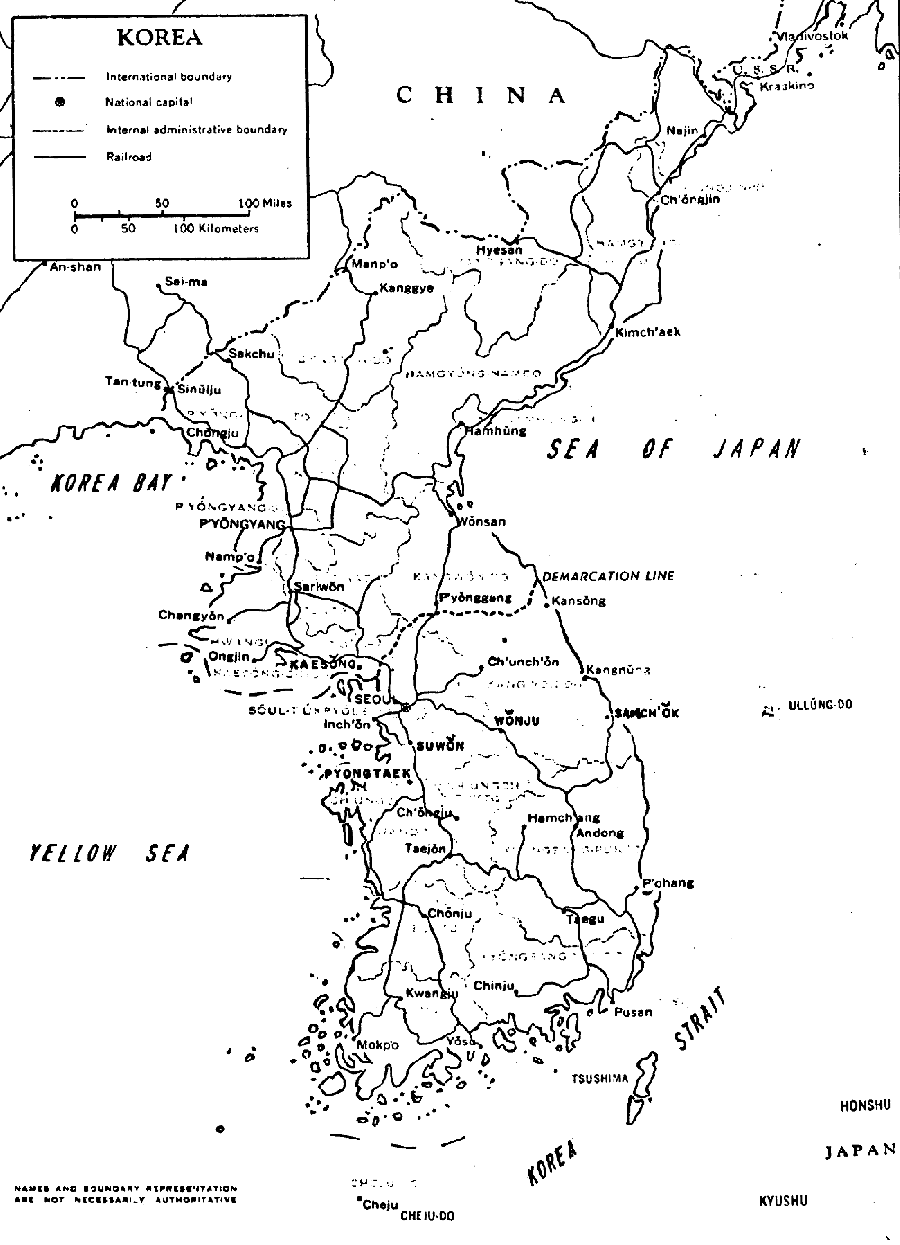
The static type of defensive line in Korea developed from arbitrary phase lines which more often followed the natural features of terrain such as river and ridge lines. These lines, delineated major objectives on offense and composed secondary lines of resistance on defense. When it became apparent that the thinly held line north of Seoul was disintegrating beneath the weight of a major Chinese Communist Offensive, U.N. Forces were ordered to withdraw, from North Korea to Line "D," beginning on 5 January 1951. This line ran from the Yellow Sea in the west through Pyongtaek, northwest through Wonju and just north of Samchok on the east coast (fig. 5). During most of this time, main Chinese Communist Forces pressure was on
25
Figure 5.- Final demarcation line between north and south Korea, 27 July 1953.
26
Table 25.- Killed and wounded in action
during pursuit
and mopping-up operations, U.S. Army divisions, Korean War
|
Operations |
Calendar period1 |
Number of divisions |
Division days |
Mean division strength |
Number |
Rate4 |
||||||
|
Total hit |
KIA |
WIA CRO2 |
WIA Adm3 |
Total hit |
KIA |
WIA CRO2 |
WIA Adm3 |
|||||
| Pursuit and mopping-up, south 38th Parallel | 28 Sept.-30 Nov. 1950 |
5 |
113 |
16,946 |
832 |
194 |
129 |
509 |
0.44 |
0.10 |
0.07 |
0.27 |
| Pursuit north of 38th Parallel to Yalu | 5 Oct.-27 Nov. 1950 |
5 |
162 |
15,601 |
2,533 |
463 |
129 |
1,941 |
1.00 |
0.18 |
0.05 |
0.77 |
| Iwon landing and pursuit, north 38th Parallel | 31 Oct.-27 Nov. 1950 |
1 |
28 |
14,788 |
229 |
45 |
5 |
179 |
0.55 |
0.11 |
0.01 |
0.43 |
|
Total |
11 |
303 |
16,028 |
3,594 |
702 |
263 |
2,629 |
0.73 |
0.14 |
0.05 |
0.54 |
|
1 Inclusive dates within which one or more
U.S. Army divisions (including attached separate Regimental Combat Teams)
contributed combat days to the indicated operation.
2 Slightly wounded-in-action cases treated on an outpatient
basis, usually at an aid station, and returned to duty before the close
of the morning report day.
3 Wounded-in-action and admitted to medical treatment facility.
4 Stated as cases per 1,000 men per day.
Table 26.- Killed and wounded in action
during operations
maintaining static defensive lines, U.S. Army divisions,
Korean War
|
Operations |
Calendar period1 |
Number of divisions |
Division days |
Mean division strength |
Number |
Rate4 |
||||||
|
Total hit |
KIA |
WIA CRO2 |
WIA Adm3 |
Total hit |
KIA |
WIA CRO2 |
WIA Adm3 |
|||||
| Line "D" (Furthest Chinese Communist Forces penetration in South Korea) | 5-29 Jan. 1951 |
6 |
107 |
16,548 |
372 |
93 |
13 |
266 |
0.21 |
0.05 |
0.01 |
0.15 |
| Line BOSTON (South bank of Han River southeast of Seoul) | 18 Feb.-6 Mar. 1951 |
2 |
32 |
16,194 |
147 |
22 |
26 |
99 |
0.28 |
0.04 |
0.05 |
0.19 |
| Line KANSAS (Phase Line across Korea around 38th Parallel) | 4-29 Apr. 1951 |
6 |
48 |
17,847 |
303 |
46 |
74 |
183 |
0.35 |
0.05 |
0.09 |
0.21 |
| Line GOLDEN (Line halting Chinese Communist Forces Spring Offensive north of Seoul) | 29 Apr.-19 May 1951 |
3 |
58 |
19,323 |
438 |
33 |
151 |
254 |
0.39 |
0.03 |
0.13 |
0.23 |
| Line NO NAME (Line halting Chinese Communist Forces Spring Offensive north of Seoul) | 29 Apr.-19 May 1951 |
3 |
55 |
18,486 |
223 |
27 |
18 |
178 |
0.23 |
0.03 |
0.02 |
0.18 |
| Line WYOMING-I Corps (Phase Line forward of KANSAS around 38th Parallel on Western Front). | 10 June-2 Oct. 1951 |
3 |
219 |
18,859 |
1,987 |
280 |
583 |
1,124 |
0.48 |
0.07 |
0.14 |
0.27 |
| Line WYOMING-IX Corps (Phase Line forward of KANSAS above 38th Parallel on Central Front) | 13 June-31 Oct. 1951 |
3 |
200 |
20,657 |
2,324 |
344 |
336 |
1,644 |
0.56 |
0.08 |
0.08 |
0.40 |
| Line KANSAS/HAYS X Corps (Phase Lines above 38th Parallel in X Corps Sector on Eastern Front) | 15 July-4 Oct. 1951 |
1 |
46 |
18,504 |
649 |
90 |
123 |
436 |
0.76 |
0.11 |
0.14 |
0.51 |
| Line JAMESTOWN (Main Battle Position, Western Front) | 7 Oct. 1951-27 July 1953 |
6 |
957 |
17,971 |
7,287 |
1,042 |
1,594 |
4,651 |
0.42 |
0.06 |
0.09 |
0.27 |
| Line MISSOURI (Main Battle Position, Central Front) | 23 Oct. 1951-27 July 1953 |
6 |
940 |
19,208 |
6,007 |
761 |
1,246 |
4,000 |
0.33 |
0.04 |
0.07 |
0.22 |
| Line MINNESOTA (Main Battle Position, Eastern Front). | 16 Oct. 1951-27 July 1953 |
5 |
832 |
19,808 |
6,990 |
891 |
1,385 |
4,714 |
0.42 |
0.05 |
0.08 |
0.29 |
|
Total |
44 |
3,494 |
18,926 |
26,727 |
3,629 |
5,549 |
17,549 |
0.40 |
0.05 |
0.08 |
0.27 |
|
1 Inclusive dates within which one or more
U.S. Army divisions (including attached separate Regimental Combat Teams)
contributed combat days to the indicated operation.
2 Slightly wounded-in-action cases treated on an outpatient
basis, usually at an aid station, and returned to duty before the close
of the morning report day.
3 Wounded-in-action and admitted to medical treatment facility.
4 Stated as cases per 1,000 men per day.
27
Table 27.- Killed and wounded in action
during operations maintaining
static defensive lines, by tactical action,
U.S. Army regiments, Korean War
|
Tactical action |
Number of regiments |
Regiment days |
Mean regiment strength |
Number |
Rate3 |
||||||
|
Total hit |
KIA |
WIA CRO1 |
WIA Adm2 |
Total hit |
KIA |
WIA CRO1 |
WIA Adm2 |
||||
| Attack, heavy resistance |
8 |
7 |
3,265 |
404 |
81 |
35 |
288 |
17.67 |
3.54 |
1.53 |
12.60 |
| Attack, light resistance |
20 |
53 |
3,427 |
688 |
100 |
64 |
524 |
3.78 |
0.55 |
0.35 |
2.88 |
| Defense, enemy attack or counterattack |
20 |
75 |
3,580 |
1,576 |
314 |
258 |
1,004 |
5.87 |
1.17 |
0.06 |
3.74 |
| Withdrawal and rearguard |
5 |
8 |
3,457 |
46 |
4 |
7 |
35 |
1.66 |
0.14 |
0.25 |
1.27 |
| Patrolling |
26 |
4,764 |
3,607 |
13,778 |
1,822 |
2,880 |
9,076 |
0.81 |
0.11 |
0.17 |
0.53 |
| Establish, hold, or consolidate defensive positions |
26 |
3,156 |
3,595 |
6,930 |
886 |
1,559 |
4,485 |
0.62 |
0.08 |
0.14 |
0.40 |
| Movement or redeployment |
26 |
421 |
3,609 |
391 |
66 |
75 |
250 |
0.25 |
0.04 |
0.05 |
0.16 |
| Reserve |
25 |
2,512 |
3,567 |
640 |
91 |
181 |
368 |
0.07 |
0.01 |
0.02 |
0.04 |
|
Total |
156 |
10,996 |
3,593 |
24,453 |
3,364 |
5,059 |
16,030 |
0.63 |
0.09 |
0.13 |
0.41 |
1 Slightly wounded-in-action cases treated
on anoutpatient basis usually at an aid station, and returned to duty before
the close of the morning report day.
2 Wounded in action and admitted to a medical treatment facility.
3 Stated as cases per 1,000 men per day.
Republic of Korea elements and the 7th U.S. Army Division from Wonju eastward to Checon. During the next 8 months, from February through September 1951, other major lines, designated BOSTON, KANSAS, GOLDEN, NO NAME, WYOMING and KANSAS/HAYS, reflected the main defensive positions of U.N. Forces back and forth across the map of Korea. After the last major U.N. offensives in October 1951, which advanced the U.N. Forces to more favorable terrain, the lines became more static and were supported by a series of strong outposts forward of the main lines. The latter became known as the "Outpost Line of Resistance," and the main line was designated "Main. Battle Position." Attacks on single strong points, such as Bloody Ridge, Heartbreak Ridge, Porkchop, and Old Baldy on the outpost lines, and other limited actions to move or improve positions on the main defensive lines, were omitted from operations in this class and placed in the class of limited operations from main battle positions. The last main battle positions which remained more or less static to the end of the war in July 1953 were Line JAMESTOWN on the western front, Line MISSOURI on the central front, and Line MINNESOTA on the eastern front. Figure 5 shows the final demarcation line as of 27 July 1953.
These operations (table 26) had the lowest rates of any active operation; only the passive operations of redeploying, regrouping, and reserve were smaller. The distributions in tables 20 and 21 show the bulk of the rates below 0.20 KIA and 0.50 WIA, respectively. The highest rate, 0.76 hit per 1,000 men per day, occurred for the KANSAS/HAYS line in the X Corps sector because most activity occurred there. Advances by X Corps tended to straighten and shorten U.N. lines, and in addition, this area was more remote from the Kaesong neutral zone. There are no large differences between the average rates for the individual lines although the numbers are so large that any small differences in the rates are highly significant statistically. The number with similar rates- for example, Line D and No Name; Kansas and Missouri; Golden, Jamestown, and Minnesota- indicate that one might find less variation in this type of operation. The static, nature of these operations is also reflected in the fact that less than 1.5 percent of all of the regimental time was spent either in defending (defense and withdrawal actions) against enemy attacks on the main line or in counterattacking (attack actions) to restore positions (table 27). Almost three-fourths of the time was used for patrolling and holding the main positions, while the balance of time was used for redeploying, regrouping, and reserve. The average daily regimental rate of 0.63 hit per 1,000 was also the lowest rate experienced for any type of active operation.
LIMITED OPERATIONS FROM MAIN BATTLE POSITIONS
Beginning in July 1951, with the start of peace talks at Kaesong on the 38th Parallel, no large-scale operations were undertaken by U.N. Forces throughout the summer until October 1951. Limited operations, with relatively small forces of regimental size or smaller, were undertaken, however, to keep the
28
Table 28.- Killed and wounded in action
during limited
operations from main battle positions, U.S. Army divisions,
Korean War
|
Limited Operations |
Number of Operations |
Calendar period1 |
Number of divisions |
Division days |
Mean division strength |
Number |
Rate4 |
||||||
|
Total hit |
KIA |
WIA CRO2 |
WIA Adm3 |
Total hit |
KIA |
WIA CRO2 |
WIA Adm3 |
||||||
| WYOMING I Corps |
6 |
1 July-3 Oct. 1951 |
6 |
20 |
19,280 |
1,134 |
166 |
192 |
776 |
2.94 |
0.43 |
0.50 |
2.01 |
| WYOMING IX Corps |
6 |
26 June-21 Sept. 1951 |
7 |
21 |
20,762 |
1,786 |
283 |
186 |
1,317 |
4.10 |
0.65 |
0.43 |
3.02 |
| KANSAS X Corps |
2 |
26 July-5 Sept. 1951 |
2 |
15 |
18,889 |
1,839 |
316 |
154 |
1,369 |
6.49 |
1.12 |
0.54 |
4.83 |
| HAYS X Corps |
4 |
9 Sept.-15 Oct. 1951 |
4 |
32 |
19,706 |
3,470 |
578 |
221 |
2,671 |
5.51 |
0.92 |
0.35 |
4.24 |
| JAMESTOWN |
16 |
16 Oct. 1951-24 July 1953 |
17 |
120 |
18,452 |
7,067 |
1,242 |
826 |
4,999 |
3.19 |
0.56 |
0.37 |
2.26 |
| MISSOURI |
4 |
10 Feb.-4 Nov. 1952 |
5 |
39 |
17,571 |
2,339 |
391 |
386 |
1,562 |
3.41 |
0.57 |
0.56 |
2.28 |
| MINNESOTA |
3 |
10 Feb.-4 Nov. 1952 |
3 |
10 |
20,851 |
307 |
57 |
49 |
201 |
1.47 |
0.27 |
0.24 |
0.96 |
|
Total |
44 |
257 |
18,847 |
17,942 |
3,033 |
2,014 |
12,895 |
3.71 |
0.63 |
0.42 |
2.66 |
||
1 Inclusive dates within which one or more
U.S. Army divisions (including attached separate Regimental Combat Teams)
contributed combat days to the indicated operation.
2 Slightly wounded-in-action cases treated on an outpatient
basis, usually at an aid station, and returned to duty before the close
of the morning report day.
3 Wounded-in-action and admitted to medical treatment facility.
4 Stated as cases per 1,000 men per day.
enemy off balance and to seize dominating terrain, thereby improving the defensive positions. On Line WYOMING in the I Corps area, (Western front) closest to the Kaesong neutral zone, the dominating terrain of the Sobang Mountains was obtained in action during the first 4 days of July 1951. Thereafter, activity was limited to raids and to two operations designed to sweep the enemy from the Corps front. On Line WYOMING, in the IX Corps Sector (Central front), several small-scale operations secured new positions on the line in addition to tank-infantry raids into the "Iron Triangle." Line KANSAS/HAYS in the X Corps sector (Eastern front) was furthest from the Kaesong neutral zone and a large portion of U.N. activity was centered there. The battles for Bloody Ridge from Line KANSAS sector of the line and Heartbreak Ridge on the HAYS sector of the line are the most notable and were largely responsible for the high division hit rates of 6.49 and 5.51, respectively, as given in table 28. When the rates are related to the specific regiments of the U.S. Army 2d Infantry Division that fought there, very high regimental rates are obtained. The 9th Infantry Regiment on Bloody Ridge had average daily rates of 152 KIA, 201 WIA-CRO, and 16.49 WIA-admissions, totaling 22.02 men hit per 1,000 troops exposed over a 10-day period. The 23d Infantry Regiment fought for Heartbreak Ridge almost twice as long as the 9th Infantry Regiment on Bloody Ridge, and sustained average daily rates of 3.14 KIA, 0.30 WIA-CRO, and 11.48 WIA-admissions, totaling 14.92 men hit per 1,000.
Again, after the last two major U.N. offensives in October 1951, action was reduced from large military operations to company and platoon patrols and raids. More often, the battles raged over single strong points or outposts forward of the main lines which, themselves, remained more or less static to the end of the war in July 1953. A total of 16 limited operations (see tables B-5 through B-11, appendix B) involved U.S. Army troops from Line JAMESTOWN, notably the several battles for outposts on Porkchop Hill and Old Baldy, and the defense of outposts Kelly, Carson, Elko, and Vegas, among others. The respective highest average, daily regi mental rates for any individual limited operation occurred on Line JAMESTOWN. The highest average daily regimental KIA rate appeared during the fourth battle for Old Baldy, 18-21, September 1952. The enemy first ejected the troops of the U.S. Army 2d Infantry Division from the peak. The 38th Infantry Regiment counterattacked and, after a bitter engagement, reoccupied the position. The average daily regimental KIA rate for this regiment was 6.29; the WIA-CRO rate, 1.44; and the daily WIA-admission rate, 17.44; totaling 25.17 men hit per 1,000 over the 4-day period. The 7-day attack of 24-30 October 1951 on unnamed Hill 199 by the 5th and 7th Cavalry Regiments, U.S. Army 1st Cavalry Division, produced the highest average daily regimental WIA-CRO rate. This average rate was 6.58 WIA-CRO per 1,000 per day over the complete period and was experienced by the 5th Cavalry Regiment. Companion rates for this regiment were 2.63 KIA and 13.90 WIA-admissions,
29
Table 29.- Killed and wounded in action
during operations from
main battle positions by tactical action, U.S. Army
regiments, Korean War
|
Tactical action |
Number of regiments |
Regiment days |
Mean regiment strength |
Number |
Rate3 |
||||||
|
Total hit |
KIA |
WIA CRO1 |
WIA Adm2 |
Total hit |
KIA |
WIA CRO1 |
WIA Adm2 |
||||
| Attack, heavy resistance |
17 |
92 |
3,602 |
7,883 |
1,223 |
630 |
6,030 |
23.79 |
3.69 |
1.90 |
18.20 |
| Attack, light resistance |
17 |
62 |
3,652 |
1,474 |
240 |
154 |
1,080 |
6.51 |
1.06 |
0.68 |
4.77 |
| Defense, enemy attack or counterattack |
20 |
101 |
3,609 |
5,221 |
1,054 |
550 |
3,617 |
14.32 |
2.89 |
1.51 |
9.92 |
| Withdrawal and rearguard |
3 |
3 |
3,496 |
10 |
2 |
4 |
4 |
0.95 |
0.19 |
0.38 |
0.38 |
| Patrolling |
23 |
183 |
3,598 |
1,223 |
149 |
299 |
775 |
1.86 |
0.23 |
0.45 |
1.18 |
| Establish, hold, or consolidate defensive positions |
21 |
190 |
3,591 |
958 |
196 |
150 |
612 |
1.41 |
0.29 |
0.22 |
0.90 |
| Movement or redeployment |
13 |
47 |
3,516 |
224 |
31 |
38 |
155 |
1.36 |
0.19 |
0.23 |
0.94 |
| Reserve |
17 |
103 |
3,542 |
87 |
6 |
38 |
43 |
0.24 |
0.02 |
0.10 |
0.12 |
|
Total |
131 |
781 |
3,590 |
17,080 |
2,901 |
1,863 |
12,316 |
6.08 |
1.03 |
0.66 |
4.39 |
1 Slightly wounded-in-action cases treated
on anoutpatient basis usually at an aid station, and returned to duty before
the close of the morning report day.
2 Wounded in action and admitted to a medical treatment facility.
3 Stated as cases per 1,000 men per day.
totaling 23.11 hit. The 7th Cavalry Regiment had much lower rates for all categories of casualty for a total of only 7.44 men hit per 1,000 per day. Both the highest average daily regimental WIA-admission rate and the highest average daily regimental total hit rate occurred during the last battle for Porkchop Hill (6-10 July 1953), before the decision on 11 July 1953 to abandon, the outpost since it had lost its tactical value. Elements of the 17th and 32d Infantry Regiments, U.S. Army 7th Infantry Division, defended the position. The l7th Infantry Regiment through 10 July 1953, when it was relieved by the 32d Infantry, Regiment, sustained average daily regimental rates of 26.66 WIA-admissions and 36.01 total hit, the highest of any individual limited operation. The average daily KIA rate was 4.93 and the WIA-CRO rate was 4.42 per 1,000 per day for this regiment. The 32d Infantry Regiment had slightly lower average rates in all categories, totaling 25.47 men hit.
Limited operations for U.S. Army troops from Line MISSOURI numbered only four and, with one exception, (ambush operation), involved single strong points of unnamed Hills 598 and 391 and outposts Charlie and King. The attack on Hill 598 produced the highest average regimental rate for limited operations from this sector of 16.66 total hit for the 32d Infantry Regiment, U.S. Army 7th Infantry Division, over a 14-day period in October 1952. After the heavy battles in the X Corps zone on the Eastern front (later designated as Line MINNESOTA), the activity was relatively quiet except for a couple flareups in the Heartbreak Ridge area. The highest average regimental rate for this sector, 12.49 total hit, was experienced by the 27th Infantry Regiment, U.S. Army 25th Infantry Division, over an extremely short (2-day) period in September 1952. Operations of this type also produced relatively high divisional rates and ranked second among all types of operations in the Korean War. It is interesting to note, however, that the average divisional WIA-CRO rate of 0.42 topped all of the other division WIA-CRO rates by type of operation. The weighted and unweighted means for division KIA and WIA-admissions, respectively, are almost identical (tables 20 and 21) and range, from 0.01 to 2.04 for KIA and from 0.05 to 7.35 for WIA-admissions. A fairly even distribution throughout the range of values indicates less uniformity among operations of this type. Approximately 70 percent (31) of the division KIA rates and about 61 percent (27) of the division WIA-admission rates exceeded 0.36 KIA and 1.80 WIA admissions which are the respective weighted mean division rates for offensive operations. Table 28 shows the average mean division rates for limited operations from the various lines with operations from Line KANSAS (largely Bloody Ridge) and from Line HAYS (largely Heartbreak Ridge) leading; operations from Line WYOMING in IX Corps zone ranked third. Although specific operations from Line JAMESTOWN produced individual high average regimental rates, the overall division averages ranked fifth. Table 29 gives the average regimental rates for tactical actions performed during these limited operations. The regimental rates for attack, (against both heavy and light enemy resistance) are the highest experienced for any type of operation, as is the regimental rate for movement and redeployment. This latter situation resulted from the difficulties
30
Table 30.- Killed and wounded in action
during defensive
(enemy offensive) operations, U.S. Army divisions, Korean
War
|
Operations |
Calendar period1 |
Number of divisions |
Division days |
Mean division strength |
Number |
Rate4 |
||||||
|
Total hit |
KIA |
WIA CRO2 |
WIA Adm3 |
Total hit |
KIA |
WIA CRO2 |
WIA Adm3 |
|||||
| Delaying Invasion, South Korea | 4 July-3 Aug. 1950 |
3 |
69 |
12,043 |
4,579 |
1,991 |
150 |
2,438 |
5.51 |
2.40 |
0.18 |
2.93 |
| Defense of Pusan Perimeter | 4 Aug.-15 Sept. 1950 |
4 |
168 |
14,345 |
11,431 |
2,623 |
717 |
8,091 |
4.75 |
1.09 |
0.30 |
3.36 |
| CCF Counteroffensive, North Korea | 25 Nov.-15 Dec. 1950 |
6 |
34 |
16,778 |
3,684 |
562 |
114 |
3,008 |
6.46 |
0.99 |
0.20 |
5.27 |
| CCF Counterattack, Wonju-Chipyong Area | 12-21 Feb. 1951 |
3 |
24 |
17,220 |
2,109 |
651 |
162 |
1,296 |
5.11 |
1.58 |
0.39 |
3.14 |
| CCF First Spring Offensive, 1951 | 22-29 Apr. 1951 |
5 |
32 |
18,343 |
1,914 |
314 |
219 |
1,381 |
3.25 |
0.53 |
0.37 |
2.35 |
| CCF Second Spring Offensive, 1951 | 17-22 May 1951 |
3 |
15 |
19,520 |
1,221 |
333 |
116 |
772 |
4.18 |
1.14 |
0.40 |
2.64 |
| CCF Attack, Western and Central Front, 1952 | 6-13 Oct. 1952 |
1 |
8 |
17,395 |
399 |
51 |
119 |
229 |
2.88 |
0.37 |
0.86 |
1.65 |
| CCF Attack ROK II Corps Front, 1953 | 10-18 June 1953 |
1 |
9 |
22,957 |
998 |
174 |
145 |
679 |
4.83 |
0.84 |
0.70 |
3.29 |
| Battle of Kumsong River Salient | 14-20 July 1953 |
3 |
17 |
21,860 |
900 |
182 |
137 |
581 |
2.42 |
0.49 |
0.37 |
1.56 |
|
Total |
29 |
376 |
15,484 |
27,235 |
6,881 |
1,879 |
18,475 |
4.67 |
1.18 |
0.32 |
3.17 |
|
1 Inclusive dates within which one or more
U.S. Army divisions (including attached separate Regimental Combat Teams)
contributed combat days to the indicated operation.
2 Slightly wounded-in-action cases treated on an outpatient
basis, usually at an aid station, and returned to duty before the close
of the morning report day.
3 Wounded-in-action and admitted to medical treatment facility.
4 Stated as cases per 1,000 men per day.
often encountered in attempting to reinforce or relieve troops on the outpost line of resistance, especially when individual outposts were under attack by the enemy.
DEFENSIVE (ENEMY OFFENSIVE) OPERATIONS
During the first 11 months of the Korean War, North Korean and Chinese Communist Armies launched six major offensives, beginning with the attack across the 38th Parallel by the Russian-trained North Korean Army on 25 June 1950. The seventh attack occurred in October 1952 and was the largest attack of the year. The last two enemy offensives occurred in June and July 1953 before the signing of the armistice agreement at Panmunjom. The operations in this class had the highest rates, on the average. The distributions in tables 20 and 21 show about half of the division-periods centered between 0.2 and 0.79 for KIA and between 1.0 and 2.49 for WIA-admissions. The weighted and unweighted averages differ by more than those for any other type of operation, and both are above the parallel rates for the other types. The average WIA-admission rate of 3.17 compares with the corresponding divisional WIA rate of 3.73 resulting from the major enemy counterattacks of World War II (6). In both wars, these operations, coincidentally, averaged 13 days in length. Table 30 presents the distributions of individual operations. The rates do not vary so widely as do the numbers hit. The highest divisional rate, 6.46 bit per 1,000 per day, resulted from the Chinese Communist intervention into the Korean War with their launching of a major offensive in November 1950. The U.S. Army 2d Infantry Division met the full impact of the overwhelming Chinese Force and slowed the attack which might have endangered the Eighth U.S. Army with envelopment. The U.S. Army 2d Infantry Division sustained rates of 3.04 KIA, 1.28 WIA-CRO, and 23.50 WIA-admissions, totaling 27.82 men hit per 1,000 per day over the period of this operation. Needless to say, this was the highest hit rate for any U.S. Army division in the Korean War and the WIA-admission rate paralleled the average WIA rate of 23.30 experienced during the beachhead landings on Saipan in World War II, the latter being the second highest divisional WIA rate among all of the World War II operations studied (6). The next highest individual division WIA-admission rate was 6.91 WIA per 1,000 per day, experienced by the U.S. Army 7th Division during the same defensive operation against the Chinese Com-
31
Table 31.- Killed and wounded in action
during defensive
(enemy offensive) operations, by tactical action, U.S.
Army regiments, Korean War
|
Tactical action |
Number of regiments |
Regiment days |
Mean regiment strength |
Number |
Rate3 |
||||||
|
Total hit |
KIA |
WIA CRO1 |
WIA Adm2 |
Total hit |
KIA |
WIA CRO1 |
WIA Adm2 |
||||
| Attack, heavy resistance |
16 |
70 |
2,767 |
3,234 |
638 |
126 |
2,470 |
16.69 |
3.29 |
0.65 |
12.75 |
| Attack, light resistance |
18 |
44 |
3,035 |
842 |
158 |
84 |
600 |
6.30 |
1.18 |
0.63 |
4.49 |
| Defense, enemy attack or counterattack |
21 |
350 |
2,639 |
14,076 |
4,038 |
782 |
9,256 |
15.24 |
4.37 |
0.85 |
10.02 |
| Withdrawal and rearguard |
18 |
91 |
3,246 |
1,602 |
306 |
67 |
1,229 |
5.43 |
1.04 |
0.23 |
4.16 |
| Patrolling |
20 |
189 |
2,514 |
1,159 |
232 |
121 |
806 |
2.44 |
0.49 |
0.25 |
1.70 |
| Establish, hold, or consolidate defensive positions |
24 |
253 |
2,924 |
2,144 |
440 |
279 |
1,425 |
2.90 |
0.59 |
0.38 |
1.93 |
| Movement or redeployment |
22 |
102 |
3,020 |
268 |
53 |
41 |
174 |
0.86 |
0.17 |
0.13 |
0.56 |
| Reserve |
21 |
134 |
2,774 |
226 |
37 |
37 |
152 |
0.61 |
0.10 |
0.10 |
0.41 |
|
Total |
160 |
1,233 |
2,791 |
23,551 |
5,902 |
1,537 |
16,112 |
6.85 |
1.72 |
0.45 |
4.68 |
1 Slightly wounded-in-action cases treated
on anoutpatient basis usually at an aid station, and returned to duty before
the close of the morning report day.
2 Wounded in action and admitted to a medical treatment facility.
3 Stated as cases per 1,000 men per day.
munists. There were two other defensive operations in the Korean War when individual divisional KIA rates exceeded the rate of 3.04 for the Chinese Communist Forces intervention. The highest KIA rate of 3.88 was sustained by the U.S. Army 24th Infantry Division when it was committed piecemeal to help the Republic of Korea Army delay the invasion of South Korea. In fact, when all divisions are included, this latter defensive operation had the highest average division KIA rate (2.40 KIA per 1,000 per day) of any operation regardless of type. The second highest daily KIA rate for an individual division was 3.63 KIA per 1,000 experienced by the U.S. Army 2d Division during the Chinese Communist Forces attack in the Wonju-Chipyong area in February 1951. The range of these individual rates is reflected in tables 20 and 21 and varies more widely than in any other set of rates. Table 31 presents the details of each regimental tactical action during division defensive operations. More than one-half of all regiment days were spent in defensive, withdrawal, or holding actions, and the regimental rates for these actions are the highest for any operation. Patrolling during defensive operations also produced a higher regimental rate than it did in any other operation, as did reserve status. Undoubtedly, the press of the enemy in this type of operation was responsible for these results.
WITHDRAWAL OPERATIONS
The two major withdrawal operations of the Korean War resulted from the Chinese Communist intervention, an action which resulted in the start, of a new war in Korea. The Eighth U.S. Army (less X Corps) ordered the withdrawal of units overland through a succession of phase lines cul-
Table 32.- Killed and wounded in action
during
withdrawal operations, U.S. Army divisions, Korean War
|
Operations |
Calendar period1 |
Number of divisions |
Division days |
Mean division strength |
Number |
Rate4 |
||||||
|
Total hit |
KIA |
WIA CRO2 |
WIA Adm3 |
Total hit |
KIA |
WIA CRO2 |
WIA Adm3 |
|||||
| Evacuation of Hungnam | 1-24 Dec. 1950 |
2 |
43 |
15,044 |
638 |
117 |
13 |
508 |
0.99 |
0.18 |
0.02 |
0.79 |
| Withdrawal from north Korea to Line "D" | 2 Dec. 1950-16 Jan. 1951 |
4 |
151 |
15,843 |
1,157 |
193 |
192 |
772 |
0.48 |
0.08 |
0.08 |
0.32 |
|
Total |
6 |
194 |
15,666 |
1,795 |
310 |
205 |
1,280 |
0.59 |
0.10 |
0.07 |
0.42 |
|
1 Inclusive dates within which one or more
U.S. Army divisions (including attached separate Regimental Combat Teams)
contributed combat days to the indicated operation.
2 Slightly wounded-in-action cases treated on an outpatient
basis, usually at an aid station, and returned to duty before the close
of the morning report day.
3 Wounded-in-action and admitted to medical treatment facility.
4 Stated as cases per 1,000 men per day.
32
Table 33.- Killed and wounded in action
during withdrawal
operations, by tactical action, U.S. Army regiments,
Korean War
|
Tactical action |
Number of regiments |
Regiment days |
Mean regiment strength |
Number |
Rate3 |
||||||
|
Total hit |
KIA |
WIA CRO1 |
WIA Adm2 |
Total hit |
KIA |
WIA CRO1 |
WIA Adm2 |
||||
| Attack, light resistance |
2 |
3 |
2,894 |
36 |
7 |
1 |
28 |
4.15 |
0.81 |
0.12 |
3.22 |
| Defense, enemy attack or counterattack |
5 |
11 |
2,870 |
179 |
45 |
18 |
116 |
5.67 |
1.43 |
0.57 |
3.67 |
| Withdrawal and rearguard |
12 |
76 |
2,704 |
743 |
155 |
18 |
570 |
3.61 |
0.75 |
0.09 |
2.77 |
| Patrolling |
16 |
95 |
2,916 |
116 |
15 |
9 |
92 |
0.41 |
0.05 |
0.03 |
0.33 |
| Establish, hold, or consolidate defensive positions |
16 |
127 |
3,025 |
181 |
24 |
4 |
153 |
0.47 |
0.06 |
0.01 |
0.40 |
| Movement or redeployment |
16 |
103 |
2,962 |
119 |
14 |
45 |
60 |
0.40 |
0.05 |
0.15 |
0.20 |
| Reserve |
12 |
195 |
2,977 |
119 |
7 |
70 |
42 |
0.20 |
0.01 |
0.12 |
0.07 |
|
Total |
79 |
610 |
2,939 |
1,439 |
267 |
165 |
1,061 |
0.83 |
0.15 |
0.09 |
0.59 |
1 Slightly wounded-in-action cases treated
on anoutpatient basis usually at an aid station, and returned to duty before
the close of the morning report day.
2 Wounded in action and admitted to a medical treatment facility.
3 Stated as cases per 1,000 men per day.
minating with line "D" below the 38th Parallel. The X Corps, on the other hand, withdrew its combat units to Hungnam on the east coast, where troops were evacuated over the beaches and returned to South Korea. The rates for these operations, given in table 32, are among the lowest for any type of operation. The highest rate for an individual division during withdrawal operations was sustained by the U.S. Army 7th Infantry Division which was ordered to move from Chosin to the Hamhung-Hungnam area and cover the withdrawal of all elements (Army-Marine-other U.N.) of X Corps. This resulted in 0.23 KIA, 0.01 WIA-CRO, and 0.99 WIA-admissions, totaling 1.23 hit per 1,000 each day. The U.S. Army 3d Infantry Division was guarding the Hungnam perimeter and later relieved the 7th Division as the covering force. The 3d Division was also the last division evacuated. Its rates were slightly less: 0.15 KIA, 0.03 WIA-CRO, and 0.64 WIA-admissions, for a total of 0.82 hit per 1,000. When the distributions of those hit by type of operation are considered, the unweighted mean of 0.67 for withdrawal operations does not differ significantly from that (0.60) for operations of pursuit (P>.05). However, if weighted mean rates as shown in tables 25 and 32 are compared and the contribution to chi square ignored for those not hit,* the difference is clearly outside the range of chance. Table 33 gives the regimental rates, most of which are low compared with those for major operations of offense and defense. The regimental rate of 3.61 hit for withdrawal and rearguard action, however, is the second highest rate for this type of action among all operations; only defensive (enemy offensive) operations, with a regimental hit rate of 5.43 for withdrawal and rearguard action, was higher.
SUMMARY BY TYPE OF OPERATION AND TACTICAL ACTION
Although individual operations and tactical actions produce casualty rates that are specific to a peculiar set of circumstances, nevertheless, certain operations of the same classification are found to be similar, as are certain of the tactical actions. In addition, the various classifications serve to introduce some slight measure of uniformity for providing the basis for projecting combined effects of certain of the inherent variables. Tables 34 and 35 summarize the U.S. Army division and regimental experience by overall type of operations and type of tactical action, respectively.
It is to be expected that factors related to the tactics of operations affect battle casualty rates very markedly but produce relatively small, effects on rates of loss due to disease and nonbattle injuries. The frontispiece shows the disease and nonbattle injury admission rates compared with the killed and wounded reflecting this phenomenon. Although the overall trend for DNBI admissions is one of decline, the variations are most frequently observed to be inverse to those of the killed and wounded.
Medical requirements for nonbattle patients
* In this modification, the number of men who were not casualties are excluded and only the measure of agreement between observed and expected numbers of casualties is calculated. The method used is a modified contingency-table approach, with the calculation of chi square and its interpretation in the usual manner.
33
Table 34.- Killed and wounded in action,
by type of ground operation, U.S. Army divisions, Korean War
|
Type of operation |
Number of operations |
Number of division periods |
Division days |
Mean division strength |
Number |
Rate3 |
||||||
|
Total hit |
KIA |
WIA CRO1 |
WIA Adm2 |
Total hit |
KIA |
WIA CRO1 |
WIA Adm2 |
|||||
| Offensive Operations |
11 |
43 |
632 |
17,164 |
25,737 |
3,943 |
2,279 |
19,515 |
2.37 |
0.36 |
0.21 |
1.80 |
| Pursuit and mopping-up operations |
3 |
11 |
303 |
16,028 |
3,594 |
702 |
263 |
2,629 |
0.73 |
0.14 |
0.05 |
0.54 |
| Main static defense lines |
11 |
44 |
3,494 |
18,926 |
26,727 |
3,629 |
5,549 |
17,549 |
0.40 |
0.05 |
0.08 |
0.27 |
| Limited operations from defense lines |
41 |
44 |
257 |
18,847 |
17,942 |
3,033 |
2,014 |
12,895 |
3.71 |
0.63 |
0.42 |
2.66 |
| Defensive operations |
9 |
29 |
376 |
15,484 |
27,235 |
6,881 |
1,879 |
18,475 |
4.67 |
1.18 |
0.32 |
3.17 |
| Withdrawal operations |
2 |
6 |
194 |
15,666 |
1,795 |
310 |
205 |
1,280 |
0.59 |
0.10 |
0.07 |
0.42 |
| Redeploying and regrouping |
1 |
2 |
32 |
15,397 |
62 |
26 |
3 |
33 |
0.13 |
0.05 |
0.01 |
0.07 |
| Corps or Army Reserve |
8 |
8 |
1,234 |
18,925 |
956 |
130 |
276 |
550 |
0.04 |
0.01 |
0.01 |
0.02 |
|
Total |
86 |
187 |
6,522 |
18,305 |
104,048 |
18,654 |
12,468 |
72,926 |
0.87 |
0.16 |
0.10 |
0.61 |
|
Total (excluding redeploy- ment and reserve) |
77 |
177 |
5,256 |
18,177 |
103,030 |
18,498 |
12,189 |
72,343 |
1.08 |
0.19 |
0.13 |
0.76 |
1 Slightly wounded-in-action cases treated
on anoutpatient basis usually at an aid station, and returned to duty before
the close of the morning report day.
2 Wounded in action and admitted to a medical treatment facility.
3 Stated as cases per 1,000 men per day.
Table 35.- Killed and wounded in action
during ground
operations1 by tactical actions, U.S. Army regiments,
Korean War
|
Type of tactical action |
Number of tactical actions |
Number of regimental days |
Mean strength |
Number |
Rate4 |
||||||
|
Total hit |
KIA |
WIA CRO2 |
WIA Adm3 |
Total hit |
KIA |
WIA CRO2 |
WIA Adm3 |
||||
| Attack, heavy resistance |
70 |
410 |
3,231 |
24,910 |
3,889 |
1,486 |
19,535 |
18.81 |
2.94 |
1.12 |
14.75 |
| Attack, light resistance |
90 |
748 |
3,341 |
9,262 |
1,483 |
977 |
6,802 |
3.70 |
0.59 |
0.39 |
2.72 |
| Airdrop, attack |
2 |
3 |
3,679 |
131 |
40 |
0 |
91 |
11.87 |
3.62 |
-- |
8.25 |
| Assault river crossing |
17 |
45 |
3,042 |
1,247 |
190 |
119 |
938 |
9.11 |
1.39 |
0.87 |
6.85 |
| Defense, enemy attack or counterattack |
94 |
601 |
2,994 |
23,217 |
5,924 |
1,744 |
15,549 |
12.90 |
3.29 |
0.97 |
8.64 |
| Withdrawal and rearguard |
41 |
185 |
3,039 |
2,414 |
468 |
96 |
1,850 |
4.29 |
0.83 |
1.17 |
3.29 |
| Patrolling |
121 |
6,034 |
3,494 |
18,196 |
2,542 |
3,606 |
12,048 |
0.86 |
0.12 |
0.17 |
0.57 |
| Establish, hold, or consolidate defensive positions |
125 |
3,933 |
3,576 |
10,820 |
1,650 |
2,065 |
7,105 |
0.78 |
0.12 |
0.15 |
0.51 |
| Mopping-up or consolidating gains |
17 |
73 |
2,783 |
256 |
38 |
31 |
187 |
1.26 |
0.19 |
0.15 |
0.92 |
| Movement or redeployment |
115 |
960 |
3,343 |
1,419 |
225 |
253 |
941 |
0.44 |
0.07 |
0.08 |
0.29 |
| Reserve |
112 |
3,527 |
3,450 |
1,588 |
215 |
452 |
921 |
0.14 |
0.02 |
0.04 |
0.08 |
|
Total |
804 |
16,519 |
3,440 |
93,460 |
16,664 |
10,829 |
65,967 |
1.64 |
0.29 |
0.19 |
1.16 |
|
Total (excluding regiment redeployment and reserve) |
577 |
12,032 |
3,445 |
90,453 |
16,224 |
10,124 |
64,105 |
2.18 |
0.39 |
0.24 |
1.55 |
1Excludes division redeploying, regrouping
and reserve periods of operation.
2Slightly wounded-in-action cases treated on anoutpatient basis
usually at an aid station, and returned to duty before the close of the
morning report day.
3Wounded in action and admitted to a medical treatment facility.
4Stated as cases per 1,000 men per day.
Table 36.- Admission rates, by type,
U.S. Army division and
separate regimental combat teams, U.S. Army, Korea,
1950-53
|
Type of operation |
All causes |
Wounded in action |
Disease and nonbattle injury |
||
|
Total |
Disease |
Nonbattle injury |
|||
| Offensive |
4.04 |
1.80 |
2.24 |
1.67 |
0.57 |
| Pursuit and mopping-up |
2.28 |
0.54 |
1.74 |
1.27 |
0.47 |
| Maintain static lines |
1.49 |
0.27 |
1.22 |
0.94 |
0.28 |
| Limited operations from defense lines |
4.12 |
2.66 |
1.46 |
1.15 |
0.31 |
| Defensive |
5.91 |
3.17 |
2.74 |
2.07 |
0.67 |
| Withdrawal |
3.25 |
0.42 |
2.84 |
1.59 |
1.24 |
| Redeploying and regrouping |
2.97 |
0.07 |
2.90 |
2.25 |
0.65 |
| Corps or Army reserve |
1.19 |
0.02 |
1.17 |
0.95 |
0.22 |
34
Table 37.- Disease and nonbattle injury,
1by
type of ground operations, U.S. Army divisions, Korean War
|
Type of operation |
Number of operations |
Number of division periods |
Division days |
Mean division strength |
Number |
Rate2 |
||||
|
Total disease and nonbattle injury |
Disease |
Nonbattle injury |
Total disease and nonbattle injury |
Disease |
Nonbattle injury |
|||||
| Offensive Operations |
11 |
43 |
632 |
17,164 |
24,265 |
18,105 |
6,160 |
2.24 |
1.67 |
0.57 |
| Pursuit and mopping-up operations |
3 |
11 |
303 |
16,028 |
8,450 |
6,175 |
2,275 |
1.74 |
1.27 |
0.47 |
| Maintain static, defensive lines |
11 |
44 |
3,494 |
18,926 |
80,925 |
62,255 |
18,670 |
1.22 |
0.94 |
0.28 |
| Limited operations from defensive lines |
41 |
44 |
257 |
18,847 |
7,090 |
5,590 |
1,500 |
1.46 |
1.15 |
0.31 |
| Defensive operations |
9 |
29 |
376 |
15,484 |
15,930 |
12,045 |
3,885 |
2.74 |
2.07 |
0.67 |
| Withdrawal operations |
2 |
6 |
194 |
15,666 |
8,615 |
4,845 |
3,770 |
2.83 |
1.59 |
1.24 |
| Redeploying and regrouping |
1 |
2 |
32 |
15,397 |
1,430 |
1,110 |
320 |
2.90 |
2.25 |
0.65 |
| Corps or Army Reserve |
8 |
8 |
1,234 |
18,925 |
27,990 |
22,950 |
5,040 |
1.20 |
0.98 |
0.22 |
| Total |
86 |
187 |
6,522 |
18,305 |
174,695 |
133,075 |
41,620 |
1.47 |
1.12 |
0.35 |
| Total (excluding Redeployment and Reserve) |
77 |
177 |
5,256 |
18,177 |
145,275 |
109,015 |
36,260 |
1.52 |
1.14 |
0.38 |
1Admissions to medical treatment facilities.
2Stated as admissions per 1,000 men per day.
cannot be expected to diminish in any proportiona1 relationship to the lull in battle. In planning for medical support of combat operations, account must be taken of requirements for the care of all patients and it must be recognized that the conditions (weather, terrain, sanitation, discipline, and extreme mental and physical stress) encountered in a specified operation directly affect the rates at which personnel require medical care for "nonbattle" causes. Table 36 gives the rates of admission in each type of operation considered for disease and nonbattle injury patients as well as for those wounded in action. Additional data pertaining to disease and nonbattle injury rates are displayed in table 37 and in the source tables included in appendix B. Disease and nonbattle injury rates are not affected by tactical operations to anywhere near the same degree as are casualty rates. Some differences do exist, however, and are reflected more by the nonbattle injury rate than by the disease rate, since fewer factors are involved in their production. It should be evident, however, that combat operations tend to expose the individual soldier to conditions of disease in certain areas, to unfavorable climates and weather, to poor sanitation, and to extreme mental and physical stress. Those factors, related to combat, intensify the exposure rate and thereby directly affect the magnitude of the disease rate. It is apparent, therefore, that many factors must be considered in addition to the average rate for both battle casualties and nonbattle losses. The U.S. Army experience of average rates for the Korean War represents only base points or models for combat operations and tactical actions, for which the planner must adjust to meet specific sets of circumstances.
| Close Window |