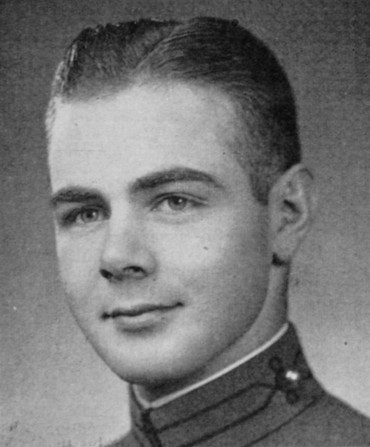
Sabol, John
Headquarters, 3rd Infantry Division
General Orders No. 191 - 22 May 1952
The President of the United States of America, authorized by
Act of Congress July 9, 1918, takes pleasure in presenting the
Silver Star to Private First Class [then Private] John Sabol (ASN:
RA-12334132), United States Army, for gallantry in action as a
member of the Medical Company, 7th Infantry Regiment, 3d
Infantry Division, in action against the enemy in Korea. On 23
November 1951, Company G was engaged in a vicious struggle with
the enemy to retain possession of Hill 355 near Kowang-San,
Korea. Due to a terrific and overpowering onslaught by the foe,
elements of the company were forced to withdraw to neighboring
high ground. During the withdrawal it was learned that one man,
too seriously wounded to walk, had been left behind. Even though
Private Sabol, an aid man, was not attached to the platoon of
which the wounded man was a member, he immediately left his
position of comparative safety and fearlessly crossed the fire
swept terrain of the forward slope. Although at one time he was
knocked off his feet and momentarily rendered unconscious by a
nearby mortar blast, Private Sabol regained his footing and
undauntedly continued forward until he was at the side of the
wounded soldier. Despite the devastating enemy fire, he
carefully applied emergency dressings and dragged the wounded
man to higher ground, where other friendly troops assisted in
carrying him to safety. Private Sabol's heroic initiative and
untiring devotion to duty were instrumental in saving the life
of a fellow soldier and reflects the highest credit upon himself
and the military service.
Saccomano, Richard E.
The President of the United States of America takes pleasure in presenting the Silver Star to Corporal
Richard E. Saccomano (MCSN: 1072773), United States Marine Corps, for conspicuous gallantry and
intrepidity while serving as a Rifle Squad Leader of Company C, First Battalion, Fifth Marines, First
Marine Division (Reinforced), in action against enemy aggressor forces in Korea on 29 May 1951. Despite a
veritable hail of hostile hand grenades and automatic weapons fire emanating from a strongly fortified
enemy hill position, Corporal Saccomano skillfully maneuvered his men forward in a bayonet assault,
knocking out three automatic weapons and accounting for five enemy dead and six captives. Bringing full
firepower to bear on a large group of hostile troops retreating down the reverse slope, he led his men in
a physical pursuit of the fleeting troops, causing heavy enemy casualties until he was seriously wounded
and forced to submit to evacuation. By his great personal bravery and inspiring leadership, Corporal
Saccomano contributed materially to the success achieved by his company. His heroic actions throughout
were in keeping with the highest traditions of the United States Naval Service. Born: Green River, Utah.
Home Town: Helper, Utah.
Sager, Perry A. (1st Bronze Oak Leaf Cluster)
Headquarters, 2nd Infantry Division
General Orders No. 69
Captain Perry A. Sager, 01299477, Infantry, Army of the
United States, Commanding Officer of Company E, 23d Infantry
Regiment, 2d Infantry Division, displayed gallantry in action
against an armed enemy on 5 September 1950 near Changnyong,
Korea. On the night of that date his company was suddenly
subjected to a fierce enemy attack. With complete
disregard for his personal safety, Captain Sager left the
company command post and dashed through the intense hostile fire
to personally direct the fire of his men. During the two
hour assault he remained in an exposed position and, on one
occasion, killed three of six enemy who were charging a machine
gun position. Throughout the engagement, he was a source
of great inspiration to all of his men and his forceful
leadership was a major factor in their ultimate success in
repelling the enemy onslaught. The gallantry and skilled
leadership displayed by Captain Sager reflect great credit upon
himself and the military service. Entered the military
service from Virginia.
Sager, Wayne B.
The President of the United States of America takes pleasure in presenting the Silver Star to Sergeant
Wayne B. Sager (MCSN: 617397), United States Marine Corps, for conspicuous gallantry and intrepidity while
serving as a Squad Leader attached to a Rifle Platoon of Company E, Second Battalion, Seventh Marines,
First Marine Division (Reinforced), in action against enemy aggressor forces in Korea on 10 February 1951.
When the platoon was subjected to intense hostile fire from entrenched positions on commanding ground
during a mission near Chiga-dong, Sergeant Sager bravely exposed himself to the heavy fire which had
already wounded many of his comrades, quickly set up his mortar and delivered accurate fire on the enemy.
Although he was temporarily blinded by flying rock fragments, Sergeant Sager succeeded in locating the
tube of his weapon by sense of touch and continued to fire upon the attackers until he suffered painful
wounds in the face and chest. By his marked courage, skill and aggressive fighting spirit, Sergeant Sager
materially aided the platoon in deploying during the attack and served to inspire all who observed him,
thereby upholding the highest traditions of the United States Naval Service. Born: Irvington, New Jersey.
Home Town: Verona, New Jersey.
Sakamoto, Sadao W.
Headquarters, 2nd Infantry Division
General Orders No. 69 - 30 March 1951
The Silver Star is awarded to Private Sadao W. Sakamoto,
RA17271082, Infantry, Army of the United States, Company F, 38
Infantry Regiment, 2d Infantry Division, who displayed gallantry
in action against an armed enemy on 7 January 1951 in the
vicinity of Wonju, Korea. Company F was subjected to a heavy
enemy attack and in the firefight, the Company Commander was
seriously wounded. Upon hearing of this, Private Sakamoto, his
runner, immediately left his position where he had been
returning the hostile fire and, dashing through the heavy enemy
fire, ran to the side of his fallen leader. Placing himself
between his Captain and the enemy fire, he proceeded to dress
the Captain’s wounds. He then moved the wounded officer into the
cover of a small trench which was not big enough for both of
them. Private Sakamoto sat on the edge of the trench holding a
compress to the Captain’s bleeding shoulder. Upon being ordered
to get into the trench at the Captain’s feet, he refused to do
so, because he could not then stop the bleeding wound. Without
thought for his safety, he held his exposed position at his
leader’s side until the enemy had been repulsed and the wounded
man could be evacuated. As a result of Private Sakamoto’s calm,
courageous action, the Company Commander remained conscious
during the enemy assault and was able to direct the successful
defense of his company’s position. The gallantry displayed by
Private Sakamoto reflects great credit upon himself and the
military service. Entered military service from Scotts Bluff,
Nebraska.
[KWE Note: Private Sakamoto was declared missing in action on 19
May 1951 and was returned to military control on 23 May 1951.
He was seriously wounded 18 May and returned to duty in July 1951 in
the US.]
Salazar, Augustine E.
The President of the United States of America takes pleasure in presenting the Silver Star to Private
First Class Augustine E. Salazar (MCSN: 1208286), United States Marine Corps, for conspicuous gallantry
and intrepidity while serving as an Automatic Rifleman of Company G, Third Battalion, Fifth Marines, First
Marine Division (Reinforced), in action against enemy aggressor forces in Korea on 21 June 1952. Although
wounded by shrapnel when his patrol was attacked by a numerically superior enemy force employing small
arms and grenades, Private First Class Salazar courageously remained at his post until ordered to
withdraw. Despite his own painful wounds, he administered first aid to a seriously wounded Marine and
carried him toward friendly lines until help arrived. By his exceptional courage, coolness under fire and
unswerving devotion to duty, Private First Class Salazar was largely responsible for saving the life of a
comrade and served to inspire all who observed him, thereby upholding the highest traditions of the United
States Naval Service. Born: Las Vegas, New Mexico. Home Town: Las Vegas, New Mexico.
Salena, Anthony Ray (posthumous)
The President of the United States of America takes pride in presenting the Silver Star (Posthumously)
to Corporal Anthony Ray Salena (MCSN: 601393), United States Marine Corps, for conspicuous gallantry and
intrepidity while serving as a member of Company A, Seventh Motor Transport Battalion, Service Command,
Fleet Marine Force, Pacific, in action against enemy aggressor forces in Korea on 29 November 1950.
Fearlessly exposing himself to hostile small arms, automatic weapons and mortar fire from well-entrenched
enemy forces who had succeeded in pinning down friendly elements, Corporal Salena voluntarily led a group
of three riflemen in a flanking maneuver up a hill overlooking a division supply dump at Hagaru-ri.
Severely wounded in the foot by a hostile hand grenade, he refused evacuation and, after obtaining first
aid, boldly continued to lead his group in an attempt to rout the numerically superior enemy forces from
their strong positions until he was struck again by hostile fire and fell, mortally wounded. By his
inspiring leadership, indomitable courage and steadfast devotion to duty in the face of overwhelming
hostile opposition, Corporal Salena upheld the highest traditions of the United States Naval Service. He
gallantly gave his life for his country. Born: November 13, 1928 at Wheeling, West Virginia. Home Town:
Bridgeport, Ohio. Death: KIA: November 29, 1950 - Buried at: Mount Calvary Cemetery - Wheeling, West
Salgado, Frank R. Jr.
Headquarters, 2d Infantry Division
General Orders No. 160 (1951)
[Full citation not yet found.]
The Silver Star posthumously awarded to Sergeant Frank R.
Salgado, Jr., of Marfa, Texas, was presented to his father,
Francisco Salgado, Sr., in a ceremony at Fort Bliss, January 18,
1952. The award was made to Sergeant Salgado for his
heroic actions at Poncho, Korea, on September 5 and 6, 1951.
After being wounded and having his wound dressed at an aid
station, he returned to his position and directed the fire of
the mortars until further wounded by flying shrapnel.
Salmona, Staleo
The President of the United States of America takes pleasure in presenting the Silver Star to Staff
Sergeant Staleo Salmona (MCSN: 1073644), United States Marine Corps, for conspicuous gallantry and
intrepidity while serving as a Squad Leader of Company H, Third Battalion, Fifth Marines, First Marine
Division (Reinforced), in action against enemy aggressor forces in Korea on 8 April 1952. When enemy
burp-gun fire-swept the platoon while it was on a combat patrol forward of the main line of resistance,
Staff Sergeant Salmona single-handedly charged the hostile position and, armed only with his carbine,
accounted for two enemy casualties. After his weapon failed to fire, he moved into the enemy emplacement
and, skillfully employing his bayonet, succeeded in capturing one of the enemy. By his indomitable
fighting spirit, courageous initiative and unwavering devotion to duty, Staff Sergeant Salmona served to
inspire all who observed him and contributed materially to the success of the patrol's mission, thereby
upholding the highest traditions of the United States Naval Service. Born: New York, New York. Home Town:
Wellesley, Massachusetts.
Salter, Chester D.
Headquarters, 24ID
General Orders No. 72 - 17 January 1951
By direction of the President, the Silver Star for gallantry in action, is awarded to Corporal Chester
D. Salter, RA17278280, Infantry, U.S. Army, a member of Company E, 19th Regiment, 24th Infantry Division,
who distinguished himself by courageous action near Anju, Korea,
on 5 November 1950. His company was attacked by an enemy force
estimated at battalion strength and was ordered to withdraw to
more tenable positions. During the fight, Corporal Salter’s
automatic rifle jammed, rendering it mechanically useless.
Although he was now unarmed, except for his trench knife, he
moved to a comrade’s foxhole when he saw three of the enemy,
armed with automatic weapons, approaching his comrade’s
position. With utter disregard for his own safety, he rushed at
the leading enemy soldier and choked him to death with his bare
hands. Taking up the dead man’s weapon, he killed the second of
the enemy soldiers while his comrade dispatched the third. He
then continued to fight off the remainder of the advancing enemy
as he withdrew to rejoin his company. Corporal Salter’s fearless
actions reflect great credit on himself and the U.S. Infantry.
Entered service from Pleasant Valley, Iowa.
Sams, Crawford Fountain
Headquarters, Far East Command
General Orders No. 67 - November 23, 1950 The President of the United States of America, authorized by
Act of Congress, July 9, 1918, takes pleasure in presenting the Silver Star to Brigadier General (Medical
Corps) Crawford Fountain Sams (ASN: 0-18261), United States Army, for gallantry in action as Public Health
and Welfare Officer, United Nations Command, while personally inspecting conditions in Korea, during the
period 29 September to 16 October 1950. Voluntarily, and with complete disregard for his safety, General
Sams traveled overland through guerilla-infested areas to obtain information vital to the treatment and
disposition of wounded civilian personnel. To estimate agricultural potential and to gain that knowledge of
conditions prevalent in civilian communities necessary for resolving complex public health and welfare
problems, General Sams made aerial reconnaissance flights in light unarmed aircraft within the range of
hostile fire over enemy dominated areas. General Sams, through his inspiring devotion to duty, effected
provision of essential subsistence and medical supplies contributing materially to the United Nations
efforts in Korea, reflecting great credit on himself and upholding the highest traditions of the military
service.
General Orders: Headquarters, Far East Command, General Orders No. 67 (November 23, 1950)
Sanchez, Aurelio C. (1st citation)
The President of the United States of America takes pleasure in presenting the Silver Star to Sergeant
Aurelio C. Sanchez (MCSN: 617547), United States Marine Corps, for conspicuous gallantry and intrepidity
while serving as a Squad Leader of Company B, First Battalion, Seventh Marines, FIRST Marine Division
(Reinforced), in action against enemy aggressor forces in Korea on 29 May 1951. When his squad was
subjected to withering hostile small arms and automatic weapons fire from well-fortified emplacements
during the attack against an enemy hill position, Sergeant Sanchez, braving the intense hostile fire, led
his men forward in a frontal assault of the bunkers. Although literally blown from his feet by an enemy
grenade, he immediately arose and moved forward up to the crest of the hill, where he personally
neutralized two hostile bunkers in hand-to- hand combat and with hand grenades. Quickly reorganizing his
squad, he skillfully led his men through heavy fire in pursuit of the fleeing enemy until ordered to
consolidate the ground, whereupon he established a base of fire to assist the advance of other friendly
elements. By his outstanding courage, aggressive leadership and gallant devotion to duty, Sergeant Sanchez
contributed materially to the success of his company and served to inspire all who observed him, thereby
upholding the highest traditions of the United States Naval Service.
Sanchez, Aurelio C. (2nd citation)
The President of the United States of America takes pleasure in presenting a Gold Star in lieu of a
Second Award of the Silver Star to Sergeant Aurelio C. Sanchez (MCSN: 617547), United States Marine Corps,
for conspicuous gallantry and intrepidity while serving as a Squad Leader of Company B, First Battalion,
Seventh Marines, First Marine Division (Reinforced), in action against enemy aggressor forces in Korea on
12 September 1951. Observing that the assaulting platoon urgently needed a machine gun during an attack
against heavily fortified hill positions, Sergeant Sanchez bravely rushed through a hail of enemy fire to
deliver the weapon. Upon reaching the leading elements, he retrieved an abandoned weapon and voluntarily
charged two hostile bunkers, neutralizing them with grenades. Courageously continuing to lead the assault
until he reached the summit of the final objective, Sergeant Sanchez, by his aggressive fighting spirit,
daring initiative and zealous devotion to duty, served to inspire all who observed him and upheld the
highest traditions of the United States Naval Service. Born: Harlingen, Texas. Home Town: Harlingen,
Texas.
Sanchez, Guadalupe L.
The President of the United States of America takes pleasure in presenting the Silver Star to Corporal
Guadalupe L. Sanchez (MCSN: 659868), United States Marine Corps, for conspicuous gallantry and intrepidity
while serving with the Military Police Company, Headquarters Battalion, First Marine Division
(Reinforced), in action against enemy aggressor forces in Korea on 6 December 1950. When the convoy to
which he was attached as a guard for a group of prisoners of war was attacked by a numerically superior
hostile force during the movement of the First Marine Division from Hagaru-ri to Koto-ri, Corporal Sanchez
boldly remained in position and delivered accurate fire against the fanatical attackers until his
ammunition was expended. Sighting a machine gun approximately forty yards to the left of the defense line,
he brought the weapon back through the enemy's heavy fire and put it into action, firing with deadly
accuracy until he again ran out of ammunition. Seizing a rifle from a wounded comrade, he employed it to
fight off the foe and then located a rocket launcher and several grenades, employing each weapon in turn
for maximum striking power to inflict heavy casualties in the enemy's ranks. By his dauntless
perseverance, indomitable fighting spirit and heroic actions in the face of heavy odds, Corporal Sanchez
contributed materially to the repulsing of the hostile attack and to the subsequent arrival of the convoy
at its destination with a minimum of casualties. His cool courage throughout was in keeping with the
highest traditions of the United States Naval Service. Born: Victoria, Texas. Home Town: Victoria, Texas.
Sanders, Antonio D.
The President of the United States of America takes pleasure in presenting the Silver Star to Sergeant
Antonio D. Sanders (MCSN: 305337), United States Marine Corps, for conspicuous gallantry and intrepidity
while serving as a Rocket Section Leader of Company F, Second Battalion, Fifth Marines, First Marine
Division (Reinforced), in action against enemy aggressor forces in Korea on 27 November 1950. Occupying a
portion of the company defense line during the hours of darkness when a large hostile force launched a
violent attack on the position, employing devastating mortar, automatic weapons and small arms fire,
Sergeant Sanders bravely continued the defense of his sector alone when all the other members of his
section became casualties and, withstanding numerous enemy attempts to overrun the position, joined the
company in a counterattack at dawn. Moving forward through intense hostile fire to pursue the enemy by
fire, he observed a hostile mortar crew attempting to set up on a distant ridge line and, loading his
rocket launcher, fired at extreme range, scoring a direct hit which killed the enemy crew members and
demolished the mortar. By his valiant fighting spirit, exceptional skill and unswerving devotion to duty,
Sergeant Sanders contributed materially to the success achieved by his company and upheld the highest
traditions of the United States Naval Service. Born: Chicago, Illinois. Home Town: Chicago, Illinois.
Sanders, Blanton
Headquarters, 24th Infantry Division
General Orders No. 95 - 16 August 1950
Corporal Blanton Sanders, RA15420860, Infantry, United States Army, a member of Company K, 21st
Infantry Regiment, 24th Infantry Division, is awarded the Silver Star for gallantry in action on 11 July
1950 near Chonui, Korea. On the morning of 11 July 1950 when attacked by the enemy, Corporal Sanders
assumed the command of his platoon after the platoon Sergeant had been killed. Corporal Sanders attacked
and destroyed an enemy machine gun and the reorganized his platoon and fought until overrun. After a
withdrawal he reformed his platoon and fought a successful delaying action for a distance of approximately
two miles. Several times in the face of heavy enemy fire he succeeded in rescuing wounded men. This
display of daring courage and cool leadership in the face of heavy enemy fire by Corporal Sanders is in
keeping with the highest traditions of the United States Army. He entered the service from Carlisle,
KY.
Sanders, Charles R.
Headquarters, 3rd Infantry Division
General Orders No. 29 - 15 January 1952
The President of the United States of America, authorized by
Act of Congress July 9, 1918, takes pleasure in presenting the
Silver Star to Captain (Infantry) Charles R. Sanders (ASN:
0-1336966), United States Army, for gallantry in action as a
member of Company L, 3d Battalion, 15th Infantry Regiment, 3d
Infantry Division, in action against the enemy in Korea. On 3
February 1951, as Company L was leading an attack by the 3d
Battalion on the strategically important Hill 319, near Yongin,
Korea, the Company Commander was seriously wounded. Realizing
the gravity of the situation, Captain Sanders, Company Executive
Officer, unhesitatingly assumed command and began reorganizing
the company with only one officer and a few key non-commissioned
officers to support him. Exposing himself to enemy fire, Captain
Sanders courageously performed the duties of Company Commander,
platoon leader and squad leader by encouraging and leading his
men forward against the determined foe until seriously wounded
by hostile mortar fire. The gallantry and vigorous leadership
displayed by Captain Sanders reflects the highest credit upon
himself and the military service.
Sanders, Edward
Department of the Army
General Orders No. 2 - 25 January 1951
Private First Class Edward Sanders, Corps of Engineers,
United States Army, distinguished himself by gallantry in action
near Haman, Korea, from 8 to 11 August 1950. Following an
attack on his platoon by numerically superior enemy forces, he,
with four other seriously wounded men, crawled through the brush
to a secluded spot which afforded shade and water. After 2
days without food and no apparent relief, he overcame vehement
objections and obtained permission to attempt the hazardous trip
to friendly forces for help. Departing at night, he
painfully crawled and dragged his way toward friendly lines.
During the first day of his tortuous journey, he encountered a
group of enemy soldiers and feigned death while they kicked and
beat his face and body before leaving him for dead. Later,
a poisonous snake bit his hand, adding further torture to his
progress. Driven by his desire to help those depending
upon him, he finally succeeded in crawling to a friendly
position, where he refused evacuation until he made sure that a
rescue party was dispatched to his helpless comrades.
Private Sanders' indomitable spirit and tenacious devotion in
insuring the rescue of his comrades reflect great credit on
himself and are in keeping with the highest traditions of the
military service.
Sanders, Harvey B.
The President of the United States of America takes pleasure in presenting the Silver Star to Sergeant
Harvey B. Sanders (MCSN: 655617), United States Marine Corps, for conspicuous gallantry and intrepidity
while serving as a Squad Leader of Company C, First Battalion, Seventh Marines, Firsdt Marine Division
(Reinforced), in action against enemy aggressor forces in Korea on 28 May 1952. Although painfully wounded
by the initial burst of enemy automatic weapons fire while he was leading his unit in an assault on a
heavily defended and well-entrenched position, Sergeant Sanders refused medical aid and continued to
advance through intense grenade, small arms and automatic weapons fire. Skillfully maintaining complete
control of his men, he effectively directed their fire and personally destroyed an enemy machine gun
emplacement, killing the crew and the riflemen who were protecting the position. By his aggressive
fighting spirit, courageous initiative and selfless devotion to duty, Sergeant Sanders served to inspire
all who observed him and contributed materially to the success of the attack, thereby upholding the
highest traditions of the United States Naval Service. Born: Sallisaw, Oklahoma. Home Town: Tulsa,
Oklahoma.
Sanders, Paul W.
Corporal Paul W. Sanders, RA15579141, (then Private First Class), Infantry, United States Army, a
member of Company L, 38th Infantry Regiment, 2d Infantry Division, distinguished himself by gallantry in
action on 31 July 1951 in the vicinity of Taeusan, Korea. On that date Company L was in defensive
positions on a strategic hill. During an enemy assault Corporal Sanders noticed that a group of
enemy soldiers were moving to the rear of his platoon's position in an attempt to encircle and cut off the
unit. Realizing the seriousness of the situation, Corporal Sanders, with complete indifference to
the intense enemy fire, left the safety of his position and made his way through the fire-swept area to
warn his platoon leader of the impending danger. As a result of his courageous and intrepidness his
platoon was able to prepare for the encircling movement and repulse the hostile attack. His actions
undoubtedly saved the lives of many of his comrades. The gallantry in action and loyal devotion to
duty demonstrated by Corporal Sanders on this occasion reflect great credit upon himself and the military
service. Entered the military service from Kentucky.
Sanders, Robert C.
General Orders No. 273 - 11 July 1951
Headquarters 3rd Infantry Division
First Lieutenant Robert C. Sanders, 059272, Infantry, Company "B", 65th Infantry, 3d Infantry Division,
United States Army. On 27 April 1951, near Uijongbu, Korea, a furious bayonet charge opened a gap in the
enemy troops which had surrounded Company "B", on Hill 476. When Lieutenant Sanders was ordered to move
his platoon through the breach in the enemy lines, he directed his platoon sergeant to lead the unit,
while he remained behind to cover the withdrawal. After his troops had made their way out of the
encirclement, Lieutenant Sanders, under vicious enemy fire, began to follow the route of withdrawal, when
he discovered a seriously wounded soldier who could not walk. Unable to obtain a litter, Lieutenant
Sanders lifted the man and carried him through the embattled area to where first aid could be
administered. The gallantry and selfless concern for the safety of a fellow soldier displayed by
Lieutenant Sanders reflect the highest credit upon himself and the military service. Entered the military
service from the State of North Carolina.
Sanders, Wade E.
Headquarters, 24th Infantry Division
General Orders No. 110 - 1 April 1952
The President of the United States of America, authorized by
Act of Congress July 9, 1918, takes pleasure in presenting the
Silver Star to First Lieutenant (Infantry) Wade E. Sanders (ASN:
0-1315451), United States Army, for gallantry in action as
Commanding Officer of Company D, 19th Infantry Regiment, 24th
Infantry Division, near Chuktae-ri, Korea, on 18 October 1951.
His company was participating in its sixth day of a battalion
attack against strong, well-entrenched enemy forces. The
accuracy and tremendous volume of enemy fire inflicted heavy
casualties upon the friendly element, reducing it to half its
effective size, and prevented a successful advance. Lieutenant
Sanders, with complete disregard for his own safety, placed
himself in a foremost position, completely exposed to the enemy,
and skillfully directed his company's machine gun fire and
supporting mortar and artillery barrages upon the enemy. During
intervals between fire missions, he repeatedly exposed himself
to deliver fire upon snipers in well concealed positions.
Undaunted by the extreme physical danger, he continually moved
from one position to another, directing a devastatingly
effective concentration of fire upon hostile emplacements. As a
result of his fearlessness and professional ability, sixty key
bunkers were destroyed, over 100 enemy soldiers killed and an
untold number wounded. Lieutenant Sanders' gallant action,
exemplary leadership and selfless devotion to duty contributed
immeasurably to the success of his unit's mission and reflect
the highest credit on himself and the United States Infantry.
Entered Service From Indiana.
Sandkaut, Louis G.
Headquarters, 25th Infantry Division
General Orders No. 171 - 3 January 1951
The President of the United States of America, authorized by
Act of Congress July 9, 1918, takes pleasure in presenting the
Silver Star to First Lieutenant (Infantry), [then Second
Lieutenant] Louis G. Sandkaut (ASN: 0-57927), United States
Army, for gallantry in action as a member of Company D, 1st
Battalion, 35th Infantry Regiment, 25th Infantry Division, in
action against an armed enemy in Korea. On the morning of 26
July 1950, the platoon which Lieutenant Sandkaut's machine gun
section was supporting was attacked by a numerically superior
enemy force in the vicinity of Yongdong, Korea. Heedless of the
heavy fire, Lieutenant Sandkaut remained in an exposed position
to direct the fire of his machine guns. During the engagement,
he personally manned one of the guns and delivered such accurate
fire that the attack was repulsed. During the afternoon, the
enemy was observed building up for another attack. Despite the
concentration of artillery fire, Lieutenant Sandkaut delivered
effective fire on the assembling force, inflicting numerous
casualties and causing the others to disperse. The next morning
the reinforced enemy again assaulted the position. Although
wounded himself, Lieutenant Sandkaut moved throughout the
concerted fire to aid a wounded comrade. He remained in position
throughout the entire day and so inspired his men by his display
of calm courage that they repulsed several other fanatical enemy
attacks. Later, after the platoon had received orders to
displace, the enemy against assaulted the position. Lieutenant
Sandkaut ordered the movement to continue and, manning one of
the machine guns, delivered effective and devastating fire on
the enemy until the displacement was completed. Lieutenant
Sandkaut's conspicuous courage, grim determination and selfless
devotion to duty are in keeping with the highest traditions of
the military service and reflect great credit upon himself and
the United States Army.
Sandoval, Leo R. (1st award)
Recommended for the Silver Star medal by PFC Floyd A. Webber
for action on 3 September 1951 in the vicinity of Yanggu, Korea.
Affidavit: On this date Sandoval's squad was leading his
platoon's attack on well fortified enemy positions. During
the attack many men were wounded, including Sandoval.
Seeing that the only way the enemy would be eliminated was by
getting close enough to the bunkers to throw grenades in them he
had his men gather as many grenades as could be carried, and he
picked up a BAR and as he charged with his men he layed down a
base of fire which pinned the enemy down, and allowed the men to
get close enough to throw the ____ effectively and destroy the
enemy. Although he was wounded and in great pain his
complete disregard for his men and their success.
Sandoval, Leo R. (1st Oak Leaf Cluster)
Headquarters, 2nd Infantry Division
General Orders No. 750 - 23 November 1951
Sergeant First Class Leo R. Sandoval, US36075412 (then
Sergeant), Infantry, Army of the United States, a member of
Company C, l9th Infantry Regiment, 2d Infantry Division,
distinguished himself by gallantry in action on 10 October 1951
in the vicinity of Tondul, Korea. On this date during an
attack on enemy positions, Company C was pinned down by intense
hostile automatic weapons and small arms fire. When
communications between attacking elements and headquarters
failed, Sergeant Sandoval advanced through enemy fire to observe
enemy action and fire. Returning to his unit he led his
men by a different route of approach and rallied them in a
successful rout of the enemy. Displaying an example of
high courage and aggressive leadership, he was instrumental in
turning the tide of the battle. The gallantry in action
displayed by Sergeant Sandoval on this occasion reflects great
credit on himself and the military service. Entered the
military service from California.
Sanford, Jesse C.
Headquarters, 25th Infantry Division
General Orders No. 186 - 31 March 1951
The President of the United States of America, authorized by
Act of Congress July 9, 1918, takes pleasure in presenting the
Silver Star to Sergeant Jesse C. Sanford, United States Army,
for gallantry in action while serving with Headquarters and
Headquarters Battery, 159th Field Artillery Battalion, 25th
Infantry Division. Near Haman, Korea, on 4 September 1950, a
friendly unit adjacent to Sergeant Sanford's battery was
subjected to strong hostile attack. Despite the proximity of the
encircling enemy, he moved through the deadly fire to aid in
evacuating the wounded. Although a casualty himself during the
sharp action, he continued his efforts until all his wounded
comrades had been carried to a place of safety. Sergeant
Sanford's courage, determination and selfless devotion to his
fellow soldiers reflect great credit on himself, his unit and
the American Soldier.
Sanford, William M.
Headquarters, 2nd Infantry Division
General Orders No. 154 - June 15, 1951 The President of the United States of America takes pleasure in
presenting the Silver Star to Master Sergeant [then Sergeant] William M. Sanford (ASN: RA-37318213), United
States Army, for conspicuous gallantry and intrepidity as a member of Company L, 23d Infantry Regiment, 2d
Infantry Division, in action against an armed enemy on 1 February 1951, near Ip'ori, Korea. On that date he
was a squad leader in an infantry platoon which was in defensive positions and was under heavy enemy attack.
During this attack Sergeant Sanford exposed himself to extremely heavy small arms and automatic weapons fire
in order to direct the fire of his squad and friendly mortars. This fire accounted for fifteen enemy dead
before his unit was ordered to withdraw to better positions. When the enemy made a fanatic attack upon his
position, he was wounded, but remained until the enemy had been repelled before allowing himself to be
evacuated. His courageous actions were an inspiration to all who observed them and enabled his unit to
reestablish its defense lines. The gallant conduct of Sergeant Sanford reflects great credit upon himself
and the military service.
Sanko, Joseph Daniel (posthumous)
The President of the United States of America takes pride in presenting the Silver Star (Posthumously)
to Lieutenant Joseph Daniel Sanko (NSN: 0-407105), United States Navy, for conspicuous gallantry and
intrepidity in combat as a pilot of a fighter plane in Fighter Squadron Six Hundred Fifty-Three (VF-653),
attached to U.S.S. Valley Forge (CV-45), during action against enemy North Korean and Chinese Communist
Forces over hostile North Korean territory on 13 May 1951. While carrying out a special interdiction
mission against vital enemy locomotives located in the most heavily defended sections of Northeast Korea,
Lieutenant Sanko, with a division of Corsairs, relentlessly pressed home repeated attacks in the face of a
storm of heavy, medium, and light caliber anti-aircraft fire to destroy a locomotive, tender and sixteen
boxcars, and severely damage a second locomotive in the vicinity of Hamhung. He continued his unrelenting
pursuit of the enemy targets by flying low altitude through Kowon, an area normally prohibited to friendly
aircraft because of the tremendous concentration of fire power, in his search for a reported train.
Despite the fact that he was instructed by Commander Task Force 77 to proceed to the Munchon areas only at
his own discretion because of the formidable array of anti-aircraft batteries surrounding that strategic
location, he continued without hesitation to that village, and with his flight commenced an attack upon
the train located there. During this coordinated attack upon the locomotive and the defending gun
positions, Lieutenant Sanko, completely heedless of the vicious barrage of withering 37-mm. and 20-mm.
fire, pressed home a ferocious and determined attack upon a battery of five 37-mm. weapons, to protect the
other aircraft of the flight and enable them to carry out bombing assaults against the trains. Because of
the tenacity and boldness of his attack, Lieutenant Sanko's aircraft was hit at a low altitude, causing
the plane and pilot to crash into the ground. It was largely through Lieutenant Sanko's unselfish devotion
to duty which caused him to press home his attack with such bold determination that he lost his life, that
the enemy batteries were sufficiently suppressed to permit the flight to completely destroy one locomotive
and tender and inflict severe damage upon a second. His intrepidity and gallant courage in the face of the
gravest odds are in keeping with the highest traditions of the United States Naval Service and his Nation
for which he gave his life. Board Serial 771 (September 5, 1952). Born: December 12, 1921. Home Town: New
Salem, Pennsylvania. Death: KIA: May 13, 1952.
Sansky, Michael J.
Headquarters, 24th Infantry Division
General Orders No. 9 - 17 August 1950
The President of the United States of America, authorized by
Act of Congress July 9, 1918, takes pleasure in presenting the
Silver Star to Second Lieutenant (Infantry) Michael J. Sansky (ASN:
0-2018928), United States Army, for conspicuous gallantry and
intrepidity in action as a member of Headquarters and
Headquarters Company, 19th Infantry Regiment, 24th Infantry
Division in action against the enemy on 16 July 1950, along the
Kum River, North of Taejon, Korea. In order for his regimental
commander to have communication, Lieutenant Sansky voluntarily
carried a 610 radio over very rugged and hilly terrain during
the attack of a hill. When his commanding officer left the hill
to order a tank and half track vehicle into the fighting,
Lieutenant Sansky put the radio on a jeep and without hesitation
mounted the tank. He manned a .50 caliber machine gun throughout
the fighting killing at least three of the enemy and wounding
many more. Reaching the river, a sniper hit him on the arm,
shattering his arm and knocking him from the tank. His
fearlessness in moving forward while completely exposed on top
of the tank reflected the highest courage and played a major
part in the successful counterattack. His outstanding devotion
to duty and courage in the face of great danger is in keeping
with the highest traditions of the military service and reflect
great credit upon himself, his unit and the United States Army.
Home Town: Los Angeles, California.
Santana-Camacho, Pedro A.
General Orders No. 197 - 19 June 1953
3rd Infantry Division
The President of the United States takes pleasure in presenting the Silver Star Medal to Pedro
Santana-Camacho, US50106679, Private First Class, U.S. Army, for conspicuous gallantry and intrepidity in
action while serving with Medical Company, 65th Infantry Regiment, 3d Infantry Division. During the early
evening of 14 February 1953, a friendly truck was struck by an enemy mortar round while proceeding up a
road directly behind the Company F sector of the main line of resistance in the vicinity of Songdong-ni,
Korea. The two men riding in the truck were critically wounded as a result of receiving the direct hit.
Having observed the entire incident, Private Santana-Camacho, a medical aid man of Company F, left the
comparative safety of his bunker, and set out for the wounded men in a litter truck. After stopping
several times to avoid being hit by enemy fire, he succeeded in reaching the wounded men and began to
administer first aid to them. He then placed the men on litters and put them into the truck. The
increasing mortar fire forced him to place the truck under cover. Realizing that the delay in evacuating
the men to the rear placed their lives in further jeopardy, he braved the hail of fire and started down
the road leading to the 2d Battalion Aid Station. He arrived safely there and delivered the casualties to
the surgeon. As a result of his actions, the lives of two critically wounded men were saved. Private
Santana-Camacho's outstanding heroism and devotion to duty reflect great credit upon himself and the
military service.
Santiago-Rodriguez, Arcadio
General Orders No. 188 - 13 June 1951
3rd Infantry Division
The President of the United States takes pleasure in presenting the Silver Star Medal to Arcadio
Santiago-Rodriquez, ER30432991, Private First Class, U.S. Army, for conspicuous gallantry and intrepidity
in action while serving with Company K, 3d Battalion, 65th Infantry Regiment, 3d Infantry Division. On 27
April 1951, near Hongbok, Korea, while approaching through a pass, a reinforced enemy battalion was fired
on by the 3d Platoon, Company K, which had taken a blocking position astride the pass. When his squad
leader was mortally wounded, Private Santiago-Rodriguez voluntarily assumed command of the squad.
Receiving orders to withdraw he organized the squad and led it to more tenable positions. During a later
assault to drive the enemy from the ridge, Private Santiago-Rodriguez volunteered to carry a wounded
comrade to safety. Suddenly encountering five enemy soldiers, he placed his wounded comrade on the ground,
and opened fire on the enemy, After killing four hostile troops, he captured the fifth and forced him to
evacuate the wounded man to the battalion aid station. The gallantry and initiative displayed by Private
Santiago-Rodriguez reflect great credit upon himself and the military service.
Santiago-Roque, SFC Ramon
General Orders No. 114 - 23 April 1951
Headquarters, 3rd Infantry Division
Sergeant First Class Ramon Santiago-Roque, RA30423607, Infantry, Company "L", 65th Infantry, 3d
Infantry Division, United States Army. On 21 February 1951,the 3d Platoon of Company "L" was gathering
river crossing data along the Han River in Korea, when it came under incessant fire from a well dug-in
enemy force on the other side of the river. When the platoon leader and five other members of the platoon
were killed and the remainder of the men pinned down, Sergeant Santiago-Roque took command of the platoon.
With complete disregard for his personal safety, he ran from man to man directing fire and reorganizing
the platoon. When an order to evacuate the wounded and withdraw from the area was given, Sergeant
Santiago-Roque braved the heavy fire to inform each man. Four times he exposed himself upon the barren
slope approaching the bank of the river in order to evacuate the wounded. The gallantry and devotion to
duty displayed by Sergeant Santiago-Roque reflect great credit upon himself and the military service.
Entered the military service from Puerto Rico.
Santopietro, Tony J.
Headquarters, 25th Infantry Division
General Orders No. 449 - 29 November 1950
The President of the United States of America, authorized by
Act of Congress July 9, 1918, takes pleasure in presenting the
Silver Star to Sergeant First Class [then Sergeant] Tony J.
Santopietro (ASN: RA-12018600), United States Army, for
gallantry in action as a member of Company H, 2d Battalion, 27th
Infantry Regiment, 25th Infantry Division, in action against an
armed enemy in Korea. On 28 July 1950, when the battalion
positions near Yongdong, Korea, were subjected to heavy enemy
machine gun and 75-mm. gun fire, Sergeant First Class
Santopietro advanced 300 yards forward of the front line rifle
troops and established an observation post. Despite the intense
hostile fire directed at the position, he continued to adjust
the fire of his mortars to destroy five enemy machine guns and
inflict a large number of casualties, thereby reducing a threat
to the battalion. Sergeant First Class Santopietro's outstanding
courage, military skill and exemplary devotion to duty are in
keeping with the highest traditions of the military service.
Santore, George J. (posthumous)
Headquarters, 1st Cavalry Division
General Orders No. 66 - April 1, 1951 The President of the United States of America, authorized by Act
of Congress July 9, 1918, takes pride in presenting the Silver Star (Posthumously) to Private First Class
George J. Santore (ASN: RA-13307677), United States Army, for gallantry in action against the enemy on 2
September 1950, while serving with the Heavy Mortar Company, 8th Cavalry Regiment, 1st Cavalry Division,
near Tabu-dong, Korea. When the enemy had launched a barrage of heavy artillery and mortar fire to support
attacking infantry units, Private Santore, gunner in a 4.2 mortar squad, displayed outstanding courage, in
the face of the enemy, and inspired his comrades to such a degree that a greater volume of fire resulted
from the entire platoon. During the terrific artillery and mortar shelling, his squad received orders to
withdraw and take cover. Private Santore, however, remained at his position, courageously and fearlessly
firing his mortar at the enemy, despite the shrapnel fragments that literally rained around him. During this
heroic action, Private Santore made the supreme sacrifice when an enemy shell made a direct hit on his
emplacement. Private Santore's great courage and devotion to duty reflect great credit upon himself and the
military service.
Santos, Antonio
General Orders No. 12 - 20 January 1951
Headquarters, 3rd Infantry Division
Corporal Antonio Santos, RA10401718, Infantry, Company "D", 65th Infantry,3d Infantry Division. United
States Army. On 22 December 1950, near Tong-ni, Korea, Corporal Santos. a machine gunner on the Hungnam
defense perimeter, opened fire on a company size, enemy column when it was approximately one-hundred yards
from his position. The enemy concentrated their fire on his position firing mortars, automatic weapons,
and small arms. While engaged in the fire fight Corporal Santos' machine gun failed, and he, with utter
disregard for his personal safety, remained, calmly repaired the gun, and continued carrying out his
duties in an outstanding manner. When enemy mortar fire forced him to quit his position, he moved the
machine gun into the open field and carried on his mission. Due to Corporal Santos' heroic actions, the
enemy was forced to withdraw leaving behind many casualties. Corporal Santos' intrepid heroism on this
occasion is in keeping with the highest traditions of the military service. Entered the military service
from Puerto Rico.
Sargent, Ray
Source: http://www.dailynexus.com (a newspaper) See
February 11, 2003, Issue 74, Volume 83.
Sarianides, Ernest A.
Headquarters, 25th Infantry Division
General Orders No. 252 - 28 October 1950
Sergeant Ernest A. Sarianides, RA35393368, Army Medical
Service, Medical Detachment, 89th Medium Tank Battalion, United
States Army. On 26 September 1950 when a member of a
beleaguered engineer squad was wounded, Sergeant Sarianides
waded the river under intense hostile fire, rendered first aid
to the casualty beneath a wrecked bridge near Sinan, Korea, and
assisted in his removal by litter. Later during the day,
Sergeant Sarianides was informed of other casualties resulting
from an intense fire fight in progress on top of a nearby hill.
Proceeding to the top of the hill with a volunteer litter team,
he was unable to reach the casualties because of the heavy
mortar and machine gun fire directed at the position.
Contacting a machine gunner, Sergeant Sarianides directed his
fire to neutralize the enemy machine gun while he evacuated
three casualties. Although wounded by a mortar fragment,
Sergeant Sarianides braved the intense enemy fire four times to
recover wounded soldiers. Sergeant Sarianides's
conspicuous bravery and selfless regard for the welfare of his
comrades reflect great credit upon himself and the Army Medical
Service. Entered the military service from Ohio.
Sartor, Louis J.
The President of the United States of America takes pleasure in presenting the Silver Star to Captain
Louis J. Sartor (MCSN: 0-22584), United States Marine Corps, for conspicuous gallantry and intrepidity as
Commanding Officer of Company I, Third Battalion, First Marines, First Marine Division (Reinforced), in
action against enemy aggressor forces in Korea on the night of 24 - 25 July 1953. Assigned the mission of
reinforcing another company that was engaged in close combat with a numerically superior enemy force far
forward of the main line of resistance, Captain Sartor skillfully led his company over an unfamiliar route
through a devastating barrage of enemy mortar and artillery fire to the objective. Although painfully
wounded and despite the numerous casualties sustained by his unit, he arrived with his company in time to
attack, break the enemy assault and regain control of the vital position. Assuming overall command, he
launched a counterattack which restored critical areas and regained the tactical superiority. Continually
moving from one position to another, he proceeded to reorganize the defense, organizing and supervising
parties to recover, repair and re-issue weapons, move ammunition and grenades to forward positions, and
carry the wounded to evacuation points. By his inspiring leadership, courageous initiative and unwavering
devotion to duty, Captain Sartor contributed in large measure to the success of the battalion's mission
and upheld the highest traditions of the United States Naval Service. Born: Palm Beach, Florida. Home
Town: Colorado Springs, Colorado.
Sartwell, Paul P.
The President of the United States of America takes pleasure in presenting the Silver Star to First
Lieutenant Paul P. Sartwell (MCSN: 0-42647), United States Marine Corps, for conspicuous gallantry and
intrepidity as a Platoon Commander in Company D, Second Battalion, Seventh Marines, First Marine Division
(Reinforced), in action against enemy aggressor forces in Korea on 26 September 1950. Although severely
wounded in both legs and unable to walk after his company was subjected to a fierce attack by a
numerically superior and well-concealed enemy force, First Lieutenant Sartwell repeatedly exposed himself
to heavy machine gun and small arms fire to direct his platoon in delivering effective fire on the hostile
strong points. Greatly weakened by profuse bleeding and suffering intense pain, he refused to be evacuated
and bravely remained at the scene of action, shouting words of encouragement to his men and skillfully
coordinating their fire. Unmindful of his serious injuries when he was later ordered to be evacuated, he
constantly inquired about the safety of his platoon and care of the wounded before he finally became
unconscious due to loss of blood and exposure. By his sustained and accurate direction of fire, First
Lieutenant Sartwell served to inspire all who observed him and contributed directly to the reduction of
several enemy key positions, thereby making a vital contribution to the successful completion of his
company's mission. His superb courage, relentless perseverance and outstanding devotion to duty reflected
great credit upon himself and upheld the highest traditions of the United States Naval Service. Born:
Marion, Idaho. Home Town: Colfax, Washington.
Savage, Calvin
Headquarters, 24th Infantry Division
General Orders No. 60 - 27 January 1952
The President of the United States of America, authorized by
Act of Congress July 9, 1918, takes pleasure in presenting the
Silver Star to Private Calvin Savage (ASN: RA-12342), United
States Army, for gallantry in action as a member of Company C,
21st Infantry Regiment, 24th Infantry Division, near Kumsong,
Korea, on 8 December 1951. His platoon was occupying defensive
positions on a mountainous terrain feature when it was attacked
by a strong enemy force, deploying intense grenade, small arms
and automatic weapons fire. Private Savage noticed that three
men manning a machine gun on the platoon's left flank were
seriously wounded. He crawled under heavy enemy fire to this
position and began firing the weapon into the hostile masses
with devastating accuracy until the gun was put out of
commission by an enemy-thrown grenade. Private Savage defended
his position with his pistol and hand grenades until the platoon
was forced to withdraw to more tenable positions. It was then
noticed that the grenade supply was dangerously low. He
volunteered to obtain more, and crawling through
enemy-infiltrated territory, moved from one bunker to another,
accumulating abandoned grenades. He returned under enemy fire
and distributed them among his comrades. With this new supply of
ammunition, the friendly troops successfully repulsed the
attack, inflicting heavy casualties upon the enemy. Private
Savage's courageous actions, fearless initiative and selfless
devotion to duty contributed immeasurably to the success of his
unit's defense and reflect the highest credit on himself and the
United States Infantry. Home Town: Newark, New Jersey.
Savage, Charlie E.
The President of the United States of America takes pleasure in presenting the Silver Star to Private
First Class Charlie E. Savage (MCSN: 1215764), United States Marine Corps, for conspicuous gallantry and
intrepidity while serving with Company D, Second Battalion, Seventh Marines, First Marine Division
(Reinforced), in action against enemy aggressor forces in Korea on 16 October 1952. Although painfully
wounded during a raid on an enemy-held hill position forward of the main line of resistance, Private First
Class Savage continued in the assault until the raid had been completed and the withdrawal had commenced.
Observing that a wounded comrade was still lying on the hill, he unhesitatingly returned to the area in
the face of devastating enemy fire and carried the casualty to the base of the fire-swept hill where a
stretcher party was waiting, subsequently covering the withdrawal of the raiding party. Although suffering
intense pain from his wounds, he refused medical treatment until he returned to friendly lines. By his
outstanding courage, indomitable spirit and daring initiative in the face of extreme peril, Private First
Class Savage served to inspire all who observed him and upheld the highest traditions of the United States
Naval Service. Born: Accomac County, Virginia. Home Town: Baltimore, Maryland.
Savage, James L.
The President of the United States of America, authorized by
Act of Congress, July 9, 1918, takes pleasure in presenting the
Silver Star to First Lieutenant James L. Savage, United States
Air Force, for gallantry in action as a Forward Air Controller,
6150th Tactical Control Squadron, 6147th Tactical Control Group,
FIFTH Air Force. Lieutenant Savage was in charge of a Tactical
Air Control Party attached to the III Republic of Korea
Division. On 17 May 1951, Lieutenant Savage was directing close
air support to a Republic of Korea Regiment when the Chinese
Communists broke through on the left flank and blocked escape
routes of this regiment. It was through the superior manner in
which he performed his duties that escape routes were reopened,
allowing an orderly withdrawal of friendly forces, and enabling
them to contain the enemy spearhead in this vital sector.
Because of his gallantry in action, many United Nations troops
were spared from almost certain destruction. Lieutenant Savage's
knowledge of both aircraft performance and the communications
equipment at his disposal, his wise judgment and courage
inspired the personnel of the Division so that what might have
been a complete and disastrous defeat turned into an important
victory. The courage, initiative, and skill displayed by
Lieutenant Savage reflected great credit upon himself, the Far
East Air Forces, and the United States Air Force.
Savage, Robert A.
Headquarters, 3ID
General Orders No. 100 - 12 December 1950
Private Robert Savage, RA17279514, Company A, 15th Infantry
Regiment, 3d Infantry Division, United States Army, is awarded
the Silver Star for gallantry in action against an armed enemy.
Near Majon-ni, Korea on 29 November 1950, Private Savage was a
rifleman in a platoon which was ambushed by superior enemy
forces. In the initial fire fight, a machine gun was
abandoned by its crew in an exposed area, after it had jammed
and two of its crew wounded. Private Savage, with complete
disregard for his own personal safety and under intense enemy
fire, dashed into the open area and recovered the machine gun.
After placing the machine gun in a covered position he again
returned to its original location and brought back much needed
ammunition. He then assisted in repairing the weapon and
firing it upon the enemy. His courageous and heroic
actions under fire reflects great credit upon himself and upon
the military service.
Sawina, Victor (posthumous)
The President of the United States of America takes pride in presenting the Silver Star (Posthumously)
to Captain Victor Sawina (MCSN: 0-41354), United States Marine Corps, for conspicuous gallantry and
intrepidity as Commanding Officer of Company D, Second Battalion, Fifth Marines, First Marine Division
(Reinforced), in action against enemy aggressor forces in Korea on 6 October 1951. Assuming command of a
company which had suffered numerous casualties in the face of devastating enemy fire from commanding
ground during several days of bitter fighting, and assigned the mission of holding the fiercely contested
defensive position, Captain Sawina promptly moved through the fire-swept area to encourage the men while
skillfully directing the construction of improved bunkers, trenches and gun emplacements. Despite the
hostile artillery, mortar and small arms fire, he continued to direct his company efficiently, thereby
encouraging the men and materially diminishing the number of casualties. When the foremost elements of his
unit were subjected to direct fire from an enemy 78-mm. gun, Captain Sawina bravely rushed to the danger
area and personally directed his men until he fell mortally wounded. By his marked courage, brilliant
leadership and unswerving devotion to duty, he served to inspire all who observed him and upheld the
highest traditions of the United States Naval Service. He gallantly gave his life for his country. Born:
May 27, 1922 at Libby, Montana. Home Town: Chehalis, Washington. Death: KIA: October 6, 1951 - Buried at:
Greenwood Memorial Park - Chehalis, Washington.
Sawyer, Webb Duane (1st citation)
The President of the United States of America, authorized by Act of Congress July 9, 1918, takes
pleasure in presenting the Silver Star (Army Award) to Major Webb Duane Sawyer (MCSN: 0-7847), United
States Marine Corps, for conspicuous gallantry and intrepidity in action against the enemy as Commanding
Officer of the Second Battalion, Seventh Marines, First Marine Division (Reinforced), in Korea, from 2 to
8 November 1950./ On e November 1950, the enemy conducted a fierce night attack against the Second
Battalion, Seventh Marines. Major Sawyer moved along the line, constantly closing gaps caused by the enemy
action, reforming the defense to meet the changing situation and continually exposing himself to heavy
enemy fire without regard for his own personal safety. Major Sawyer's display of courage, leadership and
initiative, coupled with his ability to coordinate the actions of his battalion, contributed in a high
degree to the successful repulsion of the enemy. Headquarters, X Corps, General Orders No. 25 (February
10, 1951).
Sawyer, Webb Duane (2nd citation)
The President of the United States of America, authorized by Act of Congress July 9, 1918, takes
pleasure in presenting a Bronze Oak Leaf Cluster in lieu of a Second Award of the Silver Star (Army Award)
to Major Webb Duane Sawyer (MCSN: 0-7847), United States Marine Corps, for conspicuous gallantry and
intrepidity in action against the enemy while Commanding the Second Battalion, Seventh Marines, FIRST
Marine Division (Reinforced), in Korea, on 8 December 1950. His battalion had been assigned as the advance
guard of an infantry Regiment and was ordered to attack, seize and occupy the vital key terrain feature,
Hill 1304, which was being strongly defended by the enemy. This hill controlled the critical passage
through which the entrapped First Marine Division had to move from Koto-ri to Chinhung-ni. In addition,
his Battalion was to afford flank protection to the advance elements of the Regimental and Division
vehicle train. The morning dawned in a driving snowstorm which limited visibility and ceiling to only a
few feet throughout the entire day, and was punctuated by sub-zero temperature ranging to 22 degrees below
zero. His battalion had become severely depleted from casualties and was virtually exhausted after more
than eleven days of bitter fighting. During the attack of Hill 1304, which was being defended by a
tenacious enemy from deeply entrenched and well camouflaged positions, seeing that one of his rifle
companies was being outflanked by a numerically superior enemy, Major Sawyer, in spite of a painful foot
wound received the previous day, traversed the tortuous terrain, to reach the dangerous flank. Constantly
exposing himself to heavy enemy small arms, automatic weapons and sniper fire, he personally directed and
led the attack of his depleted Battalion with such calculated precision and aggressiveness as to
completely outmaneuver the enemy and in so doing, routed him from his defensive positions, inflicted
innumerable casualties upon his foe and captured the vital objective. He then led elements of his
battalion down a steep mountain pass for four miles to join friendly forces and open the road for the
entrapped First Marine Division. Major Sawyer's devotion to duty, his aggressiveness, skill and heroic
action served as a constant inspiration and example to all his officers and men.
Sawyer, Webb Duane (3rd citation)
The President of the United States of America takes pleasure in presenting a Gold Star in addition to a
previously awarded Oak Leaf Cluster in lieu of a Third Award of the Silver Star to Major Webb Duane Sawyer
(MCSN: 0-7847), United States Marine Corps, for conspicuous gallantry and intrepidity in action against
the enemy while serving as Executive Officer of Second Battalion, Seventh Marines, First Marine Division
(Reinforced), in action against enemy aggressor forces in Korea, on 6 December 1950. When his battalion
encountered fierce enemy resistance from strong hostile positions which dominated and blocked the road
from Hagaru-ri to Koto-ri, Major Sawyer skillfully led elements of his group in an enveloping movement
around the enemy's left flank and, with brilliant leadership, successfully aided in countering and
repelling the hostile attack. For twenty-two hours he voluntarily and continually remained exposed to a
vicious hail of hostile fire and, though painfully wounded by mortar fire, steadfastly refused evacuation
in order that he might assist in the direction and control of the fighting. By his valiant courage, daring
initiative and staunch devotion to duty in the face of overwhelming odds, Major Sawyer contributed
materially to the successful accomplishment of the battalion objective, thereby upholding the highest
traditions of the United States Naval Service. Born: Toledo, Ohio. Home Town: Toledo, Ohio.
Saxon, Bill D.
Silver Star - General Orders No. 400
Headquarters X Corps
Second Lieutenant Bill D. Saxon, 065371, Artillery, United States Army, Lieutenant Saxon, as an
Artillery Forward Observer, distinguished himself by gallantry in action on 22 September 1952 in the
vicinity of Hill 854, Korea. On that date Lieutenant Saxon was given the mission of contacting and
directing supporting artillery fire for United Nation Forces counterattacking Hill 854, which, with his
Battalion's Observation Post, had been lost to the enemy during the previous night. Lieutenant Saxon
and the two enlisted members of his party were subjected to intense enemy artillery, mortar, automatic
weapons, and small arms fire at several points while en route to the Line of Departure, which was also
under heavy enemy fire. After failing to locate friendly infantry elements initially, Lieutenant
Saxon made two attempts to climb the fire-swept hill alone to contact an infantry commander. On his
third attempt he was successful in getting approximately two-thirds of the way to the top by persuading
one of three American tank commanders to permit him to ride a tank. When further progress of this
tank was blocked by a burning tank, Lieutenant Saxon dismounted and continued to climb. He reached
the crest at approximately the same time the counterattacking forces gained the top from another approach.
He immediately began adjusting artillery fire as the friendly forces closed with the enemy in hand to hand
fighting which lasted an hour. By sending back accurate and timely information during this entire
period artillery support was rendered at the critical phase of the operation, which contributed materially
to the recapture of Hill 854. His presence of mind, coolness under fire, and determined aggressive
actions were an inspiration to all personnel in the vicinity. The extraordinary heroism and
intrepidity displayed by Lieutenant Saxon on this occasion reflect the highest credit on himself and the
military service. Entered the Federal service from Oklahoma.
Sayers, Simon S.
Headquarters, 7th Infantry Division
General Orders No. 151 - May 4, 1951 The President of the United States of America, authorized by Act
of Congress, July 9, 1918, takes pleasure in presenting the Silver Star to Sergeant First Class Simon S.
Sayers (ASN: RA-6390930), United States Army, for gallantry in action against an armed enemy while serving
with the 7th Reconnaissance Company, 7th Infantry Division, near Hoengsong, Korea, on 13 February 1951. On
this date, Sergeant Sayers was the tank commander of a tank with the lead elements of a task force
proceeding through enemy positions from Hoengsong to Wonju. As the task force proceeded south, it was
ambushed by a numerically superior enemy force which succeeded in setting fire to several vehicles of the
task force, including a truck and trailer loaded with demolitions. Without regard for his personal safety,
Sergeant Sayers proceeded to use his tank to remove the burning vehicles from the road. As he was thus
engaged, he came under intense enemy small arms fire. Using the spotlight atop the tank turret to draw the
enemy fire and to locate the enemy, he was able to direct fire upon them. On three occasions it was
necessary for Sergeant Sayers to voluntarily dismount under fire in order to attack a tow cable to the
brining and disabled vehicles. The gallant actions of Sergeant Sayers on this occasion were in keeping with
the highest traditions of military service and reflect great credit upon himself, his unit, and the United
States Army.
Scarpato, Patsy J.
General Orders No. 338 - 15 August 1953
Headquarters 3rd Infantry Division
Second Lieutenant Patsy J. Scarpato, 01935200, Infantry, Company "E", 65th Infantry Regiment, 3d
Infantry Division, United States Army. On the night of 14 June and during the early morning hours of 15
June 1953, Company "E" made a raid on an enemy outpost in the vicinity of Sagimak, Korea. As the force
approached the objective, intense enemy shelling and small arms fire inflicted many friendly casualties.
Lieutenant Scarpato, a platoon leader, immediately rushed forward, offering encouragement, organizing his
men and urging them to fight aggressively despite all resistance. Twice, in the assault, he was knocked to
the ground from the concussion of enemy grenades. Nevertheless, he continued to lead his men in the
advance. When the order came to return to friendly lines, with complete disregard for his personal safety,
he advanced to within close proximity of enemy strongholds to evacuate a wounded comrade. Although
weakened by his wounds and exhausted from the battle, he carried the wounded man to the comparative safety
of the friendly lines. Lieutenant Scarpato's outstanding gallantry and devotion to duty reflect great
credit upon himself and the military service. Entered the Federal Service from New York.
Schaedel, Richard T.
The President of the United States of America, authorized by Act of Congress, July 9, 1918, takes
pleasure in presenting the Silver Star (Army Award) to Corporal Richard T. Schaedel (MCSN: 1062410),
United States Marine Corps, for conspicuous gallantry and intrepidity in action against the enemy while
serving with a Marine Infantry Company of the First Marine Division (Reinforced), in Korea, on 18 August
1950. Corporal Schaedel, as a communications non-commissioned officer assigned to a tank platoon,
efficiently restored communications that were necessary to coordinate the action of the infantry and
supporting tanks. Observing that communications in three tanks had become inoperative, Corporal Schaedel
voluntarily moved from tank to tank repairing the radio sets. In order to accomplish this task, it was
necessary for Corporal Schaedel to climb upon each tank and enter through the turret, thereby exposing
himself to further observation and fire by the enemy. Corporal Schaedel's heroic actions, his efficiency
and devotion to duty contributed greatly to the success of the operation. The gallantry displayed by
Corporal Schaedel reflects great credit on himself and is in keeping with the highest traditions of the
United States Naval Service. Headquarters, 8th Army, Korea, General Orders No. 200 (December 18, 1950).
Schanning, Harry F.
The President of the United States of America takes pleasure in presenting the Silver Star to Second
Lieutenant Harry F. Schanning (MCSN: 0-50460), United States Marine Corps, for conspicuous gallantry and
intrepidity as a Rifle Platoon Commander of Company H, Third Battalion, First Marines, First Marine
Division (Reinforced), in action against enemy aggressor forces in Korea on 15 March 1951. Assigned the
mission of seizing a strongly fortified enemy hill position, Second Lieutenant Schanning skillfully
maneuvered his platoon forward over precipitous terrain. When the unit was subjected to devastating
hostile mortar, automatic weapons and small arms fire from concealed entrenchments, and the platoon was
temporarily pinned down within 100 yards of its objective, he fearlessly moved forward through the heavy
fire to locate the concealed positions, realizing that the objective must be secured as rapidly as
possible. Although his vision was extremely limited by the smoke and fire of shell bursts, he crawled to
within a few feet of a hostile bunker and engaged the enemy in a hand grenade fight. Despite concussion
from hostile grenades which exploded directly in front of him, he quickly neutralized the bunker, killing
all occupants and inspiring his men to sweep on, overrun and secure the vital objective. By his aggressive
fighting spirit, courageous leadership and unwavering devotion to duty, Second Lieutenant Schanning
contributed in large measure to the success of his platoon and upheld the highest traditions of the United
States Naval Service. Born: Milwaukee, Wisconsin. Home Town: Milwaukee, Wisconsin.
Schappaugh, George H.
Headquarters, 2nd Infantry Division
General Orders No. 79 - 11 April 1951
The Silver Star is awarded to First Lieutenant George H.
Schappaugh, 0532286, Armor, Army of the United States, a member
of Company A, 72d Tank Battalion, 2d Infantry Division, who
displayed gallantry in action against an armed enemy on 1
September 1950 in the vicinity of Youngsan, Korea. On the
morning of that date he was the leader of a tank platoon in
support of a rifle company which was under attack by a
numerically superior enemy force. When the company was forced to
withdraw to avoid encirclement, Lieutenant Schappaugh began
fighting a vicious delaying action to cover the withdrawal.
During this action his radio communications failed and, despite
the heavy enemy fire, he dismounted and moved from one tank to
another shouting orders to the crews. Although the platoon was
surrounded five times by the enemy, Lieutenant Schappaugh
succeeded in penetrating the enemy lines and establishing new
positions. His courage and inspiring leadership enabled his men
to destroy an enemy tank and to inflict great casualties upon
the enemy. The gallantry displayed by Lieutenant Schappaugh
reflects great credit upon himself and the military service.
Entered the military service from Nebraska.
Schatz, Richard M.
Headquarters, 2nd Infantry Division
General Orders No. 215 - 24 June 1951
The Silver Star is awarded to Corporal Richard M. Schatz,
RA16278620, Army Medical Service, United States Army, a member
of Medical Company, 23d Infantry Regiment, 2d Infantry Division,
who displayed gallantry in action against an armed enemy on 10
March 1951, near Kapch'on-ni, Korea. On that date he was a
medical aid man attached to a rifle platoon which had the
mission of securing high ground. As the platoon advanced, it
came under a hail of enemy mortar fire which wounded nine of its
members. With complete disregard for his personal safety,
corporal Schatz immediately dashed forward to aid the wounded
men, and while administering first aid, he was wounded by
intense enemy small arms fire. Only after he had completed
administering first aid to the wounded did he allow himself to
be evacuated. His courageous actions were responsible for saving
several lives. The gallant conduct of Corporal Schatz reflects
great credit upon himself and the military service. Entered the
military service from McHenry County, North Dakota.
Schatz, Robert R. (posthumous)
Headquarters, 2nd Infantry Division
General Orders No. 410 - 31 October 1952
The Silver Star is posthumously awarded to Private Robert R.
Schatz, US55194297, Infantry, United States Army, a member of
Company E, 9th Infantry Regiment, 2d Infantry Division, who
distinguished himself by gallantry in action on 21 July 1952 in
the vicinity of Chorwon, North Korea. On that date, Private
Schatz was a member of a squad-sized ambush patrol that was
returning to friendly lines. Suddenly the patrol was confronted
by a numerically superior enemy unit and forced to take up
defensive positions. At that time, Private Schatz and several
other members of the patrol were painfully wounded by the
hostile small arms fire. The patrol leader, seeing that it was
impossible for all members of the patrol to get through to the
friendly lines, ordered all who were able to fight their way
free and bring reinforcements. Private Schatz, choosing to
remain and give covering fire for his comrades, deliberately
exposed himself to withering small arms fire in order to draw
the enemy fire to himself, thus enabling his comrades to make
good their escape. When last seen, Private Schatz was
courageously standing amid intense small arms fire, using enemy
weapons to return fire upon them. In the performance of that
heroic deed, he made the supreme sacrifice, giving his life for
the safety of his comrades and the successful completion of the
mission. The outstanding gallantry, devotion to duty, and
self-sacrifice displayed by Private Schatz reflect the highest
credit upon himself and the military service. Home of record:
Herrick, South Dakota.
Schauer, Carl P.
Headquarters, 2nd Infantry Division
General Orders No. 614 - 19 October 1951
The President of the United States of America, authorized by
Act of Congress July 9, 1918, takes pleasure in presenting the
Silver Star to Corporal Carl P. Schauer (ASN: US-55032431),
United States Army, for gallantry in action as a member of
Company K, 38th Infantry Regiment, 2d Infantry Division, in
action against the enemy on 29 July 1951 in the vicinity of
Taeusan, Korea. On this date the platoon, to which Corporal
Schauer was assigned as a 57-mm. recoilless rifle gunner, was
pinned down by intense enemy small arms and automatic weapons
fire from a well-built emplacement. Corporal Schauer, with
complete disregard for his personal safety, moved his weapon to
an exposed position, under intense enemy fire, and placed
effective fire into the enemy emplacement. He succeeded in
destroying it, inflicting heavy casualties upon the enemy, thus
enabling his platoon to continue the advance and successfully
secure its objective. The gallantry in action demonstrated by
Corporal Schauer on this occasion reflect great credit upon
himself and the military service.
Schelling, Robert Ayres
The President of the United States of America takes pleasure in presenting the Silver Star to Commander
Robert Ayres Schelling, United States Navy, for conspicuous gallantry and intrepidity in action in Korea
as Commanding Officer of the U.S.S. Lyman K. Swenson (DD-729). Commander Schelling navigated his ship
through an enemy mine field, engaged enemy shore batteries at close range, and contributed greatly to the
successful amphibious landings at Inchon. His actions were in keeping with the highest traditions of the
United States Naval Service. Commander 7th Fleet: Serial 918 (October 14, 1950). Born: May 23, 1917.
Death: February 14, 2003.
Schemmel, Charles Frederick (posthumous)
The President of the United States of America takes pride in presenting the Silver Star (Posthumously)
to Corporal Charles Frederick Schemmel (MCSN: 1113428), United States Marine Corps, for conspicuous
gallantry and intrepidity while serving as a Fire Team Leader of Company F, Second Battalion, Seventh
Marines, First Marine Division (Reinforced), in action against enemy aggressor forces in Korea on 10 June
1951. When his unit was subjected to intense hostile automatic weapons fire from concealed bunkers while
he was leading his fire team in an assault against a strongly defended hill position, Corporal Schemmel
ordered his men to stay under cover and bravely exposed himself to the deadly enemy fire in order to
locate the hostile gun emplacements. Mortally wounded by enemy fire while attempting to safeguard the
lives of his comrades, Corporal Schemmel, by his outstanding courage, exceptional leadership and daring
initiative, served to inspire all who observed him and upheld the highest traditions of the United States
Naval Service. He gallantly gave his life for his country. Born: July 12, 1931 at Monticello, Minnesota.
Home Town: Minneapolis, Minnesota. Death: KIA: June 10, 1951.
Schening, Richard J.
The President of the United States of America takes pleasure in presenting the Silver Star to First
Lieutenant Richard J. Schening (MCSN: 0-42275), United States Marine Corps, for conspicuous gallantry and
intrepidity as Executive Officer of Company C, First Battalion, Fifth Marines, First Marine Division
(Reinforced), in action against enemy aggressor forces in Korea on 20 March 1951. With his company
vigorously engaging the enemy when a fire, ignited by a hostile mortar burst, rapidly spread and separated
the advancing unit from his company, First Lieutenant Schening immediately summoned a support platoon and
quickly rushed into the fire-swept area. Braving intense enemy fire, he skillfully formed a base of
gunfire to cover the endangered unit and calmly led the trapped men through dense smoke back to safety.
After assisting in the reorganization of the platoon, he aided the platoon leader in leading an
aggressive, final assault against the enemy, overrunning the positions and seizing the objective. By his
outstanding leadership, marked courage and unswerving devotion to duty, First Lieutenant Schening served
to inspire all who observed him and upheld the highest traditions of the United States Naval Service.
Born: Terryville, Connecticut. Home Town: Copiague, New York.
Scherzinger, Herbert Anthony (posthumous)
The President of the United States of America takes pride in presenting the Silver Star (Posthumously)
to Private First Class Herbert Anthony Scherzinger (MCSN: 1070718), United States Marine Corps, for
conspicuous gallantry and intrepidity while serving as an Automatic Rifleman of Company H, Third
Battalion, Seventh Marines, First Marine Division (Reinforced), in action against enemy aggressor forces
in Korea on 6 February 1951. Subjected to direct hostile small arms, mortar and machine gun fire during an
attack on a heavily defended, deeply entrenched enemy strongpoint, Private First Class Scherzinger
unhesitatingly advanced to a favorable location to bring accurate fire to bear upon the hostile force.
With his ammunition supply critically low, he charged directly into the position, utilizing his remaining
ammunition to best advantage and inflicting maximum casualties on the enemy. Fatally struck down during
the bitter conflict, Private First Class Scherzinger, by his daring initiative, courageous fighting spirit
and grave concern for others at the risk of his own life, contributed to the success of his platoon in
achieving its objective with minimum loss, and his unrelenting devotion to duty was in keeping with the
highest traditions of the United States Naval Service. He gallantly gave his life for his country. Born:
January 27, 1930 at Corvallis, Oregon. Home Town: Portland, Oregon. Death: KIA: February 6, 1951.
Schiavone, Frank
Headquarters, 25th Infantry Division
General Orders No. 192 - 26 September 1950
Corporal Frank Schiavone, RA13311382, Infantry, Company F,
27th Infantry, United States Army. On the evening of 19
August 1950 near Soi-ri, Korea, a forward observer reported
tanks advancing on the company area. Going forward
immediately in the face of severe fire from the tanks and
automatic weapons, Corporal Schiavone fired his 3.5 rocket
launcher at the tanks and supporting infantry from range as
close as ten yards until he destroyed the lead tank, heavily
damaged another and put the entire enemy force to flight.
Corporal Schiavone's gallant initiative and determination to
destroy the enemy reflect great credit on himself and the
military service. Entered the military service from New
Jersey.
Schick, Paul Gerhardt (MIA) (posthumous)
The President of the United States of America takes pride in presenting the Silver Star (Posthumous) to
Sergeant Paul Gerhardt Schick (MCSN: 1159245), United States Marine Corps, for conspicuous gallantry and
intrepidity while serving as a Squad Leader of Company H, Third Battalion, First Marines, First Marine
Division (Reinforced), in action against enemy aggressor forces in Korea on 21 March 1953. With hostile
troops overrunning the position during a savage enemy attack against a vital combat outpost which his
platoon was defending far forward of the main line of resistance, Sergeant Schick courageously moved
through the trench line and delivered a withering hail of deadly, accurate fire upon the enemy. When his
sub-machine gun ceased to function, he quickly picked up an automatic weapon from a nearby wounded comrade
and, continuing to move along the defensive line in the face of enemy fire, shouted words of encouragement
to his comrades, hurled grenades and fired his weapon with exceptional accuracy, inflicting heavy
casualties on the enemy. By his aggressive fighting spirit, resourceful initiative and unyielding devotion
to duty, Sergeant Schick served to inspire all who observed him and upheld the highest traditions of the
United States Naval Service. Born: June 20, 1932 at Fort Wayne, Indiana. Home Town: Clayton, Missouri.
Death: MIA: March 21, 1953.
Schilling, Joseph E. Jr.
The President of the United States of America takes pleasure in presenting the Silver Star to Private
First Class Joseph E. Schilling, Jr. (MCSN: 1192380), United States Marine Corps, for conspicuous
gallantry and intrepidity while serving as a Machine gunner of Company I, Third Battalion, Fifth Marines,
First Marine Division (Reinforced), in action against enemy aggressor forces in Korea from 5 to 7
September 1952. Although wounded during an enemy artillery and mortar barrage while participating in the
defense of a strategic outpost more than one mile forward of the main line of resistance, Private First
Class Schilling courageously refused evacuation and remained with his weapon. On the following evening,
when the outpost again was brought under intense artillery and mortar fire proceeded by an attack by
numerically superior enemy forces, he continued to man his machine gun, inflicting heavy casualties upon
the enemy, until wounded a second time and evacuated. By his exceptional courage, initiative and
unyielding devotion to duty in the face of extreme peril, Private First Class Schilling served to inspire
all who observed him and upheld the highest traditions of the United States Naval Service. Born:
Baltimore, Maryland. Home Town: Baltimore, Maryland.
Schlansky, Arthur Henry (posthumous)
The pursuit of the NKPA and the subsequent capture of Uijongbu took place between September 28 and
October 3, 1950. It was during this same period, sometime on September 28, that 19-year old Corpsman
Schlansky lost his life in his effort to provide care to his Marines. For this he was posthumously awarded
the Silver Star. His citation reads as follows:
For conspicuous gallantry and intrepidity as a Corpsman to a Marine Corps Infantry Company, in action
against enemy aggressor forces in Korea on 28 September 1950. Voluntarily exposing himself to a shattering
hail of hostile fire during a vicious attack by a fanatical and numerically superior enemy force,
Schlansky continually moved from position to position administering aid to wounded Marines. Fully aware
that the intensity of enemy machine-gun, mortar and small-arms fire virtually precluded his escape without
injury, he steadfastly remained in an exposed position, resolutely persisting in his efforts to relieve
the suffering of his comrades until he himself fell mortally wounded. By his outstanding skill, unwavering
courage and selfless devotion to duty in the face of grave danger, Schlansky was directly responsible for
saving many lives, served as an inspiration to all who observed him and upheld the highest traditions of
the United States naval Service. He gallantly gave his life that others might live.”
Schlesinger, Francis R.
The President of the United States of America takes pleasure in presenting the Silver Star to Major
Francis R. Schlesinger (MCSN: 0-8167), United States Marine Corps, for conspicuous gallantry and
intrepidity as Executive Officer of the First Battalion, Eleventh Marines, First Marine Division
(Reinforced), in action against enemy aggressor forces in Korea on 4 December 1950. With his unit assigned
to guard the rear elements of the battalion column while in convoy, Major Schlesinger fearlessly braved
heavy and accurate fire from well-entrenched hostile positions on both sides of the road to advance to the
forward part of the column. Observing that enemy fire concentrated on the battalion was inflicting many
casualties, he quickly organized and directed an evacuation team and, despite hostile mortar, machine gun
and sniper fire, succeeded in evacuating all the wounded before rejoining the convoy. By his skilled
leadership, indomitable courage and inspiring devotion to duty, Major Schlesinger materially aided the
casualties in receiving medical attention much sooner than would otherwise have been possible, thereby
upholding the highest traditions of the United States Naval Service. Born: Franklin, New Hampshire. Home
Town: Franklin, New Hampshire.
Schlimgen, Clement Joseph (posthumous)
General Orders: Headquarters, 7th Infantry Division
General Orders No. 8 - January 7, 1952
The President of the United States of America, authorized by
Act of Congress July 9, 1918, takes pride in presenting the
Silver Star (posthumously) to Sergeant Clement Joseph Schlimgen
(ASN: US-56094629), United States Army, for conspicuous
gallantry and intrepidity as a member of Company B, 17th
Infantry Regiment, 7th Infantry Division, in action near
Chup'a-ri, Korea. On 4 September 1951, the defensive
positions of Sergeant Schlimgen's company were counterattacked
by a fanatical enemy force. A rifle and machine gun squad
assigned as the outpost guard bore the brunt of the attack.
Sergeant Schlimgen, the assistant squad leader, immediately left
his position of cover and exposed himself to the enemy fire to
encourage and organize his men. He directed accurate
machine gunfire on the enemy and inflicted heavy casualties
before being ordered to withdraw. Then Sergeant Schlimgen,
with complete disregard for his personal safety, ordered his
comrades to withdraw and voluntarily remained behind to provide
covering fire and to act as a rear guard. While performing
this courageous feat, Sergeant Schlimgen was mortally wounded
when his position was overrun by the numerically superior enemy
force. The gallantry displayed by Sergeant Schlimgen
reflect great credit upon himself and is in keeping with the
highest traditions of the military service.
Schlinghoff, Leonard M. (posthumous)*
Headquarters, 24th Infantry Division
General Orders No. 46 - 20 July 1950
The Silver Star is awarded posthumously to Private Leonard
Schlinghoff, RA39470263, Infantry, Army of the United States. On the morning of 16 July
1950, the Second Platoon, Heavy Mortar Company, 19th Infantry Regiment, was in support of Company C which
was subjected to a number of attacks by enemy infantry. After a number of such attacks had been
repulsed, the enemy succeeded in flanking the position of Company C and attacked between the rear of that
organization and the heavy mortar position. Since the enemy was inside heavy mortar range, the
platoon defended its perimeter position with small arms fire. When the position became untenable,
the Platoon Leader gave the order to withdraw. Private Schlinghoff,
and three other soldiers, although unwounded and perfectly able
to withdraw, volunteered to remain in the platoon position and
hold off the enemy while the rest of the platoon withdrew.
During the time the platoon was withdrawing, Private
Schlinghoff and his companions repulsed two assaults, killing at least nineteen of the enemy. Defying odds
of about thirty to one these soldiers enabled the main body of the platoon to withdraw and to take their
wounded with them. On the final enemy assault their position was overrun and all were killed.
Home Town: Los Angeles, California.
*It wasn't learned until later that Schlinghoff was not killed.
He was captured and he was released during the prisoner of war
exchanges on August 26, 1953. This action took place along the
Kum River.
Schmidt, Arthur J.
Headquarters, 24th Infantry Division
General Orders No. 31 - 15 January 1952
By direction of the President, the Silver Star for gallantry in action, is awarded to Sergeant Arthur J.
Schmidt, US55034193, Infantry, U.S. Army, a member of Company D, 5th Regimental Combat Team, 24th Infantry
Division, who distinguished himself by courageous action near Pangdangdong-ni,
Korea, on 13 October 1951. During an assault against determined
enemy forces, his company’s advance was halted by intense enemy
small arms, automatic weapons and grenade fire. Sergeant
Schmidt, Recoilless Rifleman, fearlessly exposed himself to the
devastating enemy fire as he set up his weapon and fired into
enemy bunkers. So accurate and intense was his fire that he
personally killed between twenty and thirty enemy soldiers and
contributed immeasurably to the success of his unit’s mission.
Sergeant Schmidt’s courageous action, aggressive fighting spirit
and selfless devotion to duty reflect the greatest credit on
himself and the U.S. Infantry. Entered service from Montevideo,
Minnesota.
Schmidt, Charles M.
The President of the United States of America takes pleasure in presenting the Silver Star to Staff
Sergeant Charles M. Schmidt (MCSN: 295070), United States Marine Corps, for conspicuous gallantry and
intrepidity in action against the enemy while serving as a Rifle Platoon Commander in Company B, First
Battalion, Fifth Marines, First Marine Division (Reinforced), in action against enemy aggressor forces in
Korea on 7 December 1950. When his company was ordered to reinforce an adjacent friendly company which was
under attack by a numerically superior enemy force employing heavy and accurate small arms, machine gun
and mortar fire, Staff Sergeant Schmidt led his unit forward and employed the men while subjected to
hostile fire, sub-zero temperatures and a heavy snow storm. Moving among the positions occupied by his
platoon, he assigned and checked sectors of fire, encouraged his men, supervised the distribution of
ammunition and assisted in the rapid evacuation of casualties. Although sustaining painful wounds from
hostile grenade fragments during the early part of the engagement, he remained with his platoon to lead
and encourage his men in the successful defense of their sector of the defense line. On one occasion when
he observed hostile troops massing to his front, he immediately requested mortar fire which he personally
observed and directed, resulting in the infliction of numerous casualties upon the enemy and in the
disorganization of the troops. By his inspiring leadership, outstanding courage and aggressive fighting
spirit, Staff Sergeant Schmidt contributed directly to the successful repulse of repeated hostile attacks,
thereby upholding the highest traditions of the United States Naval Service. Born: Rouen, France. Home
Town: Biloxi, Mississippi.
Schmidt, Clarence E.
Headquarters, 2nd Infantry Division
General Orders No. 173 - 16 June 1951
The Silver Star is awarded to Private Clarence E. Schmidt,
US55022245, Infantry, Army of the United States, a member of
Company M, 38th Infantry Regiment, 2d Infantry Division, who
distinguished himself by gallantry in action on 25 May 1951 in
the vicinity of Pangdo-ri, Korea. On that date Private Schmidt
was a squad leader of a machine gun squad attached to one of the
attacking rifle companies which had the mission of securing a
group of three hills. After securing the first two hills the
friendly forces proceeded on to the third and final objective.
On approaching the hill they came in contact with a sizeable
group of enemy in strong defensive positions. Some enemy troops
succeeded in infiltrating behind the friendly elements and
proceeded to surround them when the gunner of the machine gun of
Private Schmidt’s squad was wounded and Private Schmidt took
over the gun, immediately delivering intense fire upon the enemy
positions. Then by an outstanding display of personal leadership
and courage, Private Schmidt personally supervised the placing
of his own squad as well as the men of the rifle unit to which
he was attached. By his skillful placement of these men and his
inspiring manner of directing their fire, Private Schmidt broke
the hostile encirclement and proceeded to lead his men in the
pursuit of the disorganized enemy group, which resulted in
securing the hill and the successful occupation of the final
objective. The gallantry in action and inspiring leadership
displayed by Private Schmidt on this occasion reflect great
credit upon himself and the United States Army. Entered the
military service from Minnesota.
Schmidt, Valdemar Jr.
The President of the United States of America takes pleasure in presenting the Silver Star to Captain
Valdemar Schmidt, Jr. (MCSN: 0-22476), United States Marine Corps, for conspicuous gallantry and
intrepidity as a Helicopter Pilot in Marine Observation Squadron Six (VMO-6), in action against enemy
aggressor forces during a rescue mission in Korea on 13 April 1951. A skilled and courageous airman,
Captain Schmidt voluntarily flew his slow, unarmed aircraft 25 miles behind hostile lines to attempt the
rescue of a downed pilot in an area reported to be occupied by approximately 9,000 of the enemy.
Encountering hostile anti-aircraft, small arms and automatic weapons fire as he approached the area, he
continued to the position of the crashed plane despite continued, intense fire which struck his aircraft
repeatedly, ultimately disabling it and causing it to crash. Steadfast in his purpose to complete the
mission in the face of an apparently hopeless situation, he was subsequently instrumental in the rescue of
the downed pilot, his own crewman and himself by another helicopter. His daring efforts, perseverance and
courage throughout reflect great credit upon Captain Schmidt and the United States Naval Service. Born:
Pasadena, California. Home Town: South Pasadena, California.
Schmitt, Edward
Headquarters, 2nd Infantry Division
General Orders No. 60 - September 30, 1950 The President of the United States of America, authorized
by Act of Congress July 9, 1918, takes pride in presenting the Silver Star (Posthumously) to First
Lieutenant (Infantry) Edward Schmitt (ASN: 0-1326929), United States Army, for gallantry in action while
serving with Company H, 2d Battalion, 9th Infantry Regiment, 2d Infantry Division, in action against an
armed enemy on 10 August 1950, in the Naktong River Salient near Yongsan, Korea. On the morning of 10 August
1950, the 2d Battalion, 9th Infantry Regiment was holding commanding terrain, when they were attacked by a
numerically superior enemy force. Due to the intensity of the enemy assault, the left company of the
battalion was forced to withdraw, endangering the battalion observation post, where Lieutenant Schmitt was
directing artillery fire upon the enemy. When the observation post was overrun by the fanatical enemy, he
ordered the withdrawal of his men. With utter disregard for his own personal safety, and remaining in his
position, he called for and directed friendly artillery to bear upon his own position, in an attempt to
divert the over-running enemy. This officer was finally forced to withdraw to the remainder of the
battalion. The devastating barrage of artillery fire directed by him, caused the enemy many casualties, and
gave the battalion time to make an orderly withdrawal and to set up a new life of defense. The
unselfishness, heroism, and conspicuous devotion to duty displayed by this officer on this occasion,
exemplify the highest traditions of the American Soldier, and provide a lasting tribute to himself and to
the military service.
Schmuck, Donald M. (1st citation)
The President of the United States of America takes pleasure in presenting the Silver Star to
Lieutenant Colonel Donald M. Schmuck (MCSN: 0-5914), United States Marine Corps, for conspicuous gallantry
and intrepidity as Commanding Officer of the First Battalion, First Marines, First Marine Division
(Reinforced), in action against enemy aggressor forces in Korea from 26 November to 11 December 1950.
Braving intense hostile small arms, machine gun and mortar fire, Lieutenant Colonel Schmuck personally led
elements of his battalion in a series of daring tactical combat patrols which completely destroyed an
enemy force of estimated battalion strength that was operating against the Division's main supply route
and railhead. Ordered to launch an attack to seize and occupy a vital terrain feature in order to cover
the movement of the Division, he fearlessly spearheaded an aggressive assault, courageously leading his
unit up six miles of tortuous and precipitous ice-covered slopes to overcome strong positions fiercely
defended by a hostile battalion. A skilled leader and tactician, Lieutenant Colonel Schmuck, by his
indomitable courage and inspiring devotion to duty, was primarily responsible for the success of his
battalion in accomplishing its assigned mission and thereby upheld the highest traditions of the United
States Naval Service.
Schmuck, Donald M. (2nd citation)
The President of the United States of America takes pleasure in presenting a Gold Star in lieu of a
Second Award of the Silver Star to Lieutenant Colonel Donald M. Schmuck (MCSN: 0-5914), United States
Marine Corps, for conspicuous gallantry and intrepidity as Commanding Officer of the First Battalion,
First Marines, First Marine Division (Reinforced), in action against enemy aggressor forces in Korea on 23
February 1951. Assigned the mission of seizing a strategic hill position, which dominated the approaches
to Hoengsong, Lieutenant Colonel Schmuck advanced close behind his assaulting rifle companies to direct
and control the attack. Although constantly exposed to devastating enemy automatic weapons, small arms and
grenade fire, he courageously directed the assault and seizure of the heavily defended crest of the vital
hill and personally reorganized his companies for the continuation of the attack, inspiring his men to
sweep forward and completely rout the entrenched enemy in hand-to-hand combat. His outstanding leadership,
forceful initiative and unwavering devotion to duty reflect great credit upon Lieutenant Colonel Schmuck
and the United States Naval Service. Born: August 16, 1915 at Woodford, Illinois. Home Town: Walden,
Colorado. Death: July 24, 2004 - Buried at: Arlington National Cemetery - Arlington, Virginia.
Schmuhl, Robert A. (2nd award) (1st award in World War II)
Headquarters, 24th Infantry Division
General Orders No. 143 - 23 April 1952
The President of the United States of America, authorized by
Act of Congress July 9, 1918, takes pleasure in presenting a
Bronze Oak Leaf Cluster in lieu of a Second Award of the Silver
Star to First Lieutenant (Infantry) Robert A. Schmuhl (ASN:
0-1998029), United States Army, for gallantry in action as a
member of Company B, 5th Regimental Combat Team, 24th Infantry
Division, near Kumsong, Korea, on 19 October 1951. His company
was moved to a position behind forward elements in preparation
for an expected enemy counterattack. The numerically superior
foe charged with such force that the forward unit was ordered to
withdraw. With complete disregard for his own personal safety,
Lieutenant Schmuhl, Executive Officer, moved fearlessly
throughout the exposed positions, coordinating the fires of all
elements and personally reconnoitering to determine the best
possible route for the withdrawal of the friendly unit. When the
counterattack had been repulsed, his unit moved forward and by
dawn was in assault positions. On his own initiative, Lieutenant
Schmuhl moved from his rear position, took command of the
assault elements and led them in a courageous attack. By moving
forward against the overwhelming enemy forces, he inspired his
men to fight their way across a barren knoll and to rout the
enemy with small arms fire, grenades and bayonets. Lieutenant
Schmuhl's gallant actions, exemplary leadership and selfless
devotion to duty contributed immeasurably to the successful
capture of the objective and reflect the highest credit on
himself and the United States Infantry. Home Town: Long Beach,
New York.
Schneider, Andrew
Headquarters, 7th Infantry Division
General Orders No. 767 - October 17, 1953 The President of the United States of America, authorized by
Act of Congress July 9, 1918, takes pleasure in presenting the Silver Star to Sergeant Andrew Schneider (ASN:
US-55265162), United States Army, for gallantry in action while serving with Company G, 17th Infantry
Regiment, 7th Infantry Division, in action against the enemy near Sokkogae, Korea. On 8 July 1953, when
Sergeant Schneider's squad reached the center of a strategic outpost, it was halted by heavy machine gun
fire from a fortified bunker. Despite heavy enemy mortar, artillery, and small arms fire, Sergeant Schneider
left the comparative safety of his position and charged the bunker, throwing his grenades. After the
grenades exploded, Sergeant Schneider closed in on the bunker and destroyed the gun crew with his rifle.
This action enabled Sergeant Schneider's squad to advance with few casualties. Later during the same action,
Sergeant Schneider was wounded by enemy mortar fire but refused evacuation and was instrumental in
encouraging his men during two enemy counterattacks. When Sergeant Schneider was ordered to withdraw his
squad to a defensive position, he placed his assistant in command and remained behind to protect and effect
the evacuation of the wounded. The gallantry displayed by Sergeant Schneider reflects great credit on
himself and is in keeping with the highest traditions of the military service.
Schofield, Eugene
Headquarters, 24th Infantry Division
General Orders No. 186 - 15 October 1950
The President of the United States of America, authorized by
Act of Congress, July 9, 1918, takes pleasure in presenting the
Silver Star to Corporal Eugene Schofield, United States Army,
for conspicuous gallantry and intrepidity in action against the
enemy while serving with the Medical Company, 21st Infantry
Regiment, 24th Infantry Division, in action at Pohang-dong,
Korea, on 2 September 1950. During an attack, Corporal
Schofield's company was held up by heavy mortar, machine gun,
and small arms fire, from an enemy strongpoint, and suffered
numerous casualties. Because of the extremely mountainous
terrain, it was impossible to remove the wounded. On hearing of
the situation, Corporal Schofield unhesitatingly advanced over
300 yards through a hail of withering fire to minister to his
fallen comrades. Unable to move the wounded, he remained with
them in an exposed position covered by enemy fire throughout the
day. Under cover of darkness he led three separate litter
parties into the area, directing the evacuation of the wounded.
Corporal Schofield's gallant actions and selfless devotion to
duty, without regard for his own life, were in keeping with the
highest traditions of military service and reflect great credit
upon himself, his unit, and the United States Army Medical
Services. Home Town: Brooklyn, New York.
Schooley, Ernest William (posthumous)
The President of the United States of America takes pride in presenting the Silver Star (Posthumously)
to Technical Sergeant Ernest William Schooley (MCSN: 572731), United States Marine Corps, for conspicuous
gallantry and intrepidity while serving as an Outpost Commander of Company D, Second Battalion, First
Marines, First Marine Division (Reinforced), in action against enemy aggressor forces in Korea on 7
October 1952. When high winds and hostile fire dissipated a smoke screen which had been laid down to aid a
Corpsman in reaching three wounded Marines, during a devastating barrage of enemy mortar fire on a combat
outpost, Technical Sergeant Schooley promptly leaped out of his foxhole and threw white phosphorous
grenades from his exposed position, enabling the Hospitalman to advance with comparative safety.
Immediately responding to the shouts of the Corpsman for assistance in freeing the half-buried men, he
hurled two additional grenades for momentary protection and bravely raced forward in the face of intense
hostile mortar and sniper fire in an effort to aid the Hospitalman and the casualties. Mortally wounded
while extricating his comrades, Technical Sergeant Schooley, by his outstanding courage, daring initiative
and selfless efforts in behalf of others, served to inspire all who observed him and upheld the highest
traditions of the United States Naval Service. He gallantly gave his life for his country. Born: March 30,
1928 at Caldwell, Michigan. Home Town: Lake City, Michigan. Death: KIA: October 7, 1952.
Schreieck, Wilfred G.
Headquarters, 2nd Infantry Division
General Orders No. 723 - 15 November 1951
The President of the United States of America, authorized by
Act of Congress July 9, 1918, takes pleasure in presenting the
Silver Star to Private Wilfred G. Schreieck (ASN: US-55119746),
United States Army, for gallantry in action as a member of
Company I, 38th Infantry Regiment, 2d Infantry Division, in
action against the enemy on 2 September 1951, in the vicinity of
Taeusan, Korea. On that date during an attack on well-fortified
enemy positions, Private Schreieck totally ignored the intense
hostile small arms, automatic weapons and mortar fire as he
crawled forward to destroy several hostile bunkers. During this
hectic advance his squad leader was seriously wounded. Private
Schreieck, with complete disregard for his own safety, went to
the aid of his squad leader and carried him to safety under
point blank fire directed upon him by the enemy. After seeing
that his comrade was in a safe position for treatment, Private
Schreieck rejoined his unit and assisted in accomplishing its
mission. The gallantry in action and devotion to duty and
comrades displayed by Private Schreieck on this occasion
reflects great credit upon himself and the military service.
Schreiner, George W. Jr.
Headquarters, 24th Infantry Division
General Orders No. 169 - 11 October 1950
The President of the United States of America, authorized by
Act of Congress July 9, 1918, takes pleasure in presenting the
Silver Star to First Lieutenant (Corps of Engineers) George W.
Schreiner, Jr. (ASN: 0-2014716), United States Army, for
gallantry in action as a member of Company C, 3d Engineer Combat
Battalion, 24th Infantry Division, in action near Taejon, Korea,
on 20 July 1950. During the withdrawal under intense enemy fire,
Lieutenant Schreiner repeatedly stopped his jeep to lead wounded
soldiers seeking transportation to safety. Fired on from an
enemy road block cutting off the approach to a bridge, his jeep
received a direct hit, killing the occupants of the back seat
and forcing the vehicle off the road into a creek bed. Enemy
machine gun fire soon swept the creek bottom killing those
wounded remaining on the hood of the damaged vehicle. Braving
the intense fire, Lieutenant Schreiner carried a wounded officer
and enlisted man to the shelter of the bridge foundation to
render necessary first aid. Although the enemy machine gunners
were soon disposed of, a fire fight developed between his party
and three ammunition bearers. In the ensuing exchange of fire,
the officer and enlisted man were killed. Lieutenant Schreiner's
accurate carbine fire, however, eliminated all three of the
enemy. Stopping a friendly vehicle, he loaded the wounded aboard
and continued on to the safety of friendly lines. Although many
of the bridges en route had been prepared for demolition, he
personally removed the charges before allowing the vehicle to
cross. His gallantry, unhesitant devotion to duty and complete
disregard for his own safety won the admiration of his men and
reflect the greatest credit on himself and the United States
Army.
Schrickel, Jack B.
Headquarters, 1st Cavalry Division
General Orders No. 104 - 9 June 1951 Private First Class Jack B. Schrickel, RA15270889, Infantry,
United States Army, Company D, 8th Cavalry Regiment, 1st Cavalry Division, for gallantry in action against
the enemy on 2 November 1950, near Unsan, Korea. When the battalion defensive perimeter was flanked
and frontally assaulted by a numerically superior enemy force, a withdrawal was ordered. As Private
Schrickel's squad arrived at the pre-arranged assembly area, he noticed that one of his comrades was
missing. Despite the danger involved, he returned to the area, now overrun by enemy troops, in search
for the soldier. Although constantly drawing hostile fire, Private Schrickel persisted in his endeavor
until he found the member of his squad who was seriously wounded. Carrying the man through fire to the
assembly area, he found that the battalion had already withdrawn to another location. Despite the
wounded soldier's request that he leave him and save his own life, Private Schrickel refused and proceeded
to struggle mile after mile over the rugged terrain, wading hip-deep in a freezing river, carrying the
wounded man over his shoulder. Cold and near exhaustion, Private Schrickel finally reached friendly
lines eight hours later, and the wounded man was evacuated to a hospital for treatment. The brave and
selfless action of Private Schrickel reflects great credit on himself and the military service.
Entered federal service from Ohio.
Schrock, Donald R.
The President of the United States of America takes pleasure in presenting the Silver Star to Sergeant
Donald R. Schrock (MCSN: 490871), United States Marine Corps, for conspicuous gallantry and intrepidity
while serving as a Squad Leader of Company A, First Battalion, Seventh Marines, First Marine Division
(Reinforced), in action against enemy aggressor forces in Korea on 8 March 1951. Assuming command of the
platoon when both his platoon leader and platoon sergeant became casualties during the attack against a
well-fortified hostile position, Sergeant Schrock exposed himself to devastating enemy small arms and
automatic weapons fire to effect a hasty reorganization of his unit and direct the evacuation of the
casualties. Displaying sound tactical ability, he maneuvered his men so effectively that they were able to
place a large volume of accurate fire on the enemy positions, permitting the assaulting element to seize
the objective and rout the entrenched hostile force. By his outstanding courage, expert leadership and
resolute determination, Sergeant Schrock served to inspire all who observed him and upheld the highest
traditions of the United States Naval Service. Born: Deadwood, South Dakota. Home Town: Redding,
California.
Schrum, David Allen
The President of the United States of America takes pleasure in presenting the Silver Star to Private
David Allen Schrum (MCSN: 443357), United States Marine Corps, for conspicuous gallantry and intrepidity
while serving as a Jeep Driver in Weapons Company, Third Battalion, First Marines, First Marine Division
(Reinforced), in action against enemy aggressor forces in Korea on 25 September 1950. While his Battalion
was under intense enemy fire, Private Schrum repeatedly volunteered to drive to the front lines to
evacuate the wounded in his jeep. Although painfully wounded in the hand on one occasion when he left his
jeep to assist in carrying the wounded from the battle line, he refused medical attention and continued to
assist in the evacuation of the casualties for a period of approximately four hours while under intense
hostile fire, until all the wounded were removed from the front lines. His outstanding courage and
initiative reflect great credit upon Private Schrum and were in keeping with the highest traditions of the
United States Naval Service. Born: York, Pennsylvania. Home Town: York, Pennsylvania.
Schryver, Hugh C. Jr.
General Orders No. 160 - 13 November 1950
Headquarters Eighth Army (EUSAK)
Second Lieutenant Hugh C. Schryver Jr., O49849, United States Marine Corps, Platoon Leader, 1st
Platoon, Company B, 1st Battalion, 5th Marines, displayed gallantry in action against an armed enemy at
Obong-ni Ridge, four and one-half miles west of Yangsan, Korea, during the period 17 August to 18 August
1950. On 17 August elements of the 1st Battalion, 5th Marines assaulted the heavily defended Ridge
at Obong-ni with loss of many casualties. By nightfall the companies succeeded in securing only a
small portion of the Ridge. The precarious positions were ordered to be defended while strongly
opposed by the enemy 4th Division. Lieutenant Schryver's Platoon played a vital part in the initial
assault on the Ridge. At about 0230, 18 August, the enemy counterattacked B Company's zone.
During the counterattack Lieutenant Schryver while directing the defense suffered a severe fragment wound
on his forehead when a hand grenade exploded near his helmet, knocking him unconscious. He was
evacuated to the Battalion aid station. Upon receiving first aid and treatment at the aid station he
regained consciousness. Despite protests of Battalion corpsmen, Lieutenant Schryver voluntarily left
the aid station and returned to his platoon to reassume command when the platoon situation was critical.
His return to duty despite his painful wounds and heavy loss of blood was an inspiration to his Platoon
and to the whole Company. Lieutenant Schryver bravely reassumed command of his platoon and his
outstanding leadership and coolness under fire were highly instrumental in repelling the enemy
counterattack and subsequently seizing the vital objective which broke the main defense of the enemy in
the area. The gallantry displayed by Lieutenant Schryver reflects great credit on himself and the
naval service. Entered the naval service from Iowa.
Schuckman, Richard Fred (posthumous)
The President of the United States of America takes pride in presenting the Silver Star (Posthumously)
to Corporal Richard Fred Schuckman (MCSN: 1180348), United States Marine Corps, for conspicuous gallantry
and intrepidity while serving as Leader of a Machine gun Squad of Company E, Second Battalion, Seventh
Marines, First Marine Division (Reinforced), in action against enemy aggressor forces in Korea on 13 May
1952. When the unit was subjected to a determined night assault by a numerically superior enemy force
while defending a forward outpost, Corporal Schuckman immediately engaged the hostile troops with his
rifle and hand grenades, ordered his machine gun into action and, directing effective counterfire on the
enemy's base of fire, promptly gained fire superiority over the attackers. Quickly deploying the gun to a
fresh position when the outpost was attacked from another direction, he skillfully utilized a white
phosphorous grenade to silhouette the approaching hostile troops and aided immeasurably in repelling the
assault. Pausing only long enough to hurl grenades, fire his rifle and shout orders to his gun crew,
Corporal Schuckman continued to treat the casualties within his unit throughout a third enemy attack and,
in the absence of a Corpsman, rendered timely medical aid to the stricken men. Returning to his squad, he
instructed his men to remain in position while he placed the machine gun in preparation for an expected
assault, and was mortally wounded while assisting his unit to repel the subsequent attack. By his
outstanding courage, exemplary leadership and aggressive fighting spirit, Corporal Schuckman served to
inspire all who observed him and contributed materially to the successful defense of the outpost, thereby
upholding the highest traditions of the United States Naval Service. He gallantly gave his life for his
country. Born: September 9, 1931 at Quincy, Illinois. Home Town: Quincy, Illinois. Death: KIA: May 13,
1952 - Buried at: Woodland Cemetery - Quincy, Illinois.
Schueller, Merlin H.
The President of the United States of America takes pleasure in presenting the Silver Star to
Hospitalman Merlin H. Schueller (NSN: 3225292), United States Naval Reserve, for conspicuous gallantry and
intrepidity in action against the enemy while serving with a Marine Infantry Company of the First Marine
Division (Reinforced), in action against enemy aggressor forces in Korea on 10 June 1951. Serving as a
Medical Corpsman, Hospitalman Schueller was moving with the company in the attack of a strongly fortified
enemy position when the unit was subjected to intense and accurate enemy automatic weapons, mortar and
small arms fire, causing numerous casualties, and he himself was seriously wounded in the leg and feet.
Although he was unable to walk, he courageously crawled among his fallen comrades, skillfully rendering
first aid. When the fighting had passed beyond that area, and all casualties had been evacuated, he then
refused to be carried on a stretcher, because of a shortage, and instead hopped and crawled to the aid
station over a tortuous route. His bravery and outstanding devotion to duty were an inspiration to all who
observed him. Hospitalman Schueller's heroic actions were in keeping with the highest traditions of the
United States Naval Service. Commanding General, 1st Marine Division (Reinforced) FMF: Serial 2151
(January 27, 1951). Home Town: Waterloo, Iowa.
Schultz, Gerald D.
The President of the United States of America takes pleasure in presenting the Silver Star to Staff
Sergeant Gerald D. Schultz (MCSN: 548278), United States Marine Corps, for conspicuous gallantry and
intrepidity while serving as a Section Leader of a Heavy Machine Gun Section of Weapons Company, Third
Battalion, Seventh Marines, First Marine Division (Reinforced), in action against enemy aggressor forces
in Korea on 1 September 1951. When his platoon leader became a casualty during an attack by a numerically
superior enemy force, Staff Sergeant Schultz reorganized his men and those of nearby friendly units and
placed the troops at strategic points in a hasty defense maneuver, thereby preventing the enemy from
overrunning the area. Although suffering a severe head wound, he skillfully directed his section in
delivering counterfire on the attackers and remained at his position until the hostile force was
decisively defeated. By his marked courage, aggressive fighting spirit and gallant devotion to duty, Staff
Sergeant Schultz served to inspire all who observed him and upheld the highest traditions of the United
States Naval Service. Born: White Fish, Montana. Home Town: Bellingham, Washington.
Schupbach, Ward (posthumous)
The President of the United States of America takes pride in presenting the Silver Star (Posthumously)
to Private First Class Ward Schupbach (MCSN: 1088884), United States Marine Corps, for conspicuous
gallantry and intrepidity while serving as a Gunner in Company D, Second Battalion, Seventh Marines, First
Marine Division (Reinforced), in action against enemy aggressor forces in Korea on 12 September 1951.
Although subjected to intense fire from an enemy 76-mm. gun during an attack against well-entrenched
hostile troops, Private First Class Schupbach bravely maintained his exposed position and continued to
deliver effective machine gun fire on the retreating enemy. Mortally wounded by hostile fire while
relaying the position of the enemy weapon to a mortar forward observer, Private First Class Schupbach, by
his marked courage, daring initiative and aggressive fighting spirit, was greatly instrumental in
destroying the hostile gun and upheld the highest traditions of the United States Naval Service. He
gallantly gave his life for his country. Born: November 12, 1929 at Ozark, Missouri Home Town:
Highlandville, Missouri. Death: KIA: September 12, 1951 - Buried at: Schupbach Cemetery - Chestnut Ridge,
Missouri.
Schupp, Donald L.
The President of the United States of America takes pleasure in presenting the Silver Star to Corporal
Donald L. Schupp, United States Marine Corps, for conspicuous gallantry and intrepidity while serving with
Headquarters Battery, Fourth Battalion, Eleventh Marines, First Marine Division (Reinforced), in action
against enemy aggressor forces in Korea on 4 December 1950. Serving as a jeep driver, Corporal Schupp was
driving a lead vehicle in a convoy of tractors and howitzers proceeding under continuous enemy attack from
Yudam-ni to Hagaru-ri when the column was halted by road block manned by a numerically superior force.
With the column forced to remain in its position because the tractor prime movers were in need of fuel,
Corporal Schupp unhesitatingly volunteered to accompany an officer in an attempt to run the gauntlet of
fire to obtain aid from the perimeter at Hagaru-ri. Although suffering from exhaustion and crippling
frostbite, he skillfully maneuvered his vehicle across a blown-out bridge and over icy roads through
fire-swept territory swarming with the enemy into Hagaru-ri. Through his courageous efforts, fuel and aid
were dispatched to the beleaguered column. Corporal Schupp's daring initiative and inspiring efforts were
in keeping with the highest traditions of the United States Naval Service. Born: Louisville, Kentucky.
Home Town: Louisville, Kentucky.
Schuyler, Roy L.
Headquarters, 25th Infantry Division
General Orders No. 107 - 1950
The President of the United States of America, authorized by
Act of Congress July 9, 1918, takes pleasure in presenting the
Silver Star to Corporal Roy L. Schuyler (ASN: RA-17243681 United
States Army, for gallantry in action as a member of Company E,
2d Battalion, 27th Infantry Regiment, 25th Infantry Division, in
action against an armed enemy in Korea. On 2 August 1950,
Corporal Schuyler, who had been wounded in the arm, was being
evacuated by litter jeep along with two non-ambulatory
casualties. Because of the seriousness of the wounds of the
latter, the jeep driver attempted to negotiate an enemy
roadblock. In doing so, the jeep was hit, overturned and burst
into flame, killing the assistant driver and gravely burning the
driver. Corporal Schuyler quickly dragged one patient to cover,
returned in the face of intense enemy fire to recover the other
patient. Then, enlisting the aid of two friendly Koreans he
succeeded in passing the road block and evacuating the wounded
to the aid station. By his initiative and gallantry, Corporal
Schuyler saved the lives of his comrades and set an example
worthy of emulation. His actions were in keeping with the
highest traditions of the military service and reflect great
credit upon himself, his unit, and the United States Army.
Schwab, Gerald J.
Citation not yet found.
"Capt. Gerald J. Schwab, a doctor with the Third Infantry Division of the Seventh Infantry in Korea,
has been awarded the Silver Star medal, his parents have learned. He is the son of Mr. and Mrs.
Casper Schwab of Harlan [Iowa]. The medal was awarded because of bravery in action December 3, 1950,
when the Seventh Infantry was withdrawing down an icy mountain road under heavy enemy fire.
'Heedless of his own personal safety, Capt. Schwab repeatedly exposed himself to enemy fire and moved up
and down the road giving medical aid to all the wounded,' the official announcement of the citation read."
- special to The Council Bluffs Nonpareil, March 16, 1951
Schwatka, Herbert Blake (posthumous)
Sgt. Herbert B. Schwatka, RA17314873, Armor, United States
Army, while a member of Company B, 245 Tank Battalion, 45th
Infantry Division, distinguished himself by gallantry in action
against an armed enemy near Sanjon, Korea. The ridgeline
in enemy territory on which Sergeant Schwatka's tank was
situated on 21 March 1953 had been subjected to sporadic but
extremely accurate mortar fire. The bombardment by hostile
firing became so intense and severe that it was necessary for
Sergeant Schwatka and his crewmen to mount the vehicle through
the escape, preparing to move into firing position.
Noticing that nearby infantry units were receiving constant
shelling which had inflicted several casualties, Sergeant
Schwatka moved his tank into an exposed position to observe
enemy locations. Acting as gunner as well as commander, he
completed one devastating fire mission, then moved back to
reload. After finishing preparations for a second attack,
Sergeant Schwatka maneuvered once again to an extremely exposed
position in order to bring more accurate fire on enemy positions
in support of the infantrymen. During the execution of
this hazardous task, Sergeant Schwatka was mortally wounded, but
not before he had succeeded in destroying important Communist
installations and supplying the riflemen with vitally needed
support. The display of decisive leadership, selfless
devotion to duty and gallantry demonstrated by Sergeant Schwatka
reflect the highest credit on himself and the United States
Army.
[KWE Note: Herbert Schwatka, from Pillager,
Minnesota, enlisted in the US Army on January 30, 1951 at the age of
18. He trained at Ft. Jackson, South Carolina; Ft. Bragg, North
Carolina; Ft. Hood, Texas; and Camp Atterbury, Indiana, in the 31st
Dixie Division in tanks. He went to Korea on July 10, 1952. Sergeant
Schwatka's widow, Elaine Mudgett Schwatka, received his posthumous
Silver Star medal at a ceremony in Tuscola, Illinois, where she was
living while he was in Korea. He was the father of children John
Blake Schwatka, Ruth Elaine Schwatka, and Rachel Lynn Schwatka (who
died as an infant). Mrs. Schwatka later married Tuscolian John Ross,
who had been a medic in the Korean War.]
Schwerdt, Alvin J.
Headquarters, 1st Cavalry Division
General Orders No. 104 - 9 June 1951 Sergeant First Class Alvin J. Schwerdt (then Private First
Class), RA19278295, Infantry, United States Army, Company E, 7th Cavalry Regiment, 1st Cavalry Division, for
heroism in action against the enemy on 11 February 1951, near Surim-ni, Korea,. The unit was engaged
in attacking firmly established enemy hill positions and had suffered heavy casualties. When the
platoon was ordered to take a well concealed machine gun that was harassing the assaulting troops, they
moved forward under friendly fire, but when it ceased, the Chinese again opened fire and pinned them down.
Private Schwerdt then voluntarily moved forward, despite the heavy volume of automatic weapons fire, and
worked his way without cover to within grenade distance of the position. By throwing hand grenades and
pinning the enemy down, Private Schwerdt enabled his squad to move forward and eliminate the emplacement.
Private Schwerdt's aggressiveness and heroism reflect great credit on himself and the military service.
Entered federal service from Oregon.
Schwindt, William A.
The President of the United States of America takes pleasure in presenting the Silver Star to Private
First Class William A. Schwindt (MCSN: 1171518), United States Marine Corps, for conspicuous gallantry and
intrepidity while serving as an Automatic Rifleman of Reconnaissance Company, Headquarters Battalion,
First Marine Division (Reinforced), in action against enemy aggressor forces in Korea on 20 December 1951.
Although wounded in the left hand when his fire team was subjected to heavy enemy automatic weapons fire
while acting as rear guard during an ambush patrol, Private First Class Schwindt supported his weapon on
his knee and continued to deliver effective fire on the hostile position. Paralyzed in the right hand when
again hit by enemy fire, he refused to allow his comrades to expose themselves in order to assist him,
crawled to a covered position before accepting first aid and, during a period of two and one-half hours,
constantly remained on watch until relieved by the main group of the patrol. Throughout the return journey
to friendly lines over rugged terrain in the face of persistent harassment by hostile forces, he bravely
refused all offers of assistance in a selfless effort to render the trip as safe and expeditious as
possible for the entire unit. By his outstanding courage, marked fortitude and aggressive fighting spirit,
Private First Class Schwindt served to inspire all who observed him and contributed materially to the
success achieved by the patrol, thereby upholding the highest traditions of the United States Naval
Service. Born: Gridley, Kansas. Home Town: Topeka, Kansas.
Sciutti, Roscoe J.
The President of the United States of America takes pleasure in presenting the Silver Star to Private
First Class Roscoe J. Sciuti (MCSN: 1178077), United States Marine Corps, for conspicuous gallantry and
intrepidity while serving as an Automatic Rifleman of Company F, Second Battalion, Seventh Marines, First
Marine Division (Reinforced), in action against enemy aggressor forces in Korea on the night of 19 - 20
September 1952. While Private First Class Sciuti was moving forward with a combat patrol forward of the
main line of resistance, the unit was ambushed by the enemy and sustained several casualties. During this
action, when the patrol leader was hit and a while phosphorous grenade which he was carrying was set off
by the enemy fire, covering his body with the burning material, Private First Class Sciuti rushed to the
aid of his wounded comrade in the face of intense hostile small arms, mortar, hand grenade and automatic
weapons fire and immediately covered his burning body with his own in an attempt to extinguish the flames.
Unsuccessful in this attempt, he tore off the man's burning clothing, threw dirt on him and rolled him
around on the ground. During the entire period, he picked up and threw back several enemy grenades that
landed near the wounded Marine. By his indomitable courage, quick initiative and selfless efforts in
behalf of another, Private First Class Sciuti served to inspire all who observed him and upheld the
highest traditions of the United States Naval Service. Born: Los Angeles, California. Home Town: Brooklyn,
New York.
Scoggins, David Weldon (posthumous)
Headquarters, 24th Infantry Division
General Orders No. 267 - 18 December 1950/Amended by General
Orders No. 241 - 1951
The President of the United States of America, authorized by
Act of Congress July 9, 1918, takes pride in presenting the
Silver Star (Posthumously) to Second Lieutenant (Infantry) David
Weldon Scogin (Scoggins) (ASN: 0-2212012), United States Army,
for gallantry in action Company H, 19th Infantry Regiment, 24th
Infantry Division, in action along the Naktong River, Korea, on
9 August 1950. His battalion, launching an attack, was met by
the enemy who had simultaneously attacked. During the fierce
fight which followed he constantly exposed himself to heavy
enemy fire while directing the fire of his platoon. Unable to
advance, in the face of Lieutenant Scogin's directed fire, the
enemy attempted to move around the flank. Anticipating this
maneuver he covered the area with fire of such intensity that
the advance again was halted and the enemy repulsed. The enemy,
regrouping, again assaulted the position in such overwhelming
numbers that a withdrawal to more tenable positions was ordered.
Completely unmindful of his own safety he elected to remain in
position to cover the withdrawal. In this gallant action
Lieutenant Scogin was killed. His courageous actions, complete
devotion to duty and fearless leadership reflect the greatest
credit on himself and the United States Infantry. Home Town:
Garrison, Texas.
Scott, Dwain L.
Headquarters, 24th Infantry Division
General Orders No. 111 - 30 August 1950
Captain (then First Lieutenant) Dwain L. Scott, 01540938, Field Artillery, United states Army, a member
of Battery A, 52nd Field Artillery Battalion, 24th Infantry Division, is awarded the Silver Star for
gallantry in action on 5 July 1950 at Osan, Korea. An enemy force of superior numbers had passed the
forward infantry positions and were attacking the artillery position with observed tank, mortar and small
arms fire. Captain Scott, refusing to withdraw his unit, ordered the howitzer section to employ direct
fire against the tanks. He then joined a howitzer group to contribute to its firing. The initial enemy
fire destroyed the battery fire direction center and the ammunition dump. Captain Scott, realizing his men
were firing from exposed positions, furnished the necessary example to keep the battery firing by moving
throughout the position giving instruction and encouragement to his men. His outstanding courage and calm
leadership contributed greatly to the destruction of five enemy tanks. His devotion to duty and exemplary
conduct reflect high credit on himself and the military service. Entered the service from Santa Ana,
California.
Scott, James R.
The President of the United States of America, authorized by Act of Congress July 9, 1918, takes
pleasure in presenting the Silver Star (Army Award) to Sergeant James R. Scott (MCSN: 995511), United
States Marine Corps, for conspicuous gallantry and intrepidity as a member of Company E, Second Battalion,
Fifth Marines, First Provisional Marine Brigade, in action against enemy aggressor forces on 17 August
1950 in the Naktong River Bulge, Korea. On 17 August 1950, Sergeant Scott, a Squad Leader, was assigned
the mission of assaulting a hill defended by well-entrenched enemy forces. Without regard to his own
personal safety, he repeatedly exposed himself to rifle and grenade fire in order to coordinate and direct
the advance of his squad. During this action Sergeant Scott was wounded but, despite his wound, he refused
to be evacuated but continued to lead his squad in an aggressive attack. His leadership and skill were an
inspiration to his squad and contributed to the success of the mission. Sergeant Scott's gallantry
displayed on this occasion reflects great credit on himself and the United States Naval Service.
Headquarters, VIII U.S. Army, Korea (EUSAK), General Orders No. 68 (September 15, 1950). Entered Service
From California.
Scott, John D.
The President of the United States of America takes pleasure in presenting the Silver Star to Private
First Class John D. Scott (MCSN: 1113730), United States Marine Corps, for conspicuous gallantry and
intrepidity while serving as a Fire Team Leader of Company F, Second Battalion, Seventh Marines, First
Marine Division (Reinforced), in action against enemy aggressor forces in Korea on 10 April 1951. Leading
his fire team as point of the platoon assault against a well-fortified enemy position, Private First Class
Scott bravely moved forward in the face of withering automatic weapons and small arms fire and
single-handedly assaulted a hostile bunker with hand grenades, causing a large number of the attackers to
retreat down the reverse slope of the hill. Courageously pursuing the fleeing enemy, he killed two
soldiers and captured another, using his prisoner in an attempt to entice the remaining soldiers to
surrender. Private First Class Scott's exemplary leadership, aggressive fighting spirit and gallant
devotion to duty, served to inspire all who observed him and upheld the highest traditions of the United
States Naval Service. Born: Anthonies Mill, Missouri. Home Town: Sullivan, Missouri.
Scott, John L.
The President of the United States of America takes pleasure in presenting the Silver Star to First
Lieutenant John L. Scott (MCSN: 0-37313), United States Marine Corps, for conspicuous gallantry and
intrepidity as Pilot of an unarmed Helicopter in Marine Observation Squadron Six (VMO-6), during a rescue
mission carried out in enemy-held territory in Korea on 5 February 1951. Notified that two Marines had
been critically wounded in a forward area, First Lieutenant Scott unhesitatingly volunteered to attempt a
rescue despite the possibility of guerrilla action and the extreme danger of flying his vulnerable craft
in darkness without the proper equipment for night flight. With only a flashlight to illuminate his engine
instruments, he effected two brilliantly executed take-offs and three landings to bring both casualties
back to safety. By his superb airmanship, extraordinary courage and grave concern for others at great
personal risk, First Lieutenant Scott was undoubtedly responsible for saving the lives of two men who
otherwise might have perished. His heroic efforts throughout were in keeping with the highest traditions
of the United States Naval Service. Born: Chicago, Illinois. Home Town: Commerce, Texas.
Scott, Malcolm L.
Headquarters, Department of the Army
General Orders No. 32 - 7 November 1960
Sergeant First Class Malcolm L. Scott, (then Sergeant),
Infantry, a member of Company "E", 17th Infantry Regiment, 7th
Infantry Division, distinguished himself by gallantry in action
in the vicinity of Haukae, Korea, on 20 and 21 February 1953.
As medical aid-man, Sergeant Scott was a member of a patrol
relieving a platoon which had been attacked at night by two
companies of Chinese Communists. Upon arriving at the
combat scene, he immediately began to treat the wounded and to
direct their evacuation. When it was determined that all
of the wounded could not be evacuated, and the relief platoon
was withdrawn, Sergeant Scott, voluntarily and despite the
presence of enemy skirmishers and grenadiers in the immediate
area, remained and risked his life to care for the wounded left
behind. At dawn, after a squad of tanks took the field, he
was found wounded, with his nose, ears, and fingers partially
frozen by the extreme cold, still guarding and caring for the
last remnants of the battered patrol. This brave and
courageous action by Sergeant Scott was beyond the call of duty.
His conspicuous gallantry is in the most cherished tradition of
the United States Army, and reflects distinct credit upon
himself and the military service. Home of Record:
Providence, Rhode Island.
Scott, Miller W.
The President of the United States of America takes pleasure in presenting the Silver Star to Sergeant
Miller W. Scott (MCSN: 1172224), United States Marine Corps, for conspicuous gallantry and intrepidity
while serving as a Platoon Sergeant of Company F, Second Battalion, Seventh Marines, First Marine Division
(Reinforced), in action against enemy aggressor forces in Korea on 8 July 1953. When his platoon commander
became a casualty during the defense of a vital outpost position far forward of the main line of
resistance which was under murderous enemy mortar and artillery fire and vicious hostile infantry attacks,
Sergeant Scott unhesitatingly assumed command and courageously exposed himself to the devastating hostile
fire in order to reorganize the defensive positions, skillfully placing his men where they could repel the
enemy probes. Although painfully wounded, he refused evacuation and continued to hurl numerous grenades at
the enemy to assist in repulsing the numerically superior attacking force. During a lull in the action, he
again refused evacuation and carried a wounded comrade to safety and medical aid, returning to the outpost
through an intense hostile preparatory barrage to direct the defense of his sector of the vital position.
By his skilled leadership, aggressive fighting spirit and unyielding devotion to duty, Sergeant Scott
contributed in large measure to the successful defense of the outpost and upheld the highest traditions of
the United States Naval Service. Born: Sumner County, Tennessee. Home Town: Mount Juliet, Tennessee.
Scott, Robert Frederick (posthumous)
The President of the United States of America takes pride in presenting the Silver Star (Posthumously)
to First Lieutenant Robert Frederick Scott (MCSN: 0-32214), United States Marine Corps, for conspicuous
gallantry and intrepidity as Pilot of a Fighter Plane and Division Leader in Marine Fighter Squadron Three
Hundred Twenty-Three (VMF-323), attached to the U.S.S. Badoeng Strait (CVE-116), in action against enemy
aggressor forces in the vicinity of Chinju, Korea on 27 August 1950. Braving intense and accurate hostile
fire, First Lieutenant Scott led his five-plane division in furnishing close support to friendly ground
forces whose advance was obstructed by enemy tanks, heavy artillery and small arms fire. Reconnoitering
the area to locate hostile positions and determine the most effective type of assault, he launched
vigorous low- level bombing, rocket and strafing attacks and succeeded in personally accounting for the
destruction of an artillery emplacement and one of the three tanks destroyed by his flight. A skilled
airman and leader, First Lieutenant Scott, by his fighting spirit and strategic ability, contributed
materially to the subsequent advance of our forces with a minimum of casualties, thereby upholding the
highest traditions of the United States Naval Service. Born: July 2, 1922 at Dallas, Texas. Home Town:
Drumright, Oklahoma. Death: DNB: August 28, 1950.
Scranton, Sereno S. Jr.
The President of the United States of America takes pleasure in presenting the Silver Star to Captain
Sereno S. Scranton, Jr. (MCSN: 0-41358), United States Marine Corps, for conspicuous gallantry and
intrepidity as Commanding Officer of Company B, First Battalion, First Marines, First Marine Division
(Reinforced), in action against enemy aggressor forces in Korea from 11 to 17 August 1952. Ordered to
seize a strongly defended outpost, Captain Scranton skillfully maneuvered his company through the main
line of resistance under cover of darkness and expertly directed his men in seizing the objective and in
setting up a perimeter of defense. When the enemy attempted to retake the vital position early the next
morning, he adroitly redeployed his platoons and directed friendly artillery and mortar fire on the enemy,
successfully thwarting each counterattack. Although his company was depleted by severe casualties, he
dauntlessly continued to defend the hill until reinforcements arrived. At the rear of the main line of
resistance, he quickly reorganized his company, assigned replacements and readied them for further combat.
Within forty-eight hours, he led his men back to the hill position and, vigorously engaging the enemy,
succeeded in repelling a heavy counterattack, thereby reducing the strength of the enemy and temporarily
neutralized any hostile attempt to regain the hill. By his indomitable fighting spirit, inspiring courage
and unwavering devotion to duty, Captain Scranton contributed materially to the success achieved by the
battalion and upheld the highest traditions of the United States Naval Service. Born: New York, New York.
Home Town: New York, New York.
Scribner, Charles L.
The President of the United States of America, authorized by Act of Congress July 9, 1918, takes
pleasure in presenting the Silver Star (Army Award) to Hospital Corpsman Third Class Charles L. Scribner (NSN:
9545503), United States Navy, for conspicuous gallantry and intrepidity while serving as a Corpsman
attached to the First Battalion, Fifth Marines, First Marine Division (Reinforced), in action against
enemy aggressor forces in Korea on in the vicinity of Yongsan, Korea, on 18 August 1950. On this date
Hospitalman Scribner was at the forward aid station of his Battalion which was attacking enemy positions
on ridges east of Yongsan. Hearing that many wounded men were on a fire-swept ridge awaiting evacuation he
organized a litter bearing team of volunteer Korean civilians, and with utter disregard for his own
safety, fearlessly led them through heavy enemy small arms, automatic weapons and mortar fire. By his
initiative and example, he encouraged the litter team to continue under the heavy enemy fire. By his
aggressive efforts many seriously wounded men were evacuated to the aid station and several lives were
saved. Hospitalman Scribner's heroic actions were in keeping with the highest traditions of the United
States Naval Service.
Scroggins, Walter J. (posthumous)
Headquarters, 25th Infantry Division
General Orders No. 244 - 26 October 1950
Second Lieutenant Walter J. Scroggins, 0965247, Infantry,
Company A, 27th Infantry, United States Army. While
attacking along the road near Chongchon-ni, Korea on 2 August
1950 the company was subjected to intense small arms, machine
gun, and anti-tank gun fire which effectively stopped the
attack. Lieutenant Scroggins led a squad up a nearby hill
and established an observation post to adjust mortar fire into
the enemy positions. As Lieutenant Scroggins directed the
barrage which effective trapped the enemy force he was mortally
wounded by a sniper. By his courageous leadership,
Lieutenant Scroggins was largely responsible for the complete
rout of the enemy with 200 casualties inflicted and successful
completion of the company's mission. His initiative and
military skill reflect great credit upon himself and the United
States Army. Entered the military service from Alabama.
Sealey, Armon J.
The President of the United States of America takes pleasure in presenting the Silver Star to Warrant
Officer Armon J. Sealey (MCSN: 0-48629/214004), United States Marine Corps, for conspicuous gallantry and
intrepidity as Ordnance Officer of the First Marines, First Marine Division (Reinforced), in action
against enemy aggressor forces in Korea on 10 December 1950. Badly shaken from concussion when a hostile
grenade exploded in his truck following a small arms and mortar fire attack on the leading elements of his
convoy, Warrant Officer Sealey braved the hostile barrage to man a .50 caliber machine gun and directed
effective fire until the weapon jammed. Successfully clearing the stoppage, he continued to deliver
accurate fire, forcing the enemy to withdraw from their positions near the leading vehicles of the convoy
and along the road. After helping a wounded officer to a covered position, he insisted on returning to
re-enter the engagement, but was ordered to submit to medical attention and evacuation. His bold
initiative, skilled marksmanship and indomitable fighting spirit reflect great credit upon Warrant Officer
Sealey and the United States Naval Service. Born: Belpre, Kansas. Home Town: San Diego, California.
Sears, Carl D.
Headquarters, 2d Infantry Division, General Orders No.
87 5 November 1950
The President of the United States of America, authorized by
Act of Congress July 9, 1918, takes pleasure in presenting the
Silver Star to Corporal Carl D. Sears (ASN: RA-15422619), United
States Army, for gallantry in action as a member of the Medical
Company, 23d Infantry Regiment, 2d Infantry Division, in action
against an armed enemy on 1 September 1950 in the vicinity of
Changnyong, Korea. During the early morning hours of this date
he was attached to an infantry company as an Aid Man. When the
enemy attacked with numerically superior forces, surrounding a
platoon, Corporal Sears responded to the call for aid despite
the direct fire of the enemy and went from position to position,
helping the wounded. Later on that morning, a patrol was
organized to evacuate the casualties to the battalion aid
station and Corporal Sears was placed in charge of four litter
cases. En route to the aid station he and his four wounded men
were separated from the patrol and surrounded by the enemy, In
the face of this apparently hopeless situation, he fought off
the enemy long enough to gain the protection of a large draw on
the side of the hill for his wounded men. Corporal Sears carried
one of the wounded men on his back for a distance of
approximately three miles, even though he was under constant
enemy fire, and pinned down several times by close-in machine
gun fire. The gallantry displayed by Corporal Sears on this
occasion reflects great credit upon himself and is in keeping
with the highest traditions of the military service.
Sears, Norman Walker
The President of the United States of America, authorized by Act of Congress July 9, 1918, takes
pleasure in presenting a Bronze Oak Leaf Cluster in lieu of a Second Award of the Silver Star (Army Award)
to Captain Normal Walker Sears (NSN: 0-59557), United States Navy, for conspicuous gallantry and
intrepidity in action as Chief of Staff, Attack Force Seven, United Nations Command, in the Inchon-Seoul
operations during the period 15 September to 21 September 1950. His actions contributed to the success of
this operation and were in keeping with the highest traditions of the military service.
Seatvet, Lloyd D.
First Lieutenant Lloyd D. Seatvet, 02028518, Infantry, United States Army, 160th Infantry Regiment,
distinguished himself by gallantry in action near Sat'ae-ri Korea on 3 December 1952. Lieutenant Seatvet
led a ten man patrol into enemy territory charged with the mission of contacting and capturing the enemy.
After the patrol had advanced 300 yards, it was attacked by a numerically superior enemy force. In the
ensuing fire fight, one of the members of Lieutenant Seatvet's patrol was seriously wounded. Lieutenant
Seatvet immediately deployed the remainder of the patrol, and then exposing himself to the enemy fire
courageously went to the wounded man to ascertain the extent of his injuries. Finding the man seriously
wounded, Lieutenant Seatvet supervised the evacuation of the man to a more protected position. In the
operation Lieutenant Seatvet was wounded in the head and leg by enemy fire. When a runner, who was sent to
the main line of resistance to guide a support unit to the scene of the action was wounded, Lieutenant
Seatvet, completely disregarding his painful wounds, and under heavy artillery and mortar fire, returned
to the friendly lines to guide the support unit to the patrols position Lieutenant Seatvet's superior
actions, outstanding qualities of leadership, and inspiring gallantry were instrumental in saving many
lives and reflect great credit upon himself and the United States Army. Entered the Federal service from
Ohio.
Seeler, Jack R.
The President of the United States of America takes pleasure in presenting the Silver Star to Sergeant
Jack R. Seeler (MCSN: 494515), United States Marine Corps, for conspicuous gallantry and intrepidity while
serving as a Rifle Platoon Sergeant of Company H, Third Battalion, First Marines, First Marine Division
(Reinforced), in action against enemy aggressor forces in Korea on 13 June 1951. Attacking across a large,
open area to assist in seizing an enemy hill, Staff Sergeant Seeler led his platoon forward in the attack
against a heavily entrenched hostile force until, in the center of the area, the unit was subjected to a
heavy barrage of enemy mortar fire which inflicted fifteen casualties upon the group almost immediately,
Although painfully wounded, Staff Sergeant Seeler received first aid on the scene and continued to lead
the platoon in the assault, exhorting his men to exert their greatest efforts and steadfastly refusing
evacuation until he was wounded a second time. By his valiant fighting spirit, fortitude and selfless
devotion to duty in the face of overwhelming odds, Staff Sergeant Seeler served to inspire all who
observed him and contributed materially to the ultimate victory achieved by the company, thereby upholding
the highest traditions of the United States Naval Service. Born: St. Louis, Missouri. Home Town: St.
Louis, Missouri.
Seeley, Henry W. Jr.
The President of the United States of America takes pleasure in presenting the Silver Star to Major
Henry W. Seeley, Jr. (MCSN: 0-7315), United States Marine Corps, for conspicuous gallantry and intrepidity
as Motor Transport Officer of the First Marine Division (Reinforced), in action against enemy aggressor
forces in Korea on 2 December 1950. When his convoy was attacked and surrounded by numerically superior
hostile forces while proceeding from Koto-ri to Hagaru-ri, Major Seeley boldly refused the enemy's demand
to surrender and quickly reorganized friendly Marine and Army elements in a determined effort to fight a
way out of the ambush. Although continually exposed to hostile fire throughout the ensuing action, he
bravely led his men in inflicting heavy casualties upon the enemy and, skillfully directing the tactical
movement of the convoy, succeeded in leading his unit out of the trap. By his marked courage, aggressive
fighting spirit and unswerving devotion to duty, Major Seeley served to inspire all who observed him and
upheld the highest traditions of the United States Naval Service. Born: Washington, Connecticut. Home
Town: Washington, Connecticut.
Segar, Thomas Robert (posthumous)
The President of the United States of America takes pride in presenting the Silver Star (Posthumously)
to Private First Class Thomas Robert Segar (MCSN: 1158773), United States Marine Corps, for conspicuous
gallantry and intrepidity while serving as a Machine Gun Ammunition Carrier in Company I, Third Battalion,
Seventh Marines, First Marine Division (Reinforced), in action against enemy aggressor forces in Korea on
1 and 2 September 1951. When the enemy launched a vicious counterattack on the company and withering
hostile fire from high ground inflicted heavy casualties among his section, Private First Class Segar
coolly persisted with his duties as ammunition carrier as the attackers advanced to within forty yards of
the machine guns. Seizing an automatic rifle from a fallen comrade, he boldly raised himself to an exposed
position to obtain a more effective firing position, personally killed four of the enemy and skillfully
directed the machine gun crews in inflicting heavy losses on the hostile force. Despite successive enemy
attacks, he bravely maintained his position for over twenty-four hours until he was mortally wounded by
hostile fire. By his marked courage, daring initiative and aggressive fighting spirit, Private First Class
Segar was greatly instrumental in preventing the enemy from overrunning the position and upheld the
highest traditions of the United States Naval Service. He gallantly gave his life for his country. Born:
September 8, 1930 at Kilmarnock, Virginia. Home Town: Kilmarnock, Virginia. Death: KIA: September 2, 1951
- Buried at: Richmond National Cemetery - Richmond, Virginia.
Segraves, Herbert H.
The President of the United States of America takes pleasure in presenting the Silver Star to Corporal
Herbert H. Segraves (MCSN: 1095917), United States Marine Corps, for conspicuous gallantry and intrepidity
while serving as a Squad Leader of Company F, Second Battalion, Fifth Marines, First Marine Division
(Reinforced), in action against enemy aggressor forces in Korea on 17 September 1951. Assigned the mission
of spearheading the platoon's attack against a series of heavily fortified and strongly defended hill
positions along the enemy's main line of resistance, Corporal Segraves expertly led his men forward and,
boldly exposing himself to vicious hostile fire, launched a fierce bayonet charge, overrunning the nearest
bunkers and personally killing four of the enemy. Quickly reorganizing the squad, he moved from fire team
to fire team, directing accurate and deadly fire against the adjacent emplacements, materially aiding the
advance of the other squads. By his inspiring leadership, aggressive determination and staunch devotion to
duty in the face of strong opposition, Corporal Segraves contributed directly to the success of his
company and upheld the highest traditions of the United States Naval Service. Born: Helton, North
Carolina. Home Town: Baltimore, Maryland.
Seipp, Leroy A.
The President of the United States of America takes pleasure in presenting the Silver Star to Captain
Leroy A. Seipp (MCSN: 0-31459), United States Marine Corps, for conspicuous gallantry and intrepidity as
Pilot of a Plane in Marine All Weather Fighter Squadron Five Hundred Thirteen (VMF(AW)-513), in action
against enemy aggressor forces in Korea on 13 November 1951. A daring and resourceful airman, Captain
Seipp was directly instrumental in destroying a total of two enemy locomotives and five supply-laden
boxcars within a period of twenty-four hours. Locating a damaged hostile train which had halted in a
virtually inaccessible canyon near Singye while he was participating in an intruder mission during the
early morning hours, he carried out a series of devastating attacks on his objective, scoring direct hits
with cannon fire and napalm which completely destroyed the locomotive together with its tender and one
boxcar. While engaged in a similar mission in the vicinity of Singosan after dusk on the same day, he
pressed repeated bombing and strafing runs on another enemy train until his ordnance was expended and,
although exposed to a hail of hostile automatic weapons fire during the action, scored direct hits on the
locomotive and accompanying boxcars. By his exceptional courage, superb airmanship and unswerving devotion
to the fulfillment of his missions in the face of grave danger, Captain Seipp upheld the highest
traditions of the United States Naval Service. Born: Fredericksburg, Texas. Home Town: San Antonio, Texas.
Sellers, Harold G. (posthumous)
Private First Class Harold G. Sellers, RA14425543, Army Medical Service, United States Army, a member
of Medical Company, 9th Infantry Regiment, 2d Infantry Division, distinguished himself by gallantry in
action on 26 October 1952 in the vicinity of Chorwon, North Korea. On that date, Private Sellers, a
medical aidman attached to Company "I", 9th Infantry Regiment, was accompanying a rescue patrol into enemy
territory to bring back wounded members of a friendly patrol. The area in which the wounded men were
lost was a mine field, and Private Sellers, with complete disregard for personal safety, moved into the
hazardous area in an attempt to bring out the wounded men. As he made his way through the area, he
stepped upon a mine, detonating it and receiving mortal wounds. Private Sellers exhibited extreme
courage and bravery above and beyond the call of duty as he made the supreme sacrifice in an effort to
accomplish his deeds of mercy in the rescue of the wounded. The gallantry in action displayed by
Private Sellers reflects great credit upon himself and is in keeping with the highest traditions of the
military service. Entered the Federal service from Tennessee.
Sellers, Thomas Milford (MIA) (posthumous)
The President of the United States of America, authorized by Act of Congress July 9, 1918, takes pride
in presenting the Silver Star (Air Force Award) (Posthumously) to Major Thomas Milford Sellers (MCSN:
0-29118), United States Marine Corps, for conspicuous gallantry and intrepidity in action against an armed
enemy of the United Nations as Pilot of an F-86 aircraft, 4th Fighter Interceptor Wing, Fifth Air Force,
on 20 July 1953. On that date, Major Sellers and his wingman were on an armed reconnaissance mission deep
in North Korea when they sighted eight MiG-15s at a low altitude preparing to attack a flight of friendly
fighter-bombers. Although the nature of his mission did not require an attack on this numerically superior
force, Major Sellers completely disregarded personal safety and immediately unleashed a furious assault o
n the enemy formation. In the desperate battle that ensued, Major Sellers demonstrated outstanding
airmanship and intrepidity in destroying two of the enemy MiGs. Major Sellers continued to divert the
enemy attack on the friendly fighter-bombers until his aircraft was struck by enemy gunfire. The skill,
daring, and accuracy of his attack insured the successful accomplishment of a vital United Nations bombing
effort, and accounted for two enemy aircraft destroyed. By his extraordinary valor in action and unselfish
devotion to duty, Major Sellers reflected great credit upon himself, the Far East Air Forces and the
United States Air Force. Headquarters, Far East Air Forces, General Orders No. 13 (January 2, 1954). Born:
August 29, 1924. Home Town: Dallas, Texas. Death: MIA: July 20, 1953.
Sells, Kenneth W.
Department of the Army
General Orders No. 85 - 25 September 1951
The President of the United States takes pleasure in presenting the Silver Star Medal to Kenneth W.
Sells (ER19242255), Private, U.S. Army, for conspicuous gallantry and intrepidity in action while serving
with Company K, 17th Infantry Regiment, 7th Infantry Division, in action near Na'san, Korea, on 20 May
1951. Private Sells' company, pinned down by enemy mortar and automatic weapons fire, was launching a
strong counterattack when the enemy showered the company's position with concussion and fragmentation
grenades. Private Sells, providing flank security for a machine gun, observed a grenade thrown within
destructible range of the emplacement and near his position. In picking up the grenade and attempting to
throw it back at the enemy, he was seriously wounded when the grenade exploded. The Courage and
fortitude displayed by Private Sells in this gallant action, which doubtless prevented singular credit
on himself, the Infantry and the United States Army.
Sengewald, Richard H.
The President of the United States of America takes pleasure in presenting the Silver Star to Captain
Richard H. Sengewald (MCSN: 0-20190), United States Marine Corps, for conspicuous gallantry and
intrepidity as Commanding Officer of Company I, Third Battalion, Seventh Marines, First Marine Division
(Reinforced), in action against enemy aggressor forces in Korea on 1 October 1950. When the assault
company was pinned down by murderous hostile fire from a numerically superior enemy force occupying a
heavily fortified ridge line commanding the road, Captain Sengewald courageously exposed himself to
intense enemy small arms and automatic weapons fire to move forward and reconnoiter approaches into the
hostile position. Under cover of darkness, he launched a furious attack against the enemy-held stronghold
and, while continually subjected to heavy hostile small arms, automatic weapons, mortar and anti-tank
fire, directed the advanced elements of his company in the assault. By his skilled leadership and
outstanding courage, he was greatly instrumental in the infliction of numerous casualties upon the enemy
and in forcing the remainder of the hostile force to withdraw. His exceptional valor and resolute fighting
spirit in the face of heavy odds were contributing factors in the success achieved by his unit and reflect
great credit upon Captain Sengewald and the United States Naval Service. Born: Chicago, Illinois. Home
Town: Chicago, Illinois.
Sessions, Beryl B.
The President of the United States of America takes pleasure in presenting the Silver Star to Captain
Beryl B. Sessions (MCSN: 0-35037), United States Marine Corps, for conspicuous gallantry and intrepidity
as Pilot of a Plane in Marine Fighter Squadron Three Hundred Twenty-Three (VMF-323), in action against
enemy aggressor forces in Korea on 21 December 1951. Observing that another aircraft was disabled by enemy
flak while he was leading a division on a strike against hostile rail facilities near Sinchang-ni, Captain
Sessions immediately joined flight with the stricken plane in the face of intense ground fire and assumed
the responsibility of directing the damaged aircraft to a safe area. With the disabled plane rapidly
losing altitude, he ordered the pilot to bail out, promptly directed survival aircraft to the scene and,
throughout a period of ninety minutes, carried out repeated low-level passes over the downed airman in the
face of heavy enemy fire. Although his plane sustained five hits by hostile ground fire, he bravely
remained on station over the downed pilot. By his outstanding courage, superb airmanship and selfless
efforts in behalf of a fellow aviator, Captain Sessions upheld the highest traditions of the United States
Naval Service. Born: Hitchita, Oklahoma. Home Town: Tulsa, Oklahoma.
Sessler, Warren E.
Headquarters, 3rd Infantry Division
General Orders No. 295 - 29 July 1953
The President of the United States of America, authorized by
Act of Congress July 9, 1918, takes pleasure in presenting the
Silver Star to Private Warren E. Sessler (ASN: RA-27036146),
United States Army, for gallantry in action as a member of
Company C, 15th Infantry Regiment, 3d Infantry Division, in
action against the enemy in Korea. During the early morning
hours of 11 June 1953, in the vicinity of Songnge-dong, Korea,
Company C had the mission of reinforcing a friendly held outpost
which was assaulted by hostile forces. When the reinforcement
element was committed, Private Sessler, a rifleman, dashed up
the fire-swept slope to the summit of the hill. Moving toward
the forward enemy infested emplacements, he fired his weapon
with effective accuracy. When his squad was halted by intense
hostile machine gun fire, Private Sessler, with complete
disregard for his personal safety, crawled to within feet of the
enemy's position, threw grenades into their midst and dispatched
them. Returning to his squad, he proceeded to drive the
remaining foe from the friendly trenches and bunkers. He
remained on the hill throughout the attack until assured that
the foe had been driven off. Private Sessler's outstanding
gallantry and devotion to duty reflect great credit upon himself
and the military service.
Severns, James G.
The President of the United States of America takes pleasure in presenting the Silver Star to First
Lieutenant James G. Severns (MCSN: 0-52171), United States Marine Corps, for conspicuous gallantry and
intrepidity as a Platoon Commander of Company I, Third Battalion, Seventh Marines, First Marine Division
(Reinforced), in action against enemy aggressor forces in Korea on 21 - 22 February 1953. When the patrol
which he was leading far forward of the main line of resistance was subjected to devastating hostile
mortar and artillery fire and sustained several casualties, First Lieutenant Severns ordered the remaining
men back to the front lines to guide a relief party to the scene and traversed the entire area to comfort
and to administer medical treatment to the wounded. Although suffering intense pain from wounds sustained
during the continuing bombardment, he crawled from one man to another to offer words of encouragement and,
when one of his wounded comrades became exposed to the heavy enemy fire, covered the Marine with his own
body in order to protect him. A short time later, when the rescue team arrived, he directed the
expeditious evacuation of the casualties, refusing evacuation for himself until all the other wounded had
been removed to safety. By his outstanding leadership, indomitable courage and gallant devotion to duty,
First Lieutenant Severns served to inspire all who observed him and upheld the highest traditions of the
United States Naval Service. Born: Plymouth, Indiana. Home Town: East Chicago, Indiana.
Seward, David W.
Headquarters, 24th Infantry Division
General Orders No. 224 - 19 November 1950/Amended by General
Orders No. 231 - 1950
The President of the United States of America, authorized by
Act of Congress July 9, 1918, takes pleasure in presenting the
Silver Star to Private First Class David W. Seward (ASN:
RA-23179620), United States Army, for gallantry in action as a
member of Battery C, 52d Field Artillery Battalion, 24th
Infantry Division, in action near Waegwam, Korea, on 19
September 1950. During the assault crossing of the Naktong River
he made repeated trips across the river in attempts to establish
wire communications between the forward observer party and the
fire battery. Although under intense mortar and small arms fire
he unhesitatingly moved forward time and again until
communications were established. Private Seward's gallant
actions with complete disregard for his own safety aided
materially in the establishment of the beachhead and reflect the
greatest credit on himself and the United States Artillery. Home
Town: Louisville, Kentucky.
Sexton, Kenneth E.
Headquarters, 1st Cavalry Division
General Orders No. 322 - October 21, 1951 The President of the United States of America, authorized by
Act of Congress, July 9, 1918, takes pleasure in presenting the Silver Star to Sergeant [then Corporal]
Kenneth E. Sexton (ASN: RA-14352243), United States Army, for gallantry in connection with military
operations against an opposing armed force while serving with Company A, 70th Tank Battalion (Heavy) 1st
Cavalry division, in action against an armed enemy on 6 September 1951, near Tokchol-li, Korea. As the task
force was attempting to penetrate enemy positions in order to rescue a friendly unit that had been
surrounded, a hostile rocket launcher team was observed directly above the lead tank's position. The enemy
was located in such a way that effective fire could not be placed against it from the task force. Realizing
the grave danger to the friendly troops, Sergeant Sexton voluntarily left the comparative safety of his tank
and despite intense small arms and grenade fire engaged the two man rocket launcher team. Although wounded
by grenade fragments, Sergeant Sexton held his position until he eliminated the Chinese soldiers. Sergeant
Sexton's gallantry reflects great credit upon himself and the military service.
Seydel, Karle Frederick (posthumous)
The President of the United States of America takes pride in presenting the Silver Star (Posthumously)
to First Lieutenant Karle Frederick Seydel (MCSN: 0-43007), United States Marine Corps, for conspicuous
gallantry and intrepidity as a Machine Gun Platoon Leader in Company D, Second Battalion, Fifth Marines,
First Marine Division (Reinforced), in action against enemy aggressor forces in Korea on 6 and 7 December
1950. When his company attacked a well-entrenched, numerically superior hostile force on a high
snow-covered hill, First Lieutenant Seydel repeatedly exposed himself to heavy enemy fire to lead the
assault, direct the fire of his machine guns and distribute ammunition. During the attack, when one of his
gunners was wounded, he personally carried the machine gun forward and delivered accurate and effective
fire on the enemy until the objective was seized. Although seriously wounded by an enemy hand grenade the
following morning during a strong hostile counterattack, he refused to be evacuated and continued to move
among his men, lending words of encouragement and directing their fire until mortally wounded by a burst
of enemy submachine gun fire. By his outstanding leadership, aggressive fighting spirit and loyal devotion
to duty throughout, First Lieutenant Seydel inspired all members of his company and contributed
immeasurably to the successful seizure and defense of his assigned objective, thereby upholding the
highest traditions of the United States Naval Service. He gallantly gave his life for his country. Born:
August 16, 1924 at Denver, Colorado. Home Town: Denver, Colorado. Death: KIA: December 7, 1950.
Sgarlato, Anthony S.
The President of the United States of America takes pleasure in presenting the Silver Star to
Hospitalman Anthony S. Sgarlato (NSN: 2357256), United States Navy, for conspicuous gallantry and
intrepidity in action against the enemy while serving as a Corpsman with a Marine Infantry Company of the
First Marine Division (Reinforced), in action against enemy aggressor forces in Korea on 20 June 1952.
Hospitalman Sgarlato with one Marine voluntarily left a combat outpost at Nung-Dong surrounded by enemy to
treat three wounded Marines in a valley 700 yards away where the presence of an unknown number of enemy
was realized. He found the wounded and directed the two able to walk to the combat outpost while he
skillfully treated the third. As this Marine was unable to walk or crawl due to severe feet and leg
wounds, he carried him on his back. On four occasions he was pinned down by enemy automatic weapons fire,
each time placing the wounded Marine under cover until he believed it safe to move forward again. After
one hour he reached the combat outpost. His exceptional heroism and devotion to duty were an inspiration
to all who observed him. Hospitalman Sgarlato's courageous actions were in keeping with the highest
traditions of the United States Naval Service. Commanding General, 1st Marine Division (Reinforced) FMF:
Serial 25338 (August 26, 1952).
Shacter, Jacob
The President of the United States of America, authorized by
Act of Congress July 9, 1918, takes pleasure in presenting the
Silver Star to Lieutenant Colonel (Infantry) Jacob Shacter (ASN:
0-22724), United States Army, for gallantry in action as a
member of Headquarters, 1st Cavalry Division, in action against
the enemy on 9 August 1950 near Thogean, Korea. When his vehicle
was caught in a strong enemy road block that had successfully
halted several friendly vehicles, Colonel Shacter realized the
need for aggressive action to prevent a rout. Heedless of his
own safety, he fearlessly organized all available personnel and,
exposing himself to heavy enemy artillery, mortar and machine
gun fire, set up positions and directed fire against the enemy
strong point. Then, moving among the stalled vehicles, he
ordered the remaining personnel to take cover along the road
while he mounted a disabled vehicle to utilize the radio.
Contacting a friendly unit, Colonel Shacter called for friendly
tanks, medical service for the seriously wounded and requested
that units along the road be informed to stop traffic. When the
tanks arrived, he expertly directed their fire to eliminate the
enemy positions in reduction of the road block. His courageous
and cool leadership, coupled with a steadfast devotion to duty,
made possible the reopening of the main supply route and were an
inspiration to all men present. Colonel Shacter's gallantry
reflects great credit on himself and the military service.
Shaffer, Wayne D.
The President of the United States of America takes pleasure in presenting the Silver Star to Technical
Sergeant Wayne D. Shaffer (MCSN: 198624), United States Marine Corps, for conspicuous gallantry and
intrepidity while serving as a Gunnery Sergeant of Weapons Company, First Battalion, Fifth Marines, First
Marine Division (Reinforced), in action against enemy aggressor forces in Korea on 19 September 1950. When
a group of by-passed hostile troops opened fire on him while he was reconnoitering for advance mortar
positions, Technical Sergeant Shaffer, together with the company executive officer, immediately engaged
the enemy soldiers, killing four and capturing twelve and, despite hostile mortar and small arms fire,
delivered the prisoners to the company area. Later, he assisted in organizing and leading a patrol back to
the scene of action to engage the remainder of the enemy force, thereby materially aiding his company in
successfully displacing forward and supporting the continuation of the attack. By his marked courage,
daring initiative and devotion to duty, Technical Sergeant Shaffer upheld the highest traditions of the
United States Naval Service. Born: Punxsutawney, Pennsylvania. Home Town: Babylon, New York.
Shankle, Joseph Fay
Headquarters, 25th Infantry Division
General Orders No. 458 - 23 July 1951
The President of the United States of America, authorized by
Act of Congress July 9, 1918, takes pleasure in presenting the
Silver Star to First Lieutenant (Field Artillery), [then Second
Lieutenant] Joseph Fay Shankle (ASN: 0-62399), United States
Army, for gallantry in action as a member of Battery B, 64th
Field Artillery Battalion, 25th Infantry Division. North of
Seoul, Korea, on 21 May 1951, the unit with which Lieutenant
Shankle was serving as artillery observer encountered heavy
resistance from a strong hostile force entrenched on commanding
ground. When the preparatory artillery barrage was.lifted, he
voluntarily joined the infantry commander at the front of the
company as it moved forward for the assault. Taking the place of
a wounded platoon leader, he repeatedly exposed himself to
devastating small arms and automatic weapons fire to rally his
men and direct their movement toward the blazing crest. Although
painfully wounded by a bursting grenade, he closed on a machine
gun emplacement and eliminated the crew with small arms fire and
a hand grenade. After the enemy had been driven to flight, he
remained to reorganize a perimeter defense before he allowed
himself to be evacuated for medical aid. Lieutenant Shankle's
exemplary courage, aggressive leadership and inspirational
devotion to duty are in keeping with the historic traditions of
the United States Army. Entered the military service from
Arizona.
Shanks, Harold W. (posthumous)
The President of the United States of America takes pride in presenting the Silver Star (Posthumously)
to Corporal Harold W. Shanks (MCSN: 1179771), United States Marine Corps, for conspicuous gallantry and
intrepidity while serving as Leader of a Reconnaissance Patrol attached to Company A, First Battalion,
Fifth Marines, First Marine Division (Reinforced), in action against enemy aggressor forces in Korea on 16
- 17 July 1953. Operating three thousand yards forward of the main line of resistance in strongly defended
hostile territory when his patrol was ambushed at midnight by a numerically superior enemy force and
sustained over fifty percent casualties, Corporal Shanks quickly reorganized his unit to resist enemy
attempts to overrun the position, and skillfully directed small arms fire and mortar concentrations on the
attackers. Following this action, he proceeded to move about the hill, continuously exposing himself to
hostile fire in order to lend words of encouragement to his men and to aid the wounded. Mortally wounded,
himself, while removing casualties to safety, Corporal Shanks, by his outstanding leadership, courage and
determined efforts in behalf of his men, served to inspire all who observed him and upheld the highest
traditions of the United States Naval Service. Born: November 10, 1933 at Combes, Texas. Home Town: Combes,
Texas. Death: KIA: July 17, 1953 - Buried at: Harlingen-Combes Memorial Cemetery - Cameron, Texas.
Shannon, Robert James (posthumous)
The President of the United States of America takes pride in presenting the Silver Star (Posthumously)
to Corporal Robert James Shannon (MCSN: 630194), United States Marine Corps, for conspicuous gallantry and
intrepidity while serving as a Fire Team Leader in Company I, Third Battalion, First Marines, First Marine
Division (Reinforced), in action against enemy aggressor forces in Korea on 21 September 1950. When the
squad leader left the cover of his position during an attack against hostile strongholds to go to the aid
of wounded Marines who were in a jeep on the road, Corporal Shannon assumed command of the squad and
conducted his men in covering the evacuation of the wounded from the jeep by building a base of fire
against the enemy. Repeatedly exposing himself to hostile gunfire in order to expand his squad's base of
fire, he succeeded in providing excellent cover for the wounded men before he himself received a fatal
wound by an intense burst of enemy automatic fire. His courage, leadership and unswerving devotion to duty
reflect the highest credit upon Corporal Shannon and the United States Naval Service. He gallantly gave
his life for his country. Born: August 15, 1929 at Arlington, Massachusetts. Home Town: Cambridge,
Massachusetts. Death: KIA: September 21, 1950.
Sharon, Donald W. (1st citation)
The President of the United States of America takes pleasure in presenting the Silver Star to Second
Lieutenant Donald W. Sharon (MCSN: 0-49870), United States Marine Corps, for conspicuous gallantry and
intrepidity as a Platoon Commander of Reconnaissance Company, Headquarters and Service Battalion, First
Provisional Marine Brigade, Fleet Marine Force, Pacific, in action against enemy aggressor forces in Korea
on 10 August 1950. When his unit was ambushed by a numerically superior hostile force during a company
attack, Second Lieutenant Sharon, as advance guard point commander, bravely moved forward and launched a
devastating counterattack against the enemy. Fearlessly exposing himself to intense hostile small arms
fire, he skillfully pointed out targets and directed the fire of his men, inflicting heavy casualties upon
the enemy and destroying three machine gun emplacements. Later, Second Lieutenant Sharon directed the
successful withdrawal of his troops under intense hostile mortar fire, allowing the main body to surge
forward into the attack. By his outstanding courage, expert leadership and timely actions, he materially
aided in preventing the enemy from inflicting heavy casualties on the main body and served to inspire all
who observed him, thereby upholding the highest traditions of the United States Naval Service.
Sharon, Donald W. (2nd citation)
The President of the United States of America takes pleasure in presenting a Gold Star in lieu of a
Second Award of the Silver Star to Second Lieutenant Donald W. Sharon (MCSN: 0-49870), United States
Marine Corps, for conspicuous gallantry and intrepidity as a Platoon Commander of Reconnaissance Company,
Headquarters Battalion, First Marine Division (Reinforced), in action against enemy aggressor forces in
Korea on 4 November 1950. Suddenly confronted by four well-concealed enemy tanks while leading his unit at
the point of a motorized patrol, Second Lieutenant Sharon bravely mounted the nearest hostile vehicle,
together with two Marines, in an attempt to open the hatch and deposit a hand grenade within. Unable to
open the cover, he assisted in knocking down the periscope and, calling for a grenade to be dropped into
the aperture, succeeded in disabling the tank. While fully exposed to the fire of the remaining hostile
vehicles, he directed accurate and effective fire from his anti-tank weapons, resulting in the destruction
of the enemy tanks. By his marked courage, outstanding leadership and devotion to duty, Second Lieutenant
Sharon contributed materially to the security of his platoon and upheld the highest traditions of the
United States Naval Service. Born: Urbana, Missouri. Home Town: Urbana, Missouri.
Sharp, Allen R.
Headquarters, 24th Infantry Division
General Orders No. 79 - 8 August 1950
Sergeant Allen R. Sharp, RA38303864, Field Artillery, United States Army, a member of Headquarters
Battery, 13th Field Artillery Battalion, 24th Infantry Division, is awarded the Silver Star for gallantry
in action on 16-17 1950 near the Kum River, Korea. As Battalion Communications Sergeant, SGT Sharp
volunteered to go forward between the Battalion switchboard and the switchboards used by forward liaison
parties and forward observers when communications had been disrupted by enemy fire. He labored under heavy
enemy fire in a vain attempt to maintain these communications. Fourteen communications soldiers were
surrounded by enemy forces. SGT Sharp organized a road block which held off enemy forces while this
maneuver was carried out. He then led a group of men through the hills until he was wounded in the legs
and had to be evacuated. SGT Sharp was largely responsible for keeping communications intact as long as
possible, enabling his Battalion to deliver effective fire on the enemy forces crossing the Kum River and
in leading a large group of men to safety after a withdrawal became necessary. By his gallant and fearless
actions, he brought great credit to himself and the military service. Entered service
from Beckville, TX.
Sharpe, Walter Joseph (posthumous)
The President of the United States of America takes pride in presenting the Silver Star (Posthumously)
to Second Lieutenant Walter Joseph Sharpe (MCSN: 0-51370), United States Marine Corps, for conspicuous
gallantry and intrepidity as a Rifle Platoon Leader of Company H, Third Battalion, Fifth Marines, First
Marine Division (Reinforced), in action against enemy aggressor forces in Korea on 16 September 1951.
Assigned the mission of leading his platoon in an attack against strongly defended enemy positions near
Ku-dong, Second Lieutenant Sharpe courageously led the assault on the well-fortified bunkers and
skillfully directed the fire of his men. Although painfully wounded during the action, he steadfastly
refused evacuation, resolutely continuing in the attack and inspiring his men to heroic efforts until he
was struck by hostile fire a second time and fell, mortally wounded. By his outstanding leadership,
indomitable fighting spirit and unwavering devotion to duty in the face of heavy odds, Second Lieutenant
Sharpe upheld the highest traditions of the United States Naval Service. He gallantly gave his life for
his country. Born: April 13, 1926 at Washington, D.C. Home Town: San Antonio, Texas. Death: KIA: September
16, 1951.
Sharra, George F.
Headquarters, Eighth U.S. Army
General Orders No. 59 - 1951 The President of the United States of America, authorized by Act of
Congress July 9, 1918, takes pleasure in presenting the Silver Star to Major (Infantry) George F. Sharra,
United States Army, for gallantry in action while serving with Headquarters and Headquarters Company, 3d
Battalion, 27th Infantry Regiment, 25th Infantry Division, in action against the enemy near Taegu, Korea, on
22 August 1950. The mission at that time was one of blocking a strong enemy attack on the city and supply
routes in the vicinity of Taegu later referred to as "The Battle of Bowling Alley." The enemy had launched a
flanking attack coordinated with heavy mortar and artillery fire on the regiment which endangered the
Regimental Command Post. Major Sharra in his capacity as Battalion S-3, voluntarily organized a
counterattack force which consisted of one platoon of infantry-mounted tanks. Major Sharra led this force in
the Battalion sector which was under heavy attack. Upon reaching this area he displayed unusual courage and
leadership by placing his tanks and infantry into positions from w h8ich they were able to counterattack and
assist in repelling the enemy. The exemplary courage and aggressiveness of Major Sharra under intense enemy
fire served as an inspiration to all troops who observed him. His choice of position from which to launch
his counterattack was instrumental in maintaining the Battalion position and the eventual accomplishment of
a designed mission. The gallant leadership of Major Sharra reflects great credit upon himself, the 26th
Infantry Division, and the United States Army.
Shaw, Virgil R.
The President of the United States of America takes pleasure in presenting the Silver Star to Sergeant
Virgil R. Shaw (MCSN: 643719), United States Marine Corps, for conspicuous gallantry and intrepidity while
serving as a Tractor Commander in an Amphibian Tractor Section of Company A, First Amphibian Tractor
Battalion, First Marine Division (Reinforced), in action against enemy aggressor forces in Korea on 20
September 1950. Upon his arrival at the front lines after volunteering the services of his tractor for the
evacuation of wounded Marines, Sergeant Shaw alighted from the tractor and carried out six trips by foot,
returning each time with a seriously wounded Marine. Although pinned down by intense hostile fire, he
fought his way through on each trip and contrived to destroy six of the enemy and capture two in the
process. His courage, daring initiative and aggressive fighting spirit reflect the highest credit upon
Sergeant Shaw and the United States Naval Service. Born: Stephenville, Texas. Home Town: Sunray, Texas.
Shaw, William Hamilton (posthumous)
The President of the United States of America takes pride in presenting the Silver Star (Posthumously)
to Lieutenant William Hamilton Shaw (NSN: 257303), United States Navy, for conspicuous gallantry and
intrepidity in action against the enemy while serving as Special Interpreter and Liaison Officer attached
to the Fifth Regiment, First Marine Division (Reinforced), in action against enemy aggressor forces in
Korea on 22 September 1950. Lieutenant Shaw courageously volunteered to accompany a front line battalion
in order to conduct on the spot interrogation of prisoners and civilians and to point out critical terrain
features for the assault companies. Having been born and raised in Pyongyang, Korea, his services were of
inestimable value and his knowledge of the terrain was of material aid in planning the attack. When he
learned that a combat patrol was assigned the mission of entering and clearing a native village he
voluntarily accompanied the patrol and while leading the patrol through the village he was mortally
wounded and gallantly gave his life for his country. Lieutenant Shaw's display of initiative and heroic
actions were in keeping with the highest traditions of the United States Naval Service. Commanding
General, 1st Marine Division (Reinforced) FMF: 18196 (December 9, 1950). Born: June 5, 1922 at at
Pyongyang, Korea. Home Town: Delaware, Ohio. Death: KIA: September 22, 1950.
Shawe, Hamilton B.
General Orders No. 73 - 25 February 1951
Lieutenant Shawe distinguished himself by gallantry in action against an enemy of the United States. On
1 October 1950, while serving as a pilot of the the 8th Tactical Reconnaissance Squadron, he displayed an
exceptional degree of flying skill, courage and competence. Alone in an unarmed reconnaissance aircraft,
he flew 425 miles to his target, the port of Wonsan in Korea. Upon reaching his objective he made repeated
photographic runs at a dangerously low altitude over the strongly defended beach and port area. In spite
of his aircraft being repeatedly hit by enemy ground fire, Lieutenant Shawe continued making passes until
his mission of nine runs was completed. Information gained from the excellent photographs taken by
Lieutenant Shawe proved invaluable to the United Nations forces in their subsequent planning for the
landing at Wonsan. Lieutenant Shawe's conspicuous gallantry and outstanding skill were in keeping with the
highest traditions of the military service and reflect great credit upon himself, the Far East Air Forces
and the United States Air Force.
Shay, Clarence Raymond
Headquarters, 1st Cavalry Division
General Orders No. 82 - September 2, 1950 The President of the United States of America, authorized by
Act of Congress July 9, 1918, takes pleasure in presenting the Silver Star to First Lieutenant (Field
Artillery) Clarence R. Shay (ASN: 0-1690918), United States Army, for gallantry in action as a member of
Battery A, 77th Field Artillery Battalion, 1st Cavalry Division, in action against the enemy near Yongdong,
Korea, on 25 July 1950. Lieutenant Shay was in command of and acting as Battery Executive Of Battery A in
the most forward position of the 1st Cavalry Division. His battery was one of two in direct support of the
First Battalion of the 8th Cavalry Regiment. At about 1100 hours, North Korean troops infiltrated around the
flanks of the First Battalion and placed his battery under fire with mortars, automatic weapons and small
arms. The force of the assault was such that all personnel were pinned in their fox holes. With complete
disregard for his own safety Lieutenant Shay, acting as chief of section and gunner, turned the howitzer to
fire direct fire on the enemy troops attacking his position. This courageous action stopped the enemy fire
and allowed his battery to continue their mission. His heroic actions reflect great credit upon himself and
the military service.
Sheahan, Patrick (posthumous)
Headquarters 3d Infantry Division
General Orders No. 561 - 13 December 1951
By direction of the President, under the provisions of the Act of Congress, approved 9 July 1918 (WD
Bul 43, 1918), and pursuant to authority in AR 600-45, the Silver Star for gallantry in action is awarded
posthumously to the following named enlisted man: Corporal Patrick Sheahan, US51064448, Infantry,
Company "A", 7th Infantry, 3d Infantry Division, United States Army. On 4 October 1951, Company "A",
with the First Platoon serving as the assault unit, attacked Hill 281, near Chungse-ri, Korea. Stiff
enemy opposition prevailed and the sweeping fire of a hostile machine gun soon pinned down the platoon and
halted its advance up the hill. Corporal Sheahan, realizing the gravity of the situation and aware
that the hail of fire and completely destroyed the emplacement with accurately thrown hand grenades.
Uncertain as to whether all the enemy soldiers had been killed by the explosions, he rose to his feet and,
rushing forward, fired a long burst into the smashed entrenchment, eliminating all possible opposition.
It was while this revealed to the enemy, as he carried out his single-handedly brave action, that corporal
Sheahan fell, mortally wounded by the savage fire of an adjacent automatic weapon. Corporal
Sheahan's aggressive gallantry and selfless devotion to duty were instrumental in the successful
completion of his unit's mission and reflect the highest credit upon himself and the military service.
Entered the military service from the State of New York.
Sheehan, Thomas F.
Headquarters, 24th Infantry Division
General Orders No. 247 - 1950
The President of the United States of America, authorized by
Act of Congress July 9, 1918, takes pleasure in presenting the
Silver Star to Captain (Infantry), [then First Lieutenant]
Thomas F. Sheehan (ASN: 0-2018586), United States Army, for
gallantry in action as Commanding Officer, Company M, 21st
Infantry Regiment, 24th Infantry Division, in action near Katei-li,
Korea, on 8 September 1950. His company was attacked by a
numerically superior enemy force supported by numerous automatic
weapons. While directing his company's operations Captain
Sheehan observed that the assistant gunner of a recoilless rifle
had been wounded. Advancing through a hail of fire, he assisted
the gunner in the loading of the weapon thereby maintaining
heavy fire power on the enemy. During the ensuing fire fight a
group of friendly tanks joined in the struggle. Assigning
another man to the recoilless rifle Captain Sheehan climbed
aboard the lead tank, manned its machine gun and poured a hail
of deadly fire into the enemy's ranks. Through his accurate fire
and his directions to the tank crews the enemy was repulsed with
heavy losses. His fearless actions and superior leadership
reflect the greatest credit on himself and the United States
Infantry. Home Town: Philadelphia, Pennsylvania.
Sheldon, Thomas F.
Headquarters, 25th Infantry Division
General Orders No. 58 - August 15, 1950 The President of the United States of America, authorized by
Act of Congress July 9, 1918, takes pleasure in presenting the Silver Star to Master Sergeant Thomas F.
Sheldon (ASN: RA-32590648), United States Army, for conspicuous gallantry and intrepidity as a member of
Company D, 27th Infantry Regiment, 25th Infantry Division in Korea. On 4 August 1950, an attack by the 1st
Battalion, 27th Infantry Regiment near Chuson-ni, Korea, was temporarily halted by intense artillery, mortar
and small arms fire. Sergeant Sheldon drove a vehicle through the heavy concentrations of enemy fire on four
occasions to evacuate wounded and deliver ammunition to the front of the column. His heroic actions, which
saved the lives of many wounded and enabled the battalion to repel the attack, were in keeping with the
highest traditions of the military service.
Shelley, Virgil Charles Jr. (posthumous)
The President of the United States of America takes pride in presenting the Silver Star (Posthumously)
to Private First Class Virgil Charles Shelley, Jr. (MCSN: 1225016), United States Marine Corps, for
conspicuous gallantry and intrepidity while serving as an Automatic Rifleman of Company G, Third
Battalion, Seventh Marines, First Marine Division (Reinforced), in action against enemy aggressor forces
in Korea on 3 July 1952. When his platoon was pinned down by intense hostile machine gun fire during a
raid on concealed enemy emplacements well in advance of the main line of resistance, Private First Class
Shelley bravely exposed himself to the hostile fire and engaged the enemy with his automatic weapon until
friendly machine guns could be brought into position, personally silencing a sniper who was inflicting
casualties on his unit. Mortally wounded by hostile machine gun fire while covering his platoon during its
movement to fresh positions, Private First Class Shelley, by his outstanding courage, daring initiative
and aggressive fighting spirit, served to inspire all who observed him and contributed materially to the
success achieved by his unit, thereby upholding the highest traditions of the United States Naval Service.
He gallantly gave his life for his country. Born: May 6, 1933 at Champaign, Illinois. Home Town: LaSalle,
Illinois. Death: KIA: July 3, 1952.
Shelton, Leslie Taylor Jr. (MIA) (posthumous)
The President of the United States of America takes pride in presenting the Silver Star (Posthumously)
to First Lieutenant Leslie Taylor Shelton, Jr. (MCSN: 0-51496), United States Marine Corps, for
conspicuous gallantry and intrepidity as a Combat Patrol Commander of Company F, Second Battalion, First
Marines, First Marine Division (Reinforced), in action against enemy aggressor forces in Korea on 27
December 1952. Voluntarily leading a combat patrol on an extremely hazardous and difficult mission, First
Lieutenant Shelton advanced far forward of the main line of resistance in an effort to recover the bodies
of several Marines killed in action during a previous engagement with the enemy. When the patrol became
engaged in close combat with a numerically superior hostile force, he spearheaded a determined assault
against the fortified enemy positions. With murderous fire and superior numbers of hostile troops
retarding the advance of his unit, he led a small group of his men in an aggressive attack on the main
point of enemy resistance. Although suffering severe wounds which eventually proved to be fatal, he
continued to lead the vicious assault until he collapsed. By his outstanding leadership, valiant fighting
spirit and resolute determination in the face of overwhelming odds, First Lieutenant Shelton was
instrumental in the success achieved by the mission and served to inspire all who observed him, thereby
upholding the highest traditions of the United States Naval Service. He gallantly gave his life for his
country. Born: December 18, 1925 at Mobile, Alabama. Home Town: Mobile, Alabama. Death: MIA: December 27,
1952.
Shelton, Lyle R. (posthumous)
Headquarters, 2nd Infantry Division
General Orders No. 84 - 21 April 1951
The Silver Star is awarded posthumously to Private First
Class Lyle R. Shelton, RA17250416, Infantry, United States
Army, a member of Company G, 23d Infantry Regiment, 2d Infantry
Division, who displayed gallantry in action against an armed
enemy on 26 November 1950 in the vicinity of Kujang-dong, Korea.
Company G had launched an assault against an enemy-held hill and
had succeeded in reaching a position 30 feet from the crest. At
this point the enemy subjected the assault elements to intense
automatic weapons and grenade fire. With complete disregard for
his personal safety, Private Shelton, a rifleman, voluntarily
advanced to a position from where he could engage the
well-entrenched enemy with rifle fire. While moving forward he
was seriously wounded but nevertheless continued his fearless
advance. From a vulnerable position, he laid such a devastating
base of fire on the hostile entrenchments that the enemy was
pinned down, thereby enabling his squad to flank and destroy the
enemy. Only when the enemy had been annihilated did he allow
himself to be evacuated. The gallantry and selfless devotion to
duty displayed by Private Shelton reflect great credit upon
himself and the Armed Forces of the United States. Entered the
military service from Des Moines, Iowa.
[Private Shelton died of his wounds the following day.]
Sheehan, John B.
The President of the United States of America takes pleasure in presenting the Silver Star to Corporal
John B. Sheehan (MCSN: 653103), United States Marine Corps, for conspicuous gallantry and intrepidity in
action against the enemy while serving as a Wireman of an Artillery Forward Observer Team of Battery A,
First Battalion, Fifth Marines, First Marine Division (Reinforced), in action against enemy aggressor
forces in Korea on 10 November 1950. With his artillery forward observer seriously wounded and unable to
call fire missions during an attack by an estimated four hundred enemy soldiers against his reconnaissance
patrol, Corporal Sheehan, although inexperienced in controlling fire missions, promptly moved forward
through intense hostile small arms and machine gun fire to an exposed position where he could observe the
enemy. Utilizing the patrol commander's radio when the fire direction radio was damaged by enemy fire, he
succeeded in calling down and adjusting two fire missions, firing over two hundred rounds of artillery
ammunition before the intensity of the attack necessitated his withdrawing to a covered positions where he
could continue the fight with his carbine. By his daring initiative, prompt action and courageous efforts
against tremendous odds, Corporal Sheehan was directly instrumental in obtaining and controlling the
artillery support which permitted his patrol to disengage from the overwhelming force with a minimum of
casualties, thereby upholding the highest traditions of the United States Naval Service. Commanding
General, 1st Marine Division (Reinforced) FMF: 9978 (March 15, 1951). Born: Belleville, Illinois. Home
Town: Belleville, Illinois.
Sheldon, James D.
The President of the United States of America, authorized by Act of Congress July 9, 1918, takes
pleasure in presenting the Silver Star to Second Lieutenant (Infantry) James D. Sheldon (ASN:
0-1913462), United States Army, for gallantry in action on 9 March 1951 while serving with Company K, 3d
Battalion, 17th Infantry Regiment, 7th Infantry Division, by leading the assault on the 3d Battalion
objective, securing the objective, and conducting a rearguard delaying action for five hours. Lieutenant
Sheldon and his men tenaciously held on to the objective until all elements of the Regiment had cleared
and until only nine men were left to defend the hilltop. During this action, Second Lieutenant Sheldon
constantly exposed himself to enemy fire to consolidate his force and to direct artillery and mortar
fire from an exposed position. His courage and outstanding combat leadership ability were exemplary and
reflect great credit upon himself and are in keeping with the honored traditions of the military
service.
Sheldon, James H.
Headquarters, 3rd Infantry Division
General Orders No. 190 - June 16, 1953 The President of the United States of America, authorized by
Act of Congress July 9, 1918, takes pride in presenting the Silver Star (Posthumously) to Corporal James H.
Sheldon (ASN: US-55144435), United States Army, for gallantry in action while serving with Company C, 7th
Infantry Regiment, 3d Infantry Division. During the early morning hours of 20 November 1952, the forward
element of the friendly raiding patrol from Company A, of which Corporal Sheldon was a scout, was subjected
to hostile fire in the vicinity of Chorwon, Korea. Suddenly, an enemy machine gun and other automatic
weapons began firing upon the main body of the friendly patrol. Corporal Sheldon realized that the success
of the friendly patrol's mission of attacking enemy mortar positions and capturing a prisoner for
intelligence purposes depended on eliminating the machine gun fire. He directly exposed himself to the enemy
and without regard for his personal safety charged towards the enemy, firing his carbine and throwing hand
grenades. He leaped into the enemy trench and in hand-to-hand combat inflicted several casualties and
mortally wounded two of the foe. Although wounded, he jumped out of the trench and charged the machine gun
bunker, effectively firing his carbine. Shortly afterward, Corporal Sheldon was found near the enemy gun
position, mortally wounded. His courageous actions inspired his fellow comrades and enabled them to succeed
in their mission. Corporal Sheldon's outstanding gallantry and devotion to duty reflect great credit upon
himself and the military service.
Shelnutt, John Carlton (posthumous)
The President of the United States of America takes pride in presenting the Silver Star (Posthumously)
to Captain John Carlton Shelnutt (MCSN: 0-16535), United States Marine Corps, for conspicuous gallantry
and intrepidity as Commander of the Defense Forces at Hagaru-ri, Korea, while attached to Weapons Company,
Third Battalion, First Marines, First Marine Division (Reinforced), in action against enemy aggressor
forces in Korea on 28 and 29 November 1950. When his company was attacked by a determined, numerically
superior hostile force employing automatic weapons, mortars and hand grenades, Captain Shelnutt repeatedly
exposed himself to the heavy enemy fire to move among his men, directing their fire and shouting words of
encouragement. As the hostile attack increased in intensity, he remained in an unprotected position and
continued to point out targets until he was fatally wounded by hostile mortar fire. By his courageous
actions, he served to inspire his men to heroic endeavor toward repulsing the enemy attack and retaining
possession of a vital defensive position. His outstanding leadership, cool courage and steadfast devotion
to duty throughout reflect the highest credit upon Captain Shelnutt and the United States Naval Service.
He gallantly gave his life for his country. Born: April 22, 1917 at Athens, Georgia. Home Town: Bremerton,
Washington. Death: KIA November 29, 1950 - Buried at: Arlington National Cemetery - Arlington, Virginia.
Shenk, Henry Hess (posthumous)
The President of the United States of America takes pride in presenting the Silver Star (Posthumously)
to Staff Sergeant Henry Hess Shenk (MCSN: 404030), United States Marine Corps, for conspicuous gallantry
and intrepidity while serving as a Motor Dispatcher of Company D, First Motor Transport Battalion, First
Marine Division (Reinforced), in action against enemy aggressor forces in Korea on 7 December 1950.
Volunteering to man a light machine gun when his motor convoy was attacked by a numerically superior enemy
force during the advance from Hagaru-ri to Hungnam, Staff Sergeant Shenk fearlessly exposed himself to the
intense barrage to place his machine gun on top of a truck and deliver effective return fire on the
attackers. When ordered to take his gun out of action so he could seek the limited available cover on the
ground, he choose to remain at his station and, continuing to man his gun with deadly accuracy, accounted
for many enemy dead and wounded while providing covering fire for other Marines as they moved their guns
to more advantageous firing positions. By his daring initiative, heroic actions and grave concern for
others at great risk to his own life, Staff Sergeant Shenk served as an inspiration to all who observed
him and contributed immeasurably to the successful repulse of the enemy attack. His indomitable courage
throughout the intensive engagement reflects great credit upon himself and the United States Naval
Service. Born: July 4, 1922 at Manheim, Pennsylvania. Home Town: Newport, Rhode Island. Death: KIA:
December 7, 1950 - Buried at: National Memorial Cemetery of the Pacific - Honolulu, Hawaii.
Shepard, Jack E.
The President of the United States of America, authorized by
Act of Congress, July 9, 1918, takes pleasure in presenting the
Silver Star to First Lieutenant Jack E. Shepard, United States
Air Force, for gallantry in action against an armed enemy of the
United Nations as a Pilot, 67th Fighter-Bomber Squadron, 18th
Fighter-Bomber Group, FIFTH Air Force, on 21 April 1952. While
flying as element leader in a flight of four F-51 type aircraft
escorting a rescue helicopter near Sonchon, Korea to friendly
territory, Lieutenant Shepard's right external tank was shot off
as he attacked an enemy gun position. Disregarding the damage to
his aircraft, he pressed his attack at minimum altitude,
successfully dive-bombing the enemy position with his remaining
external tank. Lieutenant Shepard continued his minimum altitude
attacks on enemy positions making several mock attacks even
after expending his ammunition in order to protect the
helicopter on its return flight. By his fearless devotion to
duty, complete disregard for his own personal safety, and
gallantry in action, Lieutenant Shepard reflected great credit
upon himself, the Far East Air Forces, and the United States Air
Force.
Shepherd, Lemuel Cornick Jr.
The President of the United States of America, authorized by Act of Congress July 9, 1918, takes
pleasure in presenting a Second Bronze Oak Leaf Cluster in lieu of a Third Award of the Silver Star (Army
Award) to Lieutenant General Lemuel Cornick Shepherd, Jr. (MCSN:
0-889), United States Marine Corps, for conspicuous gallantry
and intrepidity in action while serving with the First Marine Division (Reinforced),
in action against enemy aggressor forces in the Inchon-Seoul operation during the period 15 September to
21 September 1950. His actions contributed materially to the success of this operation and were in keeping
with the highest traditions of the military service. Headquarters, Far East Command, General Orders No. 50
(October 27, 1950). Born: February 10, 1896 at Norfolk, Virginia. Home Town: Norfolk, Virginia. Death:
August 6, 1990 - Buried at: Arlington National Cemetery - Arlington, Virginia.
Sheridan, Daniel J.
The President of the United States of America takes pleasure in presenting the Silver Star to Corporal
Daniel J. Sheridan (MCSN: 438802), United States Marine Corps, for conspicuous gallantry and intrepidity
while serving as an Automatic Rifleman of Company D, Second Battalion, Seventh Marines, First Marine
Division (Reinforced), in action against enemy aggressor forces in Korea on 26 September 1950.
Participating in a company attack against strong enemy positions in Seoul when his platoon suddenly came
under a devastating hail of automatic weapons fire from well-concealed hostile gun emplacements, causing
numerous casualties, including the platoon leader, Corporal Sheridan courageously assumed command of the
disordered unit and, effecting a hasty reorganization of the squads, prepared for the evacuation of the
wounded. When he discovered that the killing zone of hostile fire prohibited returning to the company over
the only apparent route, he resolutely exposed himself to the withering fire to seek an alternate route
and re-crossed the fire-swept area to lead his comrades back to rejoin the company. By his courageous
leadership, initiative and indomitable devotion to duty, Corporal Sheridan served to inspire all who
observed him and aided materially in the successful redeployment of the platoon, thereby upholding the
highest traditions of the United States Naval Service. Born: Chicago, Illinois. Home Town: Chicago,
Illinois.
Sheridan, Edward J.
Headquarters, 3rd Infantry Division
General Orders No. 294 - 10 September 1952
The President of the United States of America, authorized by
Act of Congress July 9, 1918, takes pleasure in presenting the
Silver Star to Master Sergeant Edward J. Sheridan, Jr. (ASN:
RA-11112262), United States Army, for gallantry in action as a
member of Company I, 3d Battalion, 7th Infantry Regiment, 3d
Infantry Division, in action against the enemy in Korea. On 6
July 1952, the 1st Platoon of Company I was occupying defensive
positions on an outpost known as "Nori" approximately 1200 yards
forward of the friendly main line of resistance near Samgwan-Ni,
Korea, when the entire area was brought under terrific enemy
artillery and mortar fire. During the bombardment, an estimated
enemy company surrounded the outpost and cut through the barbed
wire defenses, making ready for a ground assault. Immediately
after the barrage lifted the foe made a fanatical charge through
the openings in the wire, laying down a devastating hail of
automatic weapons, small arms and grenade fire. The enemy
onslaught overwhelmed the outer defenses and pushed the friendly
troops back, confused and disorganized. Disregarding his
personal safety, Sergeant Sheridan, the Platoon Sergeant, moved
about the shell-torn area, shouting words of encouragement to
his men and directing their fire on the relentless foe. After
getting them reorganized, Sergeant Sheridan led a smashing
counterattack against the hostile force and successfully drove
the foe from the outpost. During this vicious hand-to-hand
combat Sergeant Sheridan wounded and captured the enemy leader
and personally accounted for three enemy dead. The outstanding
gallantry and leadership displayed by Sergeant Sheridan reflects
the highest credit upon himself and the military service.
Sherrard, Robert G. Jr.
Headquarters, 2d Infantry Division
General Orders No. 84 - November 1, 1950
The President of the United States of America, authorized by Act
of Congress July 9, 1918, takes pleasure in presenting the
Silver Star to Lieutenant Colonel (Infantry) Robert G. Sherrard,
Jr. (ASN: 0-19922), United States Army, for gallantry in action
as Commanding Officer, 3d Battalion, 23d Infantry Regiment, 2d
Infantry Division, in action against an armed enemy on 16
September 1950 in the vicinity of Changnyong, Korea. Colonel
Sherrard's battalion was attacking with the mission of securing
commanding ground along the Naktong River Line. The enemy was
well-entrenched and was subjecting the battalion observation
post to intense mortar and self-propelled gun fire which forced
our troops to take cover. In order to observe and coordinate the
movements of his companies, Colonel Sherrard exposed himself to
this heavy fire, and relayed orders to his company commanders
which greatly facilitated the accomplishment of their missions.
By his indifference to his personal safety, he obtained
information which enabled the attacking companies to bring
mortar and machine gun fire upon the enemy, inflicting upon them
severe casualties and throwing the entire defense into
confusion. His gallant behavior in the face of the enemy was a
determining factor in the success of the attack and the seizure
of the high ground which permitted the consolidation of the
battalion objective. The high devotion to duty, tactical
ability, and gallantry displayed by Colonel Sherrard on this
occasion reflects great credit upon himself and are in keeping
with the highest ideals of the military service.
Sherrod, Johnnie H.
Headquarters, 25th Infantry Division
General Orders No. 404 - 24 November 1950
The President of the United States of America, authorized by
Act of Congress July 9, 1918, takes pleasure in presenting the
Silver Star to Sergeant First Class Johnnie H. Sherrod (ASN:
RA-3812744), United States Army, for gallantry in action as a
member of Company C, 1st Battalion, 24th Infantry Regiment, 25th
Infantry Division, in action against an armed enemy in Korea. On
19 September 1950 near Harmon, Korea, when the assault platoon
was subjected to intense hostile small arms, mortar and
artillery fire, Sergeant First Class Sherrod was wounded by
shell fragments. Heedless of his painful wound, he carried from
the area a comrade who had been wounded in both legs. Before
reaching safety, he was again wounded, but succeeded in carrying
his comrade to safety. Sergeant First Class Sherrod's
indomitable courage and selfless devotion to his comrade
reflects great credit upon himself and upholds the highest
traditions of the Military Service of the United States.
Shewmaker, Robert E.
The President of the United States of America takes pleasure in presenting the Silver Star to Yeoman
Third Class Robert E. Shewmaker (NSN: 3447036), United States Navy, for conspicuous gallantry and
intrepidity in action while attached to and serving on board the U.S.S. Partridge (AMS-31), on 2 February
1951. When that ship struck an enemy mine while engaged in minesweeping operations in the Korean combat
zone, two men were seriously injured and pinned down in the wreckage. With the aid of another, he
successfully rescued these two men. Not until the vessel began to sink rapidly did he abandon ship. By his
aggressive initiative coupled with complete disregard for his own safety, Yeoman Third Class Shewmaker
contributed greatly to the safety of his shipmates, and his zealous devotion to duty was in keeping with
the highest traditions of the United States Naval Service. Commander 7th Fleet: Serial 1221 (August 4,
1951).
Shields, Andrew (posthumous)
Headquarters, 25th Infantry Division
General Orders No. 58 - 1951
The President of the United States of America, authorized by
Act of Congress July 9, 1918, takes pride in presenting the
Silver Star (Posthumously) to Corporal Andrew Shields (ASN:
RA-20538999), United States Army, for gallantry in action as a
member of Company B, 1st Battalion, 35th Infantry Regiment, 25th
Infantry Division, in action against an armed enemy in Korea.
During a six-hour attack by numerically superior hostile forces
on the night of 2 - 3 September 1950, near Malsan-ni, Korea,
Corporal Shields' outpost squad was cut off from the company.
Heedless of severe hostile fire, he repeatedly exposed himself
better to direct the fire of his squad, which inspired by his
example of courage and determination, held their position. When
the enemy was about to overrun the area, Corporal Shields
remained in place to cover the withdrawal of his men. While
delivering heavy fire into the attacking forces and inflicting
numerous casualties, he was killed. Corporal Shields'
outstanding and gallant leadership and superb soldierly ability
reflect great credit upon himself and uphold the highest
traditions of the Military Service of the United States.
Shields, George L.
Headquarters, 1st Cavalry Division
General Orders No. 231 - August 21, 1951 The Silver Star is awarded to Sergeant First Class George L
Shields (Enlisted Reserve), Infantry, U.S. Army, Company I, 7th Cavalry Regiment, 1st Cavalry Division, for
gallantry in action against the enemy on 4 June 1951 near Korimdong, Korea. As his platoon attacked up the
steep slope, it was suddenly pinned down by enemy grenades. Sergeant Shields, though painfully wounded,
maneuvered his way through intense enemy fire toward an enemy position and destroyed it with two well-aimed
grenades. Observing two other hostile entrenchments that were obstructing the success of the mission, he
silenced them with his automatic weapon, capturing two enemy soldiers. This aggressive action inspired
members of the platoon to greater efforts and materially aided in the accomplishment of the mission.
Sergeant Shields’ gallantry reflects great credit on himself and the military service. Entered federal
service from Montana.
Shields, Thomas Lester (MIA)
General Orders: Headquarters, Far East Air
Forces, General Orders No. 569 (December 4, 1951)
The President of the United States of America,
authorized by Act of Congress, July 9, 1918, takes pleasure in
presenting the Silver Star to Captain Thomas L. Shields, United
States Air Force, for gallantry in action against an enemy on 23
October 1951 as Aircraft Commander of a B-29, 370th Bombardment
Squadron, 307th Bombardment Wing (Medium), FIFTH Air Force.
Captain Shields was leading the third flight of aircraft over
the important enemy airfield at Namsi. Twenty miles from the
target, after encountering anti-aircraft fire, the formation of
B-29s escorted by 50 friendly fighters was attacked by
approximately 150 enemy fighters. The ensuing battle was one of
the most savage on record during the entire Korean Campaign.
Captain Shields' plane was raked by enemy fighter fire. Whole
sections of the wings covering the gas tanks were blown away.
The number three engine was in flames. The aircraft rolled
violently to the right, but through great effort Captain Shields
recovered. Refusing the opportunity of an immediate bailout, he
flew the aircraft to the coast so as to make the rescue of his
crew more probable. Captain Shields was last seen at the
controls as his crew bailed out. The superlative skill,
exceptional courage, and devotion to duty displayed by Captain
Shields were in keeping with the highest traditions of the
service, and reflected great credit upon himself, the Far East
Air Forces, and the United States Air Force.
Shiflett, James O.
Headquarters 3d Infantry Division
General Orders No. 311 - 28 June 1951
Corporal James O. Shiflett Jr., RA13386439, Infantry, Company "K", 65th Infantry Regiment, 3d Infantry
Division, United States Army. On the night of 24 May and during the early morning hours of 25 May 1953, a
friendly patrol of Company "K" was assigned the mission of ambushing the enemy in the vicinity of Kumhwa,
Korea. They reached the predetermined location for the ambush and immediately set up their formation. When
the enemy was sighted and a fire fight ensued, Corporal Shiflett demonstrated outstanding determination
and courage. As he was moving under intense hostile small arms and grenade fire, the patrol leader pointed
out to him six enemy soldiers who were advancing towards him. Stopping momentarily, he accurately fired
his automatic rifle against them. After this action, he continued his route towards a new position. There
he found one of his comrades seriously wounded. The enemy started advancing, as he aided the man.
Operating both his and his comrade's weapons Corporal Shiflett's accurate fire was instrumental in
stopping the movements of the enemy. Taking advantage of the momentary cessation of movement, he fire
swept the area which the friendly unit had selected for their defensive perimeter and then covered the
friendly maneuver to the area. His actions contributed materially to repulsing the enemy attack. Corporal
Shiflett's outstanding gallantry and devotion to duty reflect great credit upon himself and the military
service. Entered the Federal Service from Virginia.
Shimogawa, Kenneth Kazuo (posthumous)
Headquarters, 24th Infantry Division
General Orders No. 240 - 2 December 1950
The President of the United States of America, authorized by
Act of Congress July 9, 1918, takes pride in presenting the
Silver Star (Posthumously) to Private First Class Kenneth Kazuo
Shimogawa (ASN: RA-10103866), United States Army, for gallantry
in action as a member of Company E, 2d Battalion, 5th Regimental
Combat Team, 24th Infantry Division, in action near Waegwan,
Korea, on 19 September 1950. During an attack his unit was
pinned down by concentrated enemy grenade and small arms fire.
Although wounded, he continuously exposed himself while
maintaining effective BAR fire into the hostile troops. To renew
his ammunition supply, he left his position, made his way to a
machine gun ammunition bearer, reloaded his clips and returned
to continue his assault against the numerically superior enemy.
Through his efforts, his company's position was secured and the
attack continued by a reinforcing unit. In the ensuing action,
Private Shimogawa was killed. His gallantry reflects the
greatest credit upon himself and the United States Infantry.
Home Town: Kauai, Hawaii.
Shipley, Stafford D.
Corporal Stafford D. Shipley, Battery A, 15th AAA AW 8n.
(SP), displayed gallantry in action against an armed enemy near
Hoengsong, Korea, an 12 February 1951. Corporal Shipley was in
charge of an M-16 multiple machine gun half track which was
protecting a road intersection to permit the passage of the
vehicles of a task force to Woniu, Korea. While his M-16 was
engaged in firing at the enemy, Corporal Shipley heard a call
for assistance from his section chief who had discovered eight
seriously wounded soldiers in a burning house. Corporal Shipley
unhesitatingly made his way to the house through intense enemy
fire to assist in carrying the wounded men to a place of
comparative safety, after which he helped to load them onto
passing vehicles for evacuation. Corporal Shipley's gallant
actions resulted in saving the lives of eight men and reflect
great credit on himself and the military service. Entered the
service from Texas.
Shirah, Robert T.
Headquarters, 25th Infantry Division
General Orders No. 329 - 13 November 1950
The President of the United States of America, authorized by
Act of Congress July 9, 1918, takes pleasure in presenting the
Silver Star to Corporal Robert T. Shirah (ASN: RA-44032917),
United States Army, for gallantry in action as a member of
Company H, 2d Battalion, 35th Infantry Regiment, 25th Infantry
Division, in action against an armed enemy in Korea. On 6
September 1950, when the battalion headquarters installations
near Hoeman, Korea, were attack by numerically superior hostile
forces which had penetrated the battalion perimeter, Corporal
Shirah manned a .50 caliber machine gun to deliver withering
fire at the attackers. When a stoppage occurred, he braved the
intense enemy fire to run to a supply vehicle for tools, return
to his weapon, disperse the enemy with hand grenades, until he
could repair the weapon, and continued his devastating fire to
repulse the attack. Corporal Shirah's conspicuous courage and
outstanding devotion to duty reflect great credit upon himself
and uphold the highest traditions of the United States Army.
Shobe, Joseph H.
Headquarters, 2nd Infantry Division
General Orders No. 643 - 28 October 1951
The Silver Star is awarded to Master Sergeant Joseph H. Shobe,
US16163226, (then Sergeant First Class), Infantry, Army of the
United States, a member of Company F, 9th Infantry Regiment, 2d
Infantry Division, who distinguished himself by gallantry in
action on 29 August 1951 in the vicinity of Changga-Hyon, Korea.
On this date an enemy force fanatically attacked and attempted
to overrun an outpost position held by friendly units. Sergeant
Shobe, platoon leader, made a strategic withdrawal which
confused the enemy and curtailed its attack. Reorganizing his
men he led them in a daring counterattack, successfully
regaining their positions. At this time Sergeant Shobe received
orders to break through an enemy ambush attempting to infiltrate
between two friendly positions. As the unit advanced intense
enemy fire wounded several of the men and endangered the
remainder. Leaving his men in positions of safety, Sergeant
Shobe continued alone to his objective, where he set up an
automatic weapon and began to fire constantly and accurately
upon the enemy forces. Although painfully wounded, Sergeant
Shobe continued his action until reinforcements arrived. The
gallantry in action displayed by Sergeant Shobe on this occasion
reflects great credit upon himself and the military service.
Home of record: Omaha, Nebraska.
[KWE Note: Shobe served in World War II, Korea, and
Vietnam. He was born in 1928 and died in 1980. He is buried in
Arlington National Cemetery.]
Shofner, Robert W.J.L.
The President of the United States of America, authorized by Act of Congress, July 2, 1926, takes
pleasure in presenting the Silver Star to First Lieutenant Robert W. J. L. Shofner (AFSN: AO-2223709),
United States Air Force, for gallantry in action against an enemy of the United Nations as Pilot of an
F-84 type aircraft, 58th Fighter-Bomber Wing, Fifth Air Force on 30 March 1953. Pre-briefed to perform a
night reconnaissance mission in the heavily defended area of Sinanju, Korea, Lieutenant Shofner pressed
a telling attack against a string of trucks and two locomotives heading North, while accomplishing
numerous low-level strafing passes over hazardous terrain and in the face of intense ground fire. Though
enemy aircraft were only five miles from his position, and though his aircraft had sustained major
damage from the accurate ground fire, Lieutenant Shofner continued his attack until his ammunition had
been expended. The results of this attack were one locomotive destroyed, and one locomotive and five
boxcars damaged. Through his superior ability in successfully performing night intruder missions of
which this was an excellent example, his exceptional airmanship and valor, Lieutenant Shofner reflected
great credit upon himself, the Far East Air Forces, and the United States Air Force.
Shortt, James E.
Private First Class James E. Shortt, RA 15288446, Infantry, US Army, a member of Company C, 21st
Infantry Regiment, 24th Infantry Division, is awarded the Silver Star for gallantry in action near Osan,
Korea on 5 July 1950. GO 55, 24 Jul 1950. During an enemy tank attack on Company C positions, PFC Shortt
had his Browning Automatic Rifle destroyed by enemy fire. Undaunted by this he picked up a bazooka and
fired on the tanks. Due to his quick think and courage he knocked out two fo the enemy tanks and damaged
three others. He kept firing the bazooka until it was destroyed by machine gun fire. During this time
Company C’s positions were subjected to heavy artillery, mortar and small arms fire from the enemy tanks.
After the bazooka had been destroyed he returned to his position secured another Browning Automatic Rifle
and continued to fire it and helped in covering the withdrawal of his unit. The outstanding courage and
fortitude displayed by PFC Shortt reflects great credit on himself and the United States military service.
(Shortt was wounded in action on 12 July 1950.) GO 55, 24 Jul 1950.Home of record: Raleigh WV.
Shramek, Jack Howard (posthumous)
The President of the United States of America takes pride in presenting the Silver Star (Posthumously)
to Private First Class Jack Howard Shramek (MCSN: 915701), United States Marine Corps, for conspicuous
gallantry and intrepidity while serving as an Automatic Rifleman in Company G, Third Battalion, First
Marines, First Marine Division (Reinforced), in action against enemy aggressor forces in Korea on 21
September 1950. While his platoon was attacking a strong enemy position, Private First Class Shramek moved
forward in the face of intense hostile fire in order to gain a more favorable firing position. Boldly
subjecting himself to the barrage of enemy fire, he accurately directed his fire against hostile
positions, destroying several automatic weapons and annihilating many enemy troops before he received a
fatal wound. By his courageous actions, he materially aided his platoon in successfully completing its
assigned mission. His fortitude, initiative and unswerving devotion to duty reflect the highest credit
upon Private First Class Shramek and the United States Naval Service. He gallantly gave his life for his
country. Born: June 17, 1925 at Omaha, Nebraska. Home Town: Omaha, Nebraska.
Shumate, John C.
On December 16, 1950, Capt. Shumate was awarded the Silver Star
with the following citation:
Captain John C. Shumate, United States Air Force,
distinguished himself by gallantry in action against the enemy
on 10 October 1950, by rescuing an injured British fighter pilot
from his downed aircraft, deep in enemy territory north of
Seoul, Korea. Captain Shumate, in the capacity of para-doctor as
part of a helicopter team, left the helicopter upon landing near
the crashed aircraft, and rushed to the aid of the pilot. Enemy
forces from a nearby farm house opened fire with small arms in
an attempt to prevent any aid by Captain Shumate. At the risk of
his life, Captain Shumate leaped to the wing of the aircraft and
attempted to lift the pilot out of the cockpit. The pilot,
paralyzed from the waist down and unable to help, was pinned to
the wreckage by his flying suit. Still under enemy small arms
fire, Captain Shumate lifted and held the pilot with one arm and
with his free hand cut away the pilot's flight suit, freeing the
pilot. Practically exhausted, Captain Shumate managed to carry
and drag the pilot to safety from the small arms fire. Assisted
by the helicopter pilot, the injured British fighter pilot was
placed aboard the helicopter and flown to a hospital. The
gallantry under enemy fire and devotion to duty displayed by
Captain Shumate on this occasion are in keeping with the highest
traditions of the military service and reflect great credit upon
himself and the United States Air Force.
Sibley, Willard Jesse (posthumous)
Headquarters, 24th Infantry Division
General Orders No. 31 - 15 January 1952
The President of the United States of America, authorized by
Act of Congress July 9, 1918, takes pride in presenting the
Silver Star (Posthumously) to Private Willard Jesse Sibley (ASN:
RA-6705048), United States Army, for gallantry in action as a
member of Headquarters and Service Battery, 52d Field Artillery
Battalion, 24th Infantry Division, near Osan, Korean, on 5 July
1950. His unit was attacked without warning by an overwhelming,
numerically superior enemy force. After several hours of bitter
fighting, the friendly troops were completely surrounded and all
possible avenues of escape were cut off by enemy road blocks.
Although he was in a relatively safe position outside the enemy
encirclement, Private Sibley volunteered to go forward with a
machine gun crew in an attempt to break up the road blocks,
thereby providing a route of withdrawal for his unit. Although
outnumbered twenty-to-one, he continuously exposed himself to
the enemy and aggressively engaged them in fire fights which
caused the hostile soldiers to disperse and opened a safe route
of withdrawal for his surrounded unit. When last seen, he was
still manning his machine gun fighting against harassing enemy
snipers. Private Sibley's courageous action, indomitable spirit
and selfless performance of a mission far beyond the call of
duty contributed immeasurably to the success of his unit's
withdrawal and reflect the highest credit on himself and the
United States Artillery. Born: May 5, 1912. Home Town: Bradford
County, Pennsylvania. Death: KIA: July 5, 1950 - Buried at:
Arlington National Cemetery - Arlington, Virginia.
Sice, Raymond E.
The President of the United States of America takes pleasure in presenting the Silver Star to Corporal
Raymond E. Sice (MCSN: 1192917), United States Marine Corps, for conspicuous gallantry and intrepidity
while serving as a member of the 75-mm. Recoilless Rifle Platoon of Anti-tank Company, Seventh Marines,
First Marine Division (Reinforced), in action against enemy aggressor forces in Korea on 4 October 1952.
When a fourteen-man reconnaissance patrol of an infantry company inadvertently set off two land mines far
forward of the main line of resistance and every Marine in the patrol was either killed or wounded,
Corporal Sice unhesitatingly volunteered to accompany the rescue unit to the area and materially assisted
in locating the stricken patrol, neutralizing several mines during the advance. Upon arriving at the
scene, he rendered all possible aid and comfort to the wounded and aided in the evacuation of the
casualties despite continuous hostile mortar barrages which were falling in the immediate area. When it
was discovered that one man was still unaccounted for, he immediately left the group and searched the
area, finally locating the man and carrying him to safety. By his outstanding courage, initiative and
unswerving devotion to duty, Corporal Sice served to inspire all who observed him and upheld the highest
traditions of the United States Naval Service. Born: Parajioto, New Mexico. Home Town: Gallup, New Mexico.
Siddell, Donald H. (posthumous)
Headquarters, 8th Army
General Orders No. 589 - 26 July 1951
The President of the United States of America, authorized by
Act of Congress July 9, 1918, takes pride in presenting the
Silver Star (Posthumously) to Captain (Infantry) Donald H.
Siddell (ASN: 0-1316680), United States Army, for gallantry in
action as Commanding Officer, Company K, 5th Cavalry Regiment,
1st Cavalry Division, in action against the enemy in the
vicinity of Taedae-ri, Korea. On 21 February 1951, while Captain
Siddell's company was attacking in an attempt to secure Hill
201, it was pinned down by intense automatic weapons and mortar
fire laid down by the well-entrenched and fanatically determined
enemy force holding the objective. Realizing that his men were
in imminent danger of annihilation unless aggressive action was
taken, Captain Siddell quickly moved forward to point out
targets to his men. Upon locating a machine-gun emplacement that
was directing devastating fire on his men, he immediately
attacked the position single-handedly. Although mortally wounded
in this assault, Captain Siddell killed the two occupants of the
position and successfully neutralized the weapon. Inspired by
his heroic actions, his men launched a ferocious attack against
the numerically superior enemy, driving the hostile troops from
the area and securing the objective. The aggressive leadership0
and personal courage displayed by Captain Siddell reflected the
highest credit upon himself and the military service.
Siddle, Marvin N.
Headquarters, 3rd Infantry Division
General Orders No. 157 - 25 April 1952
The President of the United States of America, authorized by
Act of Congress July 9, 1918, takes pleasure in presenting the
Silver Star to First Lieutenant (Field Artillery) Marvin N.
Siddle (ASN: 0-984408), United States Army, for gallantry in
action as a member of Headquarters and Headquarters Battery,
Division Artillery, 3d Infantry Division, in action against the
enemy in Korea. On 12 March 1952, Lieutenant Siddle voluntarily
flew an unarmed liaison type aircraft to an area approximately
eleven miles beyond the Division's main line of resistance in
the vicinity of Kyodong, Korea. He reconnoitered an enemy built
up area and brought numerous targets under the fire of a battery
of 155 millimeter guns, which had been moved to a forward
position solely for this mission. Due to prior knowledge that
the area was well defended by hostile anti-aircraft weapons,
Lieutenant Siddle anticipated and skillfully avoided the almost
continual barrage of fire which he received throughout the three
hour period he was airborne. Locating a supply area, a vehicle
park, numerous camouflaged positions and troop personnel, he
accurately directed the long range guns in destroying the enemy
supplies and positions, including four anti-aircraft guns. After
exhausting all profitable enemy targets and having a critically
low fuel supply, he returned to his base. Lieutenant Siddle's
gallantry and superb devotion to duty reflect great credit upon
himself and the military service.
Sidney, 1LT Wilbur A.
Headquarters, 3ID
General Orders No. 33 - 7 February 1953
The Silver Star for gallantry in action is awarded to First
Lieutenant Wilbur A. Sidney, 019132?8, Infantry, Company L, 15th
Infantry Regiment, 3d Infantry Division, United States Army. On
8 August 1952, two platoons of Company L, of which Lieutenant
Sidney was commanding officer, were assigned the mission of
assaulting an enemy held position near Chokko-ri, Korea. As the
elements of the first platoon approached their objective, they
were subjected to enemy small arms and mortar fire, wounding the
platoon leader and several other men. The assault platoon
withdrew, leaving the casualties behind, exposed to the enemy
fire. Lieutenant Sidney immediately reorganized the first
platoon and combined it with the second platoon as he led the
friendly forces to the front of the enemy positions in a second
attack, enabling the friendly elements to evacuate their
casualties and inflict numerous casualties among the enemy.
Lieutenant Sidney’s gallantry reflects great credit upon himself
and the military service. Entered the Federal service from South
Carolina.
Sierra, Pablo (KIA)
Headquarters 3d Infantry Division
General Orders No. 536 - 24 November 1951
Sergeant Pablo Sierra, US51062889, Infantry, Company "I", 65th Infantry, 3d Infantry Division, United
States Army. On 30 September 1951, Company "I", engaged in an attack on a well-fortified hill near
Chorwon, Korea, was subjected to intense fire from the entrenched enemy. Realizing that the hill could
only be taken with bayonet and grenade as friendly mortar and artillery fire had failed to dislodge the
hostile troops, Sergeant Sierra led his squad in an assault on the first pillbox. Although several of his
men were felled by the hail of fire, he continued to fearlessly advance and destroy the occupants of the
emplacement with hand grenades. Inspired by his example, the attack gained momentum and the hostile
defense was broken. Fearlessly exposing himself, Sergeant Sierra mounted a machine gun on the crest of the
hill and delivered a lethal fire into the retreating foe; however, while so engaged, he was mortally
wounded by enemy small arms fire. The singular gallantry and courage displayed by Sergeant Sierra reflect
great credit upon himself and are in keeping with the high traditions of the military service. Entered the
military service from the State of New York.
Siers, Howard L.
The President of the United States of America takes pleasure in presenting the Silver Star to Second
Lieutenant Howard L. Siers (MCSN: 0-53391), United States Marine Corps, for conspicuous gallantry and
intrepidity as a Platoon Commander of Company C, First Battalion, Seventh Marines, First Marine Division
(Reinforced), in action against enemy aggressor forces in Korea on 28 May 1952. When his platoon was
attacking a numerically superior and well-entrenched enemy force, Second Lieutenant Siers repeatedly
exposed himself to a withering hail of enemy small arms, mortar and artillery fire to lead and control his
men. With a shower of grenades and mortar shells heavily falling around him during the final assault of
the last enemy strong point, he aggressively led his men into the hostile positions, firing his carbine
and hurling grenades. Engaging the opposition in hand-to-hand combat, he personally accounted for two
enemy dead as his unit annihilated the position and killed fifteen of the opposition. Although painfully
wounded, he skillfully reorganized his platoon and, despite a heavy enemy mortar barrage, searched the
entire area to ensure that all his men were accounted for before withdrawing. By his inspiring leadership,
courageous initiative and selfless devotion to duty, Second Lieutenant Siers was largely responsible for
the successful destruction of the enemy strong point, thereby upholding the highest traditions of the
United States Naval Service. Born: Akron, Ohio. Home Town: Jackson, Ohio.
Siewert, Orville R.
Headquarters, 24ID
General Orders No. 56 - 26 January 1952
By direction of the President, the Silver Star for gallantry in action is awarded to First Lieutenant
Orville R. Siewert, Artillery, U.S. Army, a member of Headquarters and Headquarters Battery, 26th
Antiaircraft Artillery Automatic Weapons Battalion (self-propelled), 24th Infantry Division, (then a
member of Battery D), distinguished himself by courageous action near Hudong-ni, Korea, on 10 October
1951. Lieutenant Siewert was given the mission of leading two sections of his self-propelled weapons
carriers on a reconnaissance patrol into enemy territory with tank elements. In its advance to the
destination, the patrol was suddenly attacked by approximately one enemy battalion, deploying intense
small arms, automatic weapons, mortar and artillery fire. Lieutenant Siewert immediately led two of his
carriers into a commanding position and directed the firing of both vehicles until they were put out of
action by enemy mortar and artillery fire. Although painfully wounded by mortar fragments, he refused
medical aid and directed his other vehicles into positions. While pointing out enemy positions to the
newly arrived crewmen, he saw one of his men lying wounded in an exposed position. With complete disregard
for his own safety, he moved out, under intense enemy fire, and carried the wounded man to a place of
safety. He then administered first aid and evacuated him to a medical installation. Only then did he allow
himself to be treated and evacuated. Lieutenant Siewert’s
courageous action, outstanding performance of duty and selfless
devotion to a wounded comrade reflect the highest credit on
himself and the U.S. Artillery. Entered service from
Worthington, Minn.
Siler, Jerry Eldon
The President of the United States of America takes pleasure in presenting the Silver Star to Private
First Class Jerry Eldon Siler (MCSN: 0-97889/1125371), United States Marine Corps, for conspicuous
gallantry and intrepidity while serving as a Fire Team Leader of Company H, Third Battalion, Seventh
Marines, First Marine Division (Reinforced), in action against enemy aggressor forces in Korea from 12 to
15 August 1952. With his squad leader mortally wounded during the company's defense of a strategically
important hill position, Private First Class Siler voluntarily assumed command and reorganized the squad,
personally carrying the body of the squad leader to a foxhole while subjected to an intense enemy mortar
barrage. Later, he volunteered to crawl twenty yards down the forward slope under enemy mortar and
artillery fire to search the enemy dead for intelligence information and to acquire hostile equipment for
intelligence purposes. By his inspiring courage, initiative and unswerving devotion to duty, Private First
Class Siler upheld the highest traditions of the United States Naval Service. Born: Woodline, Iowa. Home
Town: Omaha, Nebraska.
Silva, Manuel J.
Headquarters, 3rd Infantry Division
General Orders No. 363 - 17 December 1952
The President of the United States of America, authorized by
Act of Congress July 9, 1918, takes pleasure in presenting the
Silver Star to Master Sergeant [then Sergeant First Class]
Manuel J. Silva (ASN: RA-6584830), United States Army, for
gallantry in action as a member of Company K, 3d Battalion, 15th
Infantry Regiment, 3d Infantry Division, in action against the
enemy in Korea. On the night of 4 August 1952, elements of
Company K were assigned the mission of assaulting a strongly
fortified enemy position near Chokko-ri, Korea, and capturing a
prisoner for intelligence purposes. After a brief contact was
made with the enemy and the order to withdraw to more tenable
positions was given, Sergeant Silva, the platoon sergeant,
quickly and skillfully regrouped the assault element for an
attack on the hostile positions over a more advantageous route.
Placing himself at the head of the assault group, he spearheaded
the attack, leading his men to within fifteen yards of the
well-entrenched foe. With complete disregard for his personal
safety, he crossed the open terrain and enticed the enemy forces
to reveal their positions. Sergeant Silva then moved about the
fire-swept terrain, shouting words of encouragement to his men
and directing their fire. Upon breaking contact with the enemy,
he remained behind to insure the safe withdrawal of all members
of the friendly force. Sergeant Silva's outstanding gallantry
and devotion to his fellow soldier reflects the highest credit
upon himself and the military service.
Silver, Morton I.
The President of the United States of America takes pleasure in presenting the Silver Star to
Lieutenant, Junior Grade (DC) Morton I. Silver, United States Navy, for conspicuous gallantry and
intrepidity in action as Dental Officer attached to the Fifth Marines, First Marine Division (Reinforced),
in action against enemy aggressor forces in Korea from 27 November to 4 December 1950. On the night of 27
November 1950, when the Regimental Aid Station was under attack by a numerically superior enemy force
employing small arms, machine guns and grenades, Lieutenant, Junior Grade, Silver, serving as Regimental
Dentist, with absolute disregard for his own personal safety, repeatedly and fearlessly exposed himself to
heavy and direct enemy fire to assist the Regimental Surgeon administer aid and comfort to the regimental
casualties. As the attack increased in intensity, he unhesitatingly reorganized a section of Corpsmen and
integrated them into the receiving station, thereby insuring that orderly, rapid care of casualties could
continue. On 3 December 1950, while the regiment was on the march to Hagaru-ri, Korea, enemy grenades were
dropped from positions on mountain sides overlooking the road into a section of the main body he was
assigned. Immediately he moved back to the area of the explosions and administered aid to two wounded
Marines, then directed their evacuation to vehicles in the march. On another occasion, during the same
day, although the area was subjected to grazing machine gun and a barrage of mortar fire, he fearlessly
moved to an exposed area, picked up and carried two litter patients that had been previously cared for to
passing vehicles, thereby undoubtedly preventing them from receiving further wounds. Between 0100 and 0400
on 4 December 1950, Lieutenant, Junior Grade, Silver, at great risk to his person, assumed command of the
confusion resulting from an overturned truck and trailer which pinned four Marines in the wreckage. The
truck carrying patients, parachutes and primer cord had slid off the icy road and overturned down an
embankment and patients, parachute rigging and explosive became a tangle. Within a period of twenty
minutes, he had successfully extricated all Marines and began administering aid to the injured. Not having
a splint available, he broke pieces of boards from the trailer with which to make adequate splints for the
patient suffering from a compound fracture of both legs. For approximately three hours he administered aid
and loaded on passing vehicles twenty patients that were in the wrecked vehicle and trailer. His gallant
aggressive actions, constant efficient application of medical assistance and continued disregard for his
own life were an inspiration to all who observed him, and directly contributed to the high state of morale
within his regiment. Lieutenant, Junior Grade, Silver's display of outstanding courage and devotion to
duty were in keeping with the highest traditions of the United States Naval Service. Commanding General,
1st Marine Division (Reinforced) FMF: 9649 (March 7, 1951).
Simeona, David
Headquarters, 24th Infantry Division
General Orders No. 208 - 28 October 1950
The President of the United States of America, authorized by
Act of Congress July 9, 1918, takes pleasure in presenting the
Silver Star to Corporal David Simeona (ASN: RA-10735072), United
States Army, for gallantry in action as a member of the 24th
Reconnaissance Company, 24th Infantry Division, in action
against the enemy near Songju, Korea, on 21 September 1950. An
enemy force estimated at 25 infiltrated his company's area and
attacked with automatic weapons and grenades. When he observed
an unattended machine gun, he unhesitatingly manned the gun and
poured such a volume of accurate fire into the enemy that he was
repulsed leaving nine dead and one wounded. In this heroic
action Corporal Smith was wounded. His gallant example reflects
the greatest credit on himself and the United States Army.
Simmons, Edwin H.
The President of the United States of America takes pleasure in presenting the Silver Star to Major
Edwin H. Simmons (MCSN: 0-10642), United States Marine Corps, for conspicuous gallantry and intrepidity as
Commanding Officer of Weapons Company, Third Battalion, First Marines, First Marine Division (Reinforced),
in action against enemy aggressor forces in Korea on 25 and 26 September 1950. Occupying the observation
post after completing his assigned mission of organizing the battalion's left sector defensive positions
and of preparing a roadblock across the main route entering the battalion area, Major Simmons heard the
sound of tracked vehicles approaching from his front and, after flashing an attack warning, directed and
coordinated all possible fire on the enemy. When his observation post became a primary target and his
radio operator was wounded, he repeatedly exposed himself to the intense hostile fire to call for
artillery and mortar fire. Skillfully directing the friendly fire, he contributed materially to the
destruction of virtually all of the hostile vehicles and weapons and of the killing or wounding of
approximately five hundred of the enemy. By his inspiring leadership, outstanding courage and unwavering
devotion to duty in the face of grave personal risk, Major Simmons upheld the highest traditions of the
United States Naval Service. Born: August 25, 1921 at Paulsboro, New Jersey. Home Town: Paulsboro, New
Jersey. Death: May 5, 2007.
Simmons, Tom A.
Headquarters, 25th Infantry Division
General Orders No. 212 - 2 October 1951
The President of the United States of America, authorized by
Act of Congress July 9, 1918, takes pleasure in presenting the
Silver Star to Captain (Medical Service Corps) Tom A. Simmons (ASN:
0-2047499), United States Army, for gallantry in action as a
member of Medical Company, 27th Infantry Regiment, 25th Infantry
Division, in action against an armed enemy in Korea. When the
Battalion Aid Station was overrun by enemy tanks in the vicinity
of Yongdong, Korea, on 24 July 1950, medical personnel attached
to the station were forced to displace to the collecting
station. Shortly after arrival at the latter point, the medical
officer was seriously wounded. Aware of the critical situation
which existed as a result of the loss of the aid station and the
medical officer, Captain Simmons organized the remaining members
of the original aid station group and moved forward through
intense hostile fire and established an aid station near the
front lines. Although repeatedly subjected to heavy
concentrations of enemy fire, he remained at his post for 36
hours, withdrawing only when the position became untenable after
all other elements of the unit had displaced to new positions.
Captain Simmons' initiative, exemplary leadership and
outstanding devotion to duty reflect great credit upon himself
and uphold the highest traditions of the Medical Service of the
United States Army.
Simonds, Frank H.
The President of the United States of America takes pleasure in presenting the Silver Star to Major
Frank H. Simonds (MCSN: 0-13677), United States Marine Corps, for conspicuous gallantry and intrepidity as
Pilot of a Plane and Commanding Officer of Marine All Weather Fighter Squadron Five Hundred Thirteen (VMF(AW)-513),
in action against enemy aggressor forces in Korea on 4 February 1952. Participating in a night intruder
mission in the vicinity of Pyongyang, Major Simonds skillfully carried out a reconnaissance of the area
without the aid of flare-dropping aircraft. Utilizing the scattered lights of a large enemy motor convoy
to determine his altitude above the extremely rugged terrain, he launched a damaging attack against the
convoy. With the resulting fires enabling him to locate a group of the supply-laden vehicles, which had
dispersed beyond the fringes of firelight, he shifted his attacks to a cluster of buildings which appeared
to be a supply or refueling point. Undaunted by automatic weapons and small arms fire during the initial
approach, he fearlessly continued to attack the objective until his ordnance was expended and ten
buildings were engulfed by flames. His alertness, expert airmanship and courageous devotion to duty
reflect great credit upon Major Simonds and the United States Naval Service. Born: Sparta, Illinois. Home
Town: Sparta, Illinois.
Simpson, Carl C.
Headquarters, 24th Infantry Division
General Orders No. 168 - 11 October 1950
The President of the United States of America, authorized by
Act of Congress July 9, 1918, takes pleasure in presenting the
Silver Star to Captain (Field Artillery) Carl C. Simpson (ASN:
0-1178625), United States Army, for gallantry in action as a
member of the 52d Field Artillery Battalion, 24th Infantry
Division, in action against the enemy near Osan, Korea, on 5
July 1950. Attacked by advancing enemy tanks penetrating the
infantry positions, Captain Simpson unhesitatingly left the
relative safety of his position at the Battalion's fire
direction center to join a howitzer section then under fire.
Assuming the duties of cannoneer, he directed effective fire
onto the advancing tanks and destroyed two. Although the tanks
had penetrated to within one hundred yards of his position, he
continued to direct the howitzers' fire and successfully
defended the battalion's positions. To establish communication
with the forward partially out-flanked infantry battalion, he
led a volunteer wire party through the hail of small arms,
artillery, and machine gun fire to successfully contact the
infantry command post. His courage, unselfish devotion to duty
and complete disregard for his own safety were an inspiration to
the gun crews and contributed greatly to the successful defense
of the artillery positions. His gallantry reflects the greatest
credit upon himself and the United States Artillery. Home Town:
Lawton, Oklahoma.
Simpson, Ray A.
Headquarters, 1st Cavalry Division
General Orders No. 110 - September 27, 1950 The President of the United States of America, authorized
by Act of Congress July 9, 1918, takes pleasure in presenting the Silver Star to Corporal [then Private
First Class] Ray A. Simpson (ASN: RA-18349005), United States Army, for gallantry in action as a member of
Company D, 5th Cavalry Regiment, 1st Cavalry Division, in action against the enemy on 31 July 1950, near
Kunuso, Korea. During the withdrawal of the rifle company to which he was attached, Corporal Simpson stayed
in an advance position covering the withdrawal with a machine gun. The enemy advanced to within twenty yards
of his position firing point blank mortar, machine gun and rifle fire. With complete disregard for his own
safety, Corporal Simpson refused a demand to surrender and continued to fire his machine gun and carbine
until the ammunition of both was exhausted. His gallant action caused heavy casualties to the enemy,
permitted the company to which he was attached to withdraw safely and to evacuate its many wounded, and
reflected great credit upon himself and the military service.
Simpson, Wayman Elliott (POW)
Headquarters, 24th Infantry Division
General Orders No. 79 - 8 August 1950
Corporal Wayman Elliott Simpson, RA37103116, Field Artillery, United States Army, a member of Battery
B, 63d Field Artillery Battalion, 24th Infantry Division, is awarded the Silver Star for gallantry in
action on 8 July 1950 near Chonan, Korea. Corporal Simpson’s observation post was under intense enemy
artillery fire and the concussion from some shells that hit close by caused him to roll about fifty feet
down the side of a hill. With disregard for his own safety he returned to the observation post and
recovered his radio. On returning to his battery, Corporal Simpson observed an enemy machinegun crew
firing into the battery positions, which was being rapidly evacuated. He crawled to a position close to
the machinegun and destroyed it with hand grenades, then returned to his battery and mounted the last
vehicle to leave the area. The gallant act displayed by Corporal Simpson reflects great credit on himself
and the military service. Entered service from Mesa, Arkansas. (Corporal Simpson was
captured 14 July 1950 and spent the duration of the war as a prisoner of war.)
Simpson, William Franklin Jr. (posthumous)
The President of the United States of America takes pride in presenting the Silver Star (Posthumously)
to Captain William Franklin Simpson, Jr. (MCSN: 0-26126), United States Marine Corps, for conspicuous
gallantry and intrepidity as a Pilot in Marine Fighter Squadron Two Hundred Fourteen (VMF-214), attached
to the U.S.S. SICILY (CVE-118), in action against enemy aggressor forces at Inchon, Korea, on 16 September
1950. Participating in a four-plane flight to seek out and attack hostile tanks and troops which were
threatening the advance of friendly landing teams at Inchon, Captain Simpson pressed home bold attacks
against a column of six hostile armed vehicles and, directing accurate and damaging fire, assisted in
bringing the enemy group to a standstill. Fighting his plane skillfully, he made repeated low-level runs
on the hostile line and personally accounted for the destruction of a tank and several enemy troops. When
his aircraft was severely damaged by intense accurate anti-aircraft fire, he crashed among a concentration
of hostile troops. A skilled airman, Captain Simpson, by his fighting spirit and courageous devotion to
duty, contributed materially to the success of our troops in securing all of Inchon in one day, thereby
upholding the highest traditions of the United States Naval Service. He gallantly gave his life for his
country. Born: April 8, 1920 at Norfolk, Virginia. Home Town: Portsmouth, Virginia. Death: KIA; September
16, 1950 - Buried at: Arlington National Cemetery - Arlington, Virginia.
Sims, James M.
Headquarters 3d Infantry Division
General Orders No. 276 - 26 July 1953
Sergeant James M. Sims, RA10104906, Infantry, Company "F", 65th Infantry Regiment, 3d Infantry
Division, United States Army. On the afternoon of 10 June 1953, Company "F" commenced to attack enemy held
Hill "412" in the vicinity of Sagimak, Korea. An eleven man assault team was the first unit to leave the
line of departure shortly afterwards, the support element, commanded by Sergeant SIMS, moved along the
eastern ridge to a predetermined position where they set up in support of the assault group. When the
platoon leader in charge of the initial assault unit was wounded, Sergeant Sims, without regard for his
personal safety, armed himself with grenades and moved over the crest of the hill to locate the source of
the enemy fire. Finding the enemy in entrenched positions a short distance down the reverse slope, he
started the rush towards them. He reached a point within yards of the enemy before he threw his grenades.
His courageous action resulted in neutralizing the position, mortally wounding many of the enemy and
rendering others as casualties. With the enemy's fire reduced, he was then able to reorganize the assault
squad in an orderly fashion. Sergeant Sim's outstanding gallantry and devotion to duty reflect great
credit upon himself and the military service. Entered the Federal Service from Hawaii.
Sims, Lewis M.
The President of the United States of America takes pleasure in presenting the Silver Star to Corporal
Lewis M. Sims (MCSN: 1172900), United States Marine Corps, for conspicuous gallantry and intrepidity while
serving as a Machine Gun Section Leader of Company F, Second Battalion, Seventh Marines, First Marine
Division (Reinforced), in action against enemy aggressor forces in Korea on 28 March 1953. Participating
in the initial assault on a strongly fortified hostile position when his unit was subjected to a deadly
barrage of enemy mortar and artillery fire which inflicted many casualties, Corporal Sims refused medical
aid for his own painful wounds while assisting in administering treatment to his other severely wounded
comrades and, moving from one man to another to lend words of encouragement to the casualties, directed
the rescue teams to their positions. On one occasion, gallantly rising to his full height under the
devastating hostile fire to aid a helpless Marine, Corporal Sims succeeded in carrying the wounded man to
the comparative safety of the trench line, although shortly after, he, himself fell unconscious from loss
of blood and was evacuated. By his outstanding courage, exceptional fortitude and selfless efforts in
behalf of others, he served to inspire all who observed him and upheld the highest traditions of the
United States Naval Service. Born: Cedar Falls, Iowa. Home Town: Cedar Falls, Iowa.
Sinclair, Donald H.
Headquarters, 24th Infantry Division
General Orders No. 31 - 15 January 1952
The Silver Star for gallantry in action is awarded to Private
First Class Donald H. Sinclair, US52083794, Infantry, U.S. Army,
a member of Company D, 21st Infantry Regiment, 24th Infantry
Division, who distinguished himself by courageous action near
Kumsong, Korea, on 1 November 1951. Elements of his heavy
weapons company were occupying defensive positions on a recently
captured strategic hill. After making a fainting attack on an
adjoining hill to divert the friendly troops’ attention, the
enemy masses turned suddenly and assaulted the unit’s positions
with the element of surprise in their favor. The hostile
soldiers were within 75 yards of the first squad’s machine gun
emplacement and [the enemy unit] began firing its four automatic
weapons with concentrated intensity before they were discovered.
Private Sinclair, Machine Gunner, immediately sized up the
situation. He deliberately held his fire until he had determined
the location of the automatic weapons and until the enemy was
within grenade-throwing distance. With his weapon freed from its
adjustment mechanism, he swept the enemy hordes with
devastatingly accurate bursts. Finding himself unable to reach
the entire group of attackers from his half-crouched position,
he jumped to his feet and, heedless of the intense enemy small
arms fire cutting branches and splattering dust around him, he
proceeded to make a one-man stand. With his machine gun cradled
in his arms, he advanced slowly, maintaining such a steady and
highly effective volley of fire that the enemy suffered severe
casualties and retreated in blind panic. Private Sinclair’s
courageous action, exceptional presence of mind and selfless
performance of duty contributed almost exclusively to the
success of his unit’s defense and reflect the highest credit on
himself and the U.S. Infantry. Entered military service from
Youngstown, Ohio.
Sinclair, Elliott H.
The President of the United States of America, authorized by Act of Congress, July 9, 1918, takes
pleasure in presenting the Silver Star to Corporal Elliott H. Sinclair, United States Army, for
conspicuous gallantry and intrepidity in action against the enemy while serving as a Medical Aidman of
Medical Company, 23d Infantry Regiment, 2d Infantry Division, in action at Changnyong, Korea, on 7
September 1950. On that date, Corporal Sinclair's platoon was attacked from the rear and in the
hand-to-hand fighting which ensued one of the U.S. soldiers was wounded and was lying in a position
exposed to heavy enemy fire. Corporal Sinclair, with complete disregard for his personal safety,
immediately advanced to give medical aid to the wounded soldier. He remained in a position exposed to
direct enemy sniper fire from a distance of less than 30 yards and administered first aid to the wounded
man, remaining with him until he could be evacuated. Corporal Sinclair's gallant actions and selfless
devotion to duty, without regard for his own life, were in keeping with the highest traditions of military
service and reflect great credit upon himself, his unit, and the United States Army Medical Services. Home
of record: Massachusetts
Sinclair, Howard B. (1st award)
Headquarters, 3rd Infantry Division
General Orders No. 16 - January 24, 1951 The President of the United States takes pleasure in
presenting the Silver Star Medal to Howard B. Sinclair (0-22017), Lieutenant Colonel (Infantry), U.S. Army,
for conspicuous gallantry and intrepidity in action while serving with Headquarters and Headquarters
Company, First Battalion, 65th Infantry Regiment, 3d Infantry Division. On 21 November 1950, in the vicinity
of Halmjong, Korea, Company B was probing the enemy when attacked by two to three hundred enemy troops.
During the attack many difficulties accrued, and Lieutenant Colonel St. Clair personally proceeded to the
isolated company in order to determine the extent of the difficulties. With utter disregard for his own
safety, he placed himself in a forward position under intense small arms fire and observed the surrounding
conditions. Then he quickly reorganized the company which enabled another attack by the enemy to be
repulsed. Lieutenant Colonel St. Clair's outstanding devotion to duty, leadership, and courage were
inspiring to his command. His gallantry under fire exemplifies the highest traditions of the military
service. Home Of Record: West Virginia.
Sinclair, Howard B. (2nd award)
Headquarters, 3rd Infantry Division
General Orders No. 512 - November 14, 1951 The President of the United States takes pleasure in
presenting an Oak Leaf Cluster in lieu of a Second Silver Star Medal to Howard B. Sinclair (0-22017),
Lieutenant Colonel (Infantry), U.S. Army, for conspicuous gallantry and intrepidity in action while serving
with Headquarters and Headquarters Company, 1st Battalion, 65th Infantry Regiment, 3d Infantry Division. On
25 April 1951, the first of a 3-day enemy counteroffensive, the 1st Battalion was attacked from the rear by
a large hostile force, near Uijonbu, Korea, which had infiltrated the reserve company's position under cover
of a dense fog and then attempted to crash through the battalion perimeter. Personally organizing the
support company, Colonel St. Clair crossed bullet-swept terrain many times to do so and then, aware that the
continuing enemy pressure made a withdrawal expedient, he directed effective covering fire, under the
protection of which the battalion fell back to a previously designated blocking position. In this location,
the unit was again struck by the pursuing enemy forces and in order to direct a successful defense, Colonel
St. Clair repeatedly moved about on an exposed ridge, kept under fire by 5 hostile machineguns, to observe
the action and control the counter fire. After fighting a fierce engagement, the battalion, skillfully led
by Colonel St. Clair, once more necessarily withdrew to a new line of defense. Here again sustaining a
hostile attack of regimental strength, the unit held off and threw back the assault with staggering losses
as Colonel St. Clair moved fearlessly about the embattled perimeter urging his battle weary troops to stand
firm. The personal gallantry and brilliant application of fire and maneuver reflect the highest credit upon
himself and the military service.
Sinclair, Robert B.
The President of the United States of America takes pleasure in presenting the Silver Star to Captain
Robert B. Sinclair (MCSN: 0-40326), United States Marine Corps, for conspicuous gallantry and intrepidity
as Pilot of a Plane in Marine Attack Squadron Three Hundred Twelve (VMA-312), in action against enemy
aggressor forces in Korea on 22 May 1952. After leading a four-plane flight in repeated bombing and
strafing attacks which destroyed a rail bridge, a road bridge and two railway cars in the vicinity of
Chinnampo, Captain Sinclair conducted his flight on an armed reconnaissance along a heavily defended enemy
supply route near Pyongyang. Discovering a camouflaged enemy tank, he led his planes through intense
anti-aircraft fire and executed a second series of rocket and bombing assaults, destroying the armored
vehicle. When one of the attacking aircraft was struck by hostile fire and crash-landed deep in enemy
territory, Captain Sinclair immediately alerted rescue facilities and dispatched a member of the flight to
guide a rescue helicopter to the scene. Although his own plane was damaged by the increasingly accurate
ground fire, he led repeated strafing runs against an enemy force attempting to surround and capture the
downed pilot. With his ammunition expended, he carried out repeated dummy runs and effectively suppressed
the hostile fire during the recovery of the pilot and the withdrawal of the helicopter. By his superb
airmanship, daring initiative and exceptional courage, Captain Sinclair was largely responsible for the
success of the mission and the rescue of his fellow airman, thereby upholding the highest traditions of
the United States Naval Service. Born: Elizabethtown, Kentucky. Home Town: Elizabethtown, Kentucky.
Sindlinger, Jack William
The President of the United States of America takes pleasure in presenting the Silver Star to Corporal
Jack W. Sindlinger (MCSN: 919816), United States Marine Corps, for conspicuous gallantry and intrepidity
in action against the enemy while serving with a Marine Infantry Battalion of the First Marine Division
(Reinforced), in Seoul, Korea, during the period 24 September 1950 to 2 October 1950. Corporal Sindlinger
acting as a Rifle Squad Leader continuously displayed outstanding courage and leadership against enemy
forces. On one occasion while participating in an attack on strong enemy emplacements on the crest of Hill
228 and as elements of the attacking forces reached the top of the hill, he led his squad through intense
enemy machine gun fire to a position at the top of the hill within 25 yards of the enemy. Here Corporal
Sindlinger reorganized many scattered elements of the attacking forces with his squad and deployed them to
repel repeated close-in counterattacks. Without regard for his personal safety he fearlessly exposed
himself continually to control the defense of his position and by example to inspire his unit until
seriously wounded in the head by enemy fire. His initiative, courageous leadership and heroic actions were
in keeping with the highest traditions of the United States Naval Service. Born: August 31, 1925 at
Sheridan, Pennsylvania. Home Town: Conneaut, Pennsylvania. Death: July 15, 2007.
Sines, George T.
Headquarters, 2nd Infantry Division
General Orders No. 157 - June 15, 1951 The President of the United States of America, authorized by
Act of Congress July 9, 1918, takes pleasure in presenting the Silver Star to Second Lieutenant (Field
Artillery) George T. Sines (ASN: 0-1688671), United States Army, for gallantry in action as a member of
Battery A, 37th Field Artillery Battalion, 2d Infantry Division, in action against an armed enemy during the
period 20 to 25 April 1951, in Korea. During that period he was attached to an infantry unit, as a forward
observer for a battery of artillery which had the mission of supporting the infantry unit. When the
attacking friendly unit was advancing toward a battalion objective, it was suddenly subjected to murderous
cross fire from enemy automatic weapons. In spite of this he remained in his exposed position in order to
direct deadly accurate artillery fire on the enemy positions. So effective was the fire thus directed that
the enemy positions were quickly neutralized, allowing the attacking unit to advance and secure its
objective with a minimum of casualties. When the enemy mounted a fanatical "banzai" attack on the company
perimeter, Lieutenant Sines again deliberately exposed himself to intense enemy fire, in order to advance to
a point of vantage to bring neutralizing fire on the attacking enemy. He remained in his exposed position,
calling artillery concentrations on the enemy force, which prevented enemy reinforcements and inflicted
heavy casualties on the hostile force. On another occasion Lieutenant Sines observed approximately a
battalion of enemy assembling in a valley, and again his accurate fire direction brought a thunderous
artillery barrage down on the enemy force, completely annihilating it, and resulting in approximately 1,000
enemy casualties. The gallant conduct and superior tactical knowledge of Lieutenant Sines were in keeping
with the highest traditions of the military service.
Sisson, Marlyn
Citation not yet found.
"A Silver Star will be awarded Sunday to the father of a Sioux Falls [South Dakota] soldier who is
listed as a prisoner of the Chinese communists. The medal will be presented at special ceremonies to
the father of Marlyn Sisson. The award will be made by Col. Gilbert Linkswiler, acting chief of the
South Dakota Military District. The citation states that Pvt. Sisson remained behind to blow up an
ammunition dump when his platoon withdrew in the face of an enemy attack." - The Daily Republic, January
5, 1951
Article in a later issue -
"Christmas dinner in a Communist prisoner of war camp in Korea consisted of goat meat, beans, fruit and
candy, a South Dakota POW said in a letter to his parents. The letter from Pvt. Marlyn K. Sisson has
been received by Mr. and Mrs. Walter R. Sisson who farm near here. Sisson in whose name a Silver
Star was presented to his parents last week, told of Christmas observance in the POW camp. He
fashioned a "home-made" Christmas card which accompanied the ltter. He said he is living in a house
in which three other South Dakotans are also being held as prisoners of war. The other three were
not identified. The parents said the letter was written on a very poor grade of paper. Sisson
was employed by the Farmer's Market and the Sioux Transit Company here before entering service."
Six, Richard L.
Headquarters, 24th Infantry Division
General Orders No. 199 - 23 October 1950
The President of the United States of America, authorized by
Act of Congress July 9, 1918, takes pleasure in presenting the
Silver Star to Sergeant Richard L. Six (ASN: RA-35390968),
United States Army, for gallantry in action as a member of
Company A, 5th Infantry Regiment, 24th Infantry Division, in
action against the enemy near Yulgak, Korea, on 26 September
1950. During an advance a squad of his company was pinned down
by heavy machine gun fire and suffered many casualties. With
utter disregard for his own safety, he repeatedly moved through
a hail of withering fire to the squad's exposed position,
successfully evacuating the wounded to the relative safety of
friendly lines. Sergeant Six's gallant actions and complete
devotion to his comrades reflect the greatest credit on himself
and the United States Infantry. Home Town: Sutton, West
Virginia.
Skaggs, Edwin (posthumous)
Headquarters, 7th Infantry Division
General Orders No. 276 - 31 May 1953
The President of the United States of America, authorized by
Act of Congress July 9, 1918, takes pride in presenting the
Silver Star (Posthumously) to Private First Class Edwin Skaggs (ASN:
NG-23381498), United States Army, for gallantry in action as a
member of Company F, 17th Infantry Regiment, 7th Infantry
Division, in action near Sokkogae, Korea. On the night of 17 -
18 April 1953, while assisting in repulsing an enemy attack,
Private Skaggs continually exposed himself to the enemy
artillery and small arms fire. Although wounded by the enemy
fire, Private Skaggs rendered first aid to the other wounded and
tried to give them as much shelter as possible. With no regard
for his personal safety, Private Skaggs, ignoring the
devastating enemy fire, continued to treat the wounded while he
inflicted heavy casualties on the enemy with his weapon.
Although surrounded by the enemy and wounded for a second time,
Private Skaggs did not give up his position. Private Skaggs
proceeded to again treat the wounded when he was killed by an
enemy artillery round. The gallantry displayed by Private Skaggs
reflects great credit on himself and is in keeping with the
highest traditions of the military service.
Skelt, Ernest P. Jr.
The President of the United States of America takes pleasure in presenting the Silver Star to First
Lieutenant Ernest P. Skelt, Jr. (MCSN: 0-42317), United States Marine Corps, for conspicuous gallantry and
intrepidity as Officer in Charge of a Four-man Demolition Team of Company A, First Engineer Battalion,
First Marine Division (Reinforced), in action against enemy aggressor forces in Korea on 7 December 1950.
After all friendly forces had cleared the town of Hagaru-ri, First Lieutenant Skelt bravely led his men in
the destruction of a large concrete bridge, many buildings and other facilities and, with the enemy
entering the far end of the city, remained at his post until the rear elements of friendly forces had
safely cleared to a point several hundred yards distant before he detonated the last of the explosive
charges. Working far to the rear under enemy fire and, on occasion, out of sight of the friendly rear
guard throughout a dangerous sixteen hours, he repeatedly disregarded enemy small arms and mortar fire and
the possibility of contact with numerically superior hostile troops to carry out his mission and delay the
advance of the aggressors. His inspiring leadership, courage and unrelenting devotion to duty in the face
of grave peril reflect the highest credit upon First Lieutenant Skelt and the United States Naval Service.
Born: Ypsilanti, Michigan. Home Town: Ypsilanti, Michigan.
Skinger, Henry J. (posthumous)
Headquarters, 45th Infantry Division
General Orders No. 471 - August 13, 1953 The President of the United States of America, authorized by
Act of Congress July 9, 1918, takes pride in presenting the Silver Star (Posthumously) to Master Sergeant
Henry J. Skinger (ASN: RA-31312002), United States Army, for gallantry in action while serving with an
Infantry Company of the 279th Infantry Regiment, 45th Infantry Division, in action against an armed enemy
near Nae-ri, Korea. On 9 July 1953, Sergeant Skinger was supervising his communication platoon in its main
battle positions during a heavy enemy attack. Realizing the desperate situation as the attack became
stronger, he began assisting with the evacuation of the wounded. Fully aware of the personal danger
involved, Sergeant Skinger moved forward into a firing position, exposing himself to enemy fire to provide
cover for removal of the injured. His determined and courageous action in leveling a steady spray of fire at
the advancing foe, despite the great risk, aided immeasurably in the successful evacuation of the
casualties. Sergeant Skinger's gallant action and disregard for his safety reflect the highest credit upon
himself and the United States Army.
Slack, George Donald (posthumous)
Headquarters, 24th Infantry Division
General Orders No. 262 - 14 December 1950
The President of the United States of America, authorized by
Act of Congress July 9, 1918, takes pride in presenting the
Silver Star (Posthumously) to Captain (Infantry) George Donald
Slack (ASN: 0-1315627), United States Army, for gallantry in
action as a member of Company F, 19th Infantry Regiment, 24th
Infantry Division, in action in the vicinity of Ohang Hill,
Naktong River Front, Korea, on 16 August 1950. His company after
weeks of delaying action against overwhelming numbers of the
enemy, had been reduced to a strength of only 40 men. Determined
to secure high ground, in order to enable his battalion to
launch a forthcoming attack, he reorganized his company and
fearlessly led the assault. Completely disregarding personal
safety he led his men forward against the heavily defended enemy
positions. Inspired by his gallant example, his men fought their
way through the enemy's deadly fire until the position was
overrun. Upon reaching the summit of the hill and his objective
attained, Captain Slack was killed. His courageous action,
complete devotion to duty and superior leadership reflect the
greatest credit on himself and the United States Infantry. Home
Town: Tampa, Florida.
Slasor, Roy Emerson (posthumous)
The President of the United States of America takes pride in presenting the Silver Star (Posthumously)
to Corporal Roy Emerson Slasor (MCSN: 656169), United States Marine Corps, for conspicuous gallantry and
intrepidity while serving as a Machine Gun Ammunition Bearer in Company C, First Battalion, Fifth Marines,
First Marine Division (Reinforced), in action against enemy aggressor forces in Korea on 24 September
1950. Volunteering to replenish a critically short supply of hand grenades during an enemy counterattack,
Corporal Slasor repeatedly exposed himself to heavy hostile fire in order to cross an open area and return
with an ample supply of the vital ammunition. While distributing the grenades among members of his
platoon, he was mortally wounded by hostile machine gun fire. By his courageous actions, he served to
inspire others of his group to heroic endeavor toward repulsing the enemy attack. His fortitude and
unswerving devotion to duty reflect the highest credit upon Corporal Slasor and the United States Naval
Service. He gallantly gave his life for his country. Born: January 24, 1927 at Cambridge, Ohio. Home Town:
Mansfield, Ohio. Death: KIA: September 24, 1950 - Buried at: Old Washington Cemetery - Old Washington,
Ohio.
Slater, Robert M.
Headquarters, X Corps
General Orders No. 74 - 1950 The President of the United States of America, authorized by Act of
Congress, July 9, 1918, takes pleasure in presenting the Silver Star to Sergeant First Class Robert M.
Slater (ASN: RA-34929995), United States Army, for conspicuous gallantry and intrepidity in action against
the enemy while serving with Battery D, 15th Anti-Aircraft Artillery (Anti-Aircraft) Battalion (Self
Propelled), 7th Infantry Division, in action at the Chosin Reservoir, North Korea, on 28 November 1950. On
this date the gun section of which Sergeant Slater was the leader was in close support of two field
artillery units at a point on a defense perimeter. Sergeant Slater emplaced his two self-propelled weapons
so as best to cover the routes of approach being used by the enemy to attack the perimeter at that point.
Between the hours of 0030 to 0730 on this date the enemy attempted to pierce the perimeter by repeated
rushes with small arms, hand grenades and Bangalore torpedoes, in an effort to knock our Sergeant Slater's
weapons. Although he could have exercised command of his section from the comparative safety of a foxhole or
inside one of the armored vehicles, Sergeant Slater, with undaunted courage, voluntarily exposed himself to
intense enemy fire by going constantly back and forth between the weapons, directing the fire, passing
ammunition, encouraging the gun crews, assigning and instructing replacements for casualties, until he
himself was wounded in the face by shell fragments, although this did not stop him. As a result of his high
devotion to duty and his extreme personal bravery, his section killed at least one hundred enemy and the
integrity of the defense in that vicinity was maintained. Sergeant Slater's heroism, without regard for his
own life, were in keeping with the highest traditions of military service and reflect great credit upon
himself, his unit, and the United States Army.
Slavey, James W.
The President of the United States of America takes pleasure in presenting the Silver Star to Private
First Class James W. Slavey (MCSN: 1176622), United States Marine Corps, for conspicuous gallantry and
intrepidity while serving with Company C, First Battalion, Seventh Marines, First Marine Division
(Reinforced), in action against enemy aggressor forces in Korea on 28 May 1952. Although painfully wounded
in the leg when his platoon was subjected to a merciless barrage of hostile mortar and artillery fire
while participating in an attack against a heavily defended enemy hill position, Private First Class
Slavey crawled to the aid of a wounded Marine lying out in the open. Fearlessly exposing himself to the
intense hostile fire, Private First Class Slavey covered the Marine's body with his own to act as a shield
for his comrade during the deadly and continuous enemy assault and, although wounded three times while
engaged in this dangerous undertaking, remained to protect the wounded Marine until the firing ceased and
they could be evacuated. By his undaunted bravery, daring initiative and self-sacrificing efforts in
behalf of his comrade while under vicious hostile fire, Private First Class Slavey contributed materially
to saving the life of a fellow Marine and upheld the highest traditions of the United States Naval
Service. Born: Somerset, Kentucky. Home Town: Ruth, Kentucky.
Slay, Maurice S.
Headquarters, 24th Infantry Division
General Orders No. 136 - 19 September 1950
The President of the United States of America, authorized by
Act of Congress July 9, 1918, takes pleasure in presenting the
Silver Star to Captain (Field Artillery) Maurice S. Slay (ASN:
0-1823787), United States Army, for gallantry in action as a
member of the 63d Field Artillery Battalion, 24th Infantry
Division, in action on 20 July 1950 near Taejon, Korea. Leaving
on the mission of bringing necessary supplies to the two firing
batteries supporting the 34th Infantry Regiment, Captain Slay
was informed that two heavily defended enemy road blocks had
been encountered which were disrupting the main route of supply
to the forward combat elements of the Regiment. Displaying
complete disregard for his own personal safety, he manned a .30
caliber machine gun mounted on the hood of a 3/4 ton vehicle and
led three vehicles in an attempt to penetrate the road block.
Taken under heavy enemy automatic weapons fire, the vehicles
were force to withdraw, but only after inflicting heavy
casualties to the numerically superior enemy force. All
communications being out, Captain Slay organized his Service
Battery for movement to another position and then personally
proceeded to reconnoiter the Yongdong road in an attempt to
obtain infantry assistance in clearing the road block. Thee
actions of Captain Slay instilled great confidence in the men
and resulted in a successful withdrawal by the hard-pressed
battery with a minimum loss of men and equipment. The courage
and complete disregard for personal safety displayed by Captain
Slay reflects great credit on himself and the military service.
Home Town: Palm Beach, Florida.
Slaysman, Edwin L.
Headquarters 3d Infantry Division
General Orders No. 316 - 5 August 1953
Corporal Edwin L. Slaysman, RA13418700, Infantry, Company "F", 65th Infantry Regiment, 3d Infantry
Division, United States Army. On the afternoon of 10 June 1953, Company "F" began to attack enemy held
Hill "412" in the vicinity of Sagimak, Korea. When the assault team attempted to rush positions on the
reverse slope, they were momentarily halted by intense enemy artillery and mortar fire. Two squads from
the support platoon, one of which was under command of Corporal Slaysman, were quickly ordered into the
conflict. When the patrol leader called for volunteers heavily armed with grenades to lead a renewed
assault, Corporal Slaysman immediately volunteered as a member. Forming a skirmish line, they began to
advance towards the crest of the hill. Upon reaching the skyline, Corporal Slaysman started hurling
grenades at the entrenched enemy, who were but a short distance away. He then proceeded to move down the
reverse slope when suddenly a concussion shell exploded, enveloping part of the assault team. Although
stunned by the air burst, he continued to move forward until he reached a point directly in front of an
enemy position. There, he threw his remaining grenades, mortally wounding three of the enemy and rendering
two others as casualties. His actions were instrumental in routing the enemy from their entrenched
positions. Corporal Slaysman's outstanding gallantry and devotion to duty-reflect great credit upon
himself and the military service. Entered the Federal Service from Delaware.
Sleppy, Jay
Sergeant First Class Jay Sleppy, US55061514, (then Sergeant), Infantry, Army of the United States, a
member of Company A, 38th Infantry Regiment, 2d Infantry Division, distinguished himself by gallantry in
action on 14 October 1951 in the vicinity of Mundung-ni, Korea. On that date, Company A launched an
attack on a strategic hill defended by a determined enemy force. Sergeant Sleppy, platoon sergeant,
completely disregarding his own safety, led his men in the assault. Exposing himself to the heavy
concentration of enemy fire he assaulted the hostile positions with his rifle and grenades, inflicting
numerous enemy casualties. With complete indifference to the fanatical hostile resistance he
continued in this courageous manner until the objective had been secured. The aggressive and
spirited leadership of Sergeant Sleppy inspired his men and greatly aided his unit in the successful
completion of its mission. The gallantry in action and devotion to duty displayed by Sergeant Sleppy
on this occasion reflect great credit upon himself and the military service. Entered the military
service from Indiana.
Sloan, Marshall
The President of the United States of America takes pleasure in presenting the Silver Star to Hospital
Corpsman Third Class Marshall Sloan, United States Naval Reserve, for conspicuous gallantry and
intrepidity in action against the enemy while serving as a Medical Corpsman with a Rifle Platoon attached
to a Marine Infantry Company of the First Marine Division, in action at Korea, on 27 November 1952. When
an outnumbering enemy force launched a fanatical attack against his platoon's position, Corpsman Sloan
repeatedly exposed himself to direct enemy fire to search for and administer aid to wounded Marines.
Although he himself was wounded and suffering severe pain, he steadfastly refused to be evacuated and
continued administering aid and directing the rapid evacuation of casualties. Forced to submit to
evacuation when struck by enemy fire a second time as the intensity of the attack increased, Corpsman
Sloan, by his daring initiative, extraordinary heroism and grave concern for others at great risk to his
own life, contributed to the saving of many lives and served as an inspiration to all who observed him.
His staunch devotion to duty reflects the highest credit upon himself and the United States Naval Service.
Sloane, Charles R.
Headquarters 3d Infantry Division
General Orders No. 361 - 27 August 1953
Sergeant First Class Charles R. Sloane, US52176316, Infantry, Company "K", 65th Infantry Regiment, 3d
Infantry Division, United States Army. During the early morning hours of 6 July 1953, Company "K"
commenced to attack enemy held Hill "250" in the vicinity of Honu-Chon, Korea. The attacking force moved
over the first sector of the hill without incident, but as they entered the second sector. known as "Mak",
the unit came under automatic weapons fire from an enemy listening post. Sergeant Sloane, assistant
platoon sergeant, immediately directed rapid and effective carbine fire on the position. His accurate fire
quickly neutralized the position. He then began moving among his men, directing their fire, deploying them
to the most effective positions, and urging them on to the attack. Nearing the crest of "MAk", the assault
squads were fired upon from a large machine gun bunker. Sergeant Sloane, with complete disregard for his
personal safety, began to rush the enemy position. In the ensuing action, he succeeded, along with another
member of the patrol, in climbing to the roof of the bunker. He then hurled two grenades into the
aperture. As he threw his last grenade, an incoming enemy artillery round critically wounded him. His
courageous actions resulted in the complete destruction of the enemy fortification. Sergeant Sloane's
outstanding gallantry and devotion to duty reflect great credit upon himself and the military service.
Entered the Federal Service from Ohio.
Sludock, Joseph C.
The President of the United States of America takes pleasure in presenting the Silver Star to Private
First Class Joseph C. Sludock (MCSN: 1221079), United States Marine Corps, for conspicuous gallantry and
intrepidity while serving as a Fire Team Leader of Company E, Second Battalion, Seventh Marines, First
Marine Division (Reinforced), in action against enemy aggressor forces in Korea on 27 October 1952. When
the platoon's outpost position well forward of the main line of resistance was attacked by a large hostile
force during the hours of darkness, Private First Class Sludock immediately positioned his fire team and
brought deadly fire to bear upon the enemy. With the unit sustaining several casualties when a sudden
barrage of hostile mortar and artillery fire struck the outpost, he moved the casualties to a sheltered
tunnel and, remaining at one of the entrances, delivered intense fire upon the enemy with his submachine
gun. Aggressively firing his weapon, he was instrumental in killing five of the attackers and wounding at
least five others. After the enemy withdrew, he moved through the trench line to ensure that all the
wounded had been placed in covered positions. When the second enemy assault was launched, Private First
Class Sludock and several other Marines engaged the attackers in hand-to-hand combat until it was
impossible to repel the numerically superior hostile force, whereupon he again assumed a position to
protect the casualties. Subsequently, when an artillery barrage forced the enemy to withdraw, he returned
to the tunnel to offer words of encouragement to the wounded and to assist wherever possible. By his
outstanding leadership, indomitable courage and gallant devotion to duty, Private First Class Sludock
served to inspire all who observed him and upheld the highest traditions of the United States Naval
Service. Born: Brooklyn, New York. Home Town: Massapequa, New York.
Sluss, Columbus C.
Headquarters, 7th Infantry Division
General Orders No. 108 - 16 March 1953
The President of the United States of America, authorized by
Act of Congress July 9, 1918, takes pleasure in presenting the
Silver Star to Private First Class Columbus C. Sluss (ASN:
US-52118288), United States Army, for gallantry in action as a
member of Company L, 17th Infantry Regiment, 7th Infantry
Division, in action against the enemy near Chich'on, Korea. On 8
August 1952, as a friendly support team assumed positions from
which they could provide support fire for a friendly attack,
they were subjected to a withering barrage of enemy small-arms,
mortar, and artillery fire and the squad leader and assistant
squad leader were wounded. Private Sluss, immediately assumed
command of the group, placed each man in the most advantageous
positions, appointed their fields of fire, and then personally
manned a machine gun. Private Sluss placed a withering barrage
of fire on the enemy positions, and he, in turn, was subjected
to intense concentrations of enemy artillery and mortar fire as
they attempted to silence his highly effective fire. Repeatedly
moving his position, Private Sluss maintained his intense volume
of accurate fire until his ammunition was expended. Noticing a
wounded ammunition bearer, Private Sluss dashed to his side,
secured the ammunition, and returned to his position where he
again directed heavy fire on the enemy. When his ammunition was
again expended and no more was to be had, Private Sluss
defiantly exposed himself to the severe enemy fire as he moved
to the aid of his wounded comrades. The gallantry displayed by
Private Sluss reflected great credit upon himself and upheld the
highest traditions of the Military Service of the United States.
Small, Selden Clobridge
The President of the United States of America takes pleasure in presenting the Silver Star to Commander
Selden Clobridge Small (NSN: 0-71604), United States Navy, for meritorious service during the period 12
August to 25 August 1950, while Commander of the Naval Element of a Special Operations Group which
conducted a series of night demolition raids and beach reconnaissance against the enemy on the coasts of
Korea. Commander Small, together with Commander Troop Element, skillfully planned the operations and
carefully coordinated and trained all elements for these raids and beach reconnaissances. Under his
determined leadership the task element successfully completed their missions in three night demolition
raids, thereby inflicting considerable damage to enemy lines of supply and communications. Again under his
leadership the task element successfully conducted night beach reconnaissances and surveys of three
beaches, thereby obtaining valuable intelligence information. His leadership, skill, and devotion to duty
were in keeping with the highest traditions of the United States Naval Service. Commander Naval Forces Far
East: Serial 6342 (November 8, 1950). Death: October 28, 1969.
Smith, Albert J.
Headquarters, 3rd Infantry Division
General Orders No. 295 - 10 September 1952
The President of the United States of America, authorized by
Act of Congress July 9, 1918, takes pleasure in presenting the
Silver Star to Corporal [then Private First Class] Albert J.
Smith (ASN: US-53061340), United States Army, for gallantry in
action as a member of Company F, 2d Battalion, 7th Infantry
Regiment, 3d Infantry Division, in action against the enemy in
Korea. During the early morning hours of 26 July 1952, the 1st
Platoon of Company F was assigned the mission of assaulting the
enemy outpost "Cavite" near Koyangdae, Korea, and capturing
prisoners for intelligence purposes. As they neared the hostile
positions the enemy opened up with a heavy barrage of automatic
weapons and small arms fire; stopping the platoon temporarily.
Corporal Smith, an automatic rifleman, realizing that the entire
assault wave was halted and that heavy casualties would be
inflicted if the enemy's fire was not neutralized, completely
disregarded his personal safety and moved from his position of
cover, exposing himself to the lethal enemy fire to get to a
point from which he could fire more effectively into the hostile
positions. Upon reaching his objective he placed heavy automatic
weapons fire on the enemy positions, forcing the foe to seek
cover and allowing the platoon to continue its assault. When the
friendly force was ordered to withdraw, Corporal Smith
unhesitatingly moved to the rear to provide covering fire for
his comrades as they moved from the enemy outpost. With deadly
accuracy he covered the area with a withering hail of fire,
forcing the enemy to stay under cover and allowing the platoon
to withdraw safely. His courageous initiative and untiring
devotion to duty were instrumental in the successful completion
of his platoon's mission and its withdrawal with a minimum of
casualties. Corporal Smith's outstanding gallantry reflects the
highest credit upon himself and the military service.
Smith, Alvin E.
The President of the United States of America takes pleasure in presenting the Silver Star to Sergeant
Alvin E. Smith (MCSN: 324089), United States Marine Corps, for conspicuous gallantry and intrepidity in
action while serving as a Squad Leader of Company G, Third Battalion, Fifth Marines, First Marine Division
(Reinforced), in action against enemy aggressor forces during the assault of a strongly defended hill
position overlooking the battalion command post in Korea on 28 November 1950. When his unit was subjected
to intense hostile automatic weapons, grenade and small arms fire and both the platoon leader and platoon
sergeant were wounded, Sergeant Smith, although painfully wounded himself bravely refused medical
attention and, assuming command, led the men forward through the heavy fire in a daring assault against
the enemy. By his skillful leadership and fortitude he served to inspire the platoon in completely routing
the entrenched hostile force and in driving the enemy from the strategic ground. Persevering in his task,
he refused to seek aid for his wound until he had directed the establishment of a defense line. His marked
courage, aggressive fighting spirit and steadfast devotion to duty were in keeping with the highest
traditions of the United States Naval Service. Commanding General, 1st Marine Division (Reinforced) FMF:
36559 (November 7, 1951). Born: Starkville, Mississippi. Home Town: Starkville, Mississippi.
Smith, Billy G.
Headquarters, EUSAK
General Orders No. 186 - April 04, 1951 Corporal Billy G. Smith, RA18266623, Infantry, United States
Army. Corporal Smith, as a member of Company G, 27th Infantry Regiment, 25th Infantry Division,
distinguished himself by gallantry in action against the enemy near Ipsok, Korea. On the night of 27
November 1950, when his company was being attacked by the enemy, Corporal Smith defended the left flank of
his platoon, delivering heavy and accurate automatic-rifle fire on the assaulting enemy until his weapon was
knocked out. Although wounded, he moved to a new position, took the weapon of another wounded man and
continued firing on the enemy, repelling them. Refusing to withdraw, he remained in position as the
enemy began another assault, and when last seen was delivering devastating fire into the charging forces.
The gallantry and intrepidity displayed by Corporal Smith reflect great credit on himself and the military
service. Entered the federal service from Texas.
Smith, Bobbie L.
Headquarters, Far East Air Forces
General Orders No. 558 - 27 November 1951
The President of the United States of America, authorized by
Act of Congress, July 9, 1918, takes pleasure in presenting the
Silver Star to First Lieutenant Bobbie L. Smith, United States
Air Force, for gallantry in action against an enemy on 31 May
1951 as Fighter Pilot, 335th Fighter Interceptor Squadron, Fifth
Air Force. Leading an element of two F-86 planes in a group
formation on a bomber escort mission in the Sinanju area of
North Korea, Lieutenant Smith broke escort with the rest of the
Group when minimum fuel was reached. As the Group turned South
to return to home base, Lieutenant Smith sighted an enemy force
of 12 MIG-15 aircraft heading to intercept the bomber force. As
the last to become airborne, Lieutenant Smith's element had more
fuel remaining than the rest of the Group. Ordering "drop
tanks", he and his wingman returned to the bomber formation.
Arriving over the bombers just as the enemy formation initiated
their first attack, Lieutenant Smith unhesitatingly turned into
the enemy formation to engage them in a head-on pass, thereby
diverting and disrupting the enemy attack. Although outnumbered
six to one, and with the additional disadvantage of a drop tank
which failed to release, Lieutenant Smith maintained his
position over the bombers and time and again repulsed the enemy
by making head-on attacks. Lieutenant Smith's gallant defense of
the bomber formation during this 15-minute running battle,
resulted in his destroying one enemy MIG-15 in a head-on pass
and severely damaging another before running out of ammunition.
Realizing that his departure from the bombers would leave them
open to attack, and although he was out of ammunition and
handicapped by the external tank, Lieutenant Smith instructed
his wingman to take over the lead while he flew wing. Every
attack made by the enemy was parried and all bombers were safely
escorted from the target area. Lieutenant Smith's leadership and
gallantry in action in the face of overwhelming odds, reflected
great credit upon himself, the Far East Air Forces, and the
United States Air Force.
Smith, Bobby G.
The President of the United States of America takes pleasure in presenting the Silver Star to Private
First Class Bobby G. Smith (MCSN: 1166582), United States Marine Corps, for conspicuous gallantry and
intrepidity while serving as a Heavy Machine Gun Ammunition Carrier of Weapons Company, Second Battalion,
First Marines, First Marine Division (Reinforced), in action against enemy aggressor forces in Korea on 15
September 1951. With his section occupying the extreme point of the battalion's ridgeline position during
a night-long series of vicious hostile assaults, Private First Class Smith obtained an automatic rifle
from a wounded comrade and, firing his weapon with deadly accuracy, continued to defend the position
despite the apparent hopelessness of the situation. Although all friendly troops within one hundred yards
of him had become casualties and enemy hand grenades had eliminated one friendly machine gun, he moved
from one foxhole to another, deceiving the enemy in regard to the strength of the line and providing
protective fire on both sides of the one machine gun remaining in operation. Continuing his fearless
combat tactics until dawn, Private First Class Smith contributed materially to the infliction of heavy
casualties upon the enemy and to the successful defense of the friendly position. His indomitable fighting
spirit, exceptional courage and unswerving devotion to duty were in keeping with the highest traditions of
the United States Naval Service. Born: Austin, Texas. Home Town: Manor, Texas.
Smith, Burneal E.
The President of the United States of America takes pleasure in presenting the Silver Star to Captain
Burneal E. Smith (MCSN: 0-37856), United States Marine Corps, for conspicuous gallantry and intrepidity
while attached to Marine Aircraft Group Twelve (MAG 12), FIRST Marine Aircraft Wing, in action against
enemy aggressor forces in Korea, on 26 March 1953. Suddenly attacked by a flight of hostile jet
interceptors while voluntarily escorting the tactical air coordinator of a massed aerial assault on a
mission against enemy supply installations in the vicinity of Chinnampo, Captain Smith immediately
countered the attack with aggressive firing runs on the vastly superior enemy and succeeded in disrupting
their flight, skillfully maneuvering his aircraft to successively engage the swept-wing fighters as they
conducted individual dives against the flight leader. As the last of the attackers dived past the nose of
his aircraft, he gave momentary pursuit and shattered the nose of his aircraft, he gave momentary pursuit
and shattered the right wing of the enemy plane with a burst of machine-gun fire, resulting in the
immediate disengaging and retiring of the hostile flight from the area. By his exceptional courage,
professional skill and unyielding devotion to duty in the face of extreme peril, Captain Smith
successfully defended the tactical air coordinator, who subsequently directed the diverse elements of the
striking force in a highly successful bombing strike against the primary objective, thereby upholding the
highest traditions of the United States Naval Service. SPOT AWARD: 1st Marine Aircraft Wing, Serial 7158.
Born: Springfield, Ohio. Home Town: Springfield, Ohio.
Smith, Carl B.
Headquarters, 25th Infantry Division
General Orders No. 76 - 28 January 1951
The President of the United States of America, authorized by
Act of Congress July 9, 1918, takes pleasure in presenting the
Silver Star to First Lieutenant (Infantry) Carl B. Smith (ASN:
0-2206208), United States Army, for gallantry in action as a
member of Company C, 1st Battalion, 35th Infantry Regiment, 25th
Infantry Division, in action against an armed enemy in Korea. On
26 September 1950, near Chinju, Korea, hostile troops were
entrenched on a hill adjacent to Lieutenant Smith's position.
Although constantly exposed to heavy enemy machine gun fire he
quickly organized and led a counterattack. Crawling form man to
man, he supervised their fire and movements so skillfully that
the enemy were routed with heavy casualties while none were
sustained among friendly troops. Lieutenant Smith's courage,
determination and inspirational leadership reflect great credit
upon himself and uphold the highest traditions of the United
States Army.
Smith, Charles A.
Headquarters, Far East Air Forces
General Orders No. 59 - 3 February 1952
The President of the United States of America, authorized by
Act of Congress, July 9, 1918, takes pleasure in presenting the
Silver Star to First Lieutenant Charles A. Smith, United States
Air Force, for gallantry in action against an armed enemy as
Pilot, Detachment 1, 3d Air Rescue Squadron on 3 July 1951. At
the voluntary risk of his life, Lieutenant Smith flew a highly
vulnerable H-5 helicopter ten miles into enemy held territory to
rescue a Marine fighter pilot who parachuted from his stricken
airplane near Sangyong, Korea. After reaching the scene,
Lieutenant Smith, observing that the distressed pilot was waving
frantically while in a prone position, decided to land
immediately. When the defenseless helicopter alighted, bullets
began to strike in the area, and the aero-medical crewman ran to
the aid of the seriously injured pilot. Realizing the weight of
the helpless pilot was too much for the crewman, Lieutenant
Smith leaped from the aircraft and ran through concentrated
small arms fire to offer assistance. After the pilot and crewman
were aboard, Lieutenant Smith took off and returned safely to
friendly territory. By his gallantry and courage in the face of
the enemy, and his selfless devotion to duty in saving another
pilot's life, Lieutenant Smith reflected great credit upon
himself, the Far East Air Forces, and the United States Air
Force.
Smith, Charles Bradford
Headquarters, 24th Infantry Division
General Orders No. 215 - 4 November 1950
The President of the United States of America, authorized by
Act of Congress July 9, 1918, takes pleasure in presenting the
Silver Star to Lieutenant Colonel (Infantry) Charles Bradford
Smith (ASN: 0-22113), United States Army, for gallantry in
action as Commanding Officer, 1st Battalion, 21st Infantry
Regiment, 24th Infantry Division, in action at Haeju, Korea, on
17 October 1950. His battalion had encircled the city, cutting
off the escape route of hundreds of the enemy, who dispersed
throughout the city as packets of resistance and individual
snipers. Determined to prevent these troops from organizing
effective delaying action he aggressively led his battalion's
assault elements into the city. With complete disregard for his
own safety, he continually exposed himself to intense small arms
fire, directing his troops in eliminating the enemy force.
Colonel Smith's gallant actions were an inspiration to his
command and reflect the greatest credit on himself and the
United States Infantry. Home Town: Lambertville, New Jersey.
Smith, Charles F. Jr.
The President of the United States of America takes pleasure in presenting the Silver Star to Private
First Class Charles F. Smith, Jr. (MCSN: 1137771), United States Marine Corps, for conspicuous gallantry
and intrepidity while serving as a Rifleman of Company A, First Battalion, Seventh Marines, First Marine
Division (Reinforced), in action against enemy aggressor forces in Korea on the night of 17 July 1953.
When the patrol leader, assistant patrol leader and radioman were seriously wounded, temporarily leaving
the patrol without a leader or communication, during an attack from the front and flanks by a numerically
superior enemy force far forward of the main line of resistance, Private First Class Smith quickly
repaired the damaged radio aerial in order to inform the company commander of the situation and then
accurately called in friendly mortar fire on the enemy, thereby permitting the patrol to reorganize.
Observing that a proper defense was still needed, he skillfully organized the patrol in a perimeter
defense and, assigning members of the squad to evacuation teams, led the patrol back to friendly lines.
Upon returning, he discovered that four members of the unit were missing and unhesitatingly volunteered to
take a detail back to the endangered area, succeeding in bringing the missing men back to the main line of
resistance. By his aggressiveness, skilled leadership and courageous initiative, Private First Class Smith
served to inspire all who observed him and upheld the highest traditions of the United States Naval
Service. Born: Canton, Massachusetts. Home Town: Medfield, Massachusetts.
Smith, Clyde E.
The President of the United States of America takes pleasure in presenting the Silver Star to Corporal
Clyde E. Smith (MCSN: 1165484), United States Marine Corps, for conspicuous gallantry and intrepidity
while serving as a Squad Leader of Company F, Second Battalion, Seventh Marines, First Marine Division
(Reinforced), in action against enemy aggressor forces in Korea on 28 March 1953. Although painfully
wounded while leading his squad through intense enemy mortar and artillery fire in the initial assault on
a vital enemy-held outpost located far forward of the main line of resistance, Corporal Smith fearlessly
remained with his men and led them up the fire-swept hill into the hostile trenches, refusing medical aid
in order to direct his men in the defense of the newly gained position. Weak from the loss of blood, he
steadfastly continued to direct his men in the face of murderous hostile small arms fire until he
collapsed from his wounds. By his exceptional courage, fortitude and indomitable spirit, Corporal Smith
served to inspire all who observed him and upheld the highest traditions of the United States Naval
Service. Born: Alexandria, Louisiana. Home Town: Boyce, Louisiana.
Smith, Darrell Otto (posthumous)
The President of the United States of America takes pride in presenting the Silver Star (Posthumously)
to Second Lieutenant Darrell Otto Smith (MCSN: 0-55018), United States Marine Corps, for conspicuous
gallantry and intrepidity while serving as a Platoon Commander with Company H, Third Battalion, Seventh
Marines, First Marine Division (Reinforced), in action against enemy aggressor forces in Korea on 6 - 7
October 1952. Second Lieutenant Smith displayed outstanding courage, initiative and devotion to duty
during the defense of a vitally important hill position forward of the main line of resistance. When the
enemy commenced a devastating barrage of artillery and mortar fire and followed by a savage attack by an
overwhelming number of enemy troops, he expressed complete disregard for his personal safety and remained
in the exposed trench. Throughout the action, he called effective fire missions for friendly mortars and
artillery and directed the efforts of his men. When, in spite of his determined efforts, the enemy overran
the outpost and the defenders were locked in hand-to-hand combat, he stood shouting encouragement to his
comrades and throwing hand grenades. During the close fighting, he was critically wounded but even as he
was being carried to a bunker, he continued to concern himself about the welfare of his men. As a result
of his wounds, he died, gallantly giving his life for his country. Second Lieutenant Smith's gallant and
courageous actions were in keeping with the highest traditions of the United States Naval Service. Born:
July 17, 1925. Home Town: Clovis, New Mexico. Death: KIA: October 7, 1952.
Smith, Delma Bane
Headquarters, 25th Infantry Division
General Orders No. 127 - 18 February 1951
The President of the United States of America, authorized by
Act of Congress July 9, 1918, takes pleasure in presenting the
Silver Star to Private First Class Delma Bane Smith (ASN:
RA-13234863), United States Army, for gallantry in action as a
member of Company M, 3d Battalion, 27th Infantry Regiment, 25th
Infantry Division, in action against an armed enemy in Korea.
During the early morning hours of 29 November 1950, near Yong
Dong-myon, Korea, Sergeant First Class Smith reconnoitered the
area assigned to his machine gun section and deployed the
weapons at vantage points for an expected hostile assault. As
the onrushing enemy engulfed the position, he constantly exposed
himself to intense small arms fire and directed the section's
defense so effectively that the enemy was forced to withdraw.
When the enemy launched a second assault, he again exposed
himself to direct his men and, despite close proximity grenade
attack, resolutely maintained his position until the foe was
driven to flight. Sergeant First Class Smith's courageous
leadership was an inspiration to his comrades and reflects great
credit upon himself and upholds the highest traditions of the
Military Service of the United States.
Smith, Denford R. (posthumous)
The President of the United States of America takes pride in presenting the Silver Star (Posthumously)
to Private First Class Denford R. Smith (MCSN: 1350597), United States Marine Corps, for conspicuous
gallantry and intrepidity while serving as a Rifleman of Company F, Second Battalion, Seventh Marines,
First Marine Division (Reinforced), in action against enemy aggressor forces in Korea on 25 July 1953.
Serving as pointman for a patrol moving forward from an outpost which was under heavy enemy mortar and
artillery fire, Private First Class Smith discovered an enemy ambush and immediately delivered a heavy
volume of fire, exposing and breaking up the ambush position. Although knocked to the ground by the
explosion of an enemy hand grenade, he quickly regained his feet and continued to fire his weapon with
deadly accuracy. Realizing the dangerous plight of the patrol, he directed his men to return to friendly
lines and, fearlessly remaining in position, held back the overwhelming enemy force with accurate covering
fire until the patrol reached safety. Mortally wounded while carrying out this heroic action, Private
First Class Smith, by his intrepid fighting spirit, marked courage and selfless efforts in behalf of
others, was directly responsible for the safe withdrawal of his comrades and aided materially in the
success of the mission. His unwavering devotion to duty was in keeping with the highest traditions of the
United States Naval Service. He gallantly gave his life for his country. Born: April 29, 1935 at Red
Boiling Springs, Tennessee. Home Town: Red Boiling Springs, Tennessee. Death: KIA: July 25, 1953.
Smith, Dewey Edward
Headquarters, 3rd Infantry Division
General Orders No. 546 - November 30, 1951 The President of the United States of America, authorized
by Act of Congress July 9, 1918, takes pleasure in presenting the Silver Star to Master Sergeant [then
Sergeant First Class] Dewey Edward Smith (ASN: RA-16155149), United States Army, for gallantry in action
while serving with Heavy Tank Company, 9th Infantry Regiment, 3d Infantry Division, in action on 24 April
1951. On that date, the Heavy Tank Company and the infantry units it was supporting were fiercely attacked
by an estimated 1,000 enemy troops while occupying defensive positions near Taejon-ni, Korea. Heedless of
the intense hostile fire sweeping the area, Sergeant Smith fearlessly exposed himself as he manned the
tank's deck machine gun, utilizing it with great effectiveness and materially contributing to repulsing the
foe's initial assaults. Through sheer weight of numbers, the third wave of enemy soldiers overran the
infantry positions and Sergeant Smith covered friendly withdrawals until he found himself cut off behind
enemy lines. While maneuvering during the defense, his tank was partially disabled by an enemy artillery
shell but he, with great skill, drove his vehicle over two miles through the treacherous darkness of the
enemy-infested terrain; yet, in spite of these extreme hindrances, he placed the wounded and other friendly
troops on the tank, bringing all through to the safety of friendly lines. The gallant initiative and superb
courage displayed by Sergeant Smith reflect the highest credit upon himself and the military service.
Smith, Edward Hiram (posthumous)
Headquarters, 24th Infantry Division
General Orders No. 359 - 1951
The President of the United States of America, authorized by
Act of Congress July 9, 1918, takes pride in presenting the
Silver Star (Posthumously) to Corporal Edward Hiram Smith (ASN:
RA-36949918), United States Army, for conspicuous gallantry and
intrepidity in action against the enemy while serving with
Company E, 2d Battalion, 19th Infantry Regiment, 24th Infantry
Division in Korea. Corporal Smith distinguished himself by
exceptionally valorous actions near Kunom-ni, Korea, on 13
February 1951. His company was given the mission of attacking
and securing Hill 584, held by a strongly reinforced enemy
company. His company advanced to within 50 yards of the
objective when intense, interlocking automatic fire pinned down
the three attacking platoons. Private First Class Smith, a
company runner, recruited several riflemen from the command post
and entirely on his own initiative, started an attack of his
own. He worked his men to a position from which they could
direct flanking fire on the enemy and, after clever evaluation,
decided that a one-man surprise assault would be a better move
than a group assault. Instructing his men of his intention, he
moved out, sneaking stealthily up on the enemy positions. Aiming
a grenade, and holding it for a few seconds to assure himself
that it would explode on contact, he threw it into the first
enemy foxhole and immediately plunged in to finish the enemy off
with his bayonet. This act was repeated at five different enemy
positions and when he completed his self-appointed mission, five
foxholes were knocked out and seven enemy soldiers lay dead.
Private First Class Smith's courageous actions, with utter
disregard for his own safety, reflect the highest credit to
himself and are in keeping with the honored traditions of the
U.S. Infantry.
Smith, Edwin P. Jr. (1st citation)
The President of the United States of America takes pleasure in presenting the Silver Star to
Lieutenant, Junior Grade Edwin P. Smith, Jr. (NSN: 0-412097), United States Navy, for conspicuous
gallantry and intrepidity in action against the enemy while serving with Underwater Demolition Team One
and serving with Special Operations Group, Amphibious Group ONE, Pacific Fleet, in night demolition raids
against targets 200 to 300 miles behind enemy lines on the east coast of North Korea during the period 12
to 16 August 1950. Lieutenant, Junior Grade, Smith particularly distinguished himself. Serving as a scout
and swimmer for the Special Operations Group, he swam ashore from a rubber boat in the face of unknown
enemy opposition, reconnoitered each objective area and then signaled the balance of the raiding group to
land their rubber boats. Lieutenant, Junior Grade, Smith then supervised the rigging of each objective for
demolition and remained ashore after the raider group had left the beach to pull fuses and initiate each
explosion. As a result of his conspicuous and outstanding bravery during three demolition raids,
Lieutenant, Junior Grade, Smith materially assisted in the destruction of three railroad tunnels and two
railroad bridges along the enemy main coastal line of supply and communications. His bravery, gallantry,
and outstanding devotion to duty were in keeping with the highest traditions of the United States Naval
Service. Commander Naval Forces Far East: Serial 6500 (November 17, 1950).
Smith, Edwin P. Jr. (2nd citation)
The President of the United States of America takes pleasure in presenting a Gold Star in lieu of a
Second Award of the Silver Star to Lieutenant, Junior Grade Edwin P. Smith, Jr. (NSN: 0-412097), United
States Navy, for conspicuous gallantry and intrepidity in action as Wave Guide while attached to
Underwater Demolition Team One during the amphibious assault against Inchon, Korea, on 15 September 1950.
As LVT Wave Guido for the first assault wave on the Blue Beach area, he contributed greatly to the precise
timing and coordination with which these operations were stages. When it was found necessary to divert
waves scheduled for Blue Beach One, he remained in the immediate vicinity of the beach under enemy fire
and personally guided successive waves to Blue Beach Three. When a hospital boat making an attempt to
evacuate a casualty from the left flank of Beach One was driven off by hostile fire Lieutenant, Junior
Grade, Smith directed the beaching of his assault boat to remove the casualty and transferred him to the
hospital boat off shore. Upon completion of the assault phase, he led rescue boats and evacuated a
detachment of the landing force from the seawall of the Inchon Tidal Basin, while under enemy fire. His
inspiring leadership, courage, and devotion to duty were in keeping with the highest traditions of the
United States Naval Service. Commander 7th Fleet: Serial 362 (May 16, 1951).
Smith, Elmer E.
Headquarters, 25th Infantry Division
General Orders No. 114 - 6 September 1950
The President of the United States of America, authorized by
Act of Congress July 9, 1918, takes pleasure in presenting the
Silver Star to Sergeant Elmer E. Smith (ASN: RA-16001188),
United States Army, for gallantry in action as a member of
Headquarters and Headquarters Company, 27th Infantry Regiment,
25th Infantry Division, in action against an armed enemy in
Korea. On 19 July 1950, near Yechon, Korea, Sergeant Smith was
riding in the lead jeep of a reconnaissance patrol when it was
fired on at close range by enemy machine guns. After taking
cover, Sergeant Smith saw that one of his comrades lay wounded
only 15 yards from an enemy position. Moving forward under
increasingly accurate sniper fire, Sergeant Smith lifted the
wounded man into a jeep and returned him to safety. Sergeant
Smith's gallantry in rescuing his comrade in the face of the
gravest danger is in keeping with the highest traditions of the
military service and reflect great credit upon himself, his
unit, and the United States Army.
Smith, Eugene
The President of the United States of America, authorized by Act of Congress July 9, 1918, takes
pleasure in presenting the Silver Star (Army Award) to Sergeant Eugene Smith (MCSN: 816922), United States
Marine Corps, for conspicuous gallantry and intrepidity as a member of Company F, Second Battalion, First
Marines, First Marine Division (Reinforced), in action against enemy aggressor forces in the vicinity of
Saemol, Korea, on 3 June 1951. On that date, during an attack on a heavily fortified enemy position, the
squad of which Sergeant Smith was a member was cut off from the remainder of the platoon by an intense
barrage of enemy fire. Carefully selecting his route of advance, he courageously led his squad in a charge
against the enemy bunker, throwing grenades and firing directly into the emplacements. So effective was
hid direction of the attack that the objective was quickly secured, and the remainder of the platoon
contacted and regrouped. The gallantry and initiative displayed by Sergeant Smith on this occasion
contributed immeasurably to the success of his unit's mission, and reflect great credit upon himself and
the military service. Headquarters, X Corps, General Orders No. 177 (August 16, 1951). Entered Service
From Utah.
Smith, Francis M.
Headquarters, 7th Infantry Division
General Orders No. 482 - 6 November 1951
The President of the United States of America, authorized by
Act of Congress July 9, 1918, takes pleasure in presenting the
Silver Star to Lieutenant Colonel (Infantry) Francis M. Smith (ASN:
0-23634), United States Army, for gallantry in action as a
member of Headquarters, 3d Battalion, 31st Infantry Regiment,
7th Infantry Division, in action against the enemy near
Hudong-ni, Korea. On 11 September 1951, Colonel Smith ordered
Company K, 31st Infantry Regiment, on a combat patrol with the
mission of attacking and capturing two strategic enemy-held
hills. As the assault began, Colonel Smith moved from the
battalion observation post under heavy enemy automatic weapons
and artillery fire to an exposed position to advise the
commander of the attacking unit. After the first hill was
captured, he again moved forward with the company commander
toward the next objective. Remaining exposed to the concentrated
enemy fire, Colonel Smith called for and adjusted artillery fire
on the enemy position. As the assaulting forces moved forward to
the final objective, they were met with withering enemy fire.
With complete disregard for his personal safety, Colonel Smith
once again moved through the heavy enemy fire and directed the
company to a covered route of approach to the enemy
emplacements. Through the superior coordination of artillery
fire and supporting weapons by Colonel Smith, the mission was
successfully completed with negligible casualties. The gallantry
displayed by Colonel Smith reflects great credit on himself and
is in keeping with the highest traditions of the United States
Infantry. Entered Service from Tennessee.
Smith, Gerald Jay (posthumous)
The President of the United States of America takes pride in presenting the Silver Star (Posthumously)
to Private First Class Gerald Jay Smith (MCSN: 354042), United States Marine Corps, for conspicuous
gallantry and intrepidity in action while serving as a Fire Team Leader in an Infantry Platoon of Company
F, Second Battalion, Seventh Marines, First Marine Division (Reinforced), in action against enemy
aggressor forces in Korea on 28 and 29 November 1950. When a numerically superior hostile force launched
an aggressive attack against his sector, Private First Class Smith, fearlessly exposed himself to the
intense, accurate fire to direct his team in repelling the onslaught. Later, when the enemy launched a
second attack, he refused to be evacuated despite a severe arm wound and, staunchly remaining with his
men, led them over treacherous, ice- covered terrain in a maneuver to seize a heavily fortified hostile
entrenchment. Submitting to evacuation, he insisted on returning to his platoon immediately after his
wounds were dressed and, assuming command of a squad, led his men against the enemy until his company was
relieved. His bold and inspiring actions, courageous leadership and unrelenting devotion to duty against
heavy odds were contributing factors in the success achieved by his company, and reflect the highest
credit upon Private First Class Smith and the United States Naval Service. Born: November 5, 1923 at
Canandaigua, New York. Home Town: Fort Worth, Texas. Death: KIA: December 6, 1950.
Smith, Halsey W. Jr.
The President of the United States of America takes pleasure in presenting the Silver Star to Sergeant
Halsey W. Smith, Jr. (MCSN: 1106123), United States Marine Corps, for conspicuous gallantry and
intrepidity while serving as a Squad Leader of Company I, Third Battalion, Fifth Marines, First Marine
Division (Reinforced), in action against enemy aggressor forces in Korea on 8 and 9 April 1952. When his
combat patrol was subjected to heavy mortar, machine gun and small arms fire from a well-entrenched enemy
force, Sergeant Smith immediately deployed his men and, leading his unit in a vigorous assault against the
hostile troops, repeatedly attacked the entrenchments, skillfully firing his rifle and hurling hand
grenades into the enemy positions. Effectively reorganizing his group when the patrol leader became a
casualty, he bravely led them forward to reinforce the base of fire. Although painfully wounded, he
carried out three trips under intense enemy fire to search for the wounded patrol leader and, as the unit
moved to more favorable positions, assisted in carrying casualties across flooded rice paddies under enemy
fire to a forward aid station. By his inspiring courage, outstanding leadership and selfless devotion to
duty, Sergeant Smith contributed materially to the successful evacuation of the wounded and upheld the
highest traditions of the United States Naval Service. Born: Washington, D.C. Home Town: Arlington,
Virginia.
Smith, Harrison E.
Headquarters, 25th Infantry Division
General Orders No. 80 - 28 August 1950
Private First Class Harrison E. Smith, RA16316091, Field
Artillery, Headquarters and Headquarters Battery, 90th Field
Artillery Battalion, United States Army. Private First
Class Smith, assistant gunner on a 50 caliber machine gun, was
in position near Pongam-ni, Korea, when the enemy launched an
attack against the battery position on 12 August 1950.
Exposed to continuous artillery, mortar and small arms fire, he
continued to direct devastating fire into the attacking forces,
although his position was a special target of the enemy.
When his supply of ammunition dwindled he moved through the
heavy fire, replenished the stock and, reopening fire on the
enemy, destroyed an assault gun and its crew. Despite the
danger from the explosion of an ammunition truck which had been
hit by enemy fire, and although twice thrown from his machine
gun by the concussion of bursting artillery shells, Private
First Class Smith returned and refused to quit his post until
ordered to do so. Private First Class Smith's dauntless
courage and outstanding devotion to duty exemplify the highest
traditions of the military service. Entered the military
service from Illinois.
Smith, Jack E.
The President of the United States of America takes pleasure in presenting the Silver Star to Private
First Class Jack E. Smith (MCSN: 109440), United States Marine Corps, for conspicuous gallantry and
intrepidity while serving as an Assistant Machine Gunner of Company I, Third Battalion, Seventh Marines,
First Marine Division (Reinforced), in action against enemy aggressor forces in Korea on 8 December 1950.
With his platoon assigned to furnish a base of fire for the assaulting rifle platoon engaged in attacking
a ridge defended by a hostile force, consisting of an estimated three to four hundred of the enemy,
Private First Class Smith fought gallantly throughout the intense action and, when his gunner was wounded,
immediately took over the duties as gunner. Although painfully wounded during the battle, he staunchly
refused to be evacuated, remaining steadfastly at his gun to deliver accurate and effective fire and
inflict heavy casualties on the enemy. By his daring initiative, heroic fighting spirit and cool courage
at great risk to his own life, Private First Class Smith served as an inspiration to all who observed him
and contributed materially to the success of the rifle company in seizing the objective. His aggressive
and determined actions throughout reflected great credit upon himself and upheld the highest traditions of
the United States Naval Service. Born: Akron, Ohio. Home Town: Youngstown, Ohio.
Smith, Jack Edwin (1st award)
Headquarters, 24th Infantry Division
General Orders No. 67 - 5 August 1950
Captain Jack Edwin Smith, O60347, Infantry, United States Army, a member of Company M, 34th Infantry
Regiment, 24th Infantry Division, is awarded the Silver Star for gallantry in action on 8 July 1950 near
Chonan, Korea. The 3d Battalion, 34th Infantry had the mission of defending the town of Chonan. The
Battalion became disorganized due to an encirclement by the enemy. Captain Smith, the Heavy Weapons
Company Commander, became aware of the situations and made a reconnaissance of the area to locate
positions to set up heavy machine guns and 81 millimeter mortars. After locating positions for his weapons
he personally directed the setting up of the weapons. The area was under heavy enemy artillery, mortar and
automatic weapons fire. This act of courage and leadership on the part of Captain Smith inspired the men
and kept the flank position from being overrun by the enemy. The fire from the machineguns and mortars
inflicted heavy casualties on the enemy. After he had succeeded in halting the advance of the enemy, he
made another reconnaissance, again under heavy enemy artillery and tank fire, for a safe withdrawal for
the unit. During the withdrawal, he remained with the machineguns and mortars to see that all the men had
withdrawn from their positions. This gallant act on the part of Captain Smith reflects great credit on
himself and the military service. Entered service from Newton, KS.
Smith, Jack Edwin (2nd award)
Headquarters, 24th Infantry Division
General Orders No. 123 - 9 September 1950
Amended by General Orders No. 167 - 1950
The President of the United States of America, authorized by
Act of Congress July 9, 1918, takes pleasure in presenting a
Bronze Oak Leaf Cluster in lieu of a Second Award of the Silver
Star to Captain (Infantry) Jack Edwin Smith (ASN: 0-60347),
United States Army, for gallantry in action as a member of
Headquarters, 3d Battalion, 34th Infantry Regiment, 24th
Infantry Division in action on 20 July 1950 near Taejon, Korea.
The forward elements of the Division were surrounded by
numerically superior enemy forces in Taejon and a withdrawal had
been ordered. Before the withdrawal was completed the enemy
established a series of roadblocks on the roads leading out of
the city. Captain Smith seeing that the troops were
disorganized, went to them and appointed temporary leaders. In
order to prevent further disorganization he ordered a covering
force set up to cover the withdrawal. When friendly forces had
left the main part of town Captain Smith went to the area of the
enemy roadblocks and under extremely heavy enemy fire took
command of the troops there, causing them to effectively direct
their fire on the enemy thus enabling them to withdraw through
the roadblock. Only when all the troops had withdrawn did
Captain Smith leave. Arriving at a second roadblock he again
took command, organizing the troops into a fighting unit and
knocking out the roadblock. He organized a party of
approximately one hundred and fifty men approximately fifty of
whom were wounded and led them to safety. Arriving at a friendly
area Captain Smith contacted the local authorities and had his
men billeted and wounded taken care of. Allowing himself no rest
he contacted military authorities and had a hospital train
dispatched to him to remove the wounded. Due to Captain Smith's
self-sacrifice and devotion to duty many American troops were
able to reach friendly lines. The gallant act displayed by
Captain Smith reflects great credit on himself and the military
service. Home Town: Newton, Kansas.
Smith, James E. Jr. (posthumous)
Headquarters, 2nd Infantry Division
General Orders No. 38 - 12 February 1951
The Silver Star is awarded posthumously to Corporal James E.
Smith Jr., RA17269953, Infantry, United States Army, a member of
Headquarters Company, 23d Infantry Regiment, 2d Infantry
Division, who displayed gallantry in action against an armed
enemy on 25 November 1950 in the vicinity of Kujang-dong, Korea.
On the night of that date he was a member of an Intelligence and
Reconnaissance squad posted on commanding ground, overlooking
the Chongchon River, for the purpose of establishing a battalion
observation post. At approximately 2300 hours, the small group
was attacked and surrounded by an enemy force of estimated
company strength. The squad received orders to attempt a
withdrawal. Corporal Smith, voluntarily and with complete
disregard for his personal safety, remained in position in order
to cover the withdrawal of his comrades. Undaunted by the
overwhelming odds, he held his ground and held off the
numerically superior enemy by rifle fire. When last seen he was
still firing into the onrushing enemy. The gallantry and self
sacrifice of Corporal Smith enabled his squad to withdraw from
the enemy trap and reflects great credit upon himself and the
military service. Entered the military service from Kansas.
[KWE Note: A POW, Corporal Smith died 28 January 1951. His
remains were not recovered.]
Smith, J.B.
Headquarters, Far East Air Forces
General Orders No. 417 - 2 September 1951
The President of the United States of America, authorized by
Act of Congress, July 9, 1918, takes pleasure in presenting the
Silver Star to Captain J. B. Smith, United States Air Force, for
gallantry in action against an enemy of the United States on 21
January 1951 as pilot of an unarmed jet photo reconnaissance
aircraft. Captain Smith displayed great courage in volunteering
to go on a special mission, his second in two days, to obtain
low altitude oblique photographs of the heavily defended city of
Pyongyang, Korea. Realizing the importance of these photographs
to the United Nations efforts, he undertook this mission
although he knew he would be subjected to intense anti-aircraft
and small arms fire. With complete disregard for his own safety,
he entered the strongly defended target area and was last heard
from when he radioed that he was beginning the first of his two
planned photographic runs. Captain Smith's gallantry and
devotion to duty in volunteering for this extremely hazardous
mission were in keeping with the highest traditions of the
service, and reflected great credit upon himself, the Far East
Air Forces, and the United States Air Force.
Smith, Jessie Alvin (posthumous)
The President of the United States of America takes pride in presenting the Silver Star (Posthumously)
to Private First Class Jessie Alvin Smith (MCSN: 1211413), United States Marine Corps, for conspicuous
gallantry and intrepidity while serving as a Wireman attached to Company E, Second Battalion, Eleventh
Marines, First Marine Division (Reinforced), in action against enemy aggressor forces in Korea on 26
October 1952. When an intense enemy artillery and mortar barrage damaged vital communications lines,
killing the forward observer, Private First Class Smith unhesitatingly advanced into the open area to
repair the lines. Although painfully wounded about the face by the intense hostile fire while he was
re-establishing communications, he refused medical assistance and remained alone in his forward position
to call and direct accurate artillery supporting fire until he was struck down by enemy mortar fire and
fell, mortally wounded. By his outstanding courage, daring initiative and zealous devotion to duty,
Private First Class Smith served to inspire all who observed him and upheld the highest traditions of the
United States Naval Service. He gallantly gave his life for his country. Born: August 13, 1930 at
Knoxville, Kentucky. Home Town: Sebree, Kentucky. Death: KIA: October 26, 1952.
Smith, John A.
Headquarters, 25th Infantry Division
General Orders No. 413 - 25 November 1950
The President of the United States of America, authorized by
Act of Congress July 9, 1918, takes pleasure in presenting the
Silver Star to Sergeant John A. Smith (ASN: RA-34177852), United
States Army, for gallantry in action as a member of the 25th
Signal Company, 25th Infantry Division, in action against an
armed enemy in Korea. On 29 September 1950, when the leading
vehicles of the company convoy struck an enemy mine field near
Hamyang, Korea, and a large enemy force fired at the vehicles
from concealed positions in the surrounding hills, Sergeant
Smith immediately reconnoitered the area, organized the
personnel and led them to attack the enemy. By his exemplary
courage and determination, he inspired the group to repulse the
enemy, thereby eliminating the road block and enabling the
convoy to proceed to its destination. Sergeant Smith's courage
and inspired leadership is in keeping with the highest
traditions of the military service and reflect great credit upon
himself, his unit, and the United States Army.
Smith, John D. (Army)
Headquarters, 25th Infantry Division
General Orders No. 192 - 26 September 1950
Private First Class John D. Smith, RA15280643, Infantry,
Company D, 27th Infantry, United States Army. On 26 July
195 Private First Class Smith was serving as a machine gunner in
the vicinity of Tabu-dong, Korea when the company position was
subjected to a barrage of mortar fire followed by an attack in
force. Although he suffered a serious head wound early in
the action, Private First Class Smith remained in position and
continued to deliver effective fire on the hostile forces.
Despite profuse bleeding from his wound, Private First Class
Smith declined evacuation until the company was ordered to
displace to prepared positions. The gallant stand of
Private First Class Smith enabled his company to inflict severe
casualties on the enemy and provided a lasting inspiration for
his comrades. Entered the military service from Ohio.
Smith, John D. (Navy)
Headquarters, United States Naval Service
28 December 1952
The President of the United States of America takes pleasure in presenting the Silver Star to
Hospitalman John D. Smith (NSN: 3036105), United States Navy, for conspicuous gallantry and intrepidity in
action against the enemy while serving with a Marine Infantry Company of the First Marine Division
(Reinforced), in action against enemy aggressor forces in Korea on 29 - 30 November 1952. Serving as
Company Corpsman, Hospitalman Smith displayed outstanding courage, initiative and devotion to duty.
Although struck down by concussion, he ignored his own condition in an effort to continue administering
aid to the numerous casualties in the company throughout the night. Disregarding the intense enemy mortar
and artillery fire, he fearlessly moved across open ground to the side of his comrades in need. Exhibiting
indomitable spirit, under the most adverse conditions, he continued to work for almost twelve hours until
a latent blindness occurred and only when it became total, did he unwillingly abandon his treatment of the
wounded. Even then he stayed by their side and continued to raise their spirits with his words of
encouragement. His untiring efforts during the twelve hours of impending blindness were instrumental in
saving the lives of many Marines. Hospitalman Smith's gallant and intrepid actions were in keeping with
the highest traditions of the United States Naval Service. Commanding General, 1st Marine Division
(Reinforced) FMF: Serial 39628
Smith, John H. (posthumous)
Headquarters, 24th Infantry Division
General Orders No. 69 - 5 August 1950
Sergeant John H. Smith, RA6228711, Field Artillery, United States Army, a member of Battery A, 11th
Field Artillery Battalion, 24th Infantry Division, is awarded the Silver Star posthumously for gallantry
in action on 19 July 1950 at Taejon, Korea. A superior number of enemy were surrounding and overrunning
American positions at Taejon. The switch board which was keeping communication for the battery was knocked
out by enemy shelling. Sergeant Smith voluntarily left his foxhole and reinstalled the switchboard,
enabling his unit to fire counter-fire. In spite of heavy enemy artillery and mortar fire falling in his
area, SGT Smith remained at the switchboard until killed in action by enemy mortar fire. Sergeant Smith’s
superior devotion to duty and courage in face of great danger reflects the highest credit on himself and
the Military Service. Entered service from Fort Sill, OK.
Smith, Joseph T.
The President of the United States of America takes pleasure in presenting the Silver Star to Corporal
Joseph T. Smith (MCSN: 1195271), United States Marine Corps, for conspicuous gallantry and intrepidity
while serving as a Radioman of Company G, Third Battalion, Seventh Marines, First Marine Division
(Reinforced), in action against enemy aggressor forces in Korea on 13 August 1952. Painfully wounded in
the arm by enemy mortar fire when his unit was subjected to a barrage of hostile fire while defending a
key position against a fanatical enemy force, Corporal Smith proceeded to set up his radio and, after
receiving treatment for his wounds, refused evacuation and volunteered to lay communications wire from the
command post to one of the outlying platoons. Using his one good arm, he moved forward alone and, despite
a virtual hail of hostile artillery and mortar fire which fell all around him, succeeded in installing the
vitally needed wire. Although suffering intense pain from the shrapnel wounds in his arm, he continued his
hazardous undertaking, consenting to evacuation only after completing the communications system by laying
a new wire back to the main line of resistance. By his valiant determination, fortitude and selfless
devotion to duty in the face of enemy fire, Corporal Smith served to inspire all who observed him and
upheld the highest traditions of the United States Naval Service. Born: Denver, Colorado. Home Town:
Denver, Colorado.
Smith, Joseph S.
Headquarters, 25 Infantry Division
General Orders No. 329 - 13 November 1950
The President of the United States of America, authorized by
Act of Congress July 9, 1918, takes pleasure in presenting the
Silver Star to Corporal Joseph S. Smith (ASN: RA-13307541),
United States Army, for gallantry in action as a member of
Company F, 2d Battalion, 35th Infantry Regiment, 25th Infantry
Division, in action against an armed enemy in Korea. On 5
September 1950, when the company outpost positions in the
vicinity of Naende, Korea, were attacked by numerically superior
hostile forces, Corporal Smith maintained his position. Holding
fire until a large group of enemy had advanced to within fifteen
yards of his position, he fired into the group with his
automatic rifle, killed fifteen enemy and repulsed the attack.
Corporal Smith's calm courage and gallant devotion to duty
reflect great credit upon himself and uphold the highest
traditions of the Military Service of the United States.
Smith, Laverne N. (posthumous)
Headquarters, 24th Infantry Division
General Orders No. 46 - 20 July 1950
The Silver Star is awarded posthumously to Private Laverne Smith, RA17270103, Infantry, Army of the United States. On the morning of 16 July
1950, the Second Platoon, Heavy Mortar Company, 19th Infantry Regiment, was in support of Company C which
was subjected to a number of attacks by enemy infantry. After a number of such attacks had been
repulsed, the enemy succeeded in flanking the position of Company C and attacked between the rear of that
organization and the heavy mortar position. Since the enemy was inside heavy mortar range, the
platoon defended its perimeter position with small arms fire. When the position became untenable,
the Platoon Leader gave the order to withdraw. Private Smith, and three other soldiers, although
unwounded and perfectly able to withdraw, volunteered to remain in the platoon position and hold off the
enemy while the rest of the platoon withdrew. During the time the platoon was withdrawing, Private
Smith and his companions repulsed two assaults, killing at least nineteen of the enemy. Defying odds
of about thirty to one these soldiers enabled the main body of the platoon to withdraw and to take their
wounded with them. On the final enemy assault their position was overrun and all were killed.
Home Town: Shell Rock, Iowa.
Smith, Leonard G. (posthumous)
Headquarters, 2nd Infantry Division
General Orders 70 - 18 October 1950
By direction of the President, under the provisions of the
Act of Congress approved 9 July 1918 (WD Bul 43, 1918) and
pursuant to authority contained in AR' 600-45, the Silver Star
for gallantry in action is awarded posthumously to the following
named enlisted man. Private First Class Leonard G. Smith,
RA6242513, Infantry, United States Army, while a member of
Company C, 38th Infantry Regiment, 2d Infantry Division,
distinguished himself by gallantry
in action against an armed enemy on 1 September 1950 in the
vicinity of Songha-Dong, Korea. During the dark, early morning
hours of 1 September 1950, the enemy, under cover of artillery,
mortar, and direct tank fire, launched a strong attack against a
platoon of Company C. The squad of which Private Smith was
assistant squad leader had several casualties in the initial
action, and communication with the remainder of the platoon was
severed by enemy fire. Voluntarily, and with complete
disregard for his own personal safety, Private Smith left his
position, dashed across the exposed terrain swept by intense
enemy fire, contacted his Platoon Leader to procure aid for his
wounded comrades. Shortly after the completion of this mission,
he was severely wounded by enemy hand grenades. With his
last effort, he charged an enemy heavy machine gun position and
killed the entire crew with point blank fire at a distance of
less than 30 feet, before he fell mortally wounded. His
indomitable will and his outstanding gallantry in sacrificing
his life to protect his comrades, provide a lasting tribute to
himself and to the Infantry, and reflect great credit upon the
Armed Forces of the United States. Entered the military
service from Kentucky.
Smith, Myron James (MIA) (posthumous)
The President of the United States of America takes pride in presenting the Silver Star (Posthumously)
to Corporal Myron James Smith (MCSN: 1084719), United States Marine Corps, for conspicuous gallantry and
intrepidity while serving as a Radio Operator attached to the Air and Naval Gunfire Liaison Company, Fleet
Marine Force, Pacific, in action against enemy aggressor forces in Korea on 29 and 30 November 1950. When
his vitally needed radio became inoperative during a fierce assault by a numerically superior hostile
force, Corporal Smith took charge of a detail and proceeded over open ground in the face of intense enemy
fire to salvage parts from an abandoned radio. Despite sub-zero temperatures, he worked without gloves to
perform a successful major overhaul on his radio which was essential to maintain contact with the command
post. Early the following morning, during an intense enemy attack on his unit, he manned a machine gun and
remained exposed to the withering hostile fire to cover the displacement of the regimental command post
until his ammunition was exhausted. Obtaining a hand-packed radio from a wounded comrade, he took position
with the assault company in the attack and, although suffering intense pain from frozen fingers and feet,
remained all day to direct accurate fire upon the enemy until seriously wounded during an assault against
a strong hostile roadblock that evening. Corporal Smith's gallant and inspiring actions throughout were in
keeping with the highest traditions of the United States Naval Service. Born: November 24, 1929 at Omaha,
Nebraska. Home Town: Omaha, Nebraska. Death: MIA: November 30, 1950.
Smith, Nathan R.
The President of the United States of America takes pleasure in presenting the Silver Star to Major
Nathan R. Smith (MCSN: 0-18753), United States Marine Corps, for conspicuous gallantry and intrepidity as
Commanding Officer of Company A, First Battalion, Seventh Marines, First Marine Division (Reinforced), in
action against enemy aggressor forces in Korea on 29 May 1951. When his assaulting platoons were subjected
to devastating enemy small arms, mortar and automatic weapons fire, and temporarily unable to advance
during the company attack against a well-fortified hostile position, Major Smith exposed himself to the
deadly hostile barrage to move among his men, shouting words of encouragement and directing the
continuation of the attack. After gaining fire superiority over the enemy, he led his men forward in a
vicious assault upon the last hostile strong point. Although sustaining a severe chest wound during the
assault, he refused medical attention and continued forward to rout the entrenched enemy, submitting to
evacuation only after the position had been completely secured and a defense line established. By his
outstanding courage, exemplary leadership and resolute determination, Major Smith served to inspire all
who observed him and upheld the highest traditions of the United States Naval Service. Born: White Haven,
Pennsylvania. Home Town: White Haven, Pennsylvania.
Smith, Ralph Arthur (MIA) (posthumous)
The President of the United States of America takes pride in presenting the Silver Star (Posthumously)
to Lieutenant Ralph Arthur Smith (NSN: 0-320896), United States Naval Reserve, for gallantry in action
against an armed enemy as Pilot of a night attack plane attached to Composite Squadron Thirty-five
(VC-35), on board the U.S.S. Boxer (CV-21), on 7 July 1953. While flying a night interdiction mission over
Communist-held North Korea against enemy transportation facilities in the Anbyon area, Lieutenant Smith
discovered a long string of truck traffic on a highway running through the heavily-defended valley south
of Anbyon. Disregarding the extreme hazards concerned, he commenced bombing attacks by flare-light through
extremely accurate anti-aircraft fire, and though hit in one wing by an explosive 20-mm. shell, succeeded
in blowing up and destroying fifteen trucks loaded with vital supplies for attacking front-line troops.
Running the gamut of well over one hundred anti-aircraft guns situated along the valley, Lieutenant Smith,
knowing full-well that the element of surprise would be gone, and that by then every gun would be manned
and firing, reversed his course and flew backup the valley through his own flare-light, and though his
plane was hit again by an explosive shell, succeeded in destroying at least ten more loaded trucks with
accurate bombing and strafing attacks. By his outstanding airmanship and extraordinary courage in the face
of overwhelming opposition, Lieutenant Smith incalculably assisted the combat efforts of the United
Nations Forces then under attack all along the front lines. His daring initiative and steadfast devotion
to duty were in keeping with the highest traditions of the United States Naval Service. Board Serial 1086
(December 4, 1953). Born: March 16, 1921. Home Town: Salina, Kansas. Death: Missing in Action/Presumed
KIA.
Smith, Oliver P.
The President of the United States of America, authorized by Act of Congress July 9, 1918, takes
pleasure in presenting the Silver Star (Army Award) to Major General Oliver P. Smith (MCSN: 0-920), United
States Marine Corps, for conspicuous gallantry and intrepidity in action as Commanding General, First
Marine Division (Reinforced), United Nations Command, in action against enemy aggressor forces in the
Inchon-Seoul operation during the period 15 September to 21 September 1950. His actions contributed
materially to the success of this operation and were in keeping with the highest traditions of the
military service. Headquarters, Far East Command, General Orders No. 50 (October 27, 1950). Born: October
26, 1893 at Menard, Texas. Entered Service From North Carolina. Death: December 25, 1977.
Smith, Richard D.
Headquarters, 3rd Infantry Division
General Orders No. 154 - 22 April 1952
The President of the United States of America, authorized by
Act of Congress July 9, 1918, takes pleasure in presenting the
Silver Star to First Lieutenant (Field Artillery) Richard D.
Smith (ASN: 0-65158), United States Army, for gallantry in
action as a member of Headquarters and Headquarters Battery,
10th Field Artillery Battalion, 3d Infantry Division, in action
against the enemy in Korea. On 28 February 1952, Lieutenant
Smith voluntarily piloted an unarmed liaison type aircraft,
twelve miles beyond the Division's main line of resistance in
the vicinity of Tuhyon-dong, Korea, to reconnoiter and direct
the fire of friendly artillery on enemy built-up areas.
Skillfully flying through intense anti-aircraft and machine-gun
fire, he was constantly forced to use evasive maneuvers to
escape the lethal hail. Locating a large supply and troop
concentration area, he accurately directed the fire of friendly
long range guns with excellent results, scoring ten direct hits
and causing approximately sixty percent enemy supply losses and
heavy personnel losses. Knowing fully that should his plane
become disabled he would be unable to return to friendly lines,
Lieutenant Smith nevertheless remained over hostile territory,
searching for any profitable target. Locating another enemy
supply area, he so accurately directed fire that it was
effectively demolished. He continued his fire direction for a
period of three hours before a failure in the radio transmitter
prevented his further contact with friendly artillery.
Lieutenant Smith's gallantry and exemplary skill reflects the
highest credit upon himself and the military service.
Smith, Robert E.
The President of the United States of America takes pleasure in presenting the Silver Star to Corporal
Robert E. Smith (MCSN: 1097436), United States Marine Corps, for conspicuous gallantry and intrepidity
while serving with Company E, Second Battalion, Fifth Marines, First Marine Division (Reinforced), in
action against enemy aggressor forces in Korea on 20 September 1951. When a machine gunner became a
casualty during an early morning attack by a strong enemy force, Corporal Smith bravely moved through a
hail of devastating hostile fire to reach the position and unhesitatingly placed the gun in action,
centering deadly fire on advancing enemy units. As the attackers approached to within a few yards of his
weapon, he leaped up, cradled the gun in his arms and, despite intense hostile small arms and grenade
fire, delivered effective point-blank fire on the enemy. Painfully wounded by burns form a hostile signal
pistol, Corporal Smith, by his inspiring courage, aggressive fighting spirit and selfless devotion to duty
aided materially in repelling the enemy and upheld the highest traditions of the United States Naval
Service. Born: Chattanooga, Tennessee. Home Town: Hixson, Tennessee.
Smith, Robert J. (posthumous)
Headquarters, 24th Infantry Division
General Orders No. 243 - 6 December 1950
The President of the United States of America, authorized by
Act of Congress July 9, 1918, takes pride in presenting the
Silver Star (Posthumously) to Corporal Robert J. Smith (ASN:
RA-15063654), United States Army, for gallantry in action as a
member of 24th Reconnaissance Company, 24th Infantry Division,
in action near Suu-dong, Korea on 5 November 1950. The
reconnaissance team, with which he was patrolling encountered a
group of about twenty of the enemy. Corporal Smith immediately
began firing his machine gun on the enemy party, when a second
group of the infiltrating enemy attacked from the flank wounding
the driver of his vehicle, and causing him to fall to the road.
While another man went to the wounded soldier's aid, Corporal
Smith, from his exposed position, poured a hail of deadly fire
into the ranks of the advancing enemy. While continuing his fire
in an attempt to hold of the enemy, as the team withdrew to the
company's strong point, Corporal Smith was killed. His gallant
action and devotion to duty reflect the greatest credit on
himself and the United States Armor. Home Town: Indianapolis,
Indiana.
Smith, Russell Joseph
The President of the United States of America takes pleasure in presenting the Silver Star to Sergeant
Russell Joseph Smith (MCSN: 1190228), United States Marine Corps, for conspicuous gallantry and
intrepidity in action against the enemy while serving with Company F, Second Battalion, First Marines,
First Marine Division (Reinforced), in Korea, on 27 March 1953. Serving as a Platoon Guide, Sergeant Smith
displayed outstanding courage, initiative and devotion to duty in the absence of his superiors. While
engaged in combat with the enemy on an outpost far forward of the main line of resistance, he skillfully
maneuvered the platoon through intense hostile mortar and artillery fire. Although painfully wounded, he
refused evacuation and courageously led the assault on an enemy objective. Upon reaching the strategic
position, the platoon was pinned down by devastating small arms fire. Expressing complete disregard for
his personal safety, he dauntlessly advanced and found a position from which he delivered deadly fire on
an enemy machine gun bunker, putting it out of action and enabling the unit to move forward. Again
refusing medical attention, he directed tank fire on another hostile installation. He reached the
objective with the unit and moved about, caring for his injured comrades and directing the evacuation.
Only after the hostile position had been fully secured would he allow himself to be evacuated. Sergeant
Smith's gallant and courageous actions combined with his determination and indomitable spirit served as an
inspiration to all who observed him and were in keeping with the highest traditions of the United States
Naval Service. Home Town: Detroit, Michigan.
Smith, Stanley E.
Headquarters, 3rd Infantry Division
General Orders No. 176 - 8 May 1952
The President of the United States of America, authorized by
Act of Congress July 9, 1918, takes pleasure in presenting the
Silver Star to Private Stanley E. Smith (ASN: RA-28114760),
United States Army, for gallantry in action as a member of the
Medical Company, 7th Infantry Regiment, 3d Infantry Division, in
action against the enemy in Korea. On the morning of 9 March
1952, a patrol from Company F was dispatched to search for a man
missing from a patrol on the previous night near Chongia-chon,
Korea. Advancing to a point within 200 yards of an enemy
stronghold, Private Smith, the platoon medic, volunteered to
advance alone and search the forward terrain for the missing
man. Locating a figure lying on a steep slope immediately below
a hostile position, he cautiously moved forward to make an
identity, but before reaching the objective, he was subjected to
a withering hail of small-arms fire. Undaunted, he continued on
to a point from which he could identify the figure as the body
of the missing man. After reporting back to the patrol leader,
Private Smith volunteered to accompany another man in removing
the body of their comrade to prevent its falling into the
clutches of the foe. As they made their way to the body, they
were bombarded with grenade and mortar fire but stopping only
momentarily, they fearlessly continued on to a point near the
still form. While his comrade provided covering fire, Private
Smith dashed over the hazardous, fire swept terrain to the side
of the body. Staying close to the ground, he slowly inched
toward his comrade dragging the lifeless form with him. With
mortar shells coming dangerously close to him, Private Smith
finally reached the position where his comrade was providing
covering fire and, together they successfully evacuated the
body. Private Smith's conspicuous gallantry and unwavering
determination reflects the highest credit upon himself and the
military service.
Smith, Stanton T.
The President of the United States of America, authorized by
Act of Congress, July 9, 1918, takes pleasure in presenting the
Silver Star to Colonel Stanton T. Smith, United States Air
Force, for conspicuous gallantry in action on 25 July 1950, by
volunteering to lead a flight of F-80 type aircraft on a
hazardous night intruder mission from an airbase in Japan
against an enemy strong point in Korea. With only standard
fighter aircraft instruments Colonel Smith led his flight
through below marginal weather direct to the target area at
Taejon, Korea, where he aggressively attacked the surprised
enemy's supply center and troop concentrations. Determined to
exploit this advantage to the fullest, Colonel Smith pressed
repeated attacks against the enemy despite increasingly accurate
automatic weapons fire, withdrawing only when his ammunition was
totally expended. Again demonstrating superior airmanship, this
officer led his flight through mountainous terrain direct to its
home base of operations. This highly successful mission, the
first night combat mission by jet type aircraft in the history
of the Air Force, was accomplished at great risk and disregard
for personal safety. The outstanding courage, determination and
devotion to duty displayed by Colonel Smith on this occasion
reflect the highest credit upon himself and the United States
Air Force. Home Town: Texas
Smith, Thomas Archie (posthumous)
Headquarters, 24th Infantry Division
General Orders No. 258 - 12 December 1950
The President of the United States of America, authorized by
Act of Congress July 9, 1918, takes pride in presenting the
Silver Star (Posthumously) to Private Thomas Archie Smith (ASN:
RA-16323876), United States Army, for gallantry in action as a
member of Company A, 3d Engineer Combat Battalion, 24th Infantry
Division, in action near Chinju, Korea, on 31 July to 1 August
1950. Private Smith, with three other men, volunteered to hold a
roadblock forward of the 19th Infantry Regiment to insure the
use of the road by the regiment in a planned attack. The block
had been prepared for demolition and its destruction would have
seriously imperiled the attack. Although fully aware of heavy
enemy infiltration in and around the roadblock, he gallantly
insisted upon holding the position. During the night enemy
infiltration caused the attack to be short lives, although
leading elements were able to proceed past the roadblock before
withdrawing. In the action that followed the position was
overrun and Private Smith was last seen defending the position
against the advancing enemy. His fearless action in holding this
vital position against overwhelming odds reflects the greatest
credit on himself and the United States Engineer Corps. Home
Town: Newaygo County, Michigan.
Smith, Troy R. Jr.
The President of the United States of America takes pleasure in presenting the Silver Star to Private
First Class Troy R. Smith, Jr. (MCSN: 348193), United States Marine Corps, for conspicuous gallantry and
intrepidity while attached to Battery F, Second Battalion, Eleventh Marines, First Marine Division
(Reinforced), in action against enemy aggressor forces in Korea on 9 December 1950. When the infantry
company to which he was attached as a scout observer sustained many casualties after encountering two
heavily defended strong points manned by an estimated enemy battalion during its attack on a strategic
hill position, Private First Class Smith, although exhausted from carrying wounded Marines down steep,
snow-covered slopes on the preceding night, returned to his team and volunteered to move to the forward
elements of the fire fight to aid in further evacuation of the wounded. Despite intense hostile small arms
fire, he made three separate trips, carrying ammunition and grenades to the infantry and bringing back
wounded Marines for medical treatment. By his outstanding courage, initiative and selfless efforts in
behalf of others, Private First Class Smith contributed materially to the saving of many lives and served
to inspire all who observed him, thereby upholding the highest traditions of the United States Naval
Service. Born: El Reno, Oklahoma. Home Town: Dallas, Texas.
Smith, Walter G.
The President of the United States of America takes pleasure in presenting the Silver Star to Sergeant
Walter G. Smith (MCSN: 379867), United States Marine Corps, for conspicuous gallantry and intrepidity
while serving as a Rifle Squad Leader of Company C, First Battalion, Fifth Marines, First Marine Division
(Reinforced), in action against enemy aggressor forces in Korea on 29 May 1951. Assigned the mission of
attacking along a narrow ridge line leading to a well-fortified enemy hill position that was the company's
objective, Sergeant Smith led his squad through devastating hostile automatic weapons and hand grenade
fire and launched a vicious bayonet charge which completely routed the entrenched enemy, killing seven and
capturing several others. By his outstanding courage, resolute determination and gallant devotion to duty,
Sergeant Smith contributed materially to the success of his company and served to inspire all who observed
him, thereby upholding the highest traditions of the United States Naval Service. Born: Riverhead, New
York. Home Town: Riverhead, New York.
Smith, William Y.
Headquarters, Far East Air Forces
General Orders No. 232 - 15 May 1952
The President of the United States of America, authorized by
Act of Congress, July 9, 1918, takes pleasure in presenting the
Silver Star to Captain William Y. Smith, United States Air
Force, for gallantry in action against an enemy of the United
Nations as Element Leader of a flight of four (4) F-84 type
aircraft, 49th Fighter Bomber Wing, on an interdiction mission
at Chongju, Korea, on 2 February 1952. As Captain Smith led his
element on a dive bomb attack through intense anti-aircraft fire
on an important rail line, a large anti-aircraft shell ripped
through the fuselage of his aircraft, severing his right foot at
the ankle. Despite shock and loss of blood, Captain Smith
successfully completed his attack and made a wheels-up,
deadstick landing behind enemy lines. Although intense pain from
his injury made all movements extremely difficult, he crawled
thirty yards to a boulder and evaded enemy troops for
approximately one hour until he was rescued and returned to
enemy territory. Captain Smith's outstanding airmanship and
coolness during this hazardous incident reflected great credit
upon himself, the Far East Air Forces, and the United States Air
Force.
Smithson, Robert W.
Headquarters, 2nd Infantry Division
General Orders No. 147 - 15 June 1951
Captain Robert W. Smithson, 01184153, Artillery, Army of the
United Stated, Commanding Officer, Headquarters Battery, 15th
Field Artillery Battalion, 2d Infantry Division, displayed
gallantry in action against an armed enemy on 28 January 1951 in
the Wonju-Hoengsong, Korea, area. Captain Smithson's
battery was among the armor-infantry-artillery patrols
dispatched from the vicinity of Wonju with the mission of
entering Hoengsong, moving as far north into enemy territory as
time would permit, seeking out the enemy forces, and striking
deep into enemy-held territory with artillery fire. The
route from Wonju north was infested with guerillas and mine
fields, and was subjected to enemy attacks in force.
Captain Smithson wisely stripped his battery or everything
except those tactical elements absolutely required to move,
communicate, and shoot with the least possible delay.
About three miles north of Wonju, the Battery came under intense
small arms and automatic weapons fire. Captain Smithson
immediately dispersed his vehicles and men for direct support of
the infantry elements ahead. Thee leadership and
initiative displayed by Captain Smithson was primarily
responsible for the minimum of casualties sustained by his
troops. The gallant conduct displayed by Captain Smithson
reflects great credit upon himself and the military service.
Entered the military service from California.
Smyk, Walter Joseph Jr. (posthumous)
The President of the United States of America takes pride in presenting the Silver Star (Posthumously)
to Corporal Walter Joseph Smyk, Jr. (MCSN: 658168), United States Marine Corps, for conspicuous gallantry
and intrepidity while serving as Gunner of a 3.5-in Rocket Launcher while attached to Company B, First
Battalion, Fifth Marines, First Marine Division (Reinforced), in action against enemy aggressor forces in
Korea on 30 November 1950. Assigned the mission of engaging hostile positions with his rocket launcher
when his company was subjected to heavy hostile small arms, machine gun and mortar fire, Corporal Smyk
moved through the intense fire and located a position from which he succeeded in destroying several enemy
mortar emplacements. When a hostile machine gun opened fire on his company and inflicted numerous
casualties, he voluntarily crawled forward through intense fire to a position where he could observe and
bring his fire to bear upon the machine gun. After firing four rounds and temporarily silencing the
hostile gun, he was preparing to fire another round when he was mortally wounded by enemy small arms fire.
By his outstanding courage, daring initiative and steadfast devotion to duty throughout, Corporal Smyk
contributed materially to the successful defense of his company's position, thereby upholding the highest
traditions of the United States Naval Service. He gallantly gave his life for his country. Commanding
General, 1st Marine Division (Reinforced) FMF: 9872 (March 12, 1951). Born: March 19, 1931 at Baltimore,
Maryland. Home Town: Baltimore, Maryland. Death: KIA: November 30, 1950 - Buried at: National Memorial
Cemetery of the Pacific - Honolulu, Hawaii.
Smythe, Jack M.
Headquarters, 24th Infantry Division
General Orders No. 157 - 3 October 1950
The President of the United States of America, authorized by
Act of Congress July 9, 1918, takes pleasure in presenting the
Silver Star to Private First Class Jack M. Smythe (ASN:
RA-13276026), United States Army, for gallantry in action as a
member of Headquarters Company, 3d Battalion, 34th Infantry
Regiment, 24th Infantry Division, in action against the enemy on
30 July 1950 near Kwonbin-ni, Korea. To eliminate the
possibilities of valuable ammunition and equipment from falling
into the hands of a hard pressing enemy during his battalion's
withdrawal to new positions, Private Smythe volunteered to make
a lone stand against the enemy. Arming himself with a 3.5 inch
rocket launcher and three cases of ammunition he remained in the
exposed position, effectively firing upon the enemy until all
rockets had been expended. Returning, he loaded a 1/4 ton
vehicle with weapons and a maximum of ammunition. The remainder
he destroyed, thereby preventing its capture by the enemy. Only
then did he leave the area for a position of greater safety. The
gallantry displayed by Private Smythe reflects the greatest
credit upon himself and the United States Infantry. Home Town:
Bowie, Maryland.
Snee, James W.
Headquarters, 24th Infantry Division
General Orders No. 168 - 11 October 1950
The President of the United States of America, authorized by
Act of Congress July 9, 1918, takes pleasure in presenting the
Silver Star to Lieutenant Colonel (Armor) James W. Snee (ASN:
0-19516), United States Army, for gallantry in action as a
member of Headquarters, 24th Infantry Division, in action
against the enemy during the Waegwan-Taejon Offensive, 18 to 29
September 1950. As Acting Chief of Staff, G-3, Lieutenant
Colonel Snee staffed and coordinated the Division Commander's
attack plans against a tenacious enemy. Not content with merely
writing operations instructions he personally visited the scene
of action whenever difficulties appeared. The assault across the
Naktong River was accomplished against great odds and bitter
enemy opposition. Being present at the scene of fighting, he was
able to advise the Division Commander of alternate plans of
action which were adopted and successfully executed. Once beyond
this obstacle, he visited the spearhead units on many occasions
traveling over mine-infested roads; whenever a delay occurred he
promptly ascertained the cause and often was instrumental in
overcoming such obstructions. On many occasions he flew behind
the enemy lines to determine what their next course of action
would be and often succeeded in destroying enemy positions with
supporting arms prior to the arrival of our spearhead ground
units. In all instances he acted fearlessly and with utter
disregard for his own life. Such gallantry reflects great credit
upon Lieutenant Colonel Snee and the military service. Home
Town: Wilkes Barre, Pennsylvania.
Snell, Dillon
Headquarters, 25th Infantry Division
General Orders No. 444 - 29 November 1950
The President of the United States of America, authorized by
Act of Congress July 9, 1918, takes pleasure in presenting the
Silver Star to First Lieutenant (Infantry), [then Second
Lieutenant] Dillon (Dillion) Snell (ASN: 0-62230), United States
Army, for gallantry in action as a member of Company H, 2d
Battalion, 35th Infantry Regiment, 25th Infantry Division, in
action against an armed enemy in Korea. On 15 September 1950,
when his mortar platoon was supporting the defense of a rifle
company position near Kidong, Korea, Lieutenant Snell constantly
exposed himself to hostile mortar and small arms fire to adjust
the fire of his mortars. When the position was assaulted by the
enemy he carried ammunition to the gun positions. Despite a
painful face wound, he led the rifle platoon which had lost its
leader to counterattack the enemy. Lieutenant Snell's
conspicuous heroism, exemplary initiative and outstanding
leadership are in keeping with the highest traditions of the
military service and reflect great credit upon himself, his
unit, and the United States Army.
Snell, James W. (posthumous)
Headquarters, 25th Infantry Division
General Orders No. 244 - 26 October 1950
Private First Class James W. Snell, RA12315161, Infantry,
Company E, 27th Infantry, United States Army. The light
machine gun of which Private First Class Snell was assistant
gunner was prominently engaged in driving off a determined
attack on the company position near Hwanggan, Korea on 27 July
1950 when the booster cap and bipod blew off the weapon and
rolled down the hill. Despite the large volume of fire
directed at him, Private First Class Snell crawled down the
hill, retrieved the missing parts, returned to his position and
held them in place on the weapon from an exposed position until
he was mortally wounded. Private First Class Snell's
personal courage and devotion to duty were responsible for the
continued operation of his machine gun in a critical situation
and reflect the highest credit upon himself and the United
States Army. Entered the military service from New Jersey.
Snelling, Nolan Harry (posthumous)
The President of the United States of America takes pride in presenting the Silver Star (Posthumously)
to Corporal Nolan Harry Snelling (MCSN: 544147), United States Marine Corps, for conspicuous gallantry and
intrepidity while serving with Weapons Company, Third Battalion, First Marines, First Marine Division
(Reinforced), in action against enemy aggressor forces in Korea on 21 September 1950. As a member of an
eight-man patrol whose mission was to silence guns within an enemy cave, Corporal Snelling daringly
crawled forward to a position where, in spite of intense hostile fire, he was able to direct heavy fire
from his weapon upon the target. Succeeding in silencing one enemy gun, he was later mortally wounded by
hostile gunfire. By his courage, initiative and loyal devotion to duty, Corporal Snelling materially aided
his patrol in successfully completing its assigned mission and upheld the highest traditions of the United
States Naval Service. He gallantly gave his life for his country. Commanding General, 1st Marine Division
(Reinforced) FMF: 7814 (November 18, 1950). Born: June 5, 1926 at Pontiac, Michigan. Home Town:
Bakersfield, California. Death: KIA: September 21, 1950 - Buried at: Fort Rosecrans National Cemetery -
San Diego, California.
Snodgrass, Elmer
Sgt. 1C Elmer Snodgrass, Battery A, 15th AAA AW Bn. [SP],
displayed gallantry in action against on armed enemy at
Hoengsong, Korea, on 12 February 1951. Sergeant Snodgrass was
protecting a road intersection with the two M-16 multiple
machine gun half tracks of his section to permit the passage of
a withdrawing task force. While his weapons were firing against
the numerically superior enemy, Sergeant Snodgrass saw a wounded
soldier crawl out of a burning house. Making his way through
intense enemy mortar I automatic weapons and small arms fire, he
rendered first aid to the wounded man and subsequently
discovered seven other seriously wounded men in the house, all
of whom were on litters and unarmed. While Sergeant Snodgrass
was rendering first aid to them, the house was hit by enemy
mortar fire. With the assistance of three members of his
section, he carried the wounded men to a place of comparative
safety. The gallant actions of Sergeant Snodgrass resulted in
saving the lives of eight comrades and reflect great credit on
himself and the military service. Entered the service from
Virginia.
Snyder, Elwood M. (posthumous)
Headquarters, 24th Infantry Division
General Orders No. 9;1 - 15 August 1950
The President of the United States of America, authorized by
Act of Congress July 9, 1918, takes pride in presenting the
Silver Star (Posthumously) to Private First Class Elwood M.
Snyder (ASN: RA-13309654), United States Army, for gallantry in
action as a member of Company K, 21st Infantry Regiment, 24th
Infantry Division, in action on 10 July 1950 near Cho Chi Won,
Korea. Company K had successfully launched an attack and had
driven the enemy from their positions. Upon reaching their final
objective, Private First Class Snyder was seriously wounded in
the chest. Before he could be evacuated, the enemy launched a
strong counter-attack against their positions. Although
seriously wounded he secured his Browning Automatic Rifle and
started firing on the enemy attacking forces. The accurate fire
from his BAR and the small arms fire from the other men of his
platoon halted the enemy attack and forced them to withdraw. He
was evacuated to the battalion aid station which was under heavy
artillery and automatic weapons fire and while lying on a
stretcher waiting to be given medical care he was again
seriously wounded. The act of gallantry displayed by Private
First Class Snyder reflects great credit on himself and the
military service. Born: 1931. Home Town: Reynoldsville,
Pennsylvania. Death: KIA: July 11, 1950 - Buried at:
Emerickville Cemetery - Emerickville, Pennsylvania.
Snyder, Harold N.
The President of the United States of America takes pleasure in presenting the Silver Star to Private
First Class Harold N. Snyder (MCSN: 1212840), United States Marine
Corps, for conspicuous gallantry and intrepidity while serving
as a Wireman of Company H, Third Battalion, Seventh Marines,
First Marine Division (Reinforced), in action against enemy
aggressor forces in Korea from 3 to 5 April 1953. While
operating with his unit far forward of the main line of
resistance during the defense of a vital combat outpost which
was subjected to deadly hostile mortar and artillery fire
throughout this period, Private First Class Snyder bravely
traversed the area in the face of the murderous enemy fire to
ensure the maintenance of the communication system between the
outpost and the main line of resistance. On five separate
occasions, he led patrols forward of the outpost in an attempt
to recover the bodies of Marines killed in a previous action. On
one occasion, he advanced forward under a deadly hail of enemy
machine gun, mortar and artillery fire in an attempt to reach
the isolated bodies. Although painfully wounded by the hostile
fire, he successfully accomplished his mission and subsequently
aided in the evacuation of the wounded. By his indomitable
courage, initiative and steadfast devotion to duty, Private
First Class Snyder served to inspire all who observed him and
upheld the highest traditions of the United States Naval
Service. Born: Jackson, Michigan. Home Town: Jackson, Michigan.
Snyder, John W.
Headquarters, 25th Infantry Division
General Orders No. 539, October 14, 1951
Master Sergeant (then Private First Class) John W. Snyder,
ER15091375, Infantry, Company E, 27th Infantry, United States
Army. On 7 February 1951, Master Sergeant Snyder's unit
was attacking a well-fortified hostile position near Soam-Ni,
Korea. When the squad leader was killed, he quickly took
command to continue the assault against the entrenched enemy.
While directing the movement and fire of his men to provide
maximum power on the flank, his position was exposed to the
devastating fire of the enemy. Suddenly the hostile
elements initiated a fierce counter attack. Without
hesitation he charged into the midst of about 20 enemy, killing
several with his bayonet and ceasing the others to flee in
panic. His valorous actions so inspired his men that they
joined in the spirited thrust and secured the position.
Master Sergeant Snyder's exemplary leadership, notable military
ability and persistent devotion to duty are in keeping with the
highest traditions of the United States Army. Entered the
military service from West Virginia.
Sobania, Roman J.
Headquarters, 2nd Infantry Division
General Orders No. 792 - 30 November 1951
The Silver Star is awarded to Private First Class Roman J.
Sobania, Infantry, Army of the United States, a member of
Company H, 38th Infantry Regiment, 2d Infantry Division, who
distinguished himself by gallantry in action on 10 October 1951
in the vicinity of Sanggonbae, Korea. On that date Private
Sobania, forward observer for the 81mm mortar platoon, was
attached to Company F during its attack on a strategic hill
defended by a numerically superior enemy force entrenched in
well fortified bunkers. During the ensuing action, the intensity
of the enemy artillery and mortar fire forced the friendly unit
to seek cover. Private Sobania, realizing that the hostile
supporting fire had to be silenced, left his position of
comparative safety and advanced over the fire-swept area.
Crawling over the rocky and exposed terrain, he gained a vantage
point on a knoll overlooking the enemy positions. Continually
exposing himself to the enemy fire, he called for and adjusted
the mortar fire on the hostile forces, inflicting numerous
casualties upon them. He continued in this manner until friendly
units were able to advance and secure their objective. The
gallantry in action and selfless devotion to duty displayed by
Private Sobania on this occasion reflect great credit upon
himself and the military service. Entered the military service
from Minnesota.
Sobota, John F.
Headquarters, 2nd Infantry Division
General Orders No. 292 - 13 July 1951
The Silver Star is awarded to Master Sergeant John F. Sobota,
ER37797972, Infantry, Army of the United States, a member of
Company A, 38th Infantry Regiment, 2d Infantry Division, who
distinguished himself by gallantry in action on 17 May 1951 in
the vicinity of Panmegi-ri, Korea. On that date, Sergeant Sobota
participated in a three-man assault to retake his platoon
position which had been overrun by the enemy. Under intense
enemy fire Sergeant Sobota and his two comrades stormed the
positions against an overwhelming numerical superiority. This
heroic action delayed a subsequent counterattack by the massed
enemy long enough to permit Sergeant Sobota’s platoon to
reorganize and evacuate its numerous wounded who otherwise would
have been exposed to certain death or capture. The gallantry
displayed by Sergeant Sobota reflects great credit upon himself
and the military service. Entered the military service from
Minnesota.
Soderquist, Harold H.
The President of the United States of America takes pleasure in presenting the Silver Star to Corporal
Harold H. Soderquist (MCSN: 585562), United States Marine Corps, for conspicuous gallantry and intrepidity
while serving as a Machine Gunner of Company I, Third Battalion, Seventh Marines, First Marine Division
(Reinforced), in action against enemy aggressor forces in Korea on 1 March 1951. When a fellow Marine was
seriously wounded by enemy mortar fire during an engagement with numerically superior hostile forces,
Corporal Soderquist fearlessly moved to the stricken man's side and shielded him with his own body to
protect him from further harm as the attackers continued to lay down heavy small arms, machine gun and
mortar fire. Although painfully wounded himself, he calmly remained in his exposed position under the
intense barrage until friendly mortars had silenced the enemy's fire and a safe withdrawal could be
effected. By his daring initiative, extraordinary courage and grave concern for another at great risk to
his own life, Corporal Soderquist undoubtedly saved the life of one who otherwise might have perished. His
heroic actions were in keeping with the highest traditions of the United States Naval Service. Born:
Leamington, Utah. Home Town: Salt Lake City, Utah.
Sohler, Charles R.
Headquarters, 2nd Infantry Division
General Orders No. 130 - 2 June 1951
The Silver Star is awarded to Sergeant Charles R. Sohler,
ER17245928, (then Private First Class), Infantry, Army of the
United States, a member of Company F, 9th Infantry Regiment, 2d
Infantry Division, who displayed gallantry in action against an
armed enemy on 8 March 195l in the vicinity of Chigu-ri, Korea.
Sergeant Sohler and his squad were operating a listening post on
high ground near their company positions. Sergeant Sohler
noticed an enemy patrol of 15 men advancing slowly toward his
position. Cautioning his men not to fire, he ordered them to fix
bayonets. As the enemy patrol moved up close to his foxhole,
Sergeant Sohler leaped from the foxhole and quickly bayoneted
four of the surprised enemy. He then gave orders for his squad
to fire. The enemy, caught off guard, were so confused and
bewildered that the entire patrol was completely wiped out. The
tactical skill and brilliant leadership displayed by Sergeant
Sohler reflect great credit upon himself and the military
service. Entered the military service from South Dakota.
Solheim, Howard W.
The President of the United States of America takes pleasure in presenting the Silver Star to Technical
Sergeant Howard W. Solheim (MCSN: 278218), United States Marine Corps, for conspicuous gallantry and
intrepidity while serving as a Platoon Sergeant in Company E, Second Battalion, Fifth Marines, First
Marine Division (Reinforced), in action against enemy aggressor forces in Korea on 15 September 1950.
Unaware that the boat with his platoon leader and one squad aboard had crashed and had not come ashore as
scheduled during the initial Inchon landing, Technical Sergeant Solheim quickly organized the rest of the
platoon and commenced to carry out the platoon's assigned mission. Directing the capture and evacuation to
the rear of approximately fifty prisoners taken by his platoon, he then skillfully directed a flanking
assault upon his platoon's objective which was secured with no casualties among his own men and
approximately twenty of the enemy destroyed. His outstanding leadership, courage and initiative reflect
the highest credit upon Technical Sergeant Solheim and were in keeping with the highest traditions of the
United States Naval Service. Born: Minot, North Dakota. Home Town: Fessenden, North Dakota.
Sollie, John G. (posthumous)
Headquarters, 1st Cavalry Division
General Orders No. 167 - 1951 The Silver Star is posthumously awarded to Sergeant John G Sollie
(Enlisted Reserve), Infantry, U.S. Army, Company L, 5th Cavalry Regiment, 1st Cavalry Division, for
gallantry in action against the enemy on 15 February 1951 near Chipyong-ni, Korea. During the action of Task
Force Crombez, Sergeant Sollie courageously engaged the enemy to prevent fanatical attempts to destroy the
armor and protect his tank’s blind spot with his own weapon. Although fanatical Chinese soldiers carrying
satchel and pole charges assaulted the column in waves, and other foe threw hand grenades from positions
along a high bank in an all-out effort to kill the infantry mounted on the tanks, Sergeant Sollie, although
wounded, constantly displayed outstanding bravery and eagerness to close with the enemy. Aided by his
courageous and selfless devotion to duty, Task Force Crombez smashed through the 4 ½ mile defensive
position, killing over 500 enemy and arriving at the objective in time to repulse a strong Chinese attack
against a friendly regimental combat team. During this action, Sergeant Sollie was mortally wounded by the
enemy fire. His gallantry reflects great credit on himself and the military service. Entered federal service
from Minnesota.
Sollom, Almond H.
The President of the United States of America takes pleasure in presenting the Silver Star to Captain
Almond H. Sollom (MCSN: 0-24382), United States Marine Corps, for conspicuous gallantry and intrepidity as
Executive Officer of Weapons Company, First Battalion, Fifth Marines, First Marine Division (Reinforced),
in action against enemy aggressor forces in Korea on 19 September 1950. When a group of by-passed hostile
troops opened fire in him while he was reconnoitering for advance mortar positions, Captain Sollom,
together with the company gunnery sergeant, immediately engaged the enemy soldiers, killing four and
capturing twelve and, despite hostile mortar and small arms fire, delivered the prisoners to the company
area. Later, he organized and led a patrol back to the scene of action to engage the remainder of the
enemy force, thereby materially aiding his company in successfully displacing forward and supporting the
continuation of the attack. By his marked courage, brilliant leadership and devotion to duty, Captain
Sollom upheld the highest traditions of the United States Naval Service. Born: Thief River Falls,
Minnesota. Home Town: Bagley, Minnesota.
Soltis, Paul S.
Headquarters, 24th Infantry Division
General Orders No. 272 - 20 December 1950
The President of the United States of America, authorized by
Act of Congress July 9, 1918, takes pleasure in presenting the
Silver Star to Corporal Paul S. Soltis (ASN: RA-13309272),
United States Army, for gallantry in action as a member of
Company C, 3d Engineer Combat Battalion, 24th Infantry Division,
in action near Waegwan, Korea, on 19 September 1950. During the
assault crossing of the Naktong River his company was operating
the assault boats. The enemy subjected the boats to intense
mortar, machine gun and small arms fire and inflicted heavy
casualties among the crews and assault troops. Seeing that this
fire endangered the success of this most vital operation
Corporal Soltis unhesitatingly left his position of relative
safety and assisted in manning one of the boats. After making
two successful trips across the river his boat was put out of
action by enemy fire. Seeing another boat drifting downstream he
retrieved the boat and with two of his comrades ferried another
group of infantrymen across the fire-swept stream and returning
with men wounded on the far shore. When the boat was repeatedly
struck by enemy fire he inspired the other members of the crew
to greater efforts in reaching the friendly shore. During the
entire operation he distinguished himself time and again in his
fearless actions. Corporal Soltis' courage, complete devotion to
duty and exemplary leadership reflect the greatest credit on
himself and the United States Engineer Corps. Home Town:
Monessen, Pennsylvania.
Sommerfeld, Edward H. (posthumous)
Headquarters, 2nd Infantry Division
General Orders No. 207 - 21 June 1951
The Silver Star is awarded posthumously to Private First
Class Edward H. Sommerfeld, US55039438, Infantry, Army of the
United States, a member of Company A, 9th Infantry Regiment, 2d
Infantry Division, who displayed gallantry in action on 2 June
1951 in the vicinity of Inje, Korea. On that date, as Company A
attacked Hill 451, the enemy directed a withering volume of
grenade and small arms fire upon it and inflicted numerous
casualties. The terrain was such that Private Sommerfeld had to
expose himself to enemy fire in order to fire effectively.
Although other men near him were forced to withdraw by the
devastating enemy fire, he held his position and continued
placing deadly rifle fire into the enemy emplacements. When his
supply of ammunition was exhausted he paused to fix his bayonet,
and was killed by a sudden burst of enemy fire. The gallantry
and selfless devotion to duty displayed by Private Sommerfeld
reflect great credit upon himself and the military service.
Entered the military service from North Dakota.
Sonnenberg, Eugene P.
The President of the United States of America, authorized by
Act of Congress, July 9, 1918, takes pleasure in presenting the
Silver Star to Major Eugene Peter Sonnenberg (NSN: 0-158126/AFSN:
0-15254061), United States Air Force, for gallantry in action
against an enemy of the United Nations as Squadron Leader of
eight F-84 aircraft, 49th Fighter-Bomber Wing, Fifth Air Force,
on 11 July 1952. On that date, Major Sonnenberg led his Squadron
through marginal weather to strategic machine and repair shops
at Pyongyang, Korea. While preparing to attack the target, Major
Sonnenberg's aircraft sustained major damage in the right wing
from intense, accurate anti-aircraft fire. Despite the crippled
condition of his aircraft, Major Sonnenberg at great personal
risk, led the attack on the target. The devastating attack under
Major Sonnenberg's competent leadership, was credited with
complete destruction of eleven buildings, with ninety-five
percent target coverage. Through his keen flying skill, high
personal courage in the face of determined enemy opposition, and
exemplary devotion to duty, Major Sonnenberg reflected great
credit upon himself, the Far East Air Forces, and the United
States Air Force. Home Town: Princeton, Indiana
Sonnentag, Anthony A.
Headquarters, 24th Infantry Division
General Orders No. 136 - 18 April 1952
The President of the United States of America, authorized by
Act of Congress July 9, 1918, takes pleasure in presenting the
Silver Star to Corporal Anthony A. Sonnentag (ASN: US-55035859),
United States Army, for gallantry in action as a member of
Company C, 5th Regimental Combat Team, 24th Infantry Division,
near Yongon-ni, Korea, on 20 October 1951. His unit had the
mission of defending a hill from attack by the enemy. Under the
cover of darkness the fanatical foe began their assault and they
were aided by such an intense, murderous concentration of mortar
and small arms fire that the friendly troops decided to withdraw
for tactical reasons. Realizing the danger of the enemy
overrunning the friendly troops Corporal Sonnentag, remained
behind to act as a rear guard. He delivered a devastating hail
of bullets and held back the hostile troops until his unit was
able to complete an orderly withdrawal. Corporal Sonnentag's
gallant action, outstanding initiative and selfless performance
of duty were a great inspiration to his comrades and reflect the
highest credit on himself and the United States Infantry.
Entered Service From Wisconsin.
Soolpover, David
Headquarters, 25th Infantry Division
General Orders No. 153 - 1951
The President of the United States of America, authorized by
Act of Congress July 9, 1918, takes pleasure in presenting the
Silver Star to Captain (Infantry) David Soolpover (ASN:
0-1172667), United States Army, for gallantry in action as a
member of Headquarters and Headquarters Company, 1st Battalion,
24th Infantry Regiment, 25th Infantry Division, in action
against an armed enemy in Korea. On 25 November 1950, near Ipsok,
Korea, Captain Soolpover was leading the advance element of the
command group through enemy-held territory to join the attack
companies of the battalion. Contacting a large, well emplaced
hostile force, he deployed his small group to maximum advantage
and, despite intense small arms and mortar fire, moved
throughout the area encouraging his men and directing their
counterfire. By his aggressive leadership and sound tactical
judgment, he was instrumental in containing the numerically
superior enemy until reinforcements arrived. Captain Soolpover's
courage, initiative and steadfast devotion to duty reflect great
credit upon himself and uphold the highest traditions of the
United States Army.
Sorick, John Oscar
By direction of the President of the United States, under the provisions of the Act of Congress
approved 9 July 1918 (WD Bul. 43, 1918), and pursuant to authority in AR 600-45, the Silver Star for
gallantry in action is awarded to the following named enlisted man: Sergeant First Class John Oscar Sorick,
a member of Medical Company, 8th Cavalry Regiment, 1st Cavalry Division (Infantry), displayed gallantry in
action near Kumchon, Korea, on 31 July 1950. The enemy was attempting to capture the city of Kumchon,
Korea where Sergeant Sorick’s unit was engaged in the treatment and evacuation of the wounded. While under
fire from enemy mortar and small arms fire, Sergeant Sorick repeatedly exposed himself in order to move
from one wounded man to another, administering plasma and otherwise treating the wounded. Sergeant Sorick,
after treating and evacuating many patients was wounded himself in the face, arm and leg by enemy mortar
shell fragments. Sergeant Sorick’s gallant conduct reflects the highest credit upon himself and the
military service. General Orders: General Orders number 65, Headquarters 1st Cavalry Division
(Infantry), 21 August 1950. Home of Record: California.
Sosa, Cayetano (posthumous)
Headquarters, 24th Infantry Division
General Orders No. 74 - 7 August 1950
Private First Class Cayetano Sosa, RA18320021, Field Artillery, United States Army, a member of Battery
B, 52nd Field Artillery Battalion, 24th Infantry Division, is awarded the Silver Star posthumously for
gallantry in action on 16 July 1950 near Yongdong, Korea. During an enemy attack on the battery’s
position, PFC Sosa volunteered to operate a .50 caliber machinegun which was located some distance from
the battery as an outpost. This position was under heavy small arms and mortar fire. He continued to
operate the machinegun until he was mortally wounded by small arms fire. This courageous act inspired the
other men of the battery to continue to defend their positions. The act of gallantry displayed by PFC Sosa
reflects the highest credit on himself and the military service. Entered service
from Laredo, TX.
Sosebee, John H.
Headquarters, 24th Infantry Division
General Orders No. 233 - 24 November 1950
The President of the United States of America, authorized by
Act of Congress July 9, 1918, takes pleasure in presenting the
Silver Star to Private First Class John H. Sosebee
(RA-14342672), United States Army, for gallantry in action as a
member of Medical Company, 19th Infantry Regiment, 24th Infantry
Division, in action near Kyongju, Korea, on 10 September 1950.
During an attack by a numerically superior enemy, the infantry
company to which he was attached as Medical Aid Man suffered
heavy casualties. Alone to tend to the medical needs of his
company when all other aid men were evacuated as casualties,
Private Sosebee continually exposed himself to the intense
mortar and small arms fire to assist the wounded to a place of
relative safety and there render vitally needed medical aid.
When his supplies were depleted, he went forward through the
withering fire to replenish his aid kit from those left behind
by the evacuated aid men. His gallant actions and unhesitating
devotion to duty won the respect of the entire infantry unit and
reflects the greatest credit upon himself and the Army Medical
Service. Home Town: Nelson, Georgia.
Soucie, Francis Philip (posthumous)
The President of the United States of America takes pride in presenting the Silver Star (Posthumously)
to Private First Class Francis Philip Soucie (MCSN: 1169438), United States Marine Corps, for conspicuous
gallantry and intrepidity while serving as a Fire Team Leader attached to Company C, First Battalion,
First Marines, First Marine Division (Reinforced), in action against enemy aggressor forces in Korea on 18
August 1952. When his sector was subjected to a furious enemy mortar and artillery bombardment while his
platoon was defending a strategic position on "Bunker Hill," Private First Class Soucie repeatedly exposed
himself to heavy enemy small arms and machine gun fire, moving from one position to another to encourage
his men and assisting in carrying the casualties over a ridge line to positions of comparative safety.
While skillfully directing the fire of his teammates and continuing to shout words of encouragement, he
was hit by a fragment from a bursting enemy artillery shell and fell, mortally wounded. By his courage,
daring initiative and zealous devotion to duty, Private First Class Soucie served to inspire all who
observed him and upheld the highest traditions of the United States Naval Service. He gallantly gave his
life for his country. Born: July 20, 1933 at Cambridge, Massachusetts. Home Town: Cambridge,
Massachusetts. Death: KIA: August 18, 1952 - Buried at: Cambridge Cemetery - Cambridge, Massachusetts.
Southerland, Lyndell Manuel (posthumous)
Headquarters, 24th Infantry Division
General Orders No. 69 - 5 August 1950
Captain Lyndell Manuel Southerland, O1175588, Field Artillery, United States Army, a member of Battery
A, 63d Field Artillery Battalion, 24th Infantry Division, is awarded the Silver Star posthumously for
gallantry in action on 14 July 1950 near Taejon, Korea. Battery A was supporting the 34th Infantry
Regiment when wire communications were destroyed by enemy artillery fire. Captain Southerland was acting
as liaison officer and personally hand carried a fire mission to the battery he commanded. The route he
had to traverse was under heavy artillery fire. His vehicle barely missed being hit on several occasions,
and as a result of this fire mission the battalion expended several hundred rounds of ammunition
inflicting heavy casualties on the enemy and knocking out two enemy tanks. Later during the day the
battery was surprised by an enemy infantry attack from both flanks and the rear. With disregard for his
own safety, Captain Southerland continued to direct the firing of his battery until he was seriously
wounded by enemy fire. Although seriously wounded, Captain Southerland continued to direct the destruction
of equipment and the withdrawal of the personnel. During this time he received another wound in the neck
and died instantly. This gallant and courageous act on the part of Captain Southerland reflects the
highest credit on himself and the military service. Entered service from Tyler, TX.
Souza, Melvin
Headquarters, Far East Air Forces
General Orders No. 372 - 29 July 1952
The President of the United States of America, authorized by
Act of Congress, July 9, 1918, takes pleasure in presenting the
Silver Star to First Lieutenant Melvin Souza, United States Air
Force, for gallantry in action against an armed enemy of the
United Nations as a Pilot, 67th Fighter-Bomber Squadron, 18th
Fighter-Bomber Group, FIFTH Air Force, on 21 April 1952. Leading
a flight of four F-51 type aircraft, Lieutenant Souza displayed
outstanding airmanship and courage when he affected the safe
escape of a battle damaged helicopter which had picked up a
downed F-80 pilot near Sonchon, Korea. Without regard for enemy
ground fire, Lieutenant Souza positioned himself under the
helicopter and, as the enemy opened fire, led his flight in
numerous devastating attacks which silenced several of their
guns. Lieutenant Souza continued his attacks along the rescue
course and effectively prevented the enemy from directing fire
against the damaged helicopter. As a result of Lieutenant
Souza's high personal courage and superior airmanship, the
helicopter and its rescued cargo were able to proceed safely to
a friendly base. Through his outstanding gallantry in action
against determined enemy opposition, Lieutenant Souza reflected
great credit upon himself, the Far East Air Forces, and the
United States Air Force.
Sozzoni, Peter
Headquarters, 24th Infantry Division
General Orders No. 277 - 21 December 1950
The President of the United States of America, authorized by
Act of Congress July 9, 1918, takes pleasure in presenting the
Silver Star to Sergeant Pete Sozzoni (ASN: RA-19295898), United
States Army, for gallantry in connection with military
operations against an opposing armed force while serving with
Company C, 3d Engineer Combat Battalion, 24th Infantry Division.
Sergeant Sozzoni distinguished himself by courageous action near
Waegwan, Korea, on 19 September 1950. As his crew started across
the open beach and reached the water's edge during the assault
crossing of the Naktong River the enemy opened fire with mortars
and automatic weapons. In spite of the intense fire he led his
men in the crossing of the river time and again. On one occasion
the enemy scored direct hits on h is boat, but undaunted he
retrieved another and continued the flow of men and arms to the
far shore. Sergeant Sozzoni's courageous action, devotion to
duty and exemplary leadership reflect the greatest credit on
himself and the United States Engineer Corps. Home Town: Ukiah,
California.
Spafford, Richard L.
The President of the United States of America takes pleasure in presenting the Silver Star to Private
First Class Richard L. Spafford (MCSN: 1160036), United States Marine Corps, for conspicuous gallantry and
intrepidity while serving with Company I, Third Battalion, Fifth Marines, First Marine Division
(Reinforced), in action against enemy aggressor forces in Korea on 26 July 1952. Returning from a combat
patrol, Private First Class Spafford volunteered to join a rescue party attempting to locate a missing
man. When the searching patrol dispersed at the foot of an enemy-held hill upon the advice of a friendly
outpost, he immediately proceeded up the hill in company with another Marine and fearlessly exposed
himself to hostile small arms, grenade and mortar fire as he advanced to within a few yards of the enemy.
After finding the body of the missing Marine, he carried it down the hill in the face of the heavy fire
and, although painfully wounded, persisted in his efforts until the intensity of the enemy fire forced him
to leave the deceased man near the foot of the hill, where a later patrol subsequently returned to the
casualty to friendly lines. By his resolute determination, courageous initiative and selfless devotion to
duty, Private First Class Spafford served to inspire all who observed him and upheld the highest
traditions of the United States Naval Service. Born: Vista, California. Home Town: Redondo Beach,
California.
Spangenberg, Leo M.
The President of the United States of America takes pleasure in presenting the Silver Star to Private
First Class Leo M. Spangenberg (MCSN: 664306), United States Marine Corps, for conspicuous gallantry and
intrepidity while serving as a Rocket Gunner of Weapons Company, Third Battalion, First Marines, First
Marine Division (Reinforced), in action against enemy aggressor forces in Korea on 22 March 1951. When the
company's advance was temporarily halted by intense and accurate hostile automatic weapons and small arms
fire during an attack against a strongly defended enemy hill position, Private First Class Spangenberg
unhesitatingly moved through the devastating fire to an exposed area in order to place heavy rocket fire
on the hostile emplacements and, when his rocket ammunition was expended, continued with the company as a
rifleman. While administering first aid to a comrade who had been wounded by shrapnel when the unit was
subjected to a fierce enemy grenade barrage, he observed a hostile grenade rolling directly toward the
casualty and, bravely leaping forward to shield the fallen man from the explosion with his own body,
succeeded in saving him from more serious wounds or possible death, although he, himself, sustained severe
leg wounds. By his outstanding courage, valiant fighting spirit and self-sacrificing devotion to duty,
Private First Class Spangenberg served to inspire all who observed him and upheld the highest traditions
of the United States Naval Service. Born: Jersey City, New Jersey. Home Town: Jersey City, New Jersey.
Spano, Andrew J.
The Silver Star is awarded to Sergeant Andrew J. Spano, US 51 026 838, Infantry, United
States Army, a member of Company G, 21st Infantry Regiment, 24th
Infantry Division who distinguished himself by courageous action
near Kumsong, Korea, on 14 October 1951. His platoon
successfully captured a limited objective and set up a temporary
defense perimeter. Heavy machine guns attached to the platoon
were giving supporting fire to other elements of his company
when they were suddenly subjected to heavy barrages of hand
grenades tossed from an unobserved enemy bunker on an upper
slope. Sergeant Spano immediately jumped up from his position of
relative safety and, with complete disregard for his own safety,
advanced toward the bunker through the withering hail of
shrapnel. Hurling hand grenades and firing his rifle with deadly
accuracy, he destroyed the enemy position and as his comrades
advanced to join him he continued his attack, capturing 16 enemy
soldiers and causing and enemy Regimental Commander to take his
life rather than allow himself to be captured. Sergeant Spano's
courageous action, aggressive initiative and selfless devotion
to duty contributed immeasurably to the success of his company's
mission and reflect the highest credit on himself and the United
States Infantry. Entered military service from Bloomfield, New
Jersey.
Spear, Thomas J.
The President of the United States of America takes pleasure in presenting the Silver Star to Corporal
Thomas J. Spear (MCSN: 562119), United States Marine Corps, for conspicuous gallantry and intrepidity
while serving as a member of an Artillery Forward Observer Team of Battery I, Third Battalion, Eleventh
Marines, First Marine Division (Reinforced), in action against enemy aggressor forces in Korea on 28
November 1950. After two infantrymen had been hit and seriously wounded by hostile fire and on two
attempts to evacuate the casualties, the rescuers had been wounded and failed to reach the helpless
Marines, Corporal Spear fearlessly braved heavy enemy mortar and automatic weapons fire, succeeded in
reaching the two wounded men and, after evacuating one, returned through the hostile barrage to rescue the
other. His courageous initiative, unselfish consideration for others and inspiring devotion to duty in the
face of grave personal risk reflect great credit upon Corporal Spear and the United States Naval Service.
Born: New Orleans, Louisiana. Home Town: New Orleans, Louisiana.
Speed, Jack P.
Headquarters, Department of the Army
General Orders No. 19 - 28 May 1965
Master Sergeant Jack P. Speed, United States Army, while
serving with the 28th Infantry, distinguished himself by
gallantry in action while engaged in military operations against
an armed enemy on 4 November 1951, in the vicinity of Kumwha,
Korea. When the unit commander was seriously wounded
during the infiltration of the enemy's first line of defense at
an outpost, Sergeant Speed immediately assumed command.
With fortitude and determination, he rallied the raiders of his
unit and led them in charge after charge through intense enemy
gun fire, and into the enemy's second line of defense. In
one bold charge, he succeeded in knocking out the machine gun at
the enemy's key strong point and personally annihilated a great
number of the enemy troops. Although he was wounded in the
stomach during this action, he refused evacuation and continued
with the mission of mopping up the enemy positions, directing
the raiders' gun fire, and assisting his fellow soldiers in
reaching the objective. Sergeant Speed's conspicuous
gallantry is in the highest traditions of the United States Army
and reflects great credit upon himself and the military service.
Speedy, George Jr. (posthumous)
The President of the United States of America takes pride in presenting the Silver Star (Posthumously)
to Private First Class George Speedy, Jr. (MCSN: 1048304), United States Marine Corps, for conspicuous
gallantry and intrepidity while serving as a Rifleman of Company C, First Battalion, Seventh Marines,
First Marine Division (Reinforced), in action against enemy aggressor forces in Korea on 29 May 1951. When
the enemy penetrated to his position and surrounded him during a vicious night attack, Private First Class
Speedy defiantly refused an enemy demand to surrender and, opening fire with his rifle, threw his would-be
captors into confusion and forced them to withdraw, although he himself fell mortally wounded during the
action. By his daring initiative, indomitable fighting spirit and unwavering devotion to duty in the face
of almost insurmountable odds, Private First Class Speedy served to inspire all who observed him and
contributed materially to the successful maintenance of his platoon's position, thereby upholding the
highest traditions of the United States Naval Service. He gallantly gave his life for his country. Born:
November 7, 1923 at Stoneville, Ohio. Home Town: Hartville, Ohio. Death: KIA: May 29, 1951 - Buried at:
East Akron Cemetery - Akron, Ohio.
Spencer, Charles E.
Headquarters, Eighth U.S. Army
General Orders No. 142 - March 14, 1951 The President of the United States of America, authorized by
Act of Congress July 9, 1918, takes pleasure in presenting the Silver Star to Private First Class Charles E.
Spencer (ASN: RA-25251769), United States Army, for gallantry in action while serving with Company C, 23d
Infantry Regiment, 2d Infantry Division, in action near Hajok-po, Korea. On 22 September 1950, Private
Spender's unit was carrying out the mission of seizing an enemy-held hill in the vicinity of Hajok-po when,
about halfway up the hill, his platoon was suddenly subjected to machine-gun fire which inflicted heavy
casualties and halted the advance. Private Spender, with complete disregard for his personal safety,
single-handedly attacked an enemy machine-gun nest. Using hand grenades and his rifle, he destroyed the
enemy weapon and killed the crew, thereby allowing the rest of his platoon to continue their advance and to
secure their objective. Private Spencer's gallant and inspiring action reflects great credit upon himself
and the military service.
Spies, Harry R.
The President of the United States of America takes pleasure in presenting the Silver Star to Sergeant
Harry R. Spies (MCSN: 351305), United States Marine Corps, for conspicuous gallantry and intrepidity while
serving as a Platoon Guide of Company A, First Battalion, First Marines, First Marine Division
(Reinforced), in action against enemy aggressor forces in Korea on 8 December 1950. When leading elements
of the platoon were subjected to devastating hostile automatic weapons and small arms fire during the
attack against a strongly defended enemy hill position, Sergeant Spies skillfully directed the attached
machinegun section in delivering accurate fire on the enemy positions. Observing that the gunner of one
weapon was wounded, he rushed forward and, removing the stricken Marine to a safe position, quickly manned
the machine gun. As the platoon moved forward in the assault, he accompanied the leading elements and
accurately fired rifle grenades into enemy bunkers. When his supply of rifle grenades was exhausted, he
obtained hand grenades and, despite the withering hostile fire, continued to neutralize enemy
entrenchments. By his aggressive fighting spirit, courageous initiative and selfless devotion to duty,
Sergeant Spies contributed materially to the success of his unit in seizing the strategic ground and
upheld the highest traditions of the United States Naval Service. Born: Brooklyn, New York. Home Town:
Lyndhurst, New Jersey.
Spilman, Robert Burnett
Headquarters, 40th Infantry Division
Synopsis only: Lieutenant Colonel (Infantry) Robert
Burnett Spilman (ASN: 0-24955), United States Army, was awarded
the Silver Star for conspicuous gallantry and intrepidity in
connection with military operations against the enemy while
serving as Commanding Officer of an Infantry Battalion of the
223d Infantry Regiment, 40th Infantry Division, in Korea.
Spofford, James R.
Headquarters, Far East Air Forces
General Orders No. 660 - 31 December 1952
Lieutenant Colonel James R. Spofford, 13371A, United States
Air Force. Colonel Spofford distinguished himself by
gallantry in action against an armed enemy of the United Nations
as a Pilot of an F-80G aircraft, 8th Fighter-Bomber Wing, Fifth
Air Force, on 13 July 1952. As Flight Leader of a flight
of four F-80 type aircraft, Colonel Spofford displayed
outstanding airmanship and navigational skill in leading his
flight through intense and accurate automatic weapons fire to
dive bomb enemy artillery, supply caves and bunkers. Upon
entering his dive-bombing run, Colonel Spofford's aircraft
received a direct hit in the right main wing tank, exploding it,
causing a large hole in the main spar and major damage to the
horizontal stabilizer. Disregarding personal safety,
Colonel Spofford continued his run, assisting in the destruction
of six bunkers and one artillery piece. After the bomb run
it was discovered that his wingman was also hit. Although
Colonel Spofford's aircraft was hard to control, he maintained
his usual high caliber of leadership and directed from the area
the flight of his wingman, whose cockpit was filled with smoke.
As a result of this highly successful mission the enemy was
substantially hindered in pressing any further attack in that
sector. By his high personal courage, flying skill and
exemplary devotion to duty, Colonel Spofford reflected great
credit upon himself, the Far East Air Forces, and the United
States Air Force.
Sporrer, Otto E.
The President of the United States of America, authorized by Act of Congress July 9, 1918, takes
pleasure in presenting the Silver Star (Army Award) to Lieutenant Commander (CC) Otto E. Sporrer (NSN:
0-215778), United States Navy, for gallantry in action against an armed enemy while serving as Chaplain,
First Battalion, Eleventh Marines, First Provisional Marine Brigade, in action in the Yongsan area of the
Naktong River, Korea, on 18 August 1950. On this date, Lieutenant Commander Sporrer, in his capacity as
Catholic Chaplain visited the forward aid station of the Fifth Marines, then in attack on enemy positions
of the ridges west of the Naktong River. Learning that a number of wounded were on the ridges awaiting
evacuation, Lieutenant Commander Sporrer organized a litter bearing team of Korean Civilians, and, showing
a high degree of courage and skill, led them through heavy small arms, automatic weapons, and mortar fire.
By his leadership and example, Lieutenant Commander Sporrer encouraged the litter team to continue even
after they had been pinned down by enemy fire. He then succeeded in evacuating a number of seriously
wounded to the aid station. The gallantry displayed by Lieutenant Commander Sporrer reflects great credit
on himself and the United States Naval Service. Headquarters, VIII U.S. Army, Korea (EUSAK), General
Orders No. 162 (November 8, 1950).
Sprock, Alvin
Headquarters, 3rd Infantry Division
General Orders No. 52 - 20 February 1951
The Silver Star (Missing in Action) is awarded to Private
Alvin Sprock, Infantry, Company G, 7th Infantry Regiment, 3d
Infantry Division, United States Army. On 3 December 1950 in the
vicinity of Huksu-ri, Korea, when their platoon had been cut off
and surrounded by the enemy, Private Sprock and another soldier
volunteered to go on a reconnaissance mission to see if they
could find a way through the enemy lines. Private Sprock crawled
for fifty yards through frozen snow before being seen by the
enemy. Private Sprock sprang to his feet and blasted away at the
enemy, keeping its attention away from the other man. Private
Sprock was blanketed by a withering hail of small arms and
automatic weapons fire and severely wounded, but the other man
was able to get through the enemy lines and cover the withdrawal
of the rest of the platoon. Private Sprock's wounds prevented
his being removed with the platoon. Private Sprock's courage and
devotion to his fellow man were in keeping with the highest
traditions of the military service. Entered the military service
from the State of Missouri.
Springfield, William B.
The President of the United States of America takes pleasure in presenting the Silver Star to Second
Lieutenant William B. Springfield (MCSN: 0-52274), United States Marine Corps, for conspicuous gallantry
and intrepidity as an Artillery Forward Observer of Battery I, Third Battalion, Eleventh Marines, First
Marine Division (Reinforced), in action against enemy aggressor forces in Korea on 12 May 1952. When the
patrol to which he was attached was attacked by fifty of the enemy employing accurate small arms and
grenade fire, inflicting several casualties on the unit while it was engaged in a mission to bring
defensive fires on the enemy, Second Lieutenant Springfield immediately brought down previously planned
artillery fire to break up the attack. Forced to assume a position in the open due to terrain conditions,
he courageously exposed himself to the heavy enemy fire to observe the hostile force and to adjust
artillery fire. Although painfully wounded by enemy fire, he continued to direct fire on the opposition,
accounting for an estimated twenty-five enemy dead and approximately twenty others wounded. By his
professional skill, exceptional leadership and unwavering devotion to duty, Second Lieutenant Springfield
served to inspire all who observed him and upheld the highest traditions of the United States Naval
Service. Born: Corsicona, Texas. Home Town: Ennis, Texas.
Sprouse, Jesse Edward (posthumous)
Headquarters, 24th Infantry Division
General Orders No. 650 - September 19, 1951 The President of the United States of America, authorized
by Act of Congress July 9, 1918, takes pride in presenting the Silver Star (Posthumously) to Private First
Class Jesse Edward Sprouse (ASN: US-53032540), United States Army, for gallantry in action as a member of
Company C, 1st Battalion, 19th Infantry Regiment, 24th Infantry Division, in action near Pongdangdong-ni,
Korea, on 23 July 1951. His company's mission was to attack and secure a very high, steep-sided hill which
was defended from well-prepared positions by a large enemy force. As the assault began, the forward elements
were suddenly pinned down by heavy enemy small arms and machine gun fire. He, with utter disregard for his
own well-being, exposed himself to heavy fire while maneuvering into a position from which he could direct
deadly fire on the enemy machine gun crew. He then attacked another enemy position, but was mortally wounded
in the attempt. Private Sprouse's courageous action and deep devotion to duty reflect the highest credit on
himself and the United States Infantry.
Spuhler, Raymond H.
The President of the United States of America takes pleasure in presenting the Silver Star to Major
Raymond H. Spuhler (MCSN: 0-15628), United States Marine Corps, for conspicuous gallantry and intrepidity
as Commanding Officer of Weapons Company, First Battalion, Fifth Marines, First Marine Division
(Reinforced), in action against enemy aggressor forces in Korea on 3 June 1951. Although painfully wounded
when his company was subjected to an intense enemy mortar barrage while he was leading the unit in the
attack on a strongly fortified enemy hill position, Major Spuhler refused to be evacuated and fearlessly
continued to expose himself to heavy enemy fire to direct the final seizure of the objective. Despite the
severe pain from his wounds, he expertly established a defense line and remained with his company
throughout the night to assure the integrity of the position. By his aggressive fighting spirit,
outstanding leadership and courageous initiative, Major Spuhler served to inspire all who observed him and
upheld the highest traditions of the United States Naval Service. Born: Pittsburgh, Pennsylvania. Home
Town: Johnstown, Pennsylvania.
Staats, Raymond Adam (posthumous)
Headquarters, 24th Infantry Division
General Orders No. 270 - 1950
The President of the United States of America, authorized by
Act of Congress July 9, 1918, takes pride in presenting the
Silver Star (Posthumously) to Corporal Raymond Adam Staats (ASN:
RA-12251950), United States Army, for gallantry in action as a
member of Medical Company, 19th Infantry Regiment, 24th Infantry
Division, in action near Anju, Korea, on 4 November 1950. The
company to which he was attached was subjected to a fierce enemy
attack which was successful in making a penetration in the
company's positions. During the intense fighting Corporal Staats
continually exposed himself to the full fury of the enemy's
fire, treating many wounded. Time and time again he moved
through a hail of withering fire, to reach the side of a wounded
comrade and through his untiring efforts many were treated and
evacuated who otherwise would have gone unattended. When last
seen he was ministering to a fallen soldiers as the enemy
overran his position. Corporal Staats' courageous action and
complete devotion to his comrades reflect the greatest credit on
himself and the United States Army Medical Service. Home Town:
Jamaica, Long Island, New York.
Stables, Linton D. Jr.
Headquarters, 3rd Infantry Division
General Orders No. 176 - 8 May 1952
The President of the United States of America, authorized by
Act of Congress July 9, 1918, takes pleasure in presenting the
Silver Star to First Lieutenant (Infantry) Linton D. Stables,
Jr. (ASN: 0-926261), United States Army, for gallantry in action
as a member of Company B, 1st Battalion, 15th Infantry Regiment,
3d Infantry Division, in action against the enemy in Korea. On 5
February 1952, the Third Platoon of Company B was occupying
defensive positions near Koyangdae, Korea. Lieutenant Stables
volunteered to command the group in the absence of the regular
platoon leader, who had been evacuated due to sickness. The
outpost was subjected to an overwhelming enemy artillery
barrage, followed closely by a fanatical banzai charge. With
complete disregard for his own safety, Lieutenant Stables
exposed himself to the devastating hostile fire as he moved over
the embattled terrain, giving words of encouragement to the men
and directing their fire. As the onrushing foe advanced to
within 50 yards of the defensive positions, it became evident
that the friendly force could not hold the outpost without
suffering heavy casualties. Ordering the men to withdraw,
Lieutenant Stables remained with two machine-gunners to provide
covering fire. Although painfully wounded, he single-handedly
manned a mortar and with deadly accuracy, inflicted heavy
casualties on the hordes of hostile troops. Noting that his men
had reached safety, Lieutenant Stables called to his
machine-gunners to withdraw but by this time the enemy was in
the trench with them and firing at close range. Though he was
wounded again and was unable to walk, Lieutenant Stables
continued to throw hand grenades and fire his weapon. This
unflinching courage so disorganized and confused the foe that
Lieutenant Stables' comrades were able to evacuate him to
safety. Lieutenant Stables' outstanding gallantry and inspiring
leadership reflects the highest credit upon himself and the
military service.
Stak, Louis E.
Headquarters, 25th Infantry Division
General Orders No. 125 - 17 February 1951
The President of the United States of America, authorized by
Act of Congress July 9, 1918, takes pleasure in presenting the
Silver Star to Sergeant First Class Louis E. Stak (ASN:
RA-20128189), United States Army, for gallantry in action as a
member of Headquarters and Headquarters Company, 35th Infantry
Regiment, 25th Infantry Division, in action against an armed
enemy in Korea. On 1 September 1950, near Saga, Korea, Sergeant
First Class Stak's Intelligence and Reconnaissance Section was
defending a portion of the Nam River line against a major
hostile attack. During three hours of furious assault, he moved
throughout the positions encouraging his men and directing their
movement and fire. Although virtually surrounded by hostile
troops, his courage and resolute manner so inspired his men that
they held off the enemy until counterattacking troops could
restore the line. Sergeant First Class Stak's leadership,
tactical ability and steadfast devotion to duty are in keeping
with the highest traditions of the military service and reflect
great credit upon himself and the United States Army.
Stand, George
Sergeant George Stand, RA38469063, Infantry, United States
Army, a member of Heavy Mortar Company, 38th Infantry Regiment,
2nd Infantry Division, displayed gallantry in action against an
armed enemy on February 12, 1951, in the vicinity of Hoengsong,
Korea. On that date a portion of his company's defensive
perimeter was attacked and overrun by the enemy. Sergeant
Stand was a member of a squad which was given the mission to
secure the top of a hill to cover the area penetrated by the
enemy. While the squad was moving to positions along a
covered route, enemy troops less than 200 yards distant opened
heavy automatic weapons and small arms fire on the area which
the squad was to seize. Sergeant Stand voluntarily and
with complete disregard for his personal safety moved quickly
into position facing the hostile forces. Standing fully
upright, under a hail of enemy fire, he engaged the enemy with
accurate rifle fire, killing one and wounding an unknown number
of them. He continued firing from his exposed position
until the enemy withdrew, thus enabling his squad to seize its
objective. The gallantry displayed by Sergeant Stand
reflects great credit upon himself and the military service.
Sergeant Stand entered military service from Oklahoma.
St. Amand, Gilbert E.J.
The President of the United States of America takes pleasure in presenting the Silver Star to Hospital
Corpsman Third Class Gilbert E. J. St. Amand (NSN: 2097610), United States Navy, for conspicuous gallantry
and intrepidity in action against the enemy while serving as a Medical Corpsman attached to a Marine
Infantry Company of the First Marine Division (Rein.), FMF, in action against enemy aggressor forces in
Korea, on 12 June 1951. Observing an enemy hand grenade fall on the chest of a wounded man when the
company was subjected to devastating hostile small-arms, automatic weapons and hand grenade fire during an
attack against a bitterly defended enemy hill position, Corpsman St. Amand quickly leaped forward, seized
the deadly missile and hurled it back at the enemy. Although sustaining serious wounds in the arm and leg
when the grenade exploded a few feet from his hand, he refused to be evacuated in order to assist in
carrying other wounded Marines to safety and to direct the rendering of first aid, accepting treatment for
his own wounds only after all other casualties had been cared for. By his outstanding courage, quick
initiative and gallant devotion to duty, Hospital Corpsman Third Class St. Amand served to inspire all who
observed him and upheld the highest traditions of the United States Naval Service. Commanding General, 1st
Marine Division, SERIAL 60174 (November 30, 1951).
St. Clair, Albert J.
The President of the United States of America takes pleasure in presenting the Silver Star to Private
First Class Albert J. St. Clair (MCSN: 1276848), United States Marine Corps, for conspicuous gallantry and
intrepidity while serving s a Machine Gunner of Weapons Company, Second Battalion, Seventh Marines, First
Marine Division (Reinforced), in action against enemy aggressor forces in Korea on 8 July 1953. During the
initial assault by enemy troops on his sector of the main line of resistance, Private First Class St.
Clair delivered accurate machine gun fire which inflicted many casualties on the hostile troops and forced
them to halt the attack. With the main enemy force withdrawing to continue its attack from defensive
positions while a hostile unit of approximately squad size moved to the rear area of his position, he
quickly removed the machine gun from its mount, rushed from the bunker into the trench line in order to
meet the onrushing troops and gallantly fired the machine gun from his arms, causing numerous casualties
among the enemy and again forcing their withdrawal. When assured that the attackers had completely
withdrawn from the rear position, he placed his weapon in the exposed trench line and remained in the
endangered position throughout the night to fire on the enemy. By his aggressive fighting spirit,
courageous initiative and steadfast devotion to duty, Private First Class St. Clair served to inspire all
who observed him and upheld the highest traditions of the United States Naval Service. Born: Newton
Township, Ohio. Home Town: Newton Falls, Ohio.
St. Clair, Howard B. (1st citation)
Headquarters 3d Infantry Division
General Orders No. 16 - 24 January 1951
Lieutenant Colonel Howard B. St. Clair 022017, Infantry, Headquarters and Headquarters Company, First
Battalion, 65th Infantry, 3d Infantry Division, United States Army. On 21 November 1950, in the vicinity
of Halmjong, Korea, Company "B" was probing the enemy when attacked by two to three hundred enemy troops.
During the attack many difficulties accrued, and Lieutenant Colonel St. Clair personally proceeded to the
isolated company in order to determine the extent of the difficulties. With utter disregard for his own
safety, he placed himself in a forward position under intense small arms fire and observed the surrounding
conditions. Then he quickly reorganized the company which enabled another attack by the enemy to be
repulsed. Lieutenant Colonel St. Clair's outstanding devotion to duty, leadership, and courage were
inspiring to his command. His gallantry under fire exemplifies the highest traditions of the military
service. Entered the military service from the State of West Virginia.
St. Clair, Howard B. (2nd citation)
Headquarters 3d Infantry Division
General Orders No. 512 - 14 November 1951
Lieutenant Colonel Howard B. St. Clair, 022017, Infantry, Headquarters and Headquarters Company, 1st
Battalion, 65th Infantry, 3d Infantry Division, United States Army. On 25 April 1951, the first of a 3-day
enemy counteroffensive, the 1st Battalion was attacked from the rear by a large hostile force, near
Uijonbu, Korea, which had infiltrated the reserve company's position under cover of a dense fog and then
attempted to crash through the battalion perimeter. Personally organizing the support company, Colonel St.
Clair crossed bullet-swept terrain many times to do so and then, aware that the continuing enemy pressure
made a withdrawal expedient, he directed effective covering fire, under the protection of which the
battalion fell back to a previously designated blocking position. In this location, the unit was again
struck by the pursuing enemy forces and in order to direct a successful defense, Colonel St. Clair
repeatedly moved about on an exposed ridge, kept under fire by 5 hostile machineguns, to observe the
action and control the counter fire. After fighting a fierce engagement, the battalion, skillfully led by
Colonel St. Clair, once more necessarily withdrew to a new line of defense. Here again sustaining a
hostile attack of regimental strength, the unit held off and threw back the assault with staggering losses
as Colonel St. Clair moved fearlessly about the embattled perimeter urging his battle weary troops to
stand firm. The personal gallantry and brilliant application of fire and maneuver reflect the highest
credit upon himself and the military service. Entered the military service from the State of West
Virginia.
St. John, Roscoe R.
The President of the United States of America takes pleasure in presenting the Silver Star to Captain
Roscoe R. St. John (MCSN: 0-29619), United States Marine Corps, for conspicuous gallantry and intrepidity
in action while serving as Pilot of a Fighter Plane in Marine All Weather Fighter Squadron Five Hundred
Thirty-Three (VMF(AW)-533), FIRST Marine Aircraft Wing, in action against enemy aggressor forces in Korea
on 22 October 1951. When the Navy Rescue Helicopter he was escorting was taken under intense enemy
anti-aircraft fire, Captain St. John immediately maneuvered his plane to an altitude approximately 2,000
feet below the harassed craft and, flying back and forth across the hostile fire batteries, succeeded in
drawing the fire away from the helicopter, permitting it to proceed safely to the successful completion of
its mission. By his expert airmanship, daring tactics and outstanding courage in the face of tremendous
odds, Captain St. John contributed materially to the success of an extremely difficult rescue assignment,
thereby upholding the highest traditions of the United States Naval Service. Born: Los Angeles,
California. Home Town: Grants Pass, Oregon.
St. Martin, Carrol Anthony (posthumous)
Headquarters, 24th Infantry Division
General Orders No. 269 - 19 December 1950
The President of the United States of America, authorized by
Act of Congress July 9, 1918, takes pride in presenting the
Silver Star (Posthumously) to First Lieutenant (Infantry) Carrol
Anthony St. Martin (ASN: 0-58617), United States Army, for
gallantry in action as a member of Company E, 21st Infantry
Regiment, 24th Infantry Division, in action near Okchon, Korea,
on 1 October 1950. A large enemy force, armed with automatic
weapons, attacked his company's positions and caused the company
to withdraw. Seeing that his men were being disorganized by the
fury of the attack, Lieutenant St. Martin procured a machine gun
and advanced through a hail of withering fire, to the previous
defensive position where he poured a volume of deadly fire into
the ranks of the advancing enemy. Moving to another exposed
position he directed the fire of mortar crews until the enemy
force was dispersed with heavy casualties. During this gallant
action Lieutenant St. Martin was killed. His courageous actions,
complete devotion to duty and outstanding leadership reflect the
greatest credit on himself and the United States Infantry. Home
Town: Baton Rouge, Louisiana.
Stafford, Dorin S. (MIA) (posthumous)
The President of the United States of America takes pride in presenting the Silver Star (Posthumously)
to Hospitalman Dorin S. Stafford (NSN: 3935209), United States Naval Reserve, for conspicuous gallantry
and intrepidity in action against the enemy while serving with Company B, First Battalion, First Marines,
First Marine Division (Reinforced), in action against enemy aggressor forces in Korea on 27 October 1950.
Hospitalman Stafford was serving as a Corpsman in a rifle platoon on an independent outpost mission when
the platoon was subjected to heavy enemy small arms, machine gun fire, and suffered numerous casualties.
Without regard for his own personal safety, he exposed himself to the enemy fire to administer aid and
evacuate the wounded Marines. One group of enemy succeeded in overrunning the forward elements of the
platoon's rear. The platoon was ordered to withdraw to more favorable positions when Hospitalman Stafford
voluntarily rushed into the enemy hordes to aid a wounded Marine who was calling for help. His outstanding
display of devotion to duty and aggressive actions were an inspiration for all members of his platoon and
undoubtedly saved the lives of many wounded Marines. As a result of this action, he is missing in action.
Hospitalman Stafford's heroic actions were in keeping with the highest traditions of the United States
Naval Service. Commanding General, 1st Marine Division (Reinforced) FMF: Serial 9896 (March 13, 1951).
Born: January 27, 1924. Home Town: Portland, Oregon. Death: Missing in Action/Presumed KIA.
Stahelski, Anthony F.
Captain Anthony F. Stahelski, O1167648, Field Artillery, United States Army, a member of Battery B, 63d
Field Artillery Battalion, 24th Infantry Division, is awarded the Silver Star for gallantry in action on
14 July 1950 near Samgye-ri, Korea. Captain Stahelski’s battery was surrounded by enemy infantry and
subjected to heavy mortar fire from a nearby hill. Displaying complete disregard for his personal safety,
Captain Stahelski directed the action of the firing battery. With the entire battery being overrun by
enemy infantry, Captain Stahelski maneuvered two howitzer sections into a position for withdrawal, but in
the interim all the battery’s trucks were destroyed by enemy action. In the face of heavy sniper fire
Captain Stahelski started a withdrawal action, destroying all equipment. Fighting a delaying action,
Captain Stahelski took with him 150 enlisted men and 6 officers into the hill on the right flank, and
after an all night march through enemy territory brought them to the safety of our lines. This conspicuous
act of gallantry on the part of Captain Stahelski reflects great credit on himself and the military
service. GO 78, 8 Aug 1950. Entered service from Westfield, Massachusetts.
Stainbrook, Theodore A. Jr. (posthumous)
The President of the United States of America, authorized by
Act of Congress July 9, 1918, takes pleasure in presenting the
Silver Star to Corporal Theodore A. Stainbrook, Jr. (ASN:
RA-15278663), United States Army, for gallantry in action as a
member of Company H, 5th Cavalry Regiment, 1st Cavalry Division,
in action against the enemy on 28 November 1950 near Samao-ri,
Korea. While Corporal Stainbrook's battalion was moving along
the main supply route they were ambushed by a strong enemy force
that threatened to overrun the convoy. During the ensuing
action, Corporal Stainbrook's machine gun section was committed
to eliminate the road block. In a short time many casualties
were suffered. At great risk to his own life, Corporal
Stainbrook voluntarily moved about, in the heavy enemy mortar,
automatic weapons and rifle fire, to reach and carry wounded
comrades to a covered position. As the enemy pressure increased,
he organized available troops and formed a defense line between
the casualties and the enemy. Courageously continuing to direct
fire against the onrushing hordes, Corporal Stainbrook staunchly
remained at his self appointed post until he was overrun by
overwhelming enemy troops. His completely selfless and inspiring
example of supreme devotion to duty saved the lives of several
men. Corporal Stainbrook's gallantry reflects great credit on
himself and the military service.
Stallard, Roy Gilbert (posthumous)
Headquarters, 25th Infantry Division
General Orders No. 129 - 18 February 1951
The President of the United States of America, authorized by
Act of Congress July 9, 1918, takes pride in presenting the
Silver Star (Posthumously) to Sergeant Roy Gilbert Stallard (ASN:
RA-33657476), United States Army, for gallantry in action as a
member of Headquarters and Headquarters Company, 3d Battalion,
25th Infantry Regiment, 25th Infantry Division, in action
against an armed enemy in Korea. Near Chung Bolgok, Korea, on 25
October 1950, Sergeant Stallard's convoy was subjected to heavy
enemy attack, Despite exposure to small arms and automatic
weapons fire and hand grenades, he assumed a firing position o
nth e road, covered the displacement of his platoon with steady,
effective fire and resolutely maintained contact with the enemy
until mortally wounded. Sergeant Stallard's initiative, courage
and selfless devotion to his comrades reflects great credit upon
himself and upholds the highest traditions of the Military
Service of the United States.
Stallard, Walter E. (posthumous)
Headquarters, 24th Infantry Division
General Orders No. 277 - 21 December 1950
The President of the United States of America, authorized by
Act of Congress July 9, 1918, takes pride in presenting the
Silver Star (Posthumously) to Sergeant Walter E. Stallard (ASN:
RA-13303071), United States Army, for gallantry in connection
with military operations against an opposing armed force as a
member of Company C, 3d Engineer Combat Battalion, 24th Infantry
Division. Sergeant Stallard distinguished himself by courageous
action near Waegwam, Korea, on 19 September 1950. During the
assault crossing of the Naktong River he was one of the first to
reach the water's edge and to make the perilous crossing.
Continuously exposed to a hail of withering fire he urged his
boat crew on to greater efforts. Returning to the friendly shore
the boat was subjected to intense mortar fire. Rallying his men
he succeeded in loading the boat with men and arms and setting
forth across the fire-swept stream. Enemy mortar fire struck the
boat causing momentary confusion. By his outstanding leadership
and cool conduct he was able to bring the boat safely to the
shore where enemy fire raked the area and Sergeant Stallard was
seriously wounded. His courageous actions, devotion to duty and
exemplary leadership reflect the greatest credit on himself and
the United States Engineer Corps. Born: 1929. Home Town: Pound,
Virginia. Death: KIA: September 30, 1950.
Stamford, Edward P.
The President of the United States of America, authorized by Act of Congress, July 9, 1918, takes
pleasure in presenting the Silver Star (Army Award) to Captain Edward P. Stamford (MCSN: 0-30251), United
States Marine Corps, for gallantry in action against the enemy while serving with the 1st Battalion, 32d
Infantry Regiment, 7th Infantry Division (U.S. Army) in the Chosin Reservoir area on 27 November 1950,
and again on 1 December 1950. On 27 November 1950, Company A was attacked by a numerically superior enemy
force which overran the company Command Post and the third platoon, killing the company commander, the
platoon leader and seriously wounding the platoon sergeant. Captain Stamford, sensing the immediate
danger, voluntarily and without regard for his own personal safety, exposed himself to withering enemy
fire in order to rally the platoon and lead a successful counter attack against the enemy. He then ordered
the second platoon to move to a better position so as to bolster the defense of the perimeter. On 30
November 1950, while with the leading elements of the regiment, Captain Stamford directed air strikes
against the enemy on the perimeter. When his radio operator was hit and seriously wounded, he placed the
radio on his back and continued to direct the air attack, while exposed to small arms and automatic
weapons fire. Captain Stamford's courageous leadership, tactical ability and high devotion to duty reflect
great credit upon himself and the military service. Headquarters, X Corps, General Orders No. 157 (July
22, 1951). Entered Service From Florida.
Stampley, Roy
Headquarters, 25th Infantry Division
General Orders No. 252 - 28 October 1950
Sergeant Roy Stampley, RA14031624, Artillery, Headquarters
and Headquarters Battery, 64th Field Artillery Battalion, United
States Army. On 1 September 1950 near Masan, Korea,
Sergeant Stampley was serving as forward observer with a front
line infantry company. When intense hostile fire damaged
his equipment he continued to adjust fire from an exposed
position until communications were completed disrupted and his
attempts to repair them were without effect. He then
adjusted mortar fire for the infantry, maintaining his highly
vulnerable post in order more accurately to accomplish the
mission. By his initiative and indomitable devotion to
duty Sergeant Stamply contributed materially in repelling the
fanatical attack. Entered the military service from
Mississippi.
Standa, Edward J.
The President of the United States of America takes pleasure in presenting the Silver Star to Sergeant
Edward J. Standa (MCSN: 658650), United States Marine Corps, for conspicuous gallantry and intrepidity
while serving as a Squad Leader of Company F, Second Battalion, Seventh Marines, First Marine Division
(Reinforced), in action against enemy aggressor forces in Korea on 27 March 1953. When his unit became
engaged in combat an outpost well forward of the main line of resistance, Sergeant Standa ran seventy-five
yards through devastating enemy mortar and artillery fire to reach two wounded Marines and render aid to
them. Realizing the danger to the stricken men who were lying exposed to the hostile fire, he exerted
tremendous physical stamina and resourcefulness to carry both men to safety. Again braving the intense
hostile fire, he returned to the site where the men had been wounded, retrieved their automatic weapons
and brought them back to be utilized by the other members of the platoon. By his outstanding courage under
fire, quick initiative and gallant devotion to duty, Sergeant Standa served to inspire all who observed
him and upheld the highest traditions of the United States Naval Service. Born: East Taylor Township,
Pennsylvania. Home Town: Conemaugh, Pennsylvania.
Stanley, Elmer V.
Headquarters, 2nd Infantry Division
General Orders No. 732 - 17 November 1951
The President of the United States of America, authorized by
Act of Congress July 9, 1918, takes pleasure in presenting the
Silver Star to Private First Class Elmer V. Stanley (ASN:
US-54036071), United States Army, for gallantry in action as a
member of Company D, 23d Infantry Regiment, 3id, distinguished
himself by gallantry in action on 13 September 1951 in the
vicinity of Pia-ri, Korea. On this date Private Stanley's 75-mm.
recoilless rifle platoon was providing supporting fire for a
friendly unit assaulting an enemy-held hill. During this action
the enemy launched a heavy concentration of mortar fire into his
unit's position, inflicting numerous casualties. Volunteers were
needed to go after litters in order that the wounded could be
evacuated and given proper medical aid. Private Stanley
immediately volunteered, and then ran several hundred yards
through the fire-swept area. Upon reaching the point where the
litters were located he gathered all he could carry and without
any rest, returned through the same field of enemy fire. By his
personal concern for the welfare of his comrades and his
courageous action, it was possible to evacuate the wounded. The
gallantry in action and devotion to duty displayed by Private
Stanley on this occasion reflects great credit upon himself and
the military service.
Stanley, George D.
The President of the United States of America takes pleasure in presenting the Silver Star to Private
First Class George D. Stanley (MCSN: 1092621), United States Marine Corps, for conspicuous gallantry and
intrepidity while serving as a Rifleman of Company B, First Battalion, First Marines, First Marine
Division (Reinforced), in action against enemy aggressor forces in Korea on 28 October 1950. Serving as a
member of the point quad during a night attack against a strongly defended enemy position when his unit
was temporarily pinned down by intense, close-range hostile automatic weapons, rifle and grenade fire,
Private First Class Stanley unhesitatingly moved through the withering enemy fire to render aid to several
wounded comrades lying in the exposed fire-swept area. Although painfully wounded while administering
emergency treatment and assisting the casualties to safety, he continued to aid the stricken Marines,
seeking treatment for his own wounds only after all other casualties had been removed from the danger
area. By his outstanding courage, fortitude and self-sacrificing efforts in behalf of others in the face
of enemy fire, Private First Class Stanley served to inspire all who observed him and upheld the highest
traditions of the United States Naval Service. Born: Norristown, Pennsylvania. Home Town: Norristown,
Pennsylvania.
Stanley, Lee R.
Headquarters, Far East Air Forces
General Orders No. 569 - 4 December 1951
The President of the United States of America, authorized by
Act of Congress, July 9, 1918, takes pleasure in presenting the
Silver Star to Captain Lee R. Stanley, United States Air Force,
for gallantry in action against an enemy in Korea on 30 August
1951, while participating in a voluntary experimental rocket
mission near Sunchon, Korea with the 49th Fighter-Bomber Group,
FIFTH Air Force. Captain Stanley, as flight leader of a unit of
four F-84E type aircraft, demonstrated exceptional airmanship
and heroism while attacking enemy rail transportation and
supplies with experimental rockets and machine guns. Sighting a
heavily-loaded supply train heading towards the front lines,
Captain Stanley, disregarding heavy enemy ground fire, pressed
the attack, completely destroying the locomotive and numerous
tank cars. Before he could pull off the target, Captain
Stanley's badly damaged aircraft disintegrated. As a result of
this highly successful mission, valuable data were obtained on
the experimental rocket. The heroism and devotion to duty
displayed by Captain Stanley were in keeping with the highest
traditions of the service and reflected great credit upon
himself, the Far East Air Forces, and the United States Air
Force.
Stansbury, Clair D.
Headquarters, 3rd Infantry Division
General Orders No. 112 - 17 March 1952
The President of the United States of America, authorized by
Act of Congress July 9, 1918, takes pleasure in presenting the
Silver Star to Sergeant Clair D. Stansbury (ASN: US-52001973),
United States Army, for gallantry in action as a member of
Company E, 2d Battalion, 7th Infantry Regiment, 3d Infantry
Division, in action against the enemy in Korea. On 6 January
1952, while moving toward their objective of raiding and
destroying a number of enemy emplacements that had been
harassing friendly units near Kosansang, Korea, Company E found
it necessary to cross an unknown mine field. Knowing fully the
dangers involved, Sergeant Stansbury volunteered to go in
advance of the Company and clear a path for it. He safely led
them through the mine-infested area and as they approached their
objective, they were subjected to a heavy barrage of fire.
Realizing that the company was pinned down by the intense
hostile fire, Sergeant Stansbury decided upon a course of action
to relieve the pressure from them. Exposing himself to the
lethal spray of bullets, he fearlessly ran to a point from which
he could more effectively fire on the enemy positions. Finding
that he still did not have the desired field of fire, he again
braved the withering hail of hostile bullets as he dashed to a
more advantageous position. From this point he laid down such a
devastating hail of fire that the occupants of the bunkers were
completely disorganized. Finding his ammunition supply
exhausted, Sergeant Stansbury took advantage of the enemy
confusion and ran forward, throwing grenades into the enemy
hostile position and completely neutralizing it. Meanwhile the
company had succeeded in annihilating the enemy emplacements on
both flanks. Sergeant Stansbury's gallant and courageous actions
contributed materially to the success of his units mission and
reflects the highest credit upon himself and the military
service.
Staples, Carl Willis (posthumous)
The President of the United States of America takes pride in presenting the Silver Star (Posthumously)
to Second Lieutenant Carl Willis Staples (MCSN: 0-55033), United States Marine Corps, for conspicuous
gallantry and intrepidity as Platoon Commander of Company I, Third Battalion, First Marines, First Marine
Division (Reinforced), in action against enemy aggressor forces in Korea on 27 October 1952. While
participating in an assault to regain a vital sector of the main line of resistance which had been overrun
by the enemy, Second Lieutenant Staples skillfully led his unit through an intense hostile mortar and
artillery barrage to a strategic position where the final attack could be launched. Although suffering
from a concussion, he continued to direct the fire of his men in an effort to destroy enemy snipers
pinning down his platoon and, refusing to seek cover, personally killed two of the snipers and wounded
several others before he was struck down, mortally wounded. By his inspiring courage, outstanding
leadership and selfless devotion to duty, Second Lieutenant Staples was greatly responsible for the
success of the final assault, thereby upholding the highest traditions of the United States Naval Service.
He gallantly gave his life for his country. Born: January 8, 1929 at Everett, Washington. Home Town: South
Braintree, Massachusetts. Death: KIA: October 27, 1952.
Stapleton, James J. Jr.
Headquarters, 25th Infantry Division
General Orders No. 124 - 17 February 1951
The President of the United States of America, authorized by
Act of Congress July 9, 1918, takes pleasure in presenting the
Silver Star to Corporal James J. Stapleton, Jr. (ASN:
RA-31510447), United States Army, for gallantry in action as a
member of the Medical Company, 35th Infantry Regiment, 25th
Infantry Division, in action against an armed enemy in Korea. On
12 and 15 September 1950, near Hooman, Korea, Corporal Stapleton
arrived as a Medical Aidman during a series of intense hostile
attacks. Moving through a heavy concentration of small arms,
mortar and artillery fire, he administered first aid to the
wounded and evacuated them one by one through the deadly barrage
to safety. When his unit displaced leaving a wounded soldier
behind, he ran and crawled through bursting shells, secured his
comrade from the surrounding enemy and carried him back to
friendly lines. Corporal Stapleton's courage, determination and
selfless devotion to duty are in keeping with the highest
traditions of the military service and reflect great credit upon
himself, his unit, and the United States Army Medical Service.
Stasi, Emilio
Headquarters, 2nd Infantry Division
General Orders No. 154 - June 15, 1951 The President of the United States of America, authorized by
Act of Congress July 9, 1918, takes pleasure in presenting the Silver Star to Second Lieutenant (Armor),
[then Sergeant First Class] Emilio Stasi (ASN: 0-2262053), United States Army, for conspicuous gallantry and
intrepidity as a member of Tank Company, 9th Infantry Regiment, 2d Infantry Division, in action against an
armed enemy on 27 September 1950, in the vicinity of Samga, Korea. On that date, he was Gunner on a tank
which was leading a tank platoon in direct support of an attack by two infantry battalions. When the platoon
leader was wounded and evacuated, Lieutenant Stasi immediately assumed command of the platoon and led it in
an attack upon the enemy positions. Throughout the engagement he manned his 76-mm. gun with amazing results.
After exhausting the ammunition supply for this gun, he manned the machine gun located on the turret of the
tank, delivering effective fire upon enemy positions. He was directly responsible for the destruction of
several enemy machine gun positions and numerous enemy riflemen, which contributed materially to the success
of the attack. The devotion to duty and outstanding courage displayed by Lieutenant Stasi reflect great
credit on himself and the military service.
Stdko, Joseph (posthumous)
Headquarters, 25th Infantry Division
General Orders No. 319 - 11 November 1950
The President of the United States of America, authorized by
Act of Congress July 9, 1918 (amended by an act of July 25,
1963), takes pride in presenting the Silver Star (Posthumously)
to First Lieutenant (Infantry) Joseph Stdko (ASN: 0-2008480),
United States Army, for gallantry in action as a member of
Company C, 1st Battalion, 27th Infantry Regiment, 25th Infantry
Division, in action against an armed enemy in Korea. While
developing a defensive position in the vicinity of Haman, Korea,
on 1 September 1950, Lieutenant Stdko's platoon was attacked by
an overwhelming number of enemy forces which had maneuvered that
they could effectively use hand grenades. In the face of intense
hostile fire, he made his way about the platoon position to
encourage his men, direct their fire and inspire them to
withstand the onslaught. He was mortally wounded by enemy fire
while leading his men to repulse the attack, Lieutenant Stdko's
gallant and inspiring leadership and indomitable courage were in
keeping with the highest traditions of the military service and
reflect great credit upon himself, his unit, and the United
States Army.
Stebner, Arthur Robert (posthumous)
The President of the United States of America takes pride in presenting the Silver Star (Posthumously)
to Sergeant Arthur Robert Stebner (MCSN: 666935), United States Marine Corps, for conspicuous gallantry
and intrepidity while serving as a Jeep Driver and Radio Operator in Headquarters Company, First Signal
Battalion, First Marine Division (Reinforced), in action against enemy aggressor forces in Korea on 6
December 1950. When the Division convoy was subjected to a vicious hail of enemy fire which wounded him
and damaged his jeep, Sergeant Stebner courageously refused evacuation to remain in the jeep and work on
his radio in an attempt to re-establish communications with the convoy commander. Although wounded a
second time by small arms fire from hostile troops who had advanced to within a few yards of the column,
he resolutely persisted in the repair work until he fell, mortally wounded. By his unflagging
determination and steadfast devotion to duty in the face of heavy odds, Sergeant Stebner served to inspire
all who observed him and upheld the highest traditions of the United States Naval Service. He gallantly
gave his life for his country. Born: October 23, 1929 at Cleveland, Ohio. Home Town: Cleveland, Ohio.
Death: KIA: December 6, 1950 - Buried at: Arlington National Cemetery - Arlington, Virginia.
Steel, Clyde J.
The President of the United States of America takes pleasure in presenting the Silver Star to Private
First Class Clyde J. Steel (MCSN: 1226992), United States Marine Corps, for conspicuous gallantry and
intrepidity while serving as a member of Reconnaissance Company, Headquarters Battalion, First Marine
Division (Reinforced), in action against enemy aggressor forces in Korea on 6 October 1952. Undaunted by
the severe pain of his own wounds when he and his comrades were wounded s enemy infantry troops, firing
automatic weapons and hurling hand grenades, attacked under a devastating artillery and mortar barrage
while the combat patrol was advancing toward an outpost, Private First Class Steel quickly pulled his
companions out of the wire in which they had become entangled and removed them to the trail. Fearlessly
advancing through the intensified hostile fire to the outpost position, he obtained several men and
stretchers to assist in rescuing the patrol members. After the successful completion of the evacuation, he
unhesitatingly returned to the fire-swept trail to recover a radio to call supporting fires for the
defense of the outpost and assisted the Corpsman in administering aid to the wounded Marines, refusing
evacuation until the enemy had been repulsed. By his marked fortitude, outstanding bravery and courageous
initiative, Private First Class Steel served to inspire all who observed him and was directly instrumental
in saving the lives of his comrades, thereby upholding the highest traditions of the United States Naval
Service. Born: Toledo, Ohio. Home Town: Toledo, Ohio.
Steel, John A.
The President of the United States of America, authorized by Act of Congress July 9, 1918, takes
pleasure in presenting the Silver Star (Army Award) to Private First Class John A. Steel (MCSN: 636163),
United States Marine Corps, for conspicuous gallantry and intrepidity in action while serving with the
First Marine Division (Reinforced), in action against enemy aggressor forces in Korea by firing on the
enemy from an exposed position in order to prevent the evacuation of an enemy ammunition truck in
September 1950. Private First Class Steel fearlessly continued firing. This display of gallantry reflects
great credit upon himself and the Naval Service of the United States. Headquarters, X Corps, General
Orders No. 5 (September 27, 1950). Home Town: Jacksonville, Florida.
Steele, Howard Merritt Jr.
Headquarters, 7th Infantry Division
General Orders No. 430 - October 12, 1952 The President of the United States of America, authorized by
Act of Congress July 9, 1918, takes pleasure in presenting the Silver Star to Second Lieutenant (Infantry)
Howard Merritt Steele, Jr., United States Army, for gallantry in connection with military operations against
an opposing armed force while serving with Company C, 17th Infantry Regiment, 7th Infantry Division, in
action near Surang-ni, Korea. On 6 October 1952, while Lieutenant Steele was directing his platoon in
defending an outpost position, the enemy directed an intense artillery and mortar barrage on the friendly
outpost and launched a fanatical attack, which forced the platoon to withdraw. Directing his men to set up a
skirmish line, approximately seventy-five yards to the rear, Lieutenant Steele remained in the
Communications Trench, alternately firing machine guns at either end of the trench and maintaining a
continuous fire upon the enemy. Upon effectively holding the enemy off until his men had established
defensive positions, Lieutenant Steel returned to the skirmish line, bringing two friendly casualties with
him. The courageous leadership and staunch determination of Lieutenant Steele greatly inspired his men and
contributed materially to successfully repelling the numerically superior enemy force. The gallantry
displayed by Lieutenant Steele reflects great credit on himself and is in keeping with the highest
traditions of military service.
Steele, John W. (posthumous)
General Orders No. 51 - 22 July 1950
Headquarters 24th Infantry Division
Sergeant First Class John W. Steele, RA 34100759, Infantry, a member of Company "K", 21st Infantry
Regiment, 24th Infantry Division, is awarded the Silver Star for gallantry in action against the enemy the
morning of 11 July 1950 near Chochiwon, Korea. Sergeant Steele was the weapons platoon sergeant of
Company "K" and as such was inspecting platoon positions when the enemy attacked from the left flank.
The position was held until the enemy further flanked and set up four machineguns and began inflicting
heavy casualties on Company "K". The order to withdraw came and even though Sergeant Steele realized
it meant death he calmly walked through his platoon positions while under automatic weapons, rifle and
mortar fire encouraging, directing and assisting his men in the withdrawal. In this effort Sergeant
Steele was killed. His actions reflect great credit on himself and the United States Army.
Steele, Leon W.
General Orders No. 481 - 16 November 1953
Headquarters, 3rd Infantry Division
Sergeant First Class (then Sergeant) Leon W. Steele, RA12290526, Infantry, Company "C", 65th Infantry
Regiment, 3d Infantry Division, United States Army. On the night of 16 July 1953, in the vicinity of
Kumhwa, Korea, Sergeant Steele was platoon sergeant of a combat patrol advancing to Hill "326", a
contested position near enemy lines. Reaching the crest of the hill, Sergeant Steele immediately deployed
his men in an effective defense perimeter. He soon observed an enemy force approaching the position and,
alerting his men, aggressively led the patrol in the ensuing fire fight. After repelling the attack, the
unit moved back approximately thirty yards to more advantageous positions. Learning that two comrades were
missing, Sergeant Steele courageously ran back to the previous location through heavy enemy mortar and
artillery fire to evacuate them. Ring with the men, he was informed that the platoon leader had been
mortally wounded and, after receiving the order to return, he safely guided the patrol back to the main
line of resistance. Sergeant Steele's outstanding gallantry and devotion to duty reflect great credit upon
himself and the military service. Entered the Federal Service from New York.
Steele, William H.
General Orders No. 120 - 5 September 1950
Headquarters, 24th Infantry Division
First Lieutenant William H. Steele, 01182263, Artillery, United States Army, a member of Battery B,
52nd Field Artillery Battalion, 24th Infantry Division, is awarded the Silver Star for gallantry in action
on 15 July 1950, at Tuman-Ni, Korea. Lieutenant Steele was battery executive and in the battery
position at the time of an enemy attack. The battery commander was killed in the initial enemy fire
and five of the six chiefs of section were wounded. Lieutenant Steele promptly assumed command of
the battery and directed the defense of the position. The attack lasted for four hours and in
addition to directing the fire of the battery, he had the wounded collected and carried to an area safe
from enemy fire. His coolness under fire and his able leadership inspired the members of his battery
to such an extent that the enemy attack was repulsed and the battery position was saved from capture by
the enemy. This act of conspicuous gallantry in action on the part of Lieutenant Steele reflects the
highest possible credit on himself and the military service. Entered the service from Glen Garden,
New Jersey.
Steffer, Orville R.
Headquarters, 2nd Infantry Division
General Orders No. 85 - 3 November 1950
The Silver Star is awarded to Captain Orville R. Steffer,
01011195, Infantry, Army of the United States, Commanding
Officer, Headquarters Company, 23d Infantry Regiment, 2d
Infantry Division, who displayed gallantry in action against an
armed enemy on 1 September 1950 near Changnyong, Korea. On the
morning of this date, the Regimental Command Post was attacked
by an enemy force of approximately 200 men supported by
automatic weapons and mortars. The security units of the company
performed their mission well, detaining the enemy long enough
for a withdrawal order to be issued. After receiving this order,
these units withdrew into and around the Command Post Area, but
reached the area in a confused and disorganized condition. As
small groups of the platoon arrived, Captain Steffer moved
through direct enemy sniper and machine gun fire, reassuring and
reorganizing the men into units which could fight a delaying and
withdrawing action. He repeated this action each time a new
group of men appeared, even though it meant continuous exposure
to the accurate and heavy enemy fire. When all of the Regimental
Command Post group had withdrawn, he led the remaining men in a
pre-arranged withdrawal, disregarding all warnings that the
enemy would probably recognize him as an officer and snipe at
him. The gallantry displayed by Captain Steffer on this occasion
reflects great credit upon himself and is in keeping with the
highest traditions of the military service. Home of record:
Duluth, Minnesota. (Born 1916, died 1978)
Steiger, Samuel
Headquarters, 40th Infantry Division
General Orders No. 252 - June 23, 1953 The President of the United States of America, authorized by
Act of Congress July 9, 1918, takes pleasure in presenting the Silver Star to Second Lieutenant (Armor)
Samuel Steiger (ASN: 0-2266178), United States Army, for gallantry in action while serving with the 140th
Tank Battalion, 40th Infantry Division, in action on Hill 812, Korea, during the period 2 to 4 June 1953.
During a fanatical attack by enemy troops, Lieutenant Steiger, in command of a Tank Retriever, voluntarily
proceeded to the scene of a disabled tank. Realizing that the disabled tank could not be moved unless
repaired in position, Lieutenant Steiger, with complete disregard for his personal safety, courageously
dismounted under an intense barrage of artillery, mortar and small arms fire and effected the necessary
repairs, thus enabling the tank to proceed to its firing position. Approximately twelve hours later,
Lieutenant Steiger again volunteered to return to the embattled hill in a dozer tank to rescue still another
tank and its crew from possible capture. Upon arrival at the hill, Lieutenant Steiger gallantly dismounted
under intense fire from the enemy and mounted the crew from the disabled tank into his own tank and then
proceeded through enemy troops to a friendly position. Lieutenant Steiger's inspiring example of personal
bravery, heroic action and devotion to duty reflect great credit upon himself and the United States Army.
Steigerwald, Robert S.
The President of the United States of America takes pleasure in presenting the Silver Star to Staff
Sergeant Robert S. Steigerwald (MCSN: 1003996), United States Marine Corps, for conspicuous gallantry and
intrepidity while serving as a Platoon Sergeant of Company F, Second Battalion, Seventh Marines, First
Marine Division (Reinforced), in action against enemy aggressor forces in Korea on 28 March 1953. When the
platoon was subjected to devastating enemy mortar and artillery fire while he was advancing with the unit
in an assault on a strongly fortified hostile position, Staff Sergeant Steigerwald courageously exposed
himself to the hostile fire to distribute ammunition to his comrades and lend words of encouragement. With
the ammunition supply replenished, the assault continued and the unit succeeded in reaching the objective
and in routing the entrenched enemy. Upon discovering that the platoon commander was missing, Staff
Sergeant Steigerwald skillfully assumed command and organized his men for an orderly withdrawal. After an
unrelenting search, he found the platoon commander, and together they delivered deadly accurate covering
fire as the unit withdrew. By his outstanding courage, initiative and indomitable spirit, Staff Sergeant
Steigerwald served to inspire all who observed him and upheld the highest traditions of the United States
Naval Service. Born: Brooklyn, New York. Home Town: Oceanside, New York.
Stein, Max (1st citation)
The President of the United States of America takes pleasure in presenting the Silver Star to Technical
Sergeant Max Stein (MCSN: 286660), United States Marine Corps, for conspicuous gallantry and intrepidity
while serving as a Leader of a Machine Gun Section of Company C, First Battalion, Fifth Marines, First
Marine Division (Reinforced), in action against enemy aggressor forces in Korea on 15 September 1950. When
his section and a rifle squad were pinned down under intense hostile fire, Technical Sergeant Stein
courageously advanced over open, enemy fire-swept terrain to assault an enemy strong point housing a
machine gun. Accurately placing his grenades, he put the gun out of action, destroyed its crew and,
although painfully wounded during the action, called his section and rifle squad to come forward. Hastily
reorganizing the units, he skillfully led them to the successful completion of their assigned mission. By
his inspiring leadership, daring initiative and unwavering devotion to duty in the face of grave personal
risk, Technical Sergeant Stein upheld the highest traditions of the United States Naval Service.
Stein, Max (2nd citation)
The President of the United States of America takes pleasure in presenting a Gold Star in lieu of a
Second Award of the Silver Star to Technical Sergeant Max Stein (MCSN: 286660), United States Marine
Corps, for conspicuous gallantry and intrepidity while serving as a Platoon Sergeant of Company C, First
Battalion, Fifth Marines, First Marine Division (Reinforced), in action against enemy aggressor forces in
the vicinity of Hagaru-ri, Korea, on 6 and 7 December 1950. With his company assigned to defend the right
half of the battalion's defense sector when a hostile force of estimated regimental strength attacked his
area during the night, and subsequently effected a gradual penetration of the company's left flank,
Technical Sergeant Stein, despite serious wounds sustained in the back and shoulders from hostile mortar
fragments during the initial stages of the action, staunchly refused to be evacuated and persisted in the
fight. Voluntarily advancing forward of his own lines, he assumed an exposed position to observe the
strength and disposition of the attackers and, upon returning to his own lines, moved among his men,
shouting words of encouragement and directing and controlling their accurate and effective fire. Again
wounded by enemy fire and suffering intense pain, Technical Sergeant Stein continued to lead his units in
the bitter sub-zero temperatures, inspiring them to heroic efforts in repelling the onslaught and
contributing materially to the success achieved by his company. His daring leadership, fortitude and
extraordinary courage throughout the furious action reflected great credit upon himself and upheld the
highest traditions of the United States Naval Service. Born: New York, New York. Home Town: New York, New
York.
Steinberg, William A.
Headquarters, 2nd Infantry Division
General Orders No. 147 - 15 June 1951
First Lieutenant William A. Steinberg, 062641, (then Second
Lieutenant), Infantry, United States Army, a member of
Headquarters, 1st Battalion, (then Company A), 9th Infantry
Regiment, 2d Infantry Division, displayed gallantry in action
against an armed enemy on 14 September 1950 in the vicinity of
Yongsan, Korea. Elements of Company A, with supporting
anti-aircraft firing vehicles, was attempting to clear out a
bypassed enemy pocket. The patrol cautiously searched the
area where the enemy was supposed to be but could make no
contact with him. While the patrol was advancing to a
village nearby, it was ambushed by a well-concealed and
well-armed enemy. The initial volley of fire from the
enemy confused the patrol and caused heavy casualties within it.
Lieutenant Steinberg immediately reorganized the platoon,
designated targets, and ordered counter-fire upon the enemy
positions. As his platoon was predominately South Korean
soldiers, it was necessary for him to go from man to man, giving
instructions by the use of hand signals. When the platoon
was forced to withdraw, he again instructed each man as to the
route of withdrawal. Noticing that a wounded man had been
left behind, Lieutenant Steinberg moved without hesitation into
the direct line of enemy fire and carried the wounded man to
safety. Only after the platoon had reached safety did
Lieutenant Steinberg reveal that he had received a serious
wound. The gallant conduct and inspiring leadership
displayed by Lieutenant Steinberg reflect great credit upon
himself and the military service. Entered the military
service from Pennsylvania.
Stemple, James W.
The President of the United States of America takes pleasure in presenting the Silver Star to Second
Lieutenant James W. Stemple (MCSN: 0-49931), United States Marine Corps, for conspicuous gallantry and
intrepidity as a Rifle Platoon Commander of Company A, First Battalion, Seventh Marines, First Marine
Division (Reinforced), in action against enemy aggressor forces in Korea on 28 November 1950. Although
suffering from severe frostbit when the company was assigned the mission of going to the aid of another
company surrounded by a large hostile force, Second Lieutenant Stemple insisted on leading his platoon
and, when contact was made with the enemy, skillfully guided his men forward through intense hostile small
arms and automatic weapons fire to a position overlooking the besieged company. Upon discovering an enemy
strong point adjacent to his position, he led his men in a fierce bayonet charge of the hostile position,
killing seven of the enemy and routing the remainder in complete disorder. By his outstanding courage,
determined leadership and steadfast devotion to duty, Second Lieutenant Stemple contributed materially to
the success of the company and served to inspire all who observed him, thereby upholding the highest
traditions of the United States Naval Service. Born: Thomas, West Virginia. Home Town: Thomas, West
Virginia.
Stenger, John Clinton (posthumous)
The President of the United States of America takes pride in presenting the Silver Star (Posthumously)
to Corporal John Clinton Stenger (MCSN: 469572), United States Marine Corps, for conspicuous gallantry and
intrepidity in action against the enemy while serving as an 81-mm. Mortar Forward Observer of Weapons
Company, Second Battalion, Seventh Marines, First Marine Division (Reinforced), in Korea, from 21
September to 30 September 1950. Observing a squad leader who had been wounded during a vicious
counterattack against his company's position by a numerically superior hostile force on 26 September,
Corporal Stenger unhesitatingly assumed control of the unit and directed effective action against the
attackers. With his company again under heavy attack on 30 September, he constantly exposed himself to the
intense fire to direct an accurate mortar barrage, remaining in an open position and continuing his heroic
efforts until he fell, mortally wounded. By his fearless initiative, heroic actions and exceptional skill
in the performance of his duties, Corporal Stenger served as a constant inspiration to all who observed
him and upheld the highest traditions of the United States Naval Service. He gallantly gave his life for
his country. Born: April 14, 1924 at Pittsburgh, Pennsylvania. Home Town: Upper Darby, Pennsylvania.
Death: KIA: September 30, 1950.
Stenhoe, Clarence S.
Headquarters, 2nd Infantry Division
General Orders No. 63 - 12 October 1950
First Lieutenant Clarence S. Stenhoe, 01318248, Infantry,
Army of the United States, a member of Company G, 38th Infantry
Regiment, 2d Infantry Division, displayed gallantry in action
against an armed enemy on 6 September 1950 at An-Sin, Korea.
On this date, he was leading his platoon with the mission of
destroying an encircled enemy pocket located on high ground.
The momentum of the attack was rapidly being dissipated due to
intense enemy machine gun fire and deadly bursts from hand
grenades. Exposing himself to the withering hostile fire,
he reorganized his platoon and by his fearless leadership
inspired the members of his unit to continue the attack.
Though severely wounded, he refused evacuation, and with
complete disregard for his personal safety and comfort, led his
platoon in a final and successful assault of the enemy
positions. By his valorous conduct and aggressive tactics
he eliminated an enemy strongpoint which threatened the security
of our forces. His gallantry and devotion to duty reflect
great credit upon himself and the Armed Forces of the United
States. Entered the military service from California.
Stepanek, John Godfrey
Sergeant First Class John Godfrey Stepanek, RA37418423, Infantry, United States Army, a member of the
24th Reconnaissance Company, 24th Infantry Division, is awarded the Silver Star for gallantry in action on
19 July 1950 near Taejon, Korea. The scout section under the command of Sergeant First Class Stepanek was
protecting the left flank of the company during its withdrawal when the order was given for scout section
to withdraw. He ordered the section to withdraw and he remained with four men who had been wounded. With
disregard for his own safety, and under heavy artillery and automatic weapons fire, he obtained a Jeep to
evacuate them. After the company had withdrawn, and the wounded evacuated, he remained in the area
searching for the wounded until a tank was sent out to bring him back to the unit. The act of gallantry
displayed by Sergeant First Class Stepanek reflects great credit on himself and the military service. GO
95, Aug 19 1950. He entered the service from Cedar Rapids, IA.
Stephan, Richard E.
Headquarters 3d Infantry Division
General Orders No. 245 - 11 July 1953
Sergeant Richard E. Stephan,US52175421, Infantry, Company "B", 65th Infantry Regiment, 3d Infantry
Division, United States Army. During the early morning hours of 11 June 1953, Company "B" was assaulted by
a reinforced hostile company under the blanketing support of enemy mortar and artillery fire in the
vicinity of Kumhwa, Korea. Although the Company "B" recoilless rifle section, of which Sergeant Stephan
was loader, was not engaged in the action, he volunteered his assistance in the intense hand to hand
combat raging in the trenches. Granted permission, he immediately left the command post and situated
himself in an advantageous firing position, while under continual enemy fire, and returned effective,
accurate automatic rifle fire, accounting for numerous enemy casualties. Whit the slackening of the enemy
attack and remnants of the opposition withdrawing, Sergeant Stephan promptly aided in the evacuation of
friendly wounded to the nearby aid stations. A check of personnel after the fire fight revealed the
absence of a wounded platoon leader who had been seized by the retreating enemy force. With complete
disregard of his personal safety, he again volunteered to move out into the shell torn area forward of
friendly lines, encountering heavy enemy small arms and automatic weapon fire. Upon arriving at a barbed
wire entanglement, he discovered the body of the platoon leader. A litter was dispatched and he closed the
friendly line assisting his comrades in returning their mortally wounded leader. Sergeant Stephan's
outstanding gallantry and devotion to duty reflect great credit upon himself and the military service.
Entered the Federal Service from Ohio.
Stephen, William M.
Headquarters, 25th Infantry Division
General Orders No. 114 - 6 September 1950
The President of the United States of America, authorized by
Act of Congress July 9, 1918, takes pleasure in presenting the
Silver Star to Sergeant First Class William M. Stephen (ASN:
RA-6359685), United States Army, for gallantry in action as a
member of Company F, 2d Battalion, 27th Infantry Regiment, 25th
Infantry Division, in action against an armed enemy in Korea. As
part of a rescue patrol near Hasan, Korea, on 2 August 1950,
Sergeant First Class Stephen was manning a .50 caliber machine
gun mounted on a tank. Despite the increasing small arms fire
for which he in his exposed position was a clear target, he
refused to leave the gun but tried to put it back into action
after it jammed. Unable to do that, he spotted targets for and
directed fire of the tank guns so effectively that the troops
the patrol was relieving were able to escape the enemy trap.
Sergeant First Class Stephen's valorous determination reflects
great credit upon himself and upheld the highest traditions of
the United States Army.
Stephens, Pascal E.
The President of the United States of America takes pleasure in presenting the Silver Star to Corporal
Pascal E. Stephens, United States Marine Corps, for conspicuous gallantry and intrepidity in action while
serving as a Fire Team Leader of Company I, Third Battalion, First Marines, First Marine Division
(Reinforced), in action against enemy aggressor forces in Korea on 13 September 1951. Leading the assault
fire team of his platoon up a steep, bare, strongly defended hill, Corporal Stephens continually exposed
himself to intense hostile small arms, mortar, and automatic weapons fire in an attempt to dislodge the
enemy forces from their well-entrenched positions on the crest of the vitally strategic ridge. Boldly
charging the enemy positions, he inflicted numerous casualties by delivering accurate rifle fire and
well-thrown hand grenades. Corporal Stephens skillfully directed and coordinated effective rifle and
automatic rifle fire on the hostile positions until his unit, inspired by his daring leadership, joined in
the platoon assault and charged the last 100 yards, seized the objective and dislodged the defending enemy
troops. Although severely wounded in the right ear, he refused to be evacuated and, remaining with his
men, organized a hasty defense of the area, aiding his men throughout the night in repelling several
hostile counterattacks. By his bold courage and unswerving devotion to duty, Corporal Stephens upheld the
highest traditions of the Marine Corps and of the United States Naval Service.
Stephens, Richard Warburton (1st citation)
Headquarters 24ID
General Orders No. 48 - 21 July 1950
The Silver Star for gallantry in action is awarded to Colonel Richard W. Stephens, 015569, Infantry,
United States Army, who displayed gallantry in action at Chochiwon, Korea on 9 and 10 July 1950. As
Commanding Officer, 21st Infantry Regiment, 24th Infantry Division, his coolness under fire and personal
leadership inspired the inexperienced officers and troops of elements of his command to effectively delay
a determined attack conducted by numerically superior infantry and armored force. Despite enemy
artillery fire, he remained at front line positions during operations and personally directed the
improvement of positions, placement of automatic weapons and the coordination of artillery and infantry
fires. Leaning that an enemy armored and infantry attack was imminent, he returned to the positions
and skillfully directed the conduct of the defense from an observation post in advance of the main
defensive position. After his position had been surrounded on three sides by the numerically
superior forces of the enemy, he organized and conducted an orderly withdrawal to new defensive positions.
He was the last man to leave the exposed and overrun position. Colonel Stephens' gallant leadership
is in keeping with the highest traditions of the military service.
Stephens, Richard Warburton (2nd citation)
Headquarters 24ID
General Orders No. 179 - 13 October 1950
Colonel Richard W. Stephens, 015569, Infantry, United States Army, Commanding Officer, 21st Infantry
Regiment, 24th Infantry Division, is awarded the First Bronze Oak Leaf Cluster to the Silver Star for
gallantry in action against the enemy near Waegwan, Korea, on 18 and 19 September 1950. When
instructions were received for his regiment to cross the Naktong River and break through the Pusan
perimeter, colonel Stephens personally led the reconnaissance party to the vicinity of the proposed river
crossing site. Continuously exposed to concentrated enemy fire and observation, he voluntarily went
forward alone to a vantage point from which he could better observe the proposed river crossing area.
From his visual observation the attack was planned and launched during the early morning hours.
Again with complete disregard for his own safety he established his command post at the river crossing.
Although under heavy enemy artillery, machine gun and small arms fire, he moved among his men giving last
minute instructions and encouragement where necessary. His courage and superior leadership
influenced materially the success of the river crossing by his command. His gallant actions and
unhesitant devotion to duty reflect the greatest credit upon himself and the United States Infantry.
Entered the service from Pierre, South Dakota.
Stephens, Richard Warburton (3rd Award)
Headquarters IX Corps
General Orders No. 19 - 7 February 1951
The Silver Star is awarded to Colonel Richard W. Stephens, Infantry, United States Army, a member of
the 21st Infantry Regiment for extraordinary heroism in action against the enemy in the vicinity of
Kyongju, Korea, during the period 28 August 1950 to 7 September 1950. When Colonel Stephens was assigned
the mission of halting the North Korean Army’s drive down Korea’s east coast, which threatened Pusan, the
United Nations’ last remaining seaport in Korea, he immediately made a personal reconnaissance of the
front line area, braving enemy mortar and sniper fire, to confer with the Republic of Korea front line
Commanders. After making an estimate of the situation, Colonel Stephens made a decision to commit
battalion sized combat teams to strengthen the weak United Nations line and to contain any enemy
breakthrough which might develop by aggressive counter-attacks. Throughout this period, Colonel Stephens,
exhibiting unsurpassed professional knowledge and ability, made accurate, rapid estimates of each
situation confronted, and moved his troops rapidly from area to area, wherever the enemy pressure was the
greatest. By his great knowledge of the enemy’s tactics and his maneuvering of troops, he succeeded in
blunting and then hurling back the vastly numerically superior enemy’s advance, through a series of
successful aggressive counter-attacks. A battalion sized combat team engaged the enemy force and hurled
them back in a disorganized retreat at Angang-ni, Pohang-dong, and Kyongju. Throughout the period he went
long hours without sleep or food, moving from area to area, always where the fighting was the most fierce.
On one occasion, when a strong enemy force struck at the United Nations lines, he moved forward and with
complete disregard for personal safety, moved up and down the front line, completely exposed to the enemy
fire, directing his troops’ fire on enemy targets, and by personal example, encouraged his overwhelmingly
outnumbered troops to continue to place an extremely heavy volume of fire on the attacking enemy. His
extreme calmness under enemy fire served as an outstanding example to the men of his command and inspired
them to the highest possible degree of determination and efficiency. His superb leadership, during this
critical period, was directly responsible for halting the enemy’s advance and establishing a firm United
Nation’s Defense line in the sector. Colonel Stephens’ heroic action, above and beyond the call of duty,
reflects great credit on himself and is in keeping with the highest traditions of the United States Army.
Entered service from Pierre, SD.
Stephens, Travis J.L.
Headquarters, 3rd Infantry Division
General Orders No. 325 - 24 October 1952
The President of the United States of America, authorized by
Act of Congress July 9, 1918, takes pleasure in presenting the
Silver Star to First Lieutenant (Infantry) Travis J. L. Stephens
(ASN: 0-1590251), United States Army, for gallantry in action as
a member of Company M, 3d Battalion, 15th Infantry Regiment, 3d
Infantry Division, in action against the enemy in Korea. On 21
April 1952, elements of Company L were assigned the mission of
assaulting enemy positions near Kojanha, Korea. As the lead
squad advanced toward its objective it was subjected to an
intense hail of enemy small arms and automatic weapons fire and
was in danger of being cut off by a large enemy force.
Lieutenant Stephens, leader of the machine gun platoon, left his
position of comparative safety and moved across the fire-swept
terrain, shouting words of encouragement to the men and
directing their fire upon enemy positions. Observing that the
assault elements were receiving a lethal hail of automatic
weapons fire, Lieutenant Stephens, with utter disregard for his
personal safety, moved across the devastated area to a field
telephone and a point from which he could direct friendly
artillery fire. Although knocked to the ground by an exploding
enemy mortar round, Lieutenant Stephens remained in this exposed
position, directing such accurate artillery strikes that the
enemy weapons were soon silenced. When the order to withdraw was
given, Lieutenant Stephens unhesitatingly remained behind and
directed artillery to within fifty yards of his own position in
order to provide covering fire for the friendly unit. The
outstanding gallantry and inspirational leadership displayed by
Lieutenant Stephens was a vital contribution to the success of
the mission and reflects the highest credit upon himself and the
military service.
Sternburg, Harry J.
Headquarters 3d Infantry Division
General Orders No. 67 - 12 March 1951
First Lieutenant Harry J. Sternburg, 057209, Heavy Mortar Company, 65th Infantry, 3d Infantry Division,
United States Army. On 19 February 1951, near Kodong-ni, Korea, Lieutenant Sternburg was forward observer
in support of a company which was attacking Hill 88. The leading platoon was pinned down by a murderous
hail of fire from a pillbox. Being unable to direct mortar fire on the pillbox because of the proximity of
friendly troops, Lieutenant Sternburg, with complete disregard for his own personal safety and while under
intense small arms, mortar, and artillery fire, crawled to a point within thirty yards of the pillbox and
threw hand grenades into the enemy positions. Having failed to knock out the pillbox, Lieutenant Sternburg
crawled to the rear, re-supplied himself with grenades, and again returned to hurl them into the pillbox
until it had been completely neutralized. The inspiring actions of Lieutenant Sternburg resulted in the
success of the assault on the hill, and reflect great credit upon himself and the military service.
Entered the military service from the State of South Dakota.
Sternini, Roland V.
Headquarters, 25th Infantry Division
General Orders No. 449 - 29 November 1950
The President of the United States of America, authorized by
Act of Congress July 9, 1918, takes pleasure in presenting the
Silver Star to Private First Class Roland `V. Sternini (ASN:
RA-13277506), United States Army, for gallantry in action as a
member of Company C, 65th Engineer Combat Battalion, 25th
Infantry Division, in action against an armed enemy in Korea. On
20 September 1950, near Haman, Korea, when the company was
attacked by numerically superior; hostile forces, Private First
Class Sternini observed that a machine gunner had been wounded.
Dashing across the fire-swept knoll, he arrived at the machine
gun position to find the weapon out of action and the assistant
gunner attempting to evacuate his comrade. He immediately
engaged the enemy with withering fire to cover he removal of the
casualty, and held the position until he was seriously wounded
by an enemy hand grenade. Private First Class Sternini's
conspicuous bravery, soldierly ability and outstanding devotion
to duty are in keeping with the highest traditions of the
military service and reflect great credit upon himself, his
unit, and the United States Army.
Stetler, Charles H. (posthumous)
Headquarters, 2nd Infantry Division
General Orders No. 147 - 15 June 1951
Private First Class Charles H. Stetler, RA13329388,
Artillery, United States Army, a member of Battery C, 15th Field
Artillery Battalion, 2d Infantry Division, displayed gallantry
in action against an armed enemy on 12 February 1951 in the
vicinity of Hoengsong, Korea. The enemy forces had
completely surrounded the position of the 15th Field Artillery
Battalion and was delivering intense small arms and mortar fire
within the area. In spite of the severe wound suffered by
Private Stetler in earlier action he refused to be evacuated and
returned to his gun section where he operated the piece with one
arm. His actions contributed materially to the combat
efficiency of the battalion and were an inspiration to his
comrades. The gallant conduct displayed by Private Statler
reflects great credit upon himself and the military service.
Entered the military service from Maryland.
Stevens, Howard
Headquarters, 2nd Infantry Division
General Orders No. 866 - 19 December 1951
The Silver Star is awarded to Sergeant First Class Howard
Stevens, ER17010538, (then Sergeant), Infantry, Army of the
United States, a member of Company F, 23d Infantry Regiment, 2d
Infantry Division, who distinguished himself by gallantry in
action on 20 August 1951 in the vicinity of Soktunji, Korea.
When his Company Commander was seriously wounded by enemy
artillery, Sergeant Stevens took over the command of the company
and set up a blocking action to allow the wounded to be
evacuated by helicopter. He helped carry the wounded forward
observer to the helicopter through three miles of enemy
artillery fire. The gallantry in action displayed by Sergeant
Stevens reflects great credit upon himself and the military
service. Entered the military service from South Dakota.
Stevenson, Marion W.
Headquarters, 25th Infantry Division
General Orders No. 157 - 25 February 1951
The President of the United States of America, authorized by
Act of Congress July 9, 1918, takes pleasure in presenting the
Silver Star to Captain (Infantry) Marion W. Stevenson (ASN:
0-1290837), United States Army, for gallantry in action as a
member of Company H, 2d Battalion, 24th Infantry Regiment, 25th
Infantry Division, in action against an armed enemy in Korea. On
26 November 1950, near Kunu-ri, Korea, elements of Captain
Stevenson's battalion were threatened with encirclement by a
numerically superior hostile force. Despite constant exposure to
intense small arms and mortar fire, he personally engaged the
enemy with rifle fire and utilized every opportunity to direct
the advantageous emplacement and accurate counterfire of machine
guns and 57-mm. rifles. When the intense hostile pressure caused
some elements to displace, he moved throughout the position,
reorganized several scattered groups and redeployed them so
effectively that the onrushing enemy were checked and the
integrity of the line maintained. Captain Stevenson's aggressive
leadership, sound tactical judgment, and selfless devotion to
duty are in keeping with the highest traditions of the military
service and reflect great credit upon himself, his unit, and the
United States Army.
Stewart, Bruce E.
Headquarters, 24th Infantry Division
General Orders No. 135 - 18 April 1952
The President of the United States of America, authorized by
Act of Congress July 9, 1918, takes pleasure in presenting the
Silver Star to First Lieutenant (Infantry) Bruce E. Stewart (ASN:
0-1327774), United States Army, for gallantry in action as a
member of Company C, 5th Regimental Combat Team, 24th Infantry
Division, near Kumsong, Korea, on 10 December 1951. His unit had
the mission of attacking and securing strongly defended enemy
positions. As they began their assault, the friendly troops were
met by an intense, murderous concentration of hostile machine
gun fire from three sides. Lieutenant Stewart, nevertheless,
carried on the fight and led his men forward. He became
seriously wounded by hand grenade fragments, but with utter
disregard for his own safety he refused to stop. He personally
directed the evacuation of the other wounded men, and only after
the last man had been taken to the rear did he return to
relative safety for treatment of his own wounds. Lieutenant
Stewart's gallant action, exemplary leadership and selfless
performance of duty were a great inspiration to his men and
reflect the highest credit on himself and the United States
Infantry. Home Town: New York, New York.
Stewart, Doyle J.
Headquarters, 24th Infantry Division
General Orders No. 29 - 14 January 1952
The President of the United States of America, authorized by
Act of Congress July 9, 1918, takes pleasure in presenting the
Silver Star to Corporal Doyle J. Stewart (ASN: US-55055247),
United States Army, for gallantry in action as a member of
Company C, 19th Infantry Regiment, 24th Infantry Division, near
Hudong-ni, Korea, on 20 October 1951. His platoon had the
mission of taking and securing Objective KING, a steep rocky
terrain feature defended by a well dug-in enemy force. As the
friendly troops advanced on the objective, they were subjected
to intense automatic weapons, small arms and mortar fire. The
enemy, having excellent observation, pinned the platoon down and
inflicted several casualties. Corporal Stewart, Machine Gunner,
immediately recognizing the need for immediate action, picked up
his weapon and made his way to the platoon's front. He set up
his machine gun in an advantageous but completely exposed
position and unleashed withering fire on the enemy. His
unceasing fire silenced key enemy positions and enabled his
platoon to start evacuation of the wounded. As he continued to
operate his weapons with devastating accuracy, he was seriously
wounded, but realizing that if his fire ceased the enemy would
again pin his platoon down and halt evacuation of the wounded
members, he disregarded the pain and remained at his weapon to
provide valuable covering fire. His comrades discovered his
condition and tried to persuade him to submit to medical aid,
but he refused and continued to operate his weapon until he
collapsed from loss of blood. However, his covering fire had by
this time enabled the platoon to evacuate the wounded, regroup,
and renew the attack. Corporal Stewart's courageous action,
tenacious determination and selfless devotion to duty
contributed immeasurably to the success of his unit's mission
and reflect the highest credit on himself and the United States
Infantry. Home Town: Springfield, Missouri. Death: January 26,
2004.
Stewart, George C.
Headquarters, 2d Infantry Division
General Orders No. 106 - 12 May 1951
Brigadier General George C. Stewart, 015349, United States
Army, Assistant Division Commander, 2d Infantry Division,
displayed gallantry in action against an armed enemy on 16 March
1951 at Pungam-ni, Korea. On that date General Stewart
accompanied the tank-supported lead elements of two infantry
battalions in their advance against stubborn resistance to the
town of Pungam-ni, their objective for the day. Mounted on
a tank of the tank-infantry team and breaking out from a
mountain pass after sweeping the enemy from the surrounding
hills, General Stewart daringly and with utter disregard for
their safety led the advance guard through the heavily mined
area and was one of the first to reach the objective.
Witnessing this display of audacious leadership on the part of
their Assistant Division Commander, the two battalions threw all
caution aside and aggressively forged ahead to their objective.
General Stewart thereupon once more led his troops in a drive
through the town to establish positions to the northwest.
With darkness approaching and intense hostile small arms as well
as mortar fire falling in the objective area, he personally
directed the movement of the tanks in a search of the area by
tank fire which resulted in promptly silencing the opposition.
Fully exposed to the enemy fire, yet calmly moving about in
order best to observe all activity, General Stewart was a
decisive factor in the rapid and effective organization of a
perimeter defense for the ensuing night. The inspiring
example of bold and undaunted leadership and the gallantry in
action demonstrated by General Stewart on this occasion reflect
utmost credit upon himself and are in keeping with the highest
traditions of the Armed Forces of the United States.
Entered the military service from Alabama.
Stewart, James Malcolm
The President of the United States of America takes pleasure in presenting a Gold Star in lieu of a
Second Award of the Silver Star to Lieutenant Commander James Malcolm Stewart (NSN: 0-160995), United
States Navy, for conspicuous gallantry and intrepidity as Commanding Officer of the U.S.S. LSMR-409 in
combat against an armed enemy of the United Nations in the Korean conflict. During the engagement with the
enemy in Wonsan Harbor, North Korea, on 17 July 1951, Lieutenant Commander Stewart distinguished himself
by his gallantry and intrepidity in maneuvering his ship among the plumes of the enemy's fire from shore
batteries, all the while delivering rocket and continuous and effective counter battery fire against these
enemy batteries at a time when the enemy was making his most determined effort to drive United Nations
Naval forces from Wonsan Harbor. In total disregard of his own safety and for a period of about forty
minutes, while his ship was exposed to a type of enemy plunging fire which made the ships unprotected conn
station extremely dangerous, and while his ship was being hit by shell fragments from near misses, he
conned his ship skillfully and delivered counter-battery fire accurately and assisted greatly in silencing
the enemy's guns. His gallantry and intrepidity throughout this engagement reflect outstanding credit upon
himself and were in keeping with the highest traditions of the United States Naval Service. Commander 7th
Fleet: Serial 1797 (November 5, 1951).
Stewart, Joseph L.
The President of the United States of America takes pleasure in presenting the Silver Star to
Lieutenant Colonel Joseph L. Stewart (MCSN: 0-5644), United States Marine Corps, for conspicuous gallantry
and intrepidity as Executive Officer of the Fifth Marines, First Marine Division (Reinforced), in action
against enemy aggressor forces in Korea on 3 December 1950. With his regiment attacking from Yudam-ni
toward Hagaru-ri against strong elements of three hostile division occupying commanding terrain and
employing mortars and automatic weapons, Lieutenant Colonel Stewart acted immediately when the
accompanying vehicle train was halted under intense small arms, automatic weapons and mortar fire
emanating from well dug-in positions on either side of the road. Although the column suffered heavy
casualties, he unhesitatingly moved forward against the blistering fire and, walking upright back and
forth along the train, expertly directed men to cover and supervised the removal of wounded to comparative
safety. Deploying his troops forward, he boldly pointed out targets and directed a brilliantly executed
counterattack to neutralize the opposing automatic weapons, silence the supporting mortars, and enable his
units to regain fire superiority to cover the continued advance. By his superb leadership, daring combat
tactics and extraordinary courage in the face of tremendous odds, Lieutenant Colonel Stewart was in large
measure responsible for the successful culmination of his regiment's attack. His heroic efforts throughout
were in keeping with the highest traditions of the United States Naval Service. Born: May 31, 1915 at
Newton, Alabama. Home Town: Montgomery, Alabama. Death: Deceased.
Stewart, Samuel C.
The President of the United States of America takes pleasure in presenting the Silver Star to Corporal
Samuel C. Stewart (MCSN: 1053275), United States Marine Corps (Reserve), for conspicuous gallantry and
intrepidity while serving as a Squad Leader of Weapons Company, Second Battalion, First Marines, First
Marine Division (Reinforced), in action against enemy aggressor forces in Korea on 28 November 1950. When
the enemy overran a fire team and his heavy machine gun position, and approximately ten of them penetrated
further into the defense perimeter and began to deliver heavy and accurate fire against his company,
Corporal Stewart immediately reorganized the three remaining members of his squad and directed their
effective fire against the infiltrating enemy. Repulsed by heavy return fire in two consecutive assaults
against a heavy machine gun position, he made a third daring attempt which resulted in the destruction of
the emplacement and the annihilation of fifteen of the enemy. Continuing his daring efforts to hold the
enemy at bay until his company's flank was secured, Corporal Stewart, by his fearless initiative,
determined fighting spirit and cool courage against heavy odds, served as an inspiration to all who
observed him and upheld the highest traditions of the United States Naval Service. Born: Norman, Oklahoma.
Home Town: Los Angeles, California.
Stewart, William Sidney
The President of the United States of America takes pleasure in presenting the Silver Star to Commander
William Sidney Stewart (NSN: 0-78823), United States Navy, for conspicuous gallantry and intrepidity as
Commanding Officer of the U.S.S. Henderson (DD-785), in action against enemy aggressor forces in Korea
from 13 to 15 September 1950. An officer of outstanding professional ability and resourcefulness,
Commander Stewart skillfully navigated his ship through a hazardous enemy mine field and, entering the
strongly fortified harbor of Inchon, conducted an effective close-in bombardment against hostile shore
installations and gun emplacements. Defying the deadly and ever increasing fire from hidden enemy
batteries scattered along the coastline, he boldly continued to direct furious counterfire on the hostile
fortifications until the defenses were sufficiently neutralized to permit the successful amphibious
landings of friendly forces at Inchon. By his marked courage, expert seamanship and loyal devotion to the
fulfillment of vital operations, Commander Stewart upheld the highest traditions of the United States
Naval Service. Commander 7th Fleet: Serial 918 (October 14, 1950). Born: May 18, 1913. Death: January 16,
1993. Virginia.
Stickler, Bernard R.
The President of the United States of America takes pleasure in presenting the Silver Star to Corporal
Bernard R. Stickler (MCSN: 1205513), United States Marine Corps, for conspicuous gallantry and intrepidity
while serving with Company G, Third Battalion, Fifth Marines, First Marine Division (Reinforced), in
action against enemy aggressor forces in Korea on 3 July 1952. When his unit was subjected to intense
enemy small arms, grenade and mortar fire, Corporal Stickler, although painfully wounded himself,
courageously assisted in evacuating other casualties. After the unit had regrouped for a withdrawal and it
was learned that the body of a Marine who was killed in action was unaccounted for, he guided a detail of
men to recover the body and led them back through an enemy mine field. By his exceptional courage,
initiative and selfless devotion to duty, Corporal Stickler served to inspire all who observed him and
upheld the highest traditions of the United States Naval Service. Born: North Chicago, Illinois. Home
Town: North Chicago, Illinois.
Stickler, Lee R.
Headquarters, 3rd Infantry Division
General Orders No. 154 - 22 April 1952
The President of the United States of America, authorized by
Act of Congress July 9, 1918, takes pleasure in presenting the
Silver Star to First Lieutenant (Field Artillery) Lee R.
Stickler (ASN: 0-383209), United States Army, for gallantry in
action as a member of Headquarters Battery, Division Artillery,
3d Infantry Division, in action against the enemy in Korea. On
15 January 1952, Lieutenant Stickler volunteered to pilot an
unarmed liaison type aircraft to an area approximately 15,000
yards beyond the Division's main line of resistance to adjust
fire of a forward battery of artillery on enemy reserve troops
and supply areas in the vicinity of Songnyong, Korea. Subjected
to intense anti-aircraft and automatic-weapons fire, he
fearlessly continued to fly his craft at hazardous altitudes in
order for the observer to pinpoint targets and place devastating
artillery fire on enemy troops and supplies, causing 200 enemy
casualties, one vehicle neutralized and four ammunition dumps
destroyed. Only after the forward battery ran low on ammunition
and the aircraft low on fuel did he return to his base. Later
the same day Lieutenant Stickler, fully realizing the hazards
involved, again entered the target area. Undaunted by the heavy
volume of automatic-weapons and anti-aircraft fire, he remained
in the area until four dug-in positions and one anti-aircraft
position had been pinpointed and effectively silenced. The
gallantry, resolute leadership and devotion to duty displayed by
Lieutenant Stickler reflects the highest credit upon himself and
the military service.
Stiff, Houston
The President of the United States of America takes pleasure in presenting a Gold Star in lieu of a
Second Award of the Silver Star to Lieutenant Colonel Houston Stiff (MCSN: 0-7848), United States Marine
Corps, for conspicuous gallantry and intrepidity as Commanding Officer of the Second Battalion, Fifth
Marines, First Marine Division (Reinforced), in action against enemy aggressor forces in Korea on 16
September 1951. When his battalion was assigned the mission of seizing a strategic hill position,
consisting of a series of formidable and heavily defended enemy strong points, Lieutenant Colonel Stiff
bravely exposed himself to intense hostile mortar, automatic weapons and small arms fire and moved with
the assault elements, directing his attack from a completely exposed forward position. Expertly employing
his supporting arms and maneuvering his companies, he materially aided his men in seizing the objective.
Despite the numerous casualties suffered by his units, Lieutenant Colonel Stiff quickly organized the
defense and successfully defended the newly won positions against a series of sharp enemy counterattacks.
By his outstanding professional ability, marked courage and exemplary leadership, he served to inspire all
who observed him and upheld the highest traditions of the United States Naval Service. Born: Waco, Texas.
Home Town: Denton, Texas.
Stinson, John A.
Headquarters, 2nd Infantry Division
General Orders No. 118 - 1951 The President of the United States of America, authorized by Act of
Congress, July 9, 1918, takes pleasure in presenting the Silver Star to Private John A. Stinson (ASN:
RA-11202584), United States Army, for gallantry in action against an armed enemy while serving with Company
F, 38th Infantry Regiment, 2d Infantry Division on 13 March 1951, in the vicinity of Yudon-ni, Korea.
Private Stinson's platoon was moving to assume positions on a high hill and to consolidate the newly-won
ground. On the way to the objective, a group of enemy jumped from well concealed positions ready to open
fire. Seeing the enemy taking aim at the platoon leader, who was studying a map at the time, Private Stinson
immediately and coolly opened fire with his rifle, killing two enemy before they could harm the platoon
leader. He then engaged the remaining enemy in a firefight, holding them at bay until the remainder of the
platoon formed a firing line. His quick action enabled the platoon to engage and rout the enemy and to
continue the advance to its objective. The gallantry displayed by Private Stinson reflects great credit upon
himself and the military service.
Stith, Benjamin F. Jr.
[KWE Note: The following news release was sent to the KWE by Ben
Stith, son of Captain Benjamin F. Stith Jr.]
Silver Star is Awarded to Leisenring Captain
Captain Benjamin F. Stith, Jr., of Leisenring, has been
awarded for gallantry in action the Silver Star Medal, the
nation's third highest decoration. Captain Stith, whose
wife lives in Leisenring, serves with Headquarters and
Headquarters Company of the Third Battalion, 15th Infantry
Regiment, 3rd Infantry Division. The Fayette County
serviceman was cited for action which occurred on May 20, 1951,
near Pungam-ni, Korea, where Captain Stith, located in the
battalion observation post, saw that a heavy volume of enemy
automatic weapons fire was halting the Third Battalion's advance
and forcing the troops to desperately seek cover. He
unhesitatingly dashed forward through the enemy fire and urged
the troops to continue the assault. The men vigorously
renewed the advance and proceeded slowly and unfalteringly to
close in on the enemy, inflicting many casualties. Captain
Stith noticed that a steady and vicious stream of fire from a
number of concealed hostile automatic weapons was seriously
hampering the drive. He moved forward in an effort to
locate these emplacements. He was wounded and knocked
down, but recovered from the initial shock and rose from the
ground. He located the source of fire and returned to the
observation post to report his findings, which enabled an
effective artillery barrage to be placed on these emplacements.
The barrage completely neutralized their effectiveness.
Captain Stith walked a considerable distance still without
medical attention to obtain litter jeeps and guide them in their
evacuation of the wounded. He discovered a wounded officer
and waded through waist-deep water to evacuate him but the man
had died. He then returned to the scene of battle and
supervised the evacuation of all the wounded before receiving
any personal medical attention.
The citation states, "Captain Stith's extreme gallantry and
superb physical stamina reflect the highest credit upon himself
and the military service."
Stocking, Marvin M.
Headquarters, 2nd Infantry Division
General Orders No. 33 - 21 January 1952
The President of the United States of America, authorized by
Act of Congress July 9, 1918, takes pleasure in presenting the
Silver Star to Corporal Marvin M. Stocking (ASN: US-55023953),
United States Army, for gallantry in action as a member of
Company K, 38th Infantry Regiment, 2d Infantry Division, in
action against an armed enemy on 9 October 1951 in the vicinity
of Mundung-ni, Korea. On this date, during an assault on heavily
fortified enemy hill positions, Company K met heavy resistance
and was immediately counterattacked by a determined hostile
force. Under the fierce enemy onslaught the friendly unit was
forced to withdraw in order to reorganize. Corporal Stocking, a
gunner on a 60-mm. mortar, volunteered to remain behind to cover
his unit's withdrawal. Braving the intense enemy small arms,
automatic weapons, and grenade fire, he remained in his position
and directed heavy and accurate fire upon the advancing foe.
Through Corporal Stocking's heroic and voluntary actions, his
unit was able to conduct an orderly withdrawal, and the enemy
forces suffered numerous casualties. The gallantry in action and
devotion to duty displayed by Corporal Stocking on this occasion
reflect great credit upon himself and the military service.
Stockler, Von E.
The President of the United States of America takes pleasure in presenting the Silver Star to Sergeant
Von E. Stockler (MCSN: 1072969), United States Marine Corps, for conspicuous gallantry and intrepidity
while serving as a member of Service Battery, First Battalion, Eleventh Marines, First Marine Division
(Reinforced), in action against enemy aggressor forces near Yudam-ni, Korea, on 3 December 1950.
Voluntarily manning a machine gun after two gunners had been wounded, Sergeant Stockler skillfully
directed effective fire against an enemy roadblock and succeeded in silencing one hostile mortar weapon
and inflicting numerous casualties. When his defending group was pinned down by intense fire from enemy
reinforcements during at attempt to withdraw, he fearlessly moved into the open and, while advancing
toward the enemy, fired his weapon from a carrying position. By his bold initiative and personal courage
in the face of great risk, he delivered accurate fire which permitted the remainder of his group to
withdraw safely. His indomitable fighting spirit and inspiring devotion to duty reflect great credit upon
Sergeant Stockler and the United States Naval Service. Born: Dayton, Ohio. Home Town: Dayton, Ohio.
Stofel/Stoffel, Herbert
Headquarters, 25th Infantry Division
General Orders No. 348 - 1951
Synopsis Only: The President of the United States of America,
authorized by Act of Congress July 9, 1918, takes pleasure in
presenting the Silver Star to Corporal Herbert Stofel (Stoffel)
(ASN: RA-34149292), United States Army, for conspicuous
gallantry and intrepidity in action against the enemy while
serving with the 25th Anti-Aircraft Artillery (Automatic
Weapons) Battalion (Self Propelled), 25th Infantry Division, in
action against the enemy in Korea on or about 31 May 1951.
Corporal Stoffel's gallant actions and selfless devotion to
duty, without regard for his own life, were in keeping with the
highest traditions of military service and reflect great credit
upon himself, his unit, and the United States Army.
Stokley, William J.
The President of the United States of America takes pleasure in presenting the Silver Star to Private
First Class William J. Stokley (MCSN: 612389), United States Marine Corps, for conspicuous gallantry and
intrepidity while serving as a Fire Team Leader of Company H, Third Battalion, Fifth Marines, First Marine
Division (Reinforced), in action against enemy aggressor forces south of Yudam-ni, Korea, on 1 December
1950. When the point platoon and its attached tank were subjected to heavy automatic weapons and small
arms fire from positions on high ground while proceeding along the battalion's main supply routed, Private
First Class Stokley supervised his team in delivering fire against the enemy emplacements. While other
units of the company moved forward during the ensuing action to combat the continued intense hostile
barrage which killed three men and wounded nine, he fearlessly climbed onto the heavy tank, voluntarily
manned the .50 caliber machine gun and registered accurate fire on the enemy positions approximately 800
yards east of the supply route, thereby furnishing cover for the evacuation of casualties. Staunchly
maintaining a vigorous defense, he remained at his post until a severe leg wound forced him to submit to
evacuation. His bold initiative, indomitable courage and inspiring devotion to duty were contributing
factors in the success of the company in achieving its objective, and reflect great credit upon Private
First Class Stokley and the United States Naval Service. Born: Philadelphia, Pennsylvania. Home Town:
Camden, New Jersey.
Stone, Earnest H. Jr.
The President of the United States of America takes pleasure in presenting the Silver Star to First
Lieutenant Earnest H. Stone, Jr. (MCSN: 0-45147), United States Marine Corps, for conspicuous gallantry
and intrepidity as Communications Officer of the Third Battalion, Seventh Marines, First Marine Division
(Reinforced), in action against enemy aggressor forces in Korea on 7 December 1950. En route with his
battalion in convoy when a numerically superior hostile force attacked and separated the column into two
sections, First Lieutenant Stone immediately organized the elements of two rifle companies and attacked in
an attempt to drive the enemy back. While subjected to intense hostile fire from small arms, machine guns
and mortars, he skillfully established a base of fire and directed an air strike to neutralize the
roadblock and permit the convoy to consolidate and advance. By his daring and aggressive leadership,
superb tactics and cool courage in the face of grave peril, First Lieutenant Stone served as an
inspiration to all who observed him and upheld the highest traditions of the United States Naval Service.
Born: Lingle, Wyoming. Home Town: Bridgeport, Nebraska.
Stone, Floyd L.
Headquarters, 1st Cavalry Division
General Orders No. 64 - February 12, 1952 The President of the United States of America, authorized by
Act of Congress July 9, 1918, takes pleasure in presenting the Silver Star to Private First Class Floyd L.
Stone (ASN: US-55110466), United States Army, for gallantry in action against an armed enemy on 21 - 22
November 1951, while serving with the 3d Platoon, Company F, 8th Cavalry Regiment, 1st Cavalry Division, in
action near Sonbyok, Korea. The Chinese preceded the attack on Company F's outpost area with and intense
concentration of artillery and mortar fire which cut gaping holes in the barbed wire entanglements around
the friendly positions. As the hostile troops assaulted through the breaks in the wire, Private Stone fired
with deadly accuracy, taking a heavy toll in dead and wounded. Although wounded himself, Private Stone
displayed remarkable courage by remaining at his post and firing his weapon. The Chinese were forced to
withdraw without penetrating the friendly perimeter, but a short time later they attacked again, walking
through their own mortar and artillery fire in their fanatical determination to capture this friendly
position. This time, the enemy assaulted in overwhelming number, overrunning Private Stone's position. His
gallantry reflects great credit on himself and the military services.
Stone, James Lamar
Headquarters, 1st Cavalry Division
General Orders No. 335 - 1951 The President of the United States of America, authorized by Act of
Congress July 9, 1918, takes pleasure in presenting the Silver Star to First Lieutenant (Infantry) James
Lamar Stone (ASN: 0-65096), United States Army, for gallantry in action against while serving with Company
F, 2d Battalion, 8th Cavalry Regiment, 1st Cavalry Division, in action against the enemy on 9 October 1951
near Homang-ni, Korea. When Company F was assigned the mission of assaulting heavily fortified enemy
positions manned by a numerically superior enemy force, the unit was pinned down by an overwhelming volume
of small arms, automatic weapons, mortar and artillery fire. Lieutenant Stone, with complete disregard for
his own safety, rushed to the head of his platoon, and, demonstrating a remarkable degree of intrepid
leadership, led his men in a charge against the enemy positions which served to relieve pressure on the
company and caused a large number of hostile casualties. Leaping on the wall of an enemy trench, waving and
shouting to his men to follow him, Lieutenant Stone killed and wounded several of the enemy soldiers. As a
result of his gallantry and selfless devotion to duty, the hostile forces suffered very heavy casualties,
and the way was eased for the company to continue in the fight and eventually to successfully achieve its
assigned mission. Lieutenant Stone's gallantry and heroism reflect the highest credit on himself and the
military service.
Story, Anthony F.
General Headquarters, Far East Command
General Orders No. 41 - 17 October 1950
Lieutenant Colonel Anthony F. Story, A0523446, United States
Air Forces, Aide-de-Camp and pilot to General of the Army
Douglas MacArthur, Commander-in-Chief, United Nations Command,
distinguished himself by conspicuous gallantry in action in
Korea during the period 27 June to 30 September 1950. His
actions in flying successfully and safely many missions in an
unarmed plane over enemy-held territory or into areas subject to
enemy attack contributed materially to the success of the
campaign, and were in keeping with the highest traditions of the
military service. Entered Federal service from Missouri.
Stotler, Charles H. (posthumous)
Headquarters, 2nd Infantry Division
General Orders No. 147 - 15 June 1951
The President of the United States of America, authorized by
Act of Congress July 9, 1918, takes pride in presenting the
Silver Star (Posthumously) to Private First Class Charles H.
Stotler (ASN: RA-13329388), United States Army, for gallantry in
action as a member of Battery C, 15th Field Artillery Battalion,
2d Infantry Division, in action against an armed enemy on 12
February 1951 in the vicinity of Hoengsong, Korea. The enemy
forces had completely surrounded the position of the 15th Field
Artillery Battalion and was delivering intense small arms and
mortar fire within the area. In spite of the severe wound
suffered by Private Stotler in earlier action he refused to be
evacuated and returned to his gun section where he operated the
piece with one arm. His actions contributed materially to the
combat efficiency of the battalion and were an inspiration to
his comrades. The gallant conduct displayed by Private Stotler
reflects great credit upon himself and the military service.
Stovall, John R. (posthumous)
Private John R. Stovall, RA16235431, Infantry, United States Army, a member of Company K, 34th Infantry
Regiment, 24th Infantry Division, is awarded the Silver Star for gallantry in action on 8 July 1950 near
Chonan, Korea. Company K was in a defensive position north of Chonan, when it was ordered to withdraw to
the city of Chonan due to the numerically superior attacking forces of the enemy. A light machine gun
which was protecting the withdrawal of the Company was knocked out by enemy fire. Private Stovall
volunteered to take up a position with his carbine and furnish protection for the withdrawal. Private
Stovall’s position was under intense small arms and automatic weapons fire. The fire from his carbine was
so accurate and effective that it held up the enemy attacking forces and gave the Company enough time to
complete their withdrawal and set up in new positions. He was last seen as the enemy overran his position.
The gallant act displayed by Private Stovall reflects great credit on himself and the military service. GO
67, 5 Aug 1950. Entered service from Scott Field, IL. (Private Stovall is missing in action, declared dead
13 Dec 1953. Family DNA needed.)
Stover, Benny Raymond (posthumous)
[Partial citation only] "While traveling along the narrow
mountainous road, the company came under intense automatic and
small arms fire from guerrillas entrenched in the surrounding
hills. The advance guard for the company was well forward when
the unit was ambushed. "When the order to withdraw was given,
Sgt. Stover, with utter disregard for his personal safety and
heedless of the great danger involved, volunteered to go forward
through a heavy hail of fire to get in contact with the advance
guard and instruct it to withdraw. On his way forward he was
seriously wounded but refused medical aid. He was last seen
laying down a protective base of fire enabling the men around
him to withdraw. As a result of his heroic action the lives of
many men were saved."
Stowell, Patrick J.
Headquarters 24th Division
General Orders No. 195 - 22 October 1950
Second Lieutenant (then Master Sergeant) Patrick J. Stowell, 02262122, Infantry, United States Army, a
member of Company B, 19th Infantry Regiment, 24th Infantry Division, is awarded the Silver Star for
gallantry in action against the enemy near Chon-do, Korea, on 17 August 1950. During an advance by
his company on enemy hillside positions, his platoon was held up by intense mortar and machine gun fire.
Seeing that this fire threatened to disorganize the company's advance he determined to attack.
Organizing the platoon, he led the assault, and the men, inspired by his example, overran the position.
When strengthened enemy forces counter-attacked, Lieutenant Stowell led the defense of the position and
through his effective use of hand grenades, the enemy was repulsed with heavy losses. His gallant
example reflects the greatest credit on himself and the United States Infantry. Entered military
service from Stanley, North Dakota.
Stowers, Rufus Arnold
The President of the United States of America takes pleasure in presenting the Silver Star to Master
Sergeant Rufus Arnold Stowers (MCSN: 238782), United States Marine Corps, for conspicuous gallantry and
intrepidity while serving as an Armorer in Charge of four Light Machine Guns of Headquarters and Service
Company, Second Battalion, Seventh Marines, First Marine Division (Reinforced), in action against enemy
aggressor forces in Korea on 2 and 3 November 1950. With his machine guns employed in defense of the
battalion command post when the enemy launched a strong attack on the defense lines, and the 4.2" mortar
company on his flank was forced to fall back, Master Sergeant Stowers, observing that a new line of
defense had to be established, fearlessly exposed himself to the blistering barrage to re-deploy his men
and weapons. When one of the machine guns jammed, he boldly moved forward and repaired it under direct
enemy fire and, although painfully wounded, refused evacuation and continued to direct and encourage his
men until he was ordered to the aid station. While undergoing treatment, he worked tirelessly and with
exceptional skill in total darkness and succeeded in repairing another machine gun that was brought to him
when it became inoperable. By his daring and aggressive leadership, fortitude and cool courage in the face
of tremendous odds, Master Sergeant Stowers contributed materially to the successful defense of the
battalion command post and served as an inspiration to all who observed him. His heroic efforts throughout
reflected great credit upon himself and upheld the highest traditions of the United States Naval Service.
Commanding General, 1st Marine Division (Reinforced) FMF: 10643 (April 7, 1951). Born: Milton, Florida.
Home Town: Milton, Florida.
Stoyanow, Victor R.
The President of the United States of America, authorized by Act of Congress July 9, 1918, takes
pleasure in presenting the Silver Star (Army Award) to First Lieutenant Victor R. Stoyanow (MCSN:
0-40939), United States Marine Corps, for conspicuous gallantry and intrepidity in action as a member of
Third Battalion, Seventh Marines, First Marine Division (Reinforced), in action against enemy aggressor
forces in the vicinity of Moraekogae, Korea on 17 May 1951. During the early morning hours on that date,
his company was subjected to a fanatical attack by an estimated enemy regiment. Early in the engagement,
Lieutenant Stoyanow was painfully wounded in the upper arm and in both legs. Refusing medical attention,
he continued to deploy his company to the greatest advantage, displaying outstanding courage and
professional skill. With complete disregard for his own personal safety, he continually exposed himself to
the withering small arms, automatic weapons and mortar fire in order to maneuver elements of his company
into positions to contain the enemy attack. After approximately three and one half hours of fierce
fighting, the attack was repulsed, and the enemy forced to retreat in disorder, abandoning numerous
wounded personnel. The outstanding leadership, gallantry, and high devotion to duty displayed by
Lieutenant Stoyanow on this occasion reflect great credit on himself and the military service.
Headquarters, X Corps, General Orders No. 226 (October 7, 1951). Born: Helsingfors, Finland. Entered
Service From Arizona. Death: October 19, 1970.
Strahley, Charles Glasgow (posthumous)
The President of the United States of America takes pride in presenting the Silver Star (Posthumously)
to Lieutenant, Junior Grade Charles Glasgow Strahley (NSN: 0-513261), United States Navy, for conspicuous
gallantry and intrepidity in action while serving with Fighter Squadron Fifty-two (VF-52), embarked in
U.S.S. Valley Forge (CV-45), in action against hostile North Korean and Chinese Communist forces. On 21
March 1952, Lieutenant, Junior Grade Strahley led a section of jet fighters on a strike against the vital
enemy rail network in the vicinity of Hamhung, North Korea, With the highest skill and precision,
Lieutenant, Junior Grade, Strahley destroyed sections of the track in four separate locations on four
attacks. On the fourth attack, made through a hail of crossfire from automatic weapons, his aircraft was
struck in several vital locations, and immediately began trailing smoke indicating an engine fire.
However, the smoke dissipated shortly afterward and Lieutenant, Junior Grade, Strahley unhesitatingly
returned to the target to make four more attacks, severing the enemy rail track in two more vital
sections. As he recovered from his last attack, Lieutenant, Junior Grade,. Strahley's aircraft was again
critically struck by a barrage of automatic weapons fire causing a dense fire in the engine compartment
and the plane to erupt volumes of heavy smoke, whereupon he immediately flew a direct course to the
coastline. By the time he was safely clear of enemy territory, however, his cockpit was enveloped in
flames and he was forced to bail out. His body was seen to strike the horizontal stabilizer and though his
parachute opened normally his body was not recovered. The gallant fighting spirit demonstrated by
Lieutenant, Junior Grade, Strahley in the face of grave peril, coupled with the hazard of making several
attacks in a flak-damaged aircraft is most evident of unbounded courage and bravery. His actions reflected
great credit upon himself and upheld the highest traditions of the United States Naval Service. Commander
7th Fleet: Serial 1602 (July 1, 1952). Born: April 8, 1926. Home Town: Philadelphia, Pennsylvania. Death:
KIA: March 21, 1952.
Strand, Eric C.
Headquarters, 3rd Infantry Division
General Orders No. 565 - December 16, 1951 The President of the United States of America, authorized
by Act of Congress July 9, 1918, takes pleasure in presenting the Silver Star to Sergeant [then Corporal]
Eric C. Strand (ASN: ER-19257660), United States Army, for gallantry in connection with military operations
against an opposing armed force while serving with Battery B, 10th Field Artillery Battalion, 3d Infantry
Division, in Korea. On 27 September 1951, Company F of the 7th Infantry Regiment was occupying defensive
positions on Hill 395, near Yaksang-dong, Korea, when the enemy made a night attack, using an estimated
three companies. The hostile onslaught concentrated on one platoon which was forced back, making a dangerous
gap in the defenses. Sergeant Strand, a reconnaissance sergeant and a member of an artillery forward
observer party attacked to Company F, realized that close cover artillery fire could do much to stop the
enemy charge. Disregarding the incessant small arms, mortar, and artillery fire, he voluntarily raced to the
observation post and repeatedly exposed himself in order to direct friendly artillery fire on the enemy.
This shattering barrage turned the enemy attack into a state of confusion, causing the foe not only to
withdraw from the company's perimeter, but also to obtain a nearby hill only recently occupied. The fearless
initiative and gallant devotion to duty displayed by Sergeant Strand reflect high credit upon himself and
the military service.
Strasser, Buster W.
Sergeant First Class Buster W. Strasser, 21st AAA AW Bn.
(SP). On 4 April 1951, Sergeant First Class Strasser's
half-track platoon was supporting an attack on strong hostile
positions near Kunia-dang, Korea. When the communications system
within his unit failed to function, he repeatedly exposed
himself to heavy small arms and automatic weapons and mortar
fire to direct the counterfire of the crews on the main strong
points of the foe. Despite the increasing intensity of the
devastating barrage, he continued his efforts until the enemy
had been driven from the objective. Sergeant First Class
Strasser's courageous and determined actions reflect the highest
credit on himself, his unit and the Armed Forces. Entered
the military from North Dakota.
Stratton, Ralph Burgess (posthumous)
The President of the United States of America, authorized by
Act of Congress July 9, 1918, takes pride in presenting the
Silver Star (Posthumously) to Private Ralph Burgess Stratton (ASN:
RA-33529851), United States Army, for gallantry in action as a
member of Company B, 8th Cavalry Regiment, 1st Cavalry Division,
in action against the enemy on 2 September 1950 near Taegu,
Korea. When his company had been surrounded by the enemy and was
attempting to withdraw to more tenable positions, they suddenly
encountered a hostile road block consisting of four machine guns
along the possible route of escape. Private Stratton, with
another automatic rifleman, quickly moved 75 yards forward of
the friendly lines before the enemy opened fire upon them. After
several minutes of returning the enemy's fire, Private Stratton
realized his automatic rifle fire was ineffective. Picking out a
more advantageous position, he quickly moved to the new post and
directed such effective fire into the enemy emplacements that
one machine gun crew was destroyed and the other three were
forced to withdraw. Private Stratton's gallantry and
aggressiveness reflect great credit upon himself and the
military service.
Streetman, Roy L.
The President of the United States of America, authorized by Act of Congress July 9, 1918, takes
pleasure in presenting the Silver Star (Army Award) to Corporal Roy L. Streetman (MCSN: 667796), United
States Marine Corps, for gallantry in action against the enemy while serving with Company D, Second
Battalion, Fifth Marines, First Provisional Marine Brigade, near Taebong-ni, Korea, on 17 August 1950.
During an attack against the enemy main line of resistance the platoon, of which Corporal Streetman was a
member, came under intense enemy fire and during the fire fight which followed Corporal Streetman was
seriously wounded. Upon being evacuated and despite three serious wounds, Corporal Streetman realizing the
need for corpsmen in his platoon's sector voluntarily organized and led a group of Corpsmen to the aid of
his unit. His actions in guiding Corpsmen to his platoon materially aided in saving the lives of many
Marines who were in need of medical aid. His initiative and courage were in keeping with the highest
traditions of the United States Naval Service. Headquarters, VIII U.S. Army, Korea (EUSAK), General Orders
No. 104 (October 7, 1950). Entered Service From Texas.
Streiff, Richard W.
Headquarters, 1st Cavalry Division
General Orders No. 156 - November 16, 1950 The President of the United States of America, authorized
by Act of Congress, July 9, 1918, takes pleasure in presenting the Silver Star to First Lieutenant (Armor)
Richard W. Streiff (ASN: 0-28060), United States Army, for gallantry in action against the enemy while
serving with Company B, 70th Tank Battalion (Heavy), attached to the 1st Cavalry Division, on 3 to 6
September 1950, near Tabudong, Korea. When the enemy, in its all out drive on the vital city of Taegu,
surrounded and isolated his platoon behind enemy lines, Lieutenant Streiff displayed extreme devotion to
duty and inspirational leadership in effecting its return to safety. Though his first attempt was thwarted
he efficiently re-organized his platoon and skillfully coordinating air and artillery support, once again
began to break through the road blocks and heavy fortified enemy positions. Fearlessly disregarding his own
safety Lieutenant Streiff rode with his tank hatch open to more effectively observe and deliver fire on the
enemy strong points. In this position and while constantly exposed to point blank heavy weapons and small
arms fire he so efficiently directed the combat operations of his platoon that they destroyed eight
anti-tank guns, five machine guns, and forty enemy troops and were successful in returning to their own
lines with a minimum of casualties. Lieutenant Streiff's skillful leadership, courageous action and ability
to think fast under enemy fire was responsible for the saving of many lives, critically needed ordnance
material and provided an inspirational example to our forces. His gallant action reflects great credit upon
himself and the military service.
Stricker, Jerry L.
The President of the United States of America takes pleasure in presenting the Silver Star to Private
First Class Jerry L. Stricker (MCSN: 1137069), United States Marine Corps, for conspicuous gallantry and
intrepidity while serving as a member of the Anti-tank Platoon, Weapons Company, Third Battalion, Seventh
Marines, First Marine Division (Reinforced), in action against enemy aggressor forces in Korea on 17 May
1951. When a numerically superior enemy force attacked the platoon, overran its positions and gained
control of the two key areas from which automatic weapons fire was poured on the platoon's flanks, Private
First Class Stricker, in company with another Marine, moved forward in the face of intense hostile fire in
an attempt to regain one of the vital gun positions. Twice repelled by grenades, which wounded his
comrade, Private First Class Stricker moved forward a third time under the covering fire of his squad and
managed to get close enough to hurl a grenade into the hostile position and thereby neutralize it. Despite
the hail of fire around him, he skillfully employed the enemy's own weapon to knock out the other
position, enabling his squad to regain fire superiority and to hold its sector of the line. By his marked
courage, initiative and aggressive fighting spirit, Private First Class Stricker contributed in large
measure to the repelling of the strong enemy force. His actions throughout were in keeping with the
highest traditions of the United States Naval Service. Born: Columbus, Ohio. Home Town: Laguna Beach,
California.
Strickland, Charles M.
The President of the United States of America takes pleasure in presenting the Silver Star to Corporal
Charles M. Strickland (MCSN: 613514), United States Marine Corps, for conspicuous gallantry and
intrepidity while serving as a Squad Leader in a Rifle Platoon of Company D, Second Battalion, Seventh
Marines, First Marine Division (Reinforced), in action against enemy aggressor forces in Korea on 3
November 1950. When his company was ordered to seize and occupy an enemy-held hill during the movement of
his battalion from Hamhung to Hagaru-ri, Corporal Strickland promptly moved his squad into the foremost
position on Hill 698 and, constantly exposing himself to the enemy's intense fire, succeeded in
maneuvering his men into covered and concealed positions. Although twice painfully wounded during the
action, he staunchly refused to be evacuated and, remaining in position under concentrated hostile machine
gun fire, calmly directed the fire of his squad against the counterattacking force, at the same time
firing his rifle and throwing hand grenades. By his daring and aggressive leadership, indomitable fighting
spirit and courageously determination in the face of heavy odds, Corporal Strickland served as an
inspiration to all who observed him and contributed to the successful accomplishment of the assigned
mission. His heroic efforts were in keeping with the highest traditions of the United States Naval
Service. Born: Nash County, North Carolina. Home Town: Middlesex, North Carolina.
Strickland, Leval
Headquarters, 24th Infantry Division
General Orders No. 131 - 17 April 1952
The President of the United States of America, authorized by
Act of Congress July 9, 1918, takes pleasure in presenting the
Silver Star to Private Leval Strickland (ASN: US-53085629),
United States Army, for gallantry in action as a member of
Company C, 5th Regimental Combat Team, 24th Infantry Division,
near Kumsong, Korea, on 10 December 1951. His unit had the
mission of attacking and securing several strongly defended
enemy positions. His platoon became pinned down by a murderous
concentration of hostile machine gun fire. Realizing that the
foe's emplacement must be obliterated, Private Strickland, with
utter disregard for his own personal safety advanced to a point
within a few yards of the bunker and delivered a deadly accurate
hail of bullets into it, killing two occupants and wounding the
third. He was seriously wounded while clearing out the position
but continued fighting until he had finished the job. As a
direct result of his accomplishment, his unit was able to
complete its mission. Private Strickland's gallant action,
unswerving determination and selfless performance of duty were
an inspiration to his comrades and reflect the highest credit on
himself and the United States Infantry. Entered Service From
Mississippi.
Strom, Robert E.
The President of the United States takes pleasure in
presenting the Oak Leaf Cluster to First Lieutenant Robert E.
Strom, 001174449, Infantry, Heavy Mortar Company, 65th Infantry,
3d Infantry Division, United States Army. On 26 April 1951, near
Yongam-ni, Korea, Lieutenant Strom, in the face of an extremely
heavy enemy attack at night, succeeded in organizing an
effective defensive perimeter by collecting the personnel from
units previously dispersed by hostile action and positioning
them to obtain a coordinated line of resistance. Continually
walking along the most critical sector of the perimeter, he
adjusted the location of the defending personnel to cope with
the constantly shifting enemy attack. At one stage of the
action, hostile troops penetrated the friendly lines and braving
the lethal hail of automatic weapons and small arms fire,
Lieutenant Strom immediately took positive steps to restore the
line in that sector. The heroic and decisive leadership
displayed by Lieutenant Strom reflects great credit upon himself
and the military service.
Strommen, Ronald Duane (MIA) (posthumous)
The President of the United States of America takes pride in presenting the Silver Star (Posthumously)
to Private First Class Ronald Duane Strommen, United States Marine Corps, for conspicuous gallantry and
intrepidity while serving as a Radio Operator of Company C, First Battalion, Seventh Marines, First Marine
Division (Reinforced), in action against enemy aggressor forces in Korea on the night of 28 November 1950.
Assigned the mission of establishing radio contact with the battalion, Private First Class Strommen moved
out of his company's defensive perimeter and proceeded through the snow in sub-zero temperatures to a
listening post on high ground manned by eight Marines. Shortly after his arrival, and before he could
establish radio contact with the battalion, the enemy attacked in overwhelming numbers under cover of
darkness, completely overrunning the listening post and subjecting the entire rifle company to fierce
grenade, rifle and mortar fire. Although severely wounded, Private First Class Strommen continued his
efforts to establish contact until he was no longer able to do so. At this time he entrusted his radio set
to his comrades so that it might not fall into enemy hands. By his outstanding courage, resolute
determination and inspiring devotion to duty, Private First Class Strommen upheld the highest traditions
of the United States Naval Service. He gallantly gave his life for his country. Born: July 22, 1930 at
Madison, Wisconsin. Home Town: Janesville, Wisconsin. Death: MIA: November 28, 1950.
Strong, Gordon Malin (posthumous)
Gordon Malin Strong
(Click picture for a larger view) |
First Lieutenant Gordon M. Strong, 050835, Infantry, Company
E, 5th Infantry, United States Army. When on 7 August 1950 near
Chindong-ni, Korea, his platoon was overrun by a numerically
superior hostile force, Lieutenant Strong quickly gathered a
depleted squad and moved to the flank of the hard pressed unit.
Despite intense small arms, automatic weapons fire and hand
grenades, he led a direct assault into the enemy forces, thereby
creating a diversion which permitted his platoon time to
reorganize and defend its position. In the bold, determined
attack, Lieutenant Strong was mortally wounded. Lieutenant
Strong's gallant leadership and tactical ingenuity are in
keeping with the highest traditions of the United States Army.
Entered the Military service from Pennsylvania.
[KWE Note: "Gordo was born on 26 March 1925 at the Station
Hospital, Fort Riley, Kansas, and spent the first two years of his
life at that old Cavalry post. From then on through his
childhood he found himself living wherever his father, a U.S.
Cavalry officer, happened to be stationed. Such places as Fort
Leavenworth, Kansas; Saumur, France; Ft. Bliss, Texas; Ft.
Oglethorpe, Georgia; Ft. Knox, Kentucky; and Washington, D.C. were
all included in the memories of his childhood. The facilities
for his early education were similarly varied: until at the age of
fourteen years he entered Northwood School at Lake Placid, New York,
where, after four years of creditable performance in academics and
athletics, he received his high school diploma. Concurrent
with his senior year, his mother, after untiring effort and
masterful negotiations, secured for him a third alternate
appointment to the military academy. This appeared at the time
to be a very uncertain road to his father's and brother's Alma
Mater, but, his principal and two senior alternates either failed
their examinations or decided on other careers, and young Strong was
duly admitted and sworn in, much to his and his family's delight.
Almost immediately after academics had started, Gordo developed a
mental allergy to mathematics, which, unfortunately, was not
overcome in time to prevent his being found deficient at Christmas.
However, after three months with "Doc" Silverman, he was readmitted
the following September in the Class of 1947. He was graduated
accordingly and bore the mark of the Academy as one who had applied
himself with equal enthusiasm to academics, athletics and good
fellowship. There are many young men in the Service today who,
in addition to the normal qualities of a true soldier and officer,
have an additional intangible aura of leadership which is reflected
by their sincerity and by the confidence they inspire. Without
noticeable effort they stand out and their leadership and guidance
are sought by those around them. Not knowing that he was such
a young man--and probably not much concerned about it anyway--Gordo
went into the Infantry. After a year of basic and branch
schools in the United States, he found himself aboard a ship bound
for Korea. He remained there, evidently quite happy and
occupied, for eighteen months. Finally, in January 1950, he
wrote that he had been transferred permanently to Hawaii, where he
could 'buy a car, some Waikiki beach shorts, and perhaps even become
engaged for a while.' He returned to Korea with the 5th
Infantry Regimental Combat Team in July 1950, after the war there
had started, and in the role of a platoon leader in combat, was
mortally wounded in action on 7 August while his unit was on the
perimeter of the Pusan beachhead at its smallest." - Source: U.S.
Military Academy]
Stropes, Dale Lemoine (posthumous)
The President of the United States of America takes pleasure in presenting the Silver Star to Technical
Sergeant Dale Lemoine Stropes (MCSN: 338703), United States Marine Corps, for conspicuous gallantry and
intrepidity in action against the enemy while serving with Weapons Company, Third Battalion, Fifth
Marines, First Marine Division (Reinforced), in Korea, on 20 September 1950. During the attack on the Han
River Bridgehead west of Seoul, Korea, Technical Sergeant Stropes, serving as Company Gunnery Sergeant,
observed that the 60-mm. mortar section was pinned down and receiving heavy enemy small arms and machine
gun fire from an estimated enemy battalion. Unhesitatingly he fearlessly and courageously left his covered
position and with complete disregard for his own personal safety repeatedly exposed himself to evacuate
three wounded Marines to a position of cover. This courageous action materially aided the wounded in
receiving medical attention much earlier than would otherwise have been possible. Technical Sergeant
Stropes then moved from position to position and personally encouraged and urged the remaining men of the
60-mm. mortar section to reorganize. On completion of the reorganization he personally observed the
adjusting of the fires in order to effectively support the attack. This action materially aided his
company in the successful continuance of the attack. Technical Sergeant Stropes' display of initiative and
heroic actions were in keeping with the highest traditions of the United States Naval Service. Born:
September 14, 1921 at Andelusia, Illinois. Home Town: Andelusia, Illinois. Death: KIA: December 2, 1950.
Stuffelbeam, Myron
Headquarters 25th Division
General Orders No. 286 - 3 November 1950
The Silver Star is awarded to Private First class Myron Stuffelbeam, Infantry, Company B, 5th Infantry
Regiment, United States Army. During an intense hostile attack on the company position near Taejon,
Korea, on 13 August 1950, Private First Class Stuffelbeam was seriously wounded in the face. Despite
his painful wound, he continued to fire his rifle on the fanatic attackers until he was wounded in both
hands and unable to hold his weapon. By his selfless devotion to duty, he assisted materially in repelling
the hostile forces and contributed greatly to the esprit of his unit. Private First Class
Stuffelbeam's courageous action reflects great credit on himself and the United States Army. Entered
the military service from Iowa.
Sturgeon, Willie B.
Headquarters 24th Infantry Division
General Orders No. 55 - July 5, 1950
The President of the United States of America, authorized by Act of Congress July 9, 1918, takes
pleasure in presenting the Silver Star to Private First Class Willie B. Sturgeon (ASN: RA-14338277),
United States Army, for gallantry in action as a member of Company C, 21st Infantry Regiment, 24th
Infantry Division, near Osan, Korea on 5 July 1950. The 1st Battalion, 21st Infantry, was in a defensive
positions which was being attacked by thirty-two enemy tanks, artillery, mortar, automatic weapons and
small arms fire. Private First Class Sturgeon distinguished himself by volunteering to fire a bazooka
singled handed with which he destroyed one enemy tank and damaged five others while annihilating their
crews. It was necessary for Private First Class Sturgeon to leave his position and expose himself to enemy
fire in order to secure additional ammunition and a new bazooka. He immediately returned to a firing
position and was pinned down by fire from other thanks. Being unable to join his unit he remained behind
the enemy lines one day before he could rejoin. The outstanding courage and determination to destroy the
enemy shown by Private First Class Willie B. Sturgeon reflects the highest credit on himself and the Armed
Forces of the United States.
Sturkie, Rudolph M.
Headquarters, 3rd Infantry Division
General Orders No. 118 - 21 March 1952
The President of the United States of America, authorized by
Act of Congress July 9, 1918, takes pleasure in presenting the
Silver Star to Master Sergeant Rudolph M. Sturkie (ASN:
RA-6964892), United States Army, for gallantry in action as a
member of Company D, 1st Battalion, 7th Infantry Regiment, 3d
Infantry Division, in action against the enemy in Korea. On 25
April 1951, the 1st Battalion, 7th Infantry was occupying
defensive positions along the Kansas Line in the vicinity of
Popsu-dong, Korea, when it was attacked by a numerically
superior hostile force. During the terrific onslaught the foe
succeeded in capturing one of the friendly machine-gun positions
and commenced using the lethal weapon on the defending forces.
Quickly realizing that the machine-gun was being used against
friendly positions, Sergeant Sturkie, a platoon sergeant, left
his position, and exposing himself to a devastating barrage of
hostile fire, crawled over the treacherous terrain toward the
foe and with two accurately thrown hand grenades he destroyed
the position and killed the enemy gun crew. While making his way
back to his position through the intense hostile fire, he was
painfully wounded in the leg by a burst of enemy machine-gun
fire, but heedless of the great pain, he returned to his
position. His courageous and determined action was directly
responsible for saving the lives of many of his comrades, and
for his units successful defense of its positions. Sergeant
Sturkie's gallantry reflects the highest credit upon himself and
the military service.
Sturman, Kenneth
Citation not found yet.
"Major Kenneth Sturman of Lusk, former Wyoming university football player, has been given two medals
for heroic action during the fight for Heartbreak Ridge in Korea. Major Sturman has been given the
Silver Star and the French Croix de Guerre. He is an executive officer of a battalion of the 23rd
Infantry Regiment. During World War II he took part in several major Pacific invasions." - Billings
Gazette, November 27, 1951
Suddaby, Arlen R.
Headquarters, 25th Infantry Division
General Orders No. 29 - 17 January 1951
The President of the United States of America, authorized by
Act of Congress July 9, 1918, takes pleasure in presenting the
Silver Star to First Lieutenant (Infantry) Arlen R. Suddaby (ASN:
0-2014532), United States Army, for gallantry in action as a
member of Company K, 3d Battalion, 35th Infantry Regiment, 25th
Infantry Division, in action against an armed enemy in Korea. On
3 September 1950 near Shuam, Korea, the company with which
Lieutenant Suddaby was serving as subjected to five successive
attacks by a numerically superior hostile force. Repeatedly
exposing himself to the deadly enemy fire, he moved about the
area encouraging his men and deploying hem so as to obtain
maximum results. When a heavy machine gun failed to fire, he
moved to an exposed position to remedy the defect; he personally
fired a light mortar when the crew became demoralized by the
intensity of the attack. Throughout the protracted engagement he
so inspired his men that they were able to withstand the
onslaught of he foe and maintain the integrity of the company's
positions. Lieutenant Suddaby's dauntless courage, outstanding
leadership and unflinching devotion to duty reflect great credit
upon himself and uphold the highest traditions of the United
States Army.
Suitsev, Kalju
Headquarters, 2nd Infantry Division
General Orders No. 42 - 1951 The President of the United States of America, authorized by Act of
Congress, July 9, 1918, takes pleasure in presenting the Silver Star to Corporal [then Private First Class]
Kalju Suitsev (ASN: RA-19347534), United States Army, for gallantry in action while a member of Company K,
23d Infantry Regiment, 2d Infantry Division. Corporal Suitsev displayed gallantry in action against an armed
enemy on 14 September 1950 and 15 September 1950 in the vicinity of Yongsan, Korea. On the night of 14
September 1950, the defensive position of his company was attacked by a numerically superior enemy force.
Corporal Suitsev, an assistant machine gunner, remained in position and at times was forced to use his
pistol to drive off the enemy who had penetrated to within grenade range. When the machine gunner was
killed, he took over the operation of the machine gun and maintained a steady base of fire against the
attacking enemy. When his ammunition was exhausted, he retrieved a rifle from a wounded comrade and
continued to fight off the enemy, until the assault was repulsed with heavy losses. During this engagement,
he killed an estimated 37 enemy by his fire and was largely instrumental to the success of his company in
defending its position. The gallantry displayed on this occasion by Corporal Suitsev reflects great credit
upon himself and the military service.
Sullivan, Daniel J.
The President of the United States of America takes pleasure in presenting the Silver Star to Private
First Class Daniel J. Sullivan (MCSN: 564253), United States Marine Corps, for conspicuous gallantry and
intrepidity while serving with Company F, Second Battalion, Fifth Marines, First Marine Division
(Reinforced), in action against enemy aggressor forces in Korea on 23 September 1950. Unhesitatingly
assuming command of his squad after all noncommissioned officers had become casualties, Private First
Class Sullivan courageously led the assault on a well defended enemy-held ridge. Although suffering
extreme pain and loss of blood from a wound sustained in action, he resolutely continued to direct and
control the squad's fire against three hostile machine guns until, wounded a second time, his evacuation
was necessitated. By his daring initiative, aggressive determination and unwavering devotion to duty in
the face of heavy enemy opposition, Private First Class Sullivan upheld the highest traditions of the
United States Naval Service. Born: Brooklyn, New York. Home Town: Brooklyn, New York.
Sullivan, Daniel Patrick (posthumous)
Headquarters, 24th Infantry Division
General Orders No. 69 - 5 August 1950
Sergeant First Class Daniel Patrick Sullivan, RA38013701, Field Artillery, United States Army, a member
of Headquarters Battery, 13th Field Artillery Battalion, 24th Infantry Division, is awarded the Silver
Star posthumously for gallantry in action on 16 and 17 July 1950 north of Taejon, Korea, on the Kum River.
The 13th Field Artillery Battalion was in support of the 19th Infantry Regiment defending the Kum River
line. The enemy had been able to penetrate the defensive positions of the 19th and attack their left
flank. The enemy set up a road block in the rear of the 13th Field Artillery’s position. SFC Sullivan, on
his own initiative and with disregard for his own personal safety, organized a group of men and set them
up in a defensive position establishing a base of fire which resulted in the reduction of the enemy road
block and the elimination of a large part of the sniper activity which was encountered upon the withdrawal
of the battalion. He personally wounded and killed several of the snipers. His group of men later laid
down a base of fire permitting a group of 200 men who were withdrawing from their forward position to
withdraw past other enemy roadblocks. He also acted as rear guard fur this group of men. As the group of
200 men withdrew some of the wounded fell out. SFC Sullivan or one of his men stayed with them until such
time as they could be evacuated to safety. The gallant action displayed by SFC Sullivan reflects great
credit on himself and the military service. Entered service from Artesia, NM.
Sullivan, Edward M.
The President of the United States of America takes pleasure in presenting the Silver Star to
Hospitalman Edward M. Sullivan (NSN: 3613568), United States Navy, for conspicuous gallantry and
intrepidity in action against the enemy while serving with a Marine Infantry Company of the First Marine
Division (Reinforced), in action against enemy aggressor forces in Korea on 27 September 1950. During the
attack by his company, Hospitalman Sullivan serving as a Company Corpsman, with complete disregard for his
own personal safety, advanced under the intense enemy small arms, machine gun and mortar fire to reach two
wounded Marines. While advancing forward he was knocked unconscious by concussion of an enemy mortar shell
explosion. Regaining consciousness soon he continued forward and moved the two wounded back into a covered
position and proceeded to administer first aid. By his courageous actions medical attention was given the
wounded men much earlier than would otherwise have been possible. Hospitalman Sullivan's heroic actions
were in keeping with the highest traditions of the United States Naval Service. Commanding General, 1st
Marine Division (Reinforced) FMF: Serial 17630 (November 2, 1950).
Summers, Charles F.
Headquarters, 25th Infantry Division
General Orders No. 127 - 18 February 1951
The President of the United States of America, authorized by
Act of Congress July 9, 1918, takes pleasure in presenting the
Silver Star to Sergeant [then Corporal] Charles F. Summers (ASN:
RA-45035673), United States Army, for gallantry in action as a
member of Company L, 3d Battalion, 27th Infantry Regiment, 25th
Infantry Division, in action against an armed enemy in Korea.
Near Hadong, Korea, 27 July 1950, Sergeant Summers' platoon was
evacuating it's position after covering the displacement of the
company. Despite exposure to intense hostile fire, he aided a
wounded comrade across some hundred yards of open terrain.
Repeatedly traversing the fire-swept field, he successfully
evacuated six more wounded men to a place of safety. Sergeant
Summers valorous actions reflect great credit upon himself and
uphold the highest traditions of the Military Service of the
United States.
Sun, Herbert C.Y.
Master Sergeant Herbert C.Y. Sun, RA29040109, Infantry, United States Army, a member of Company L, 23d
Infantry Regiment, 2d Infantry Division, distinguished himself by gallantry in action on 19 September 1951
in the vicinity of Suim-nyon, Korea. On this date his platoon was defending its newly-won positions
against a numerically superior hostile force. Sergeant Sun repeatedly exposed himself to the intense
enemy fire in a valiant attempt to set up an adequate defense line. Circulating among his men he shouted
words of encouragement and directed them in delivering accurate and effective fire on the onrushing
hostile forces. On numerous occasions he advanced over the fire-swept area to administer aid to his
wounded comrades and assisted in their evacuation. during the entire battle Sergeant Sun remained
with the most forward elements of his unit and by his example of bravery under fire inspired his men to
turn the enemy attack into a complete rout. The gallantry in action and selfless devotion to duty
displayed by Sergeant Sun on this occasion reflect great credit upon himself and the military service.
Entered the military service from the Territory of Hawaii.
Surber, Ralph Edmonds (1st citation) (MIA) (posthumous)
The President of the United States of America takes pride in presenting the Silver Star (Posthumously)
to Staff Sergeant Ralph Edmonds Surber (MCSN: 326338), United States Marine Corps, for conspicuous
gallantry and intrepidity while serving as a Platoon Sergeant of Company H, Third Battalion, Seventh
Marines, First Marine Division (Reinforced), in action against enemy aggressor forces in Korea from 13 to
15 August 1952. With the company engaged in defending a vitally important hill position far forward of the
main line of resistance, Staff Sergeant Surber skillfully moved his platoon into position under extremely
heavy enemy mortar and artillery fire and expertly deployed his men over the platoon's assigned sector of
the hill. Constantly exposing himself to the intense fire, he personally supervised his platoon in setting
up positions and encouraged his men who were suffering from exhaustion and intense heat. When the enemy
attacked, he picked up an automatic rifle and delivered devastating fire into the oncoming force,
inflicting heavy losses upon the enemy and forcing their withdrawal. Although painfully wounded, he
continued to aid his platoon and repeatedly rushed through the heavy enemy artillery, mortar and small
arms fire to carry urgently needed ammunition and water to his men. By his aggressive fighting spirit,
cool courage and unwavering devotion to duty, Staff Sergeant Surber served to inspire all who observed him
and upheld the highest traditions of the United States Naval Service.
Surber, Ralph Edmonds (2nd citation) (MIA) (posthumous)
The President of the United States of America takes pleasure in presenting a Gold Star in lieu of a
Second Award of the Silver Star to Staff Sergeant Ralph Edmonds Surber (MCSN: 326338), United States
Marine Corps, for conspicuous gallantry and intrepidity while serving as a Platoon Sergeant of Company H,
Third Battalion, Seventh Marines, First Marine Division (Reinforced), in action against enemy aggressor
forces in Korea on the night of 6 - 7 October 1952. When a bunker collapsed and buried a fellow Marine
while the unit was defending a vital outpost during an intense hostile mortar and artillery bombardment on
the position, Staff Sergeant Surber rushed to the scene in a brave attempt to aid his comrade. Undeterred
by the devastating enemy fire falling all around him, he continued to clear away the debris until the
wounded man had been rescued, and evacuated the casualty to the command post for medical treatment. Later,
when hostile forces overran the outpost during a savage attack, he boldly led his men in hand-to-hand
combat and, although his weapon was destroyed, continued to fight barehanded until he fell, mortally
wounded. By his outstanding courage, aggressive fighting spirit and selfless devotion to duty, Staff
Sergeant Surber served to inspire all who observed him and upheld the highest traditions of the United
States Naval Service. He gallantly gave his life for his country. Born: September 22, 1924 at Charleston,
West Virginia. Home Town: Charleston, West Virginia. Death: MIA: October 7, 1952.
Sussel, Malcolm A.
Department of the Army
General Orders No. 51 - 29 November 1956
Captain Malcolm A. Sussel, Infantry (then First Lieutenant)
United States Army, distinguished himself by gallantry in action
near Osu-ri, Korea, on 6 February 1951. While making a
reconnaissance on a hilly and wooded area Captain Sussel found
an enemy force on the battalion's exposed flank. With only
two squads at his disposal Captain Sussel deployed one along
high ground and exposed himself to enemy small arms fire in
order to more effectively direct fire from beyond the village.
With the other squad he set up a road block and for 8 hours
successfully held the position and captured one prisoner.
Through Captain Sussel's direction while continually exposed to
the enemy, the fire became so accurate that the enemy withdrew
from the forward slope and surrounding area. Captain
Sussel then remained exposed to mortar fire personally directing
the withdrawal of all men and vehicles. Captain Sussel's
courage, and prompt and aggressive employment of his small force
against numerically superior enemy forces permitted his
battalion to form a defensive line, and reflect great credit on
himself and the military service. Home of Record:
Pottstown, PA.
Suszko, August
The President of the United States of America takes pleasure in presenting the Silver Star to Hospital
Corpsman Third Class August Suszko (NSN: 2784859), United States Navy, for conspicuous gallantry and
intrepidity in action against the enemy while serving with a Marine Infantry Company of the First Marine
Division (Reinforced), in action against enemy aggressor forces in Korea on 26 July 1953. Serving as a
Corpsman, Hospital Corpsman Third Class Suszko displayed outstanding courage, initiative and devotion to
duty. While serving with a Company operating far forward of the main line of resistance, he was critically
wounded when the company was subjected to intense enemy mortar and artillery fire and as a result of his
wounds was unable to walk. Expressing complete disregard for his own personal safety, he courageously
crawled to a seriously wounded Marine officer and with a remarkable display of courage administered first
aid to the stricken man. Despite the intense enemy mortar and artillery barrage, he dauntlessly continued
to give first aid treatment and directed the safe evacuation of several comrades. He gallantly remained at
his post in order to assure the evacuation of all the wounded and only then did he let himself be removed
from the extremely dangerous area. Hospital Corpsman Third Class Suszko's gallant and courageous actions
combined with his selfless devotion to duty served as an inspiration to all who observed him and were in
keeping with the highest traditions of the United States Naval Service. Commanding General, 1st Marine
Division (Reinforced) FMF: Serial 26124 (November 1, 1953).
Suszko, George O.
Headquarters, 2nd Infantry Division
General Orders No. 613 - 19 October 1951
The President of the United States of America, authorized by
Act of Congress July 9, 1918, takes pleasure in presenting the
Silver Star to Master Sergeant [then Sergeant] George D. Suszko
(ASN: ER-13092786), United States Army, for gallantry in action
as a member of Headquarters Company, 2d Battalion, (then Medical
Company), 23rd Infantry Regiment, 2d Infantry Division, in
action against the enemy on 9 April 1951 in the vicinity of
Hwachon Reservoir, Korea. On that date, Sergeant Suszko was a
medical aid man assigned to an infantry platoon which was
advancing toward the Hwachon Reservoir. During the ensuing
action when intense enemy fire pinned down the platoon, wounding
the lead scout, Sergeant Suszko unhesitatingly exposed himself
to enemy fire to aid the wounded man and evacuated him to
safety. When the platoon was forced to withdraw, due to
numerically superior enemy force, a severely wounded man was
left behind. Sergeant Suszko once again, disregarding hostile
fire, made his way to the wounded man and carried him to the
safety of friendly lines. The gallantry and outstanding devotion
to duty and comrades displayed by Sergeant Suszko on this
occasion reflect great credit upon himself and the military
service.
Sutherland, John P.
The President of the United States of America takes pleasure in presenting the Silver Star to Captain
John P. Sutherland (MCSN: 0-42278), United States Marine Corps, for conspicuous gallantry and intrepidity
as Pilot of a Plane in Marine Attack Squadron Two Hundred Twelve (VMA-212), in action against enemy
aggressor forces in Korea on 21 June 1952. Leading a flight of four fighter planes while engaged with
friendly surface units in destroying enemy coastal defense installations, Captain Sutherland quickly
directed one of his aircraft onto an enemy target when the plane developed mechanical trouble and
instructed the pilot to return with a passing flight that was proceeding to its base. After being directed
to an enemy gun position by the surface controller, he led his remaining planes in an aggressive attack on
the hostile weapons and, when one aircraft was shot down by enemy anti-aircraft fire, skillfully directed
rescue operations from the air, resulting in the safe rescue of the downed pilot. Returning to the target
area, he again led his flight in devastating attacks and destroyed three hostile boats and one coastal gun
position. Redirected by the surface controller, he carried out additional attacks with his wingman and
succeeded in destroying four bunkers and in damaging one gun position. When his wingman developed an
electrical fire in the cockpit, Captain Sutherland led him on the final attack and destroyed four
buildings and one gun position. By his superb airmanship, courageous initiative and unwavering devotion to
duty in the face of intense enemy fire, Captain Sutherland contributed materially to the success of his
unit and upheld the highest traditions of the United States Naval Service. Born: Beaumont, Texas. Home
Town: Hot Springs, Arkansas.
Sutton, Bennie F.
Headquarters, 25th Infantry Division
General Orders No. 388 - 22 November 1950
The President of the United States of America, authorized by
Act of Congress July 9, 1918, takes pleasure in presenting the
Silver Star to Sergeant First Class Bennie F. Sutton (ASN:
RA-183304433), United States Army, for gallantry in action as a
member of Company D, 1st Battalion, 27th Infantry Regiment, 25th
Infantry Division, in action against an armed enemy in Korea.
When the company to which his squad was attached was directed to
displace, Sergeant First Class Sutton volunteered to remain at
his machine gun to cover the movement. In the early morning
hours of 3 September 1950, near Haman, Korea, the enemy
assaulted the position and suffered numerous casualties from the
intense machine gun fire. When all ammunition was exhausted,
Sergeant First Class Sutton withdrew his squad to the next ridge
where he assembled other troops for a counterattacking force to
repel the attackers and re-take the positions. Sergeant First
Class Sutton's outstanding courage, notable initiative and
exemplary leadership reflect great credit upon himself and
uphold the highest traditions of the United States Army.
Suzuki, Norman S.
Headquarters, 24th Infantry Division
General Orders No. 56 - 26 January 1952
The President of the United States of America, authorized by
Act of Congress July 9, 1918, takes pleasure in presenting the
Silver Star to Sergeant First Class Norman S. Suzuki (ASN:
RA-10104245), United States Army, for gallantry in action as a
member of Company L, 5th Regimental Combat Team, 24th Infantry
Division, near Nunan-san, Korea, on 18 May 1951. His company
attacked enemy forces firmly entrenched on a strategic mountain
objective. Due to the nature of the terrain, the assault was
made in a column of platoons, with the Third Platoon as the
leading element. As the forward troops fought their way up the
objective, they were subjected to intensely concentrated machine
gun fire and suddenly counterattacked by a strong enemy force on
the right flank. The friendly unit's ammunition supply was
dangerously low and the enemy hordes in front of them and to
their right were preparing to join, making the situation doubly
perilous. Sergeant Suzuki, Platoon Sergeant, realized that if
his men withdrew the entire attack would collapse. If they
remained, they would suffer heavy casualties. He immediately ran
to a foremost position, shouting encouragement to his comrades
and, with complete disregard for his own safety, charged
headlong toward the machine gun position confronting the
platoon. So furious was his assault that the hostile soldiers
were completely demoralized. As the gun crew attempted to flee,
Sergeant Suzuki killed them with bursts from his automatic
rifle. His men, inspired by his fearless aggressiveness,
immediately followed him and secured an intermediate objective.
Enemy automatic weapons fire from higher ground suddenly swept
their position. Deploying his men to give him covering fire, he
again advanced, dashing across the open terrain under
devastating enemy fire toward the emplacement. His men took up
the charge, some with empty weapons, and as the panicky enemy
troops scrambled out of their positions, they were killed or
wounded by the assault fire. As a result of his outstanding
valor, his platoon took both its objectives with a minimum of
casualties and turned what might have been disaster into a
decisive victory. Sergeant Suzuki's courageous action,
magnificent fighting spirit and indomitable determination
reflect the highest credit on himself and are in keeping with
the honored traditions of the United States Infantry. Home Town:
Kahului, Maui, Hawaii.
Swafford, Jesse B.
The President of the United States of America takes pleasure in presenting the Silver Star to Sergeant
Jesse B. Swafford (MCSN: 980245), United States Marine Corps, for conspicuous gallantry and intrepidity
while serving as a Machine Gun Section Leader in Company A, First Battalion, Seventh Marines, First Marine
Division (Reinforced), in action against enemy aggressor forces during a dangerous patrol mission in Korea
on 26 November 1950. When the enemy attacked the leading assault platoon with automatic weapons fire at
point-blank range, Sergeant Swafford immediately put his machine gun into action and delivered accurate
fire which forced the hostile troops to withdraw from their positions. Voluntarily assuming charge after
the enemy subsequently launched a fierce counterattack in force form the front and left flank, killing the
rifle platoon leader and platoon sergeant and wounding four other Marines, he reorganized the platoon and
moved it to a favorable position where he gained fire superiority and then evacuated the wounded who were
lying in the hostile lines. His courageous initiative, aggressive leadership and indomitable fighting
spirit reflect great credit upon Sergeant Swafford and the United States Naval Service. Born: Petros,
Tennessee. Home Town: Nashville, Tennessee.
Swartz, Richard Paul
The President of the United States of America takes pleasure in presenting the Silver Star to Technical
Sergeant Richard Paul Swartz (MCSN: 398821), United States Marine Corps, for conspicuous gallantry and
intrepidity in action against the enemy while serving with a Marine Infantry Company of the First Marine
Division (Reinforced), in action against enemy aggressor forces in Korea on 10 June 1951. Serving as
Company First Sergeant, Technical Sergeant Swartz displayed outstanding courage and initiative during a
company attack of a strongly defended enemy hill position. When the assaulting platoon neared the crest of
the objective, they were subjected to an intense enemy mortar barrage, followed by an enemy counterattack.
Beating of the enemy attack, they were preparing to continue the advance when they were caught in a
vicious crossfire of enemy automatic weapons, causing numerous casualties. Unhesitatingly moving forward
through heavy enemy fire, he fearlessly and with complete disregard for his personal safety remained
exposed in order to direct and assist in the evacuation of the many casualties. Refusing to seek cover for
himself, he discovered that the platoon's radioman had also been wounded, whereupon he took over operation
of the radio, enabling the company commander to transmit vital messages in maneuvering the platoon to
safety. His great personal bravery, resourcefulness, and unswerving devotion to duty were an inspiration
to all who observed him, and aided materially in the success achieved by the company. Technical Sergeant
Swartz's heroic actions were in keeping with the highest traditions of the United States Naval Service.
Home Town: Indianapolis, Indiana.
Swartz, Stanley P.
Headquarters, 25th Infantry Division
General Orders No. 324 - 12 November 1950
The President of the United States of America, authorized by
Act of Congress July 9, 1918, takes pleasure in presenting the
Silver Star to Captain (Infantry) Stanley P. Swartz (ASN:
0-437971), United States Army, for gallantry in action as a
member of Company K, 3d Battalion, 24th Infantry Regiment, 25th
Infantry Division, in action against an armed enemy in Korea. On
29 September 1950, near Impa, Korea, when the advance guard of
the regimental combat team was attacked by a large body of
cleverly concealed enemy, Captain Swartz courageously led his
company to attack the enemy position. By his personal valor,
high degree of initiative and exemplary leadership, Captain
Swartz was responsible for reducing an enemy road block and
permitting the advance of the combat team to continue. His
gallant actions reflect great credit upon himself and uphold the
highest traditions of the Military Service of the United States.
Sweeney, Robert W.
Headquarters, 2nd Infantry Division
General Orders No. 71 - 1 April 1951
The Silver Star is awarded to Master Sergeant Robert W.
Sweeney, RA14015916, Artillery, United States Army, a member of
Battery D, 82d Antiaircraft Artillery Automatic Weapons
Battalion (Self Propelled), 2d Infantry Division, who displayed
gallantry in action against an armed enemy on 12 February 1951
in the vicinity of Haktam-ni, Korea. On that date, in the
absence of an officer, he assumed command of an antiaircraft
firing vehicle and led a convoy through an enemy roadblock.
Despite the heavy enemy small arms, machine gun and mortar fire,
he maintained an extremely exposed position on the outside of
the armored vehicle in order to fire the forward .30 caliber
machine gun and direct the fire of the 40mm guns. When the 40mm
guns could not be depressed far enough to fire on two enemy
machine gun positions, he calmly remained in position and, with
his .30 caliber machine gun, succeeded in destroying the enemy
positions. The gallant and inspiring actions of Sergeant Sweeney
reflect great credit upon himself and are in keeping with the
high traditions of the military service. Entered the military
service from Louisiana.
Sweere, Richard T.
The President of the United States of America takes pleasure in presenting the Silver Star to
Hospitalman Richard T. Sweere (NSN: 3182394), United States Navy, for conspicuous gallantry and
intrepidity in action against the enemy while serving with a Marine Infantry Company of the First Marine
Division (Reinforced), in action against enemy aggressor forces in Korea on 10 February 1951. Hospitalman
Sweere, serving as a Corpsman in an infantry platoon, displayed outstanding skill, courage and confidence
in the performance of his duties. While advancing along a narrow trail on an independent mission, his
platoon was attacked by numerically superior enemy forces, and he, though subjected to direct enemy small
arms, mortar and machine gun fire, continually moved through the platoon administering first aid to the
wounded Marines. Although painfully wounded in the initial attack, he refused to be evacuated and
continued to fearlessly expose himself to the heavy enemy fire in order to treat the increasing number of
casualties. After the enemy attack had been repulsed, he remained at his post, still refusing evacuation
and organized and directed stretcher parties to carry the wounded to the nearest aid station. His
aggressive actions, devotion to duty and complete disregard for his own personal safety set an example for
all who served with him and were directly instrumental in saving the lives of numerous wounded Marines.
Hospitalman Sweere's heroic actions were in keeping with the highest traditions of the United States Naval
Service. Commanding General, 1st Marine Division (Reinforced) FMF: Serial 11310 (May 15, 1951).
Sweet, Garry L.
Headquarters, 3rd Infantry Division
General Orders No. 57 - 1 February 1952
The President of the United States of America, authorized by
Act of Congress July 9, 1918, takes pleasure in presenting the
Silver Star to Sergeant Garry L. Sweet (ASN: RA-12357711)United
States Army, for gallantry in action as a member of Company I,
3d Battalion, 7th Infantry Regiment, 3d Infantry Division, in
action against the enemy in Korea. On 11 September 1951, near
Hajinmyong-dong, Korea, Company I was attacking a
well-entrenched enemy force on Hill 396, when their advance was
impeded by several hand grenade-hurling foes located in two
bunkers. During this action, Sergeant Sweet, a squad leader,
realized the assault must continue and fearlessly exposed
himself to the bursting grenades as he raced over the embattled
terrain throwing a grenade into the first bunker and firing his
rifle until it was completely destroyed. He then crawled to the
remaining bunker, hurled a grenade into it and, as the only
remaining enemy soldier partly exposed himself in an attempt to
throw a grenade, Sergeant Sweet fired, killing the man
instantly. His bold removal of the two enemy bunkers enabled his
comrades to advance and successfully accomplish their mission.
The gallantry and aggressive initiative demonstrated by Sergeant
Sweet reflects the highest credit upon himself and the military
service.
Sweet, Granville G.
The President of the United States of America takes pleasure in presenting the Silver Star to Second
Lieutenant Granville G. Sweet, United States Marine Corps, for conspicuous gallantry and intrepidity as a
Platoon Commander in Company A, First Tank Battalion, First Marine Division (Reinforced), in action
against enemy aggressor forces in Korea on 23 February 1951. Assigned the mission of supporting an
infantry battalion in the attack on a strongly defended enemy hill position, Second Lieutenant Sweet
fearlessly and with complete disregard for his own safety exposed himself to devastating enemy fire,
skillfully leading his platoon forward over the tortuous terrain seeking routes of advance which would
enable the platoon to move in close support of the infantry. Repeatedly moving on foot to better direct
the fire and movement of his tanks, he was able to keep his platoon with the assault elements, rendering
effective close-in machine gun fire, and destroying bunkers at point-blank range. His aggressive
leadership and outstanding devotion to duty were an inspiration to all who observed him, and aided
immeasurably in the successful seizure of the objective. Second Lieutenant Sweet's heroic actions were in
keeping with the highest traditions of the United States Naval Service. Born: July 16, 1918 at Glenwood,
Illinois. Home Town: Glenwood, Illinois.
Swenson, David H. Jr. (posthumous)
The President of the United States of America takes pride in presenting the Silver Star (Posthumously)
to Lieutenant, Junior Grade David "H" Swenson, Jr. (NSN: 0-498457), United States Navy, for conspicuous
gallantry and intrepidity in action against the enemy while serving in U.S.S. Lyman K. Swenson (DD-729),
in the Korean area on 13 September 1950. Lieutenant, Junior Grade, Swenson, while assigned the duties of
Gunnery Liaison Officer, was charged with ascertaining from available information on hand the correct and
specific targets on which his ship should fire during its bombardment of Inchon, Korea, on 13 September
1950, and to keep the ship's gunner control officer informed accordingly. While carrying out his assigned
duties of observing the effect of his ship's gunfire on the enemy shore batteries and applying that
information to the ship's gunfire charts in order that the guns could receive accurate revised target
data, Lieutenant, Junior Grade, Swenson was struck by enemy counter-battery fire and instantly killed. By
his courageous action and devotion to duty in refusing to leave his unprotected post in the face of heavy
enemy fire, Lieutenant, Junior Grade, Swenson was responsible for obtaining and furnishing such valuable
information to the gunnery control officer that he definitely assisted his ship to escape damage from
enemy gunfire, thereby providing a material contribution to the war effort of the Korean Campaign. His
conduct served as an inspiration to the members of the ship's company and was in keeping with the highest
traditions of the United States Naval Service. Commander 7th Fleet: Serial 1090 (November 20, 1950). Born:
August 26, 1926. Home Town: Taylor, Texas. Death: KIA: September 13, 1950.
Swingle, Ivan Earl (posthumous)
Headquarters, 24th Infantry Division
General Orders No. 29 - 14 January 1952
The President of the United States of America, authorized by
Act of Congress July 9, 1918, takes pride in presenting the
Silver Star (Posthumously) to Corporal Ivan Earl Swingle (ASN:
US-52058360), United States Army, for gallantry in action as a
member of Company C, 19th Infantry Regiment, 24th Infantry
Division, near Korisil, Korea, on 14 October 1951. His platoon
had the mission of attacking and securing an enemy-occupied
objective. As the friendly troops approached the top of the
hill, they were pinned down by intensely concentrated fire form
enemy mortars located on the reverse slope. Immediately
perceiving the situation, Corporal Swingle, armed with grenades
and rifle, fearlessly moved forward over the top. With complete
disregard for his own safety, he charged the mortar position
exposing himself to the intense automatic weapons fire and
grenades that were blasting around him as he ran. Deliberately
using himself as a decoy, he drew all firepower upon himself,
thereby enabling the remainder of the platoon to advance. Coming
into full view of the emplacement, he threw a grenade into it,
completely destroying the position and killing the mortar crew.
Seconds later, he was mortally wounded by small arms fire.
Corporal Swingle's courageous action, aggressive initiative and
self-sacrificing performance of a task far beyond the call of
duty contributed immeasurably to the success of his unit's
mission, reflect the highest credit on himself and are in
keeping with the honored traditions of the United States
Infantry. Born: August 18, 1928. Home Town: Blue Rock, Ohio.
Death: KIA: October 14, 1951.
Swope, Orvel L.
Headquarters, 2nd Infantry Division
General Orders No. 157 - June 15, 1951 The President of the United States of America, authorized by
Act of Congress July 9, 1918, takes pleasure in presenting the Silver Star to Private First Class [then
Private] Orvel L. Swope (ASN: RA-17255257), United States Army, for gallantry in action against an armed
enemy as a member of Service Battery, 37th Field Artillery Battalion, 2d Infantry Division in the vicinity
of Taegu, Korea. On this date, Private Swope was an assistant driver of an ammunition truck returning to
Service Battery. As they came past the position of Battery B, they noticed that it was under intense small
arms and mortar fire which had caused the position to be evacuated leaving the guns and equipment in
position. They stopped to see if they could be any help. Volunteers were called for to re-enter the vacated
position in an attempt to secure a howitzer and take it to the new battery position. Private Swope
volunteered for this hazardous mission and, with his comrades, entered the area which was still under heavy
concentration of artillery and mortar fire. With complete disregard for his personal safety and indifference
to hostile fire, he moved calmly through the area and, aided by his comrades, succeeded in placing the piece
in traveling position, hooked it to a truck and moved it to a new position. The timely arrival of this
desperately needed howitzer allowed the Battery to furnish support to the hard pressed infantry which
succeeded in breaking up the enemy attack. The gallantry and high devotion to duty displayed by Private
Swope on this occasion reflect great credit upon himself and the military service.
Swords, John J.
The President of the United States of America takes pleasure in presenting the Silver Star to First
Lieutenant John J. Swords (MCSN: 0-49727), United States Marine Corps, for conspicuous gallantry and
intrepidity as a Platoon Commander of Company A, First Battalion, First Marines, First Marine Division
(Reinforced), in action against enemy aggressor forces in Korea on 25 April 1951. While participating in a
company attack against a strongly defended hostile position, the platoon was subjected to an intense
barrage of enemy mortar fire which caused numerous casualties and forced the company to halt temporarily
in order to reorganize. Realizing that many of the casualties required immediate medical attention, First
Lieutenant Swords bravely moved across 500 yards of open, fire-swept terrain to reach a friendly tank
platoon and guide them to his company position. Continuing to expose himself to the intense hostile fire
while directing the placing of the wounded on the tanks and the evacuation of the casualties to the aid
station, he contributed materially to the saving of many lives which would have been lost without prompt
medical attention. By his outstanding courage, skill and selfless efforts in behalf of others, First
Lieutenant Swords served to inspire all who observed his heroic actions and upheld the highest traditions
of the United States Naval Service. Born: New York, New York. Home Town: Jeffersonville, New York.
Syms, George L.
This was my grandfather, George L. Syms, whom I loved and respected very much. I went into the Army
because of him and his love for this country. My Grandfather was a hero. Just before he died of cancer
this year, I asked him how he earned the Silver Star with "V" device. My Grandfather told me the story. I
obviously don't remember all of it but here it goes.
He was in the Artillery. After being overrun by the North Koreans, a retreat order was given.
My Grandfather evacuated with some of the first to leave. When his unit realized that they had left
wounded and others behind, he went back for them. He had to steal a jeep from an officer. While
saving his fellow soldiers' lives, he was engaged by enemy and was shot at numerous times, he said,
sometimes coming within yards of the North Koreans. He said he turned a corner and there was a
young North Korean soldier scared to death. My Grandfather sped away from him quickly before he
could shot at my grandfather. After getting to the front line and saving his fellow soldiers, my
Grandfather ended up driving along a creek bed, following it until he reached a unit that could help them.
When he returned he had been shot, "grazed" as he put it, three times. He went back for men that his
command left behind. He was the only one who would go and get those men. My Grandfather lived
by the words, "No man left behind." Also, my Grandfather went to the medics with his wounds from being
shot. They patched him up and told him to come back later and fill out the paperwork for his Purple
Heart. My Grandfather never went back and he never received a Purple Heart for being wounded in
action. He did get the Silver Star. I guess that was enough for him. He treasured that award until
the day he died. A few years ago I got together with my family and we bought an awards display for him for
Christmas for his medal and awards. This was the only time I ever saw my Grandfather cry. -
Submitted by Det. Richard Campbell
Sypniewski, Stanley Leonard (posthumous)
The President of the United States of America takes pride in presenting the Silver Star (Posthumously)
to Hospitalman Stanley Leonard Sypniewski (NSN: 3034019), United States Navy, for conspicuous gallantry
and intrepidity while serving as a Corpsman attached to Company G, 3d Battalion, 7th Marines, First Marine
Division (Rein.), FMF, in action against enemy aggressor forces in Korea on 13 August 1952. With his
company defending a strategic sector of "Bunker Hill" in the face of a heavy enemy bombardment,
Hospitalman Sypniewski bravely exposed himself to hostile mortar and artillery fire to treat the wounded
and to ensure their prompt evacuation. Refusing to seek cover, he constantly moved across the fire-swept
terrain to administer aid to the casualties in other areas. Mortally wounded by enemy shell fragments
while attempting to reach a stricken Marine, Hospitalman Sypniewski, by his outstanding courage, daring
initiative and selfless efforts in behalf of his comrades, served to inspire all who observed him and
upheld the highest traditions of the United States Naval Service. He gallantly gave his life for his
country. Born: November 3, 1931. Home Town: Chicago, Illinois. Death: Killed in Action.
Syroid, Michael
Headquarters, 3rd Infantry Division
General Orders No. 80 - 22 February 1952
The President of the United States of America, authorized by
Act of Congress July 9, 1918, takes pleasure in presenting the
Silver Star to First Lieutenant (Infantry), [then Second
Lieutenant] Michael Syroid (ASN: 0-2263188), United States Army,
for gallantry in action as a member of Company F, 2d Battalion,
7th Infantry Regiment, 3d Infantry Division, in action against
the enemy in Korea. On 17 July 1951, elements of Company F, 2d
Battalion, commanded by Lieutenant Syroid, were occupying
outpost positions on Hill 682, in Korea, when they were attacked
by a numerically superior enemy force, utilizing machine gun,
small arms and grenade fire. Aware of the need for concealment
to prevent the enemy from ascertaining his unit's positions and
weapons, Lieutenant Syroid ordered his men to hold their fire
and throw hand grenades only at his prearranged signal. When he
gave the command, the sudden barrage of grenades halted the foe,
but only long enough to allow them to reorganize and attack from
another direction. Lieutenant Syroid moved about the defense
perimeter encouraging his men when an illuminating artillery
shell prematurely exploded directly over him, exposing him to
full observation and fire from the enemy but unheeding the
danger, he continued to maintain his position. In a third
attempt to overrun the positions, the enemy managed to achieve a
penetration of the units perimeter, only to be met by the
accurately thrown grenades of Lieutenant Syroid, which killed
three hostile soldiers and forced the remaining enemy to
withdraw. His daring actions and unwavering determination were
instrumental in repulsing three vicious enemy attacks and were a
vital contribution to the success of the unit's mission.
Lieutenant Syroid's gallantry and courage reflects the highest
credit upon himself and the military service.
Syverson, Douglas Wayne (2nd citation)
Headquarters, 24th Infantry Division
General Orders No. 9 - 4 January 1951
The President of the United States of America, authorized by Act of Congress July 9, 1918, takes
pleasure in presenting a Bronze Oak Leaf Cluster in lieu of a Second Award of the Silver Star to Captain
(Infantry), [then First Lieutenant] Douglas W. Syverson, United States Army, for gallantry in action while
serving as Commanding Officer, Company G, 21st Infantry Regiment, 24th Infantry Division, in action near
Angang-ni, Korea, on 4 September 1950. His company was attacked by an enemy force estimated at over 400
troops. One of his platoons had been subjected to a particularly fierce assault and was being disorganized
by the fury of the fire sweeping its positions. One of three tanks, supporting the platoon, was disabled
in this action. Utterly disregarding the enemy's intense fire, Captain Syverson moved among the men
encouraging them on to greater efforts and placing them in defensive positions. Dispatching a small group
of his men, to the rear, with instructions for setting up a defense of the town, he remained in his
exposed position. He personally placed explosive charges to destroy the disabled tank and directed the
evacuation of the wounded on the remaining tanks. After the disabled tank had been destroyed and assured
of the safe removal of the wounded Captain Syverson led the platoon, through the encircling enemy to the
company's position in the town. Here he quickly organized an effective defense and in spite of
overwhelming odds the enemy was repulsed withy heavy losses. Captain Syverson's gallant actions, exemplary
leadership and complete devotion to duty reflect the greatest credit upon himself and the United States
Infantry.
Syverson, Douglas Wayne (3rd citation)
Headquarters, 24th Infantry Division
General Orders No. 223 - 1951
The President of the United States of America, authorized by Act of Congress July 9, 1918, takes
pleasure in presenting a Second Bronze Oak Leaf Cluster in lieu of a Third Award of the Silver Star to
Captain (Infantry) Douglas W. Syverson, United States Army, for gallantry in action while serving as
Commanding Officer, Company G, 21st Infantry Regiment, 24th Infantry Division, in action near Kwaksen,
Korea, on 31 October 1950. When his company was spearheading the regiment's drive toward the Yalu River,
its advance was temporarily halted when it encountered severe fire from seven enemy tanks and an estimated
battalion of enemy troops. When the enemy opened fire on his company's lead platoon, Captain Syverson,
displaying outstanding leadership ability, courage and devotion to duty, moved forward into the severe
enemy mortar, automatic weapons and small arms fire to his lead platoon's position where, with utter
disregard for personal safety, he personally directed establishment of a base of fire by the platoon.
Then, although under intense enemy fire, he moved to the rear and in the extreme darkness, contacted his
support platoon. Captain Syverson, again displaying utter disregard for personal safety led his support
platoon back into the face of the enemy fire to a position from where it placed heavy fire on the enemy
position and neutralized the enemy fire. Captain Syverson's courageous actions and outstanding leadership
ability reflect the greatest credit on himself and the United States Infantry.
Syvertsen, Alfred
The President of the United States of America takes pleasure in presenting the Silver Star to Private
First Class Alfred Syvertsen (MCSN: 1152296), United States Marine Corps, for conspicuous gallantry and
intrepidity while serving as a member of Weapons Company, First Battalion, Fifth Marines, First Marine
Division (Reinforced), in action against enemy aggressor forces in Korea on 16 June 1951. Although he
sustained serious leg and hand injuries when the rifle company to which he was attached as a member of a
machine gun squad was attacked by a large hostile force employing automatic weapons, hand grenades and
small arms, Private First Class Syvertsen bravely refused to be evacuated and remained in position to
deliver heavy fire on the enemy. When he observed a wounded Marine lying in an exposed area swept by
hostile fire, he moved forward to attempt his rescue and, despite the intense pain of his own wounds,
succeeded in carrying the man to safety. By his aggressive fighting spirit and selfless efforts in behalf
of a comrade, he served to inspire all who observed him. His marked courage and steadfast devotion to duty
reflect the highest credit upon Private First Class Syvertsen and the United States Naval Service. Born:
Klickitat, Washington. Home Town: Alturas, California.
Szczepanski, Sylvester
The President of the United States of America takes pleasure in presenting the Silver Star to Corporal
Sylvester Szczepanski (MCSN: 653896), United States Marine Corps, for conspicuous gallantry and
intrepidity while serving as a Gunner of Company B, First Tank Battalion, First Marine Division
(Reinforced), in action against enemy aggressor forces near Seoul, Korea, on 28 September 1950. With his
tank disabled by intense hostile anti-tank, small arms and automatic weapons fire, Corporal Szczepanski,
upon observing that his loader had collapsed from dangerous fumes within the vehicle, continued to engage
the enemy forces withy his gun. Alternately loading and firing both his 90-mm. and coaxial machine gun, he
delivered accurate and effective fire to inflict heavy casualties among the attackers and put several
anti-tank guns out of action, continuing his defense of his own tank until it could be withdrawn to a
position of comparative safety. By his daring initiative, indomitable fighting spirit and inspiring
devotion to duty, Corporal Szczepanski contributed materially to the success achieved by his unit. His
heroic efforts throughout reflected great credit upon himself and upheld the highest traditions of the
United States Naval Service. Born: Milwaukee, Wisconsin. Home Town: Milwaukee, Wisconsin.
|